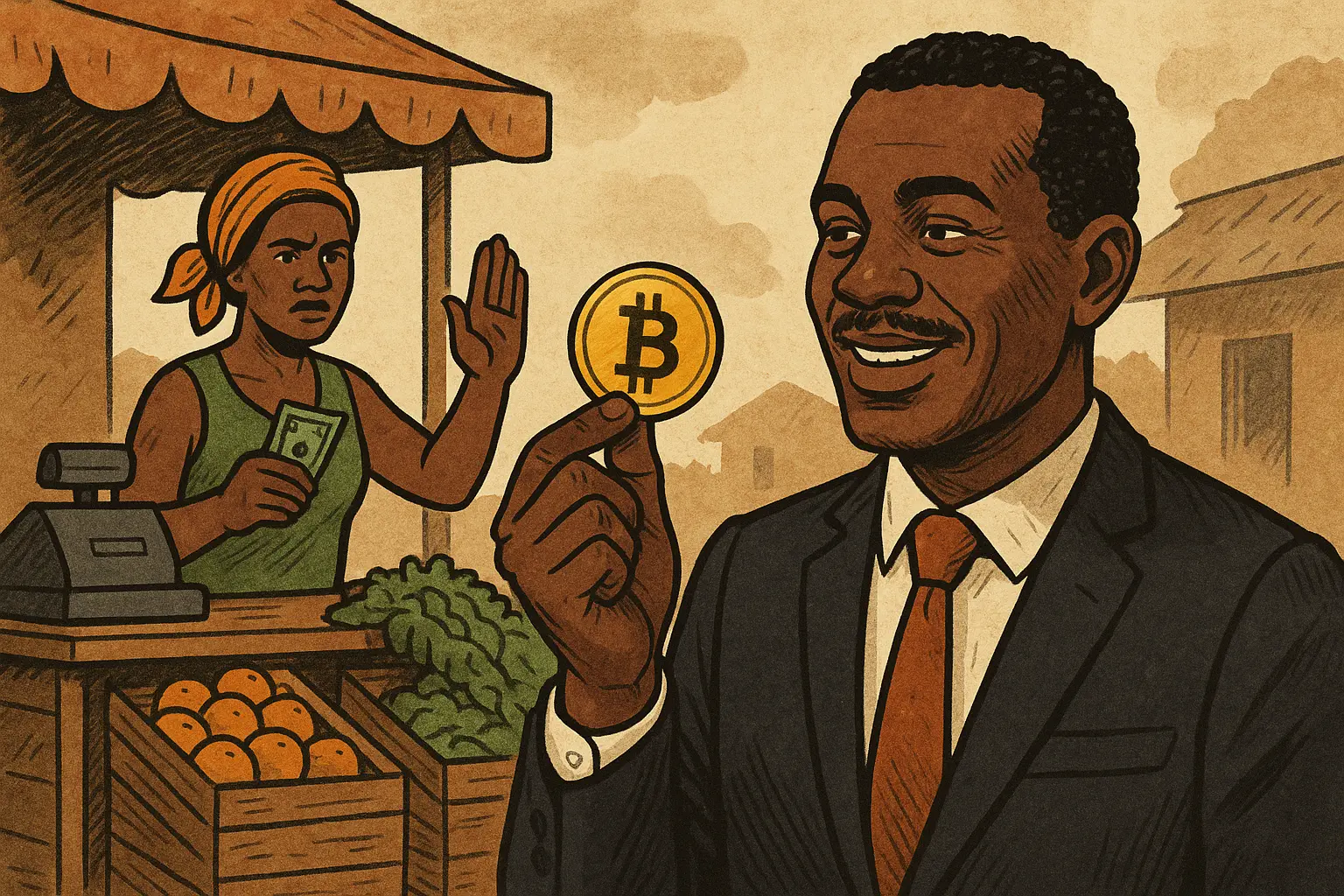
Stafford Masie, Executive Chairman of Africa Bitcoin, stated on the Coin Stories podcast that in some parts of Africa, Bitcoin is actually used as everyday currency, not just as an investment tool — local merchants “don’t accept dollars, but accept Sats,” with inflation reaching 4% to 5% every afternoon.
Masie’s Core Argument: Africa’s Bitcoin Framework Is Completely Different from the West
During an interview with Coin Stories host Natalie Brunell, Masie directly challenged the Western mainstream definition of Bitcoin. In developed markets, investors emphasize Bitcoin as a hedge against inflation and a long-term store of value; but in some parts of Africa, Bitcoin is a functional currency used for daily commercial transactions.
He explained the issue with inflation differences: “You talk about currency devaluation, which is 4% to 5% per year — but we’re talking about 4% to 5% devaluation in an afternoon.” In this context, he describes Bitcoin as “primitive capital” — a financial foundation for individuals and businesses to build wealth: “In Africa, we suddenly have something that cannot be devalued. It’s immutable, decentralized, and cannot be confiscated. For Africans, this is a matter of life and death.”
Masie also emphasized that over a quarter of Africa’s population is under 20 years old, and the younger generation is bypassing traditional financial systems to adopt new technologies like Bitcoin and AI — similar to how mobile communication technology rapidly spread across Africa years ago.
On-Chain Data Validates: Structural Growth in Africa’s Crypto Adoption
Chainalysis data confirms Masie’s description. From July 2024 to June 2025, on-chain transaction volume in Sub-Saharan Africa exceeded $205 billion, a 52% increase year-over-year, making it the third-fastest growing region globally; in March 2025, monthly transaction volume surged to nearly $25 billion, mainly due to Nigeria’s currency devaluation leading to increased activity.
Former UN Deputy Secretary-General Vera Songwe pointed out at the World Economic Forum in January this year that remittances in many African economies have become more important than foreign aid, but traditional transfer fees cost about $6 per $100 sent. In environments where over ten countries have inflation rates above 20% and about 650 million people lack bank accounts, stablecoins and Bitcoin are playing dual roles as payment channels and stores of value.
Key Data on Africa’s Crypto Adoption
- On-Chain Transaction Volume: Sub-Saharan Africa grew 52% from July 2024 to June 2025, surpassing $205 billion
- Global Growth Rank: Third fastest-growing crypto region worldwide; in March 2025, monthly volume nearly $25 billion
- Retail-Oriented Features: Transactions under $10,000 account for over 8% (above the global average of 6%)
- Remittance Cost Gap: Traditional transfers cost about $6 per $100; crypto tools significantly reduce costs
- Financial Inclusion Gap: Estimated 650 million people without bank accounts, creating a large market for crypto tools
FAQs
Why do Africans have vastly different needs for Bitcoin compared to Western investors?
Western investors mainly see Bitcoin as a long-term store of value to hedge against inflation; in some parts of Africa, hyperinflation and currency devaluation happening daily or even hourly make Bitcoin a more stable medium of exchange, directly used for commercial transactions, filling the gap left by malfunctioning fiat currencies.
What is Sats, and why is it more commonly used than Bitcoin in African transactions?
Sats (Satoshi) are the smallest unit of Bitcoin, with 1 Bitcoin equal to 100 million Sats. Because a full Bitcoin is expensive, using Sats is more practical for everyday small transactions, helping Bitcoin circulate as a real currency in low-income markets, similar to using cents instead of dollars for small purchases.
What are the main drivers behind crypto adoption in Africa?
Key drivers include high inflation rates (over 20% in some countries), expensive traditional remittances (about $6 per $100), a large unbanked population (around 650 million), and a young, tech-savvy demographic — over a quarter of Africa’s population is under 20. These factors collectively make Africa one of the most dynamic regions for crypto adoption globally.
Disclaimer: The information on this page may come from third parties and does not represent the views or opinions of Gate. The content displayed on this page is for reference only and does not constitute any financial, investment, or legal advice. Gate does not guarantee the accuracy or completeness of the information and shall not be liable for any losses arising from the use of this information. Virtual asset investments carry high risks and are subject to significant price volatility. You may lose all of your invested principal. Please fully understand the relevant risks and make prudent decisions based on your own financial situation and risk tolerance. For details, please refer to
Disclaimer.
Related Articles
U.S. financial industry job openings drop to 13-year lows, with 92,000 jobs lost nationwide in February
According to data from the Federal Reserve Bank of St. Louis, by the end of 2025, job vacancies in the U.S. finance and insurance industry will drop to 134,000, a 13-year low, down 75% from 2022. Analysts warn that more layoffs may occur, while the U.S. Bureau of Labor Statistics reports that employment unexpectedly decreased in February, but financial activities defied the trend by adding 10,000 net jobs, which could influence the Federal Reserve's interest rate cut policy.
GateNews26m ago
Trump says oil prices will quickly fall back, but Bitcoin and the stock market have already been hit
On March 9th, as the "Epic Rage Action" escalated, the global energy markets experienced intense volatility, with oil prices soaring to $116 at one point, raising concerns about supply disruptions through the Strait of Hormuz. Trump predicted that oil prices would fall back, but gasoline prices have already risen to $3.45. The stock and cryptocurrency markets declined sharply, and investors should pay attention to the impact of geopolitical events on the markets and future monetary policies.
GateNews36m ago
The probability of a US recession soars to 40%, with rising oil prices and escalating geopolitical risks
As oil prices surpass $100 and the conflict between Israel and Iran escalates, market concerns about a U.S. recession in 2026 are intensifying, with the estimated recession probability reaching 40%. Signs of weakness are emerging in the labor market, with non-farm employment declining and the unemployment rate rising, putting economic pressure on the economy. Under the dual influence of energy and private credit markets, the uncertainty of the future economic outlook is increasing, and policy challenges are growing.
GateNews1h ago
The risk of a US recession soars: predicted market probability rises to 40%, with soaring oil prices and worsening employment becoming key factors
Due to rising global energy prices and geopolitical tensions, concerns about the US economic outlook have intensified. Several forecasting platforms indicate that the probability of a recession in the United States by 2026 has increased to 36%-40%. Oil prices have surpassed $100, and coupled with a weak labor market and increasing financial pressures, these are the main factors driving the heightened recession expectations.
GateNews1h ago
U.S. Unexpectedly Loses 92,000 Jobs in February, Financial Sector Job Openings Drop to 13-Year Low
The U.S. February employment report showed an unexpected loss of 92,000 jobs, with financial sector vacancies dropping to the lowest level in 13 years, indicating structural contraction. Although financial activities added 10,000 jobs, sectors like healthcare and information industries experienced significant layoffs. Weak labor market data may prompt the Federal Reserve to cut interest rates, creating a dual impact on the crypto market.
MarketWhisper1h ago
Japan requests the oil reserve agency to prepare for releasing oil reserves
Gate News Report, March 9, According to Nikkei News, the Japanese government has asked the oil reserve agency to prepare to release oil reserves.
GateNews1h ago


