Tether USDT, the world’s largest stablecoin pegged to the US dollar, is experiencing its strongest monthly supply reduction in years as major investors increase withdrawal activity, according to blockchain data.
Based on a Bloomberg report citing Artemis Analytics data, the circulating supply of USDT has decreased by approximately 1.5 billion USD so far in February, after a 1.2 billion USD decline in January. This puts USDT on its steepest downward trend in three years, since the collapse of the FTX cryptocurrency exchange in November 2022.
Previously, in December 2022, USDT’s supply had fallen by 2 billion USD following the collapse of FTX and its 150 subsidiaries, which caused significant shocks in the crypto industry.
Cryptocurrency Market Liquidity Shows Signs of Contraction
The recent decline in USDT supply may indicate shrinking liquidity in the crypto market. As the largest stablecoin, USDT plays a crucial role as a gateway for investors entering the crypto space. With a market capitalization of 183 billion USD, USDT currently accounts for about 71% of the total stablecoin market cap, according to CoinMarketCap data.
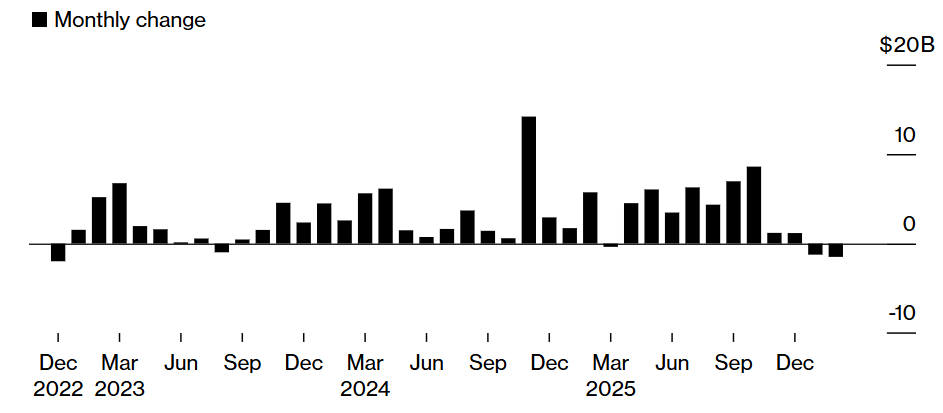 Tether USDT, Monthly Supply Change Rate, Monthly Summary | Source: Artemis Analytics, BloombergCointelegraph reached out to Tether for comment on the reasons behind the supply decrease in February but has not received a response as of publication.
Stablecoin Market Remains Stable in February
Despite the significant reduction in USDT supply, this does not necessarily mean the entire stablecoin market is in decline. According to data from DeFiLlama, the total market cap of stablecoins across all exchanges increased by 2.33% in February, rising from 300 billion USD to 307 billion USD.
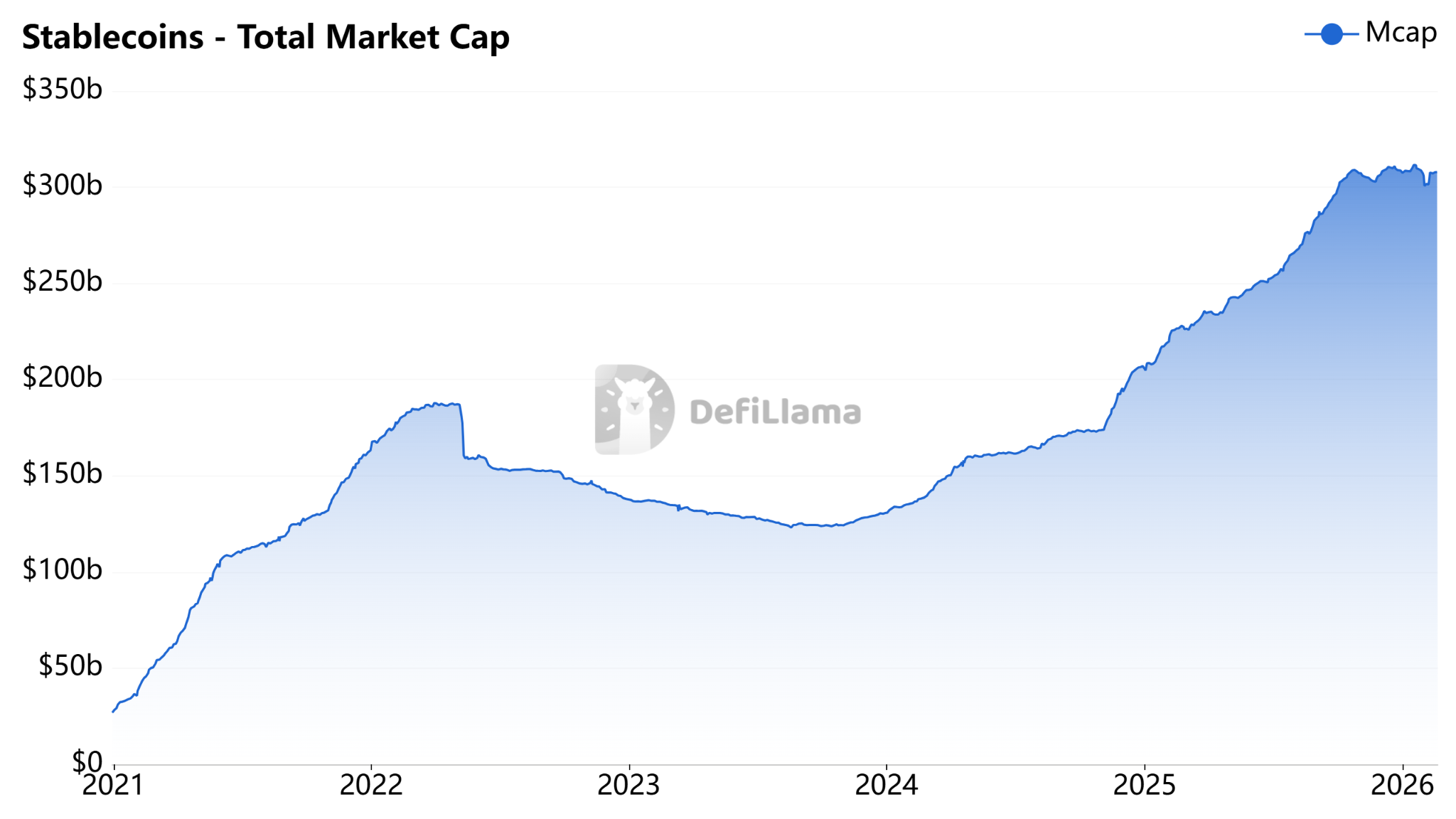 Total Stablecoin Market Cap | Source: DeFiLlama While the two largest stablecoins, USDT and Circle’s USDC, decreased by 1.7% and 0.9% respectively, USD1—a stablecoin linked to the Trump family and issued by World Liberty Financial—saw an impressive 50% growth in market cap, reaching 5.1 billion USD as of Friday, according to DeFiLlama.
Diverging Trends: Whales Reduce Holdings, New Wallets Increase Purchases
Large investors, known as “whales,” are significantly reducing their USDT holdings. According to analytics platform Nansen, in the past week, 22 whale wallets sold a total of 69.9 million USD worth of USDT, with selling speed increasing 1.6 times compared to previous periods.
Additionally, top traders tracked under the “smart money” category have also become net sellers of USDT. However, a notable development is that new wallets created within the past 15 days have purchased approximately 591 million USD worth of USDT during the same period, according to Nansen data.
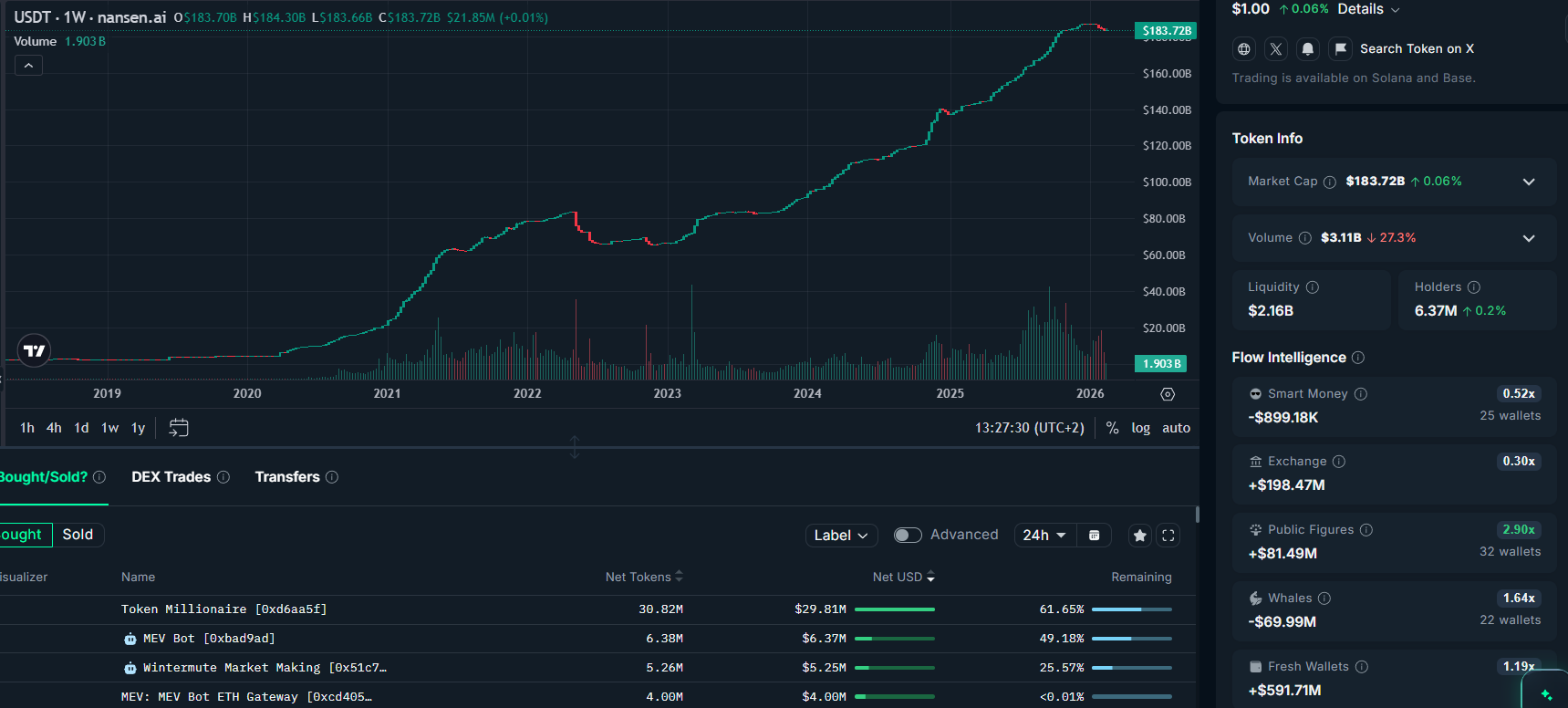 USDT on Ethereum, “God Mode” token chart, one-year | Source: Nansen These contrasting flows reflect a market landscape with clear polarization: while large investors are withdrawing or reallocating assets, new investors are actively entering, helping to maintain overall stablecoin supply stability.
Mr. Giáo
Disclaimer: The information on this page may come from third parties and does not represent the views or opinions of Gate. The content displayed on this page is for reference only and does not constitute any financial, investment, or legal advice. Gate does not guarantee the accuracy or completeness of the information and shall not be liable for any losses arising from the use of this information. Virtual asset investments carry high risks and are subject to significant price volatility. You may lose all of your invested principal. Please fully understand the relevant risks and make prudent decisions based on your own financial situation and risk tolerance. For details, please refer to
Disclaimer.
Related Articles
Circle Moves $68 Million in 30 Minutes Using USDC, Showing Real Power of Stablecoin Payments
Circle recently demonstrated the transformative potential of stablecoins in corporate finance by swiftly transferring $68 million using USDC, showcasing advantages like instant settlement and improved transparency over traditional banking methods.
CryptometerIo1h ago
Hyperliquid crude oil products are trading at a premium of over 4% compared to traditional markets, with the on-chain market absorbing the weekend production cut news.
Affected by Middle East production cuts, Brent and WTI crude oil show significant premiums on the Hyperliquid platform, reaching 4.76% and 5.42% respectively. Similar situations were observed in on-chain gold prices during the US-Iran conflict, so investors should exercise caution to handle potential sharp fluctuations.
GateNews1h ago
Bitcoin spot ETF saw a net outflow of $349 million yesterday, with none of the twelve ETFs experiencing net inflows.
On March 7th, Bitcoin spot ETFs experienced a total net outflow of $349 million, with none of the twelve ETFs showing net inflows. Fidelity FBTC and BlackRock IBIT had net outflows of $159 million and $143 million respectively. Currently, the total net asset value of Bitcoin spot ETFs is $87.075 billion.
GateNews2h ago
Yesterday, Ethereum spot ETFs had a total net outflow of $82,851,900, and none of the nine ETFs experienced net inflow.
On March 7th, Ethereum spot ETFs experienced a total net outflow of $82,851,900, with all nine ETFs showing no net inflow. Among them, Fidelity FETH saw an outflow of $67,566,900, and Grayscale ETH Trust experienced an outflow of $5,997,900. As of now, the total net asset value of ETFs is $11.283 billion.
GateNews2h ago
Retail investors are not trading cryptocurrencies but stocks? Cryptocurrency market liquidity is moving to the US stock market, AI helps interpret financial reports and boosts confidence
Wintermute's research indicates that retail cryptocurrency funds are flowing heavily into the US stock market, reversing the correlation to become negatively correlated. As liquidity in the crypto market declines, retail investors prefer mature stock markets, aided by generative AI enhancing their investment capabilities. Cryptocurrencies are gradually becoming part of asset allocation.
CryptoCity4h ago
Strategy: Purchased 48,000 BTC in the first two months of 2026, investing $4.3 billion
Bitcoin Treasury Company Strategy Director Chaitanya Jain revealed that in the first two months of 2026, approximately $4.3 billion was invested to purchase 48,000 Bitcoins, far exceeding the $300 million spent in all of 2022. Jain stated that this large-scale institutional buying will change the structure of the Bitcoin market.
GateNews7h ago


