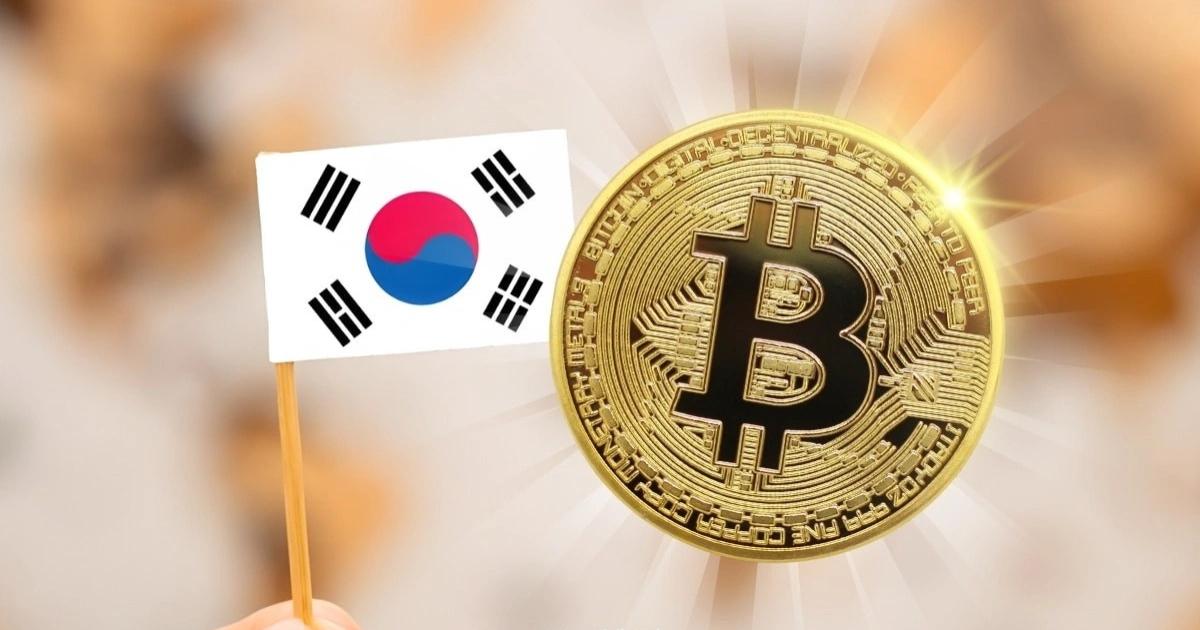
South Korea’s FSC plans to lift the ban on corporate crypto investments, setting a 5% cap and restricting to the top 20 cryptocurrencies, while aligning with the “Digital Asset Basic Act,” marking a shift from closed regulation to a systematic open approach.
The nine-year “Corporate Cryptocurrency Investment Ban” in South Korea is about to come to an end. According to reports, the Financial Services Commission (FSC) is drafting regulatory guidelines for corporate investments in cryptocurrencies, with an expected investment cap of 5%, symbolizing South Korea’s move from strict suppression to orderly, institutionalized openness.
According to the Seoul Economic Daily, the FSC has preliminarily completed trading guidelines for cryptocurrencies targeting listed companies and professional investors, with the final version expected to be released in January or February this year. If progress goes smoothly, South Korean companies could legally include cryptocurrencies on their balance sheets within this year.
To prevent excessive corporate speculation leading to financial risks, this draft sets strict “firewall” measures:
- Investment Cap: Companies and professional investors can allocate up to 5% of their shareholder equity (capital from shareholders) annually to purchase cryptocurrencies.
- Investment Scope: Currently limited to the top 20 cryptocurrencies by market capitalization.
Stablecoin controversy: Whether USD-pegged stablecoins like $USDT, $USDC , etc., will be included in the legal purchase list is still under discussion.
Presto Research Associate Min Jung pointed out: “This will inject considerable liquidity into the market, but since the limit is on the top 20 cryptocurrencies by market cap, funds are expected to flow mainly into Bitcoin and Ethereum, with limited benefits for competing coins.”
This new guideline continues the recent trend of the FSC gradually lifting the practical ban on “institutions trading crypto assets.” As early as mid-2025, South Korea already permitted non-profit organizations and cryptocurrency exchanges to sell their holdings; regulators also announced plans to open trading of cryptocurrencies to listed companies and professional investors in the second half of 2025.
To prevent large transactions from causing market volatility, the new guidelines will also include mechanisms such as “order splitting” and “price limits.” Min Jung stated: “Although the 5% limit seems conservative, for companies taking their first steps, initial efforts will likely be cautious, so it doesn’t constitute a substantial obstacle.”
The most closely watched focus among Korean crypto circles and investors is the upcoming “Digital Asset Basic Act,” expected to be introduced in the first quarter of this year. Seen as a “second-phase comprehensive regulation,” this legislation will set the tone for key policies, including the issuance and trading regulations of cryptocurrency spot ETFs, and will establish a regulatory framework for the Korean won stablecoin.
- This article is reprinted with permission from: 《Block Talk》
- Original title: 《South Korea to Open “Corporate Coin Buying”! Annual Investment Cap 5%, Limited to Top 20 Coins》
- Original author: Block Sister MEL
Disclaimer: The information on this page may come from third parties and does not represent the views or opinions of Gate. The content displayed on this page is for reference only and does not constitute any financial, investment, or legal advice. Gate does not guarantee the accuracy or completeness of the information and shall not be liable for any losses arising from the use of this information. Virtual asset investments carry high risks and are subject to significant price volatility. You may lose all of your invested principal. Please fully understand the relevant risks and make prudent decisions based on your own financial situation and risk tolerance. For details, please refer to
Disclaimer.
Related Articles
Over $2.2 Billion Bitcoin, Ethereum, XRP Options Expire Today, US PCE Data May Trigger Volatile Swings in Crypto Market
Today, the cryptocurrency market faces important option expiration and PCE inflation data release, with cautious market sentiment. Bitcoin and Ethereum options will expire, with traders expecting Bitcoin to maintain high-level oscillation. Ethereum support is being watched at the $2,100 range. U.S. macroeconomic policy and energy market volatility are similarly affecting market sentiment.
GateNews6m ago
ETH falls below the $2,100 level, still maintaining a 1.01% increase intraday
Gate News reports that as of March 13, ETH price fell below the $2,100 mark, trading near $2,099. Despite the short-term pullback, ETH's intraday gains remain at 1.01%.
GateNews19m ago
BlackRock Ethereum Staking ETF Records $15.5 Million in First Day Trading Volume, Key Step Forward for Yield-Generating Crypto ETFs
Global asset management giant BlackRock's staking Ethereum ETF iShares Staked Ethereum Trust (ETHB) achieved $15.5 million in trading volume on its first day of trading, demonstrating strong market reception. The ETF generates returns for investors through a staking mechanism and distributes most of the returns in the form of monthly dividends, potentially opening new pathways for crypto investment models.
GateNews28m ago
ERC-8004 Launches on Ethereum Mainnet, AI Agent Trust Mechanism Established
Ethereum has officially launched ERC-8004, establishing identity, reputation, and verification standards for artificial intelligence agents. Over 10,000 agents have already registered. This standard addresses the trust gap by enabling portable reputation and cross-platform discoverability, while integrating x402 payment mechanisms to enhance economic accountability for agents. Developers can easily integrate it without rewriting code.
MarketWhisper38m ago
Ethereum Gas Fees Hit New Lows: Down 90% in a Year, Swap Costs Just $0.01
Ethereum's average gas fees have dropped to approximately 0.045 Gwei, with ordinary ERC-20 token transaction costs now around just $0.01, representing a decline of over 90%. This change stems from the rise of Layer 2 networks and multiple technical upgrades, which have reduced network congestion and transformed previous perceptions about blockchain transaction fees. This cost structure shift has made Ethereum transaction costs significantly more attractive compared to traditional financial solutions.
MarketWhisper44m ago
Sky Lianechuang Rune two crude oil long positions turned profitable, Ethereum and Nasdaq 100 short positions still at a loss
On March 13, multiple leveraged trading positions of Sky co-founder Rune showed divergent profits and losses. The 20x leverage WTI crude oil long position and 7x Brent crude oil long position were profitable, but the 7x Ethereum and Nasdaq short positions remained in loss, with overall losses approaching $300,000.
GateNews55m ago


