Author: Arthur Hayes
Translation: Deep Tide TechFlow
Introduction: Hayes’s main argument in this article is simple: from the 1990 Gulf War to the 2001 War on Terror, every U.S.-led Middle East war has been followed by the Federal Reserve lowering interest rates. He believes the Iran war in 2026 will follow the same historical logic, making it the right time to increase Bitcoin holdings. The views are clear and logical; you don’t have to agree, but they deserve serious consideration.
Full Text:
(All opinions expressed are solely the author’s personal views and do not constitute investment advice or recommendations to participate in trading.)
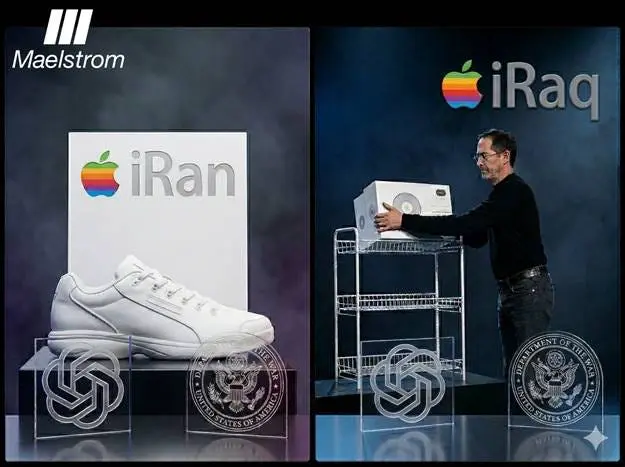
Under the guidance of America’s most peace-loving president, Donald J. Trump, the U.S. Department of Defense has jointly launched an offensive Agent AI weapon—a deadly new Apple iOS system. Once uploaded into a country’s network infrastructure, it can initiate regime change. Regime change is usually accompanied by indiscriminate bombing of military and civilian infrastructure, causing massive casualties, costing hundreds of billions to trillions of dollars. After eliminating resistance, the new political elite installed by the U.S. can siphon money from American taxpayers and local populations into private accounts at JPMorgan Chase. Public dissatisfaction with this pro-American Vichy-style regime in the Middle East continues to grow, ultimately leading to violent support for a reactionary, often oppressive and bloodthirsty local political structure. The sales cycle is thus complete, and OpenAI can start selling the next version. Are you already excited about OpenAI’s IPO priced at an infinite P/E ratio?
Since my consciousness awakened in 1985, and I began leaving my mark on the quantum continuum, the American empire’s crusade for justice in Middle Eastern oil-producing countries—and the strategic oil pipeline routes—has never ceased. Enjoy this exquisite chart created with Perplexity’s new Computer model:
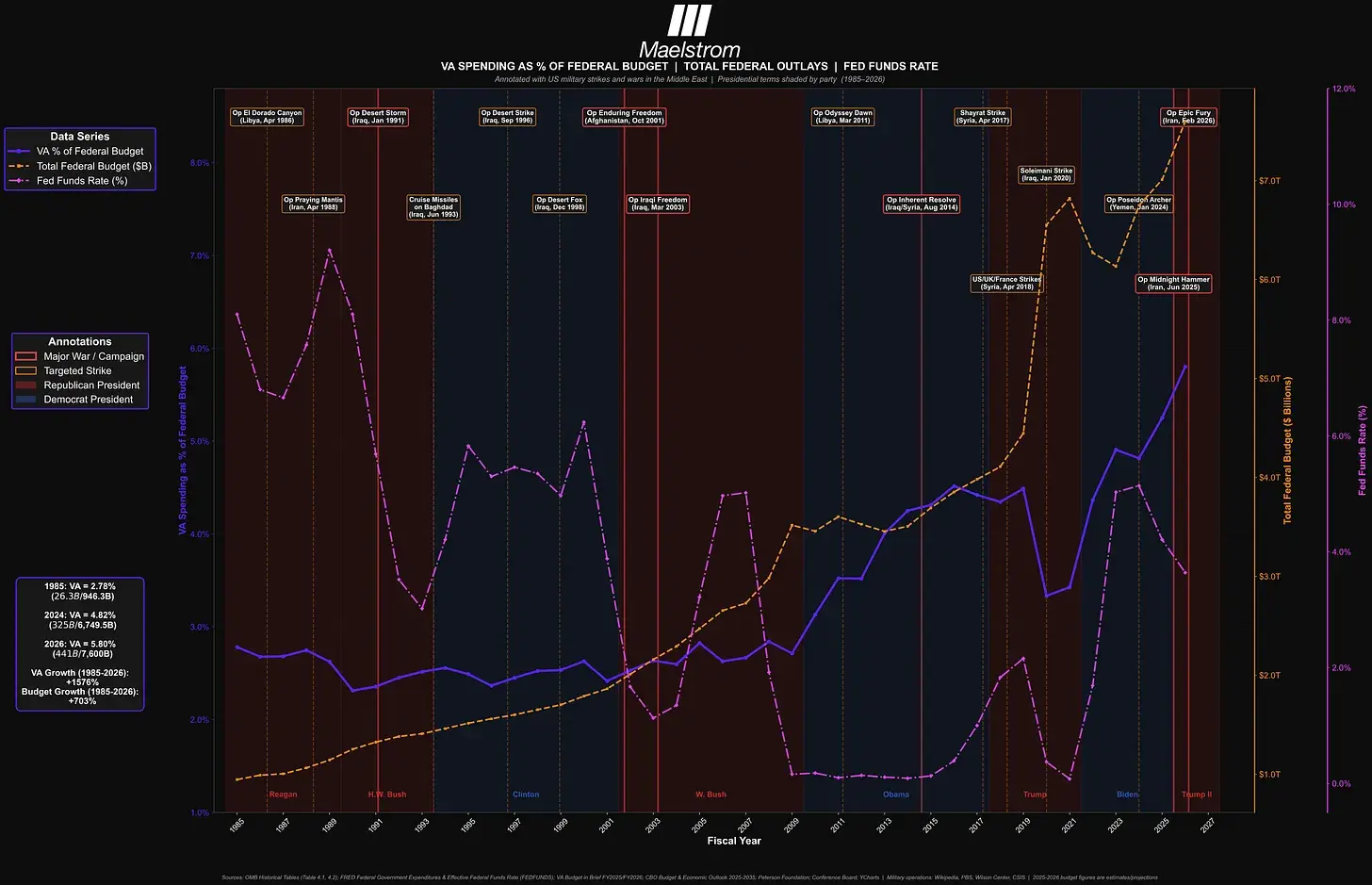
From a macro perspective, the chart shows the human cost of war: the proportion of Veterans Affairs (VA) spending in the federal budget, the total nominal federal expenditure, and the effective federal funds rate. The chart marks cases where the U.S. launched missile strikes or full-scale wars against Middle Eastern countries, for reference only, not an exhaustive list. As shown, the cost of caring for the military grows at twice the rate of federal budget increases. Most importantly for this article: whenever the U.S. initiates a Middle East war, the Federal Reserve immediately lowers interest rates. Despite every U.S. president in my lifetime trying to deceive the public into believing that the nightly televised Middle Eastern war games do not bring suffering to American soldiers, the data clearly shows that this obsession with Middle Eastern military adventures is destroying American lives at a very high cost.
My lottery ticket of ovaries was luckier than most, born on this land called America, defined by fictional curved lines. In my forty years, every Republican and Democrat president has launched missiles or full-scale wars against some Middle Eastern country. It’s as if, once you become president, high-level bureaucrats take you into a super-secret room, clamp your testicles in tongs, and force you to swear that at least one Middle Eastern country will feel the heat of democracy during your term… or face the consequences.
Whether you believe the current popular conspiracy theories about why the U.S. bombs certain countries or not, at least in my lifetime, the chart makes it clear: every U.S. president since 1985 has used force against one or more Middle Eastern nations. So when Trump gloats about the apparent assassination of Iran’s Supreme Leader Khamenei and endorses the popular revolution to overthrow this theocratic state, investors must consider: what will happen to our portfolios when Trump walks the same adult path as his predecessors?
Given that I am just a simple-minded crypto brother infected with toxic masculinity, I use a very simple heuristic to judge Bitcoin’s rise or fall: the longer Trump invests in the extremely expensive activity of nation-building in Iran, the higher the likelihood that the Federal Reserve will cut rates and increase money supply to support America’s latest Middle Eastern adventure.
To test my hypothesis, let’s examine the history of the Fed’s actions after each major Middle East war since 1985.
1990 Gulf War—Father (President George H. W. Bush)
At the first meeting after the war broke out, the Fed kept rates unchanged but hinted that if the war dragged on, easing might be necessary.
Here is a direct quote from the FOMC statement retrieved by Perplexity:
August 21, 1990:
“Uncertainty surrounding Middle East events has increased, and the economic outlook has become more uncertain, complicating the formulation of effective monetary policy.”
“Some members see the possibility that developments could lead to a need to ease policy at some point to counteract the economic weakening that had already begun prior to the rise in oil prices.”
Subsequently, the Fed cut rates in November and December 1990, using diplomatic language to describe the war as a confounding factor in decision-making. The war ended in March 1991.
“Business and consumer confidence have fallen sharply, reflecting not only developments in the Middle East but also the uncertainty about how these developments will affect oil prices.”
The Fed eased monetary policy amid rising oil prices fueling inflation.
2001 Global War on Terror (GWOT)—Son (President George W. Bush)
GWOT was launched immediately after the Twin Towers fell in New York. Iraq and Afghanistan were almost instantly targeted with cruise missile strikes. The Fed swiftly accelerated rate cuts to help restore economic confidence.
In an emergency meeting after the attacks, Chairman Alan Greenspan announced:
“Clearly, the events of last week have created a great deal of fear and uncertainty, exerting significant downward pressure on asset prices and increasing the risk of deflation, which is evident in the economic impact. Therefore, I propose lowering the federal funds rate target by 50 basis points.”
Essentially, if confidence in the American empire’s economy declines and asset prices fall, the Fed must act immediately. The remedy: cheaper, more abundant money.
Another statement from the Fed is equally telling: when needed, the Fed will fulfill its duty to help finance the war machine.
November 6, 2001—FOMC statement:
“Although the reallocation of resources necessary to enhance security may temporarily restrain productivity growth, the long-term outlook for productivity and the economy remains optimistic.”
2009 Troop Surge—Holy Spirit (President Barack Obama)
Unfortunate civilians in Iraq, Syria, and Afghanistan might have thought that a Nobel Peace Prize-winning president wouldn’t unleash hellfire on their countries. But they were mistaken; false hope can be deadly. Although Obama did not initiate any major new Middle Eastern wars, he did implement troop surges in what he considered just wars in Afghanistan.
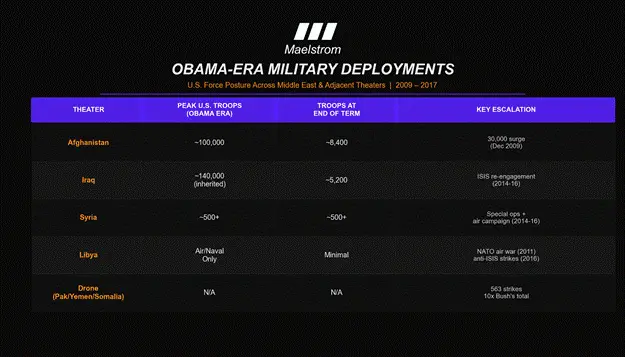
Since the Fed had already cut rates to zero and started quantitative easing at the end of 2008, facing Obama’s troop surges, there was no room for further maneuver. Money was free, supply unlimited. The U.S. war machine and contractors feasted.
2026 Iran—Messiah (President Donald Trump)
Fate is ironic: after surviving an assassination attempt during his 2024 presidential campaign, Trump nearly rose from the dead. As Kanye said, Jesus is walking. I can now talk about Kanye because he has surrendered, right…?
Trump’s presidency, and the reelection prospects of his Republican allies in November, will depend on the rise or fall of financial markets and oil prices. Since the fall of the Iranian Shah in 1979, regime change in Iran has been a dream of both parties’ elites. The Fed has the political cover to massively ease monetary policy. Failing to provide cheaper, more abundant funds to rebuild Iran as a U.S. vassal would be unpatriotic.
Trading Strategy
Today, sitting here, we don’t know how long Trump will remain interested in spending billions or even trillions to reshape Iran according to his preferences, nor how much geopolitical and market pain he can endure before retreating. The prudent approach is to wait and see. The optimal moment to go all-in on Bitcoin and quality altcoins like $HYPE is immediately after the Fed cuts rates and/or prints money to support U.S. goals in Iran.
Take care, everyone.


