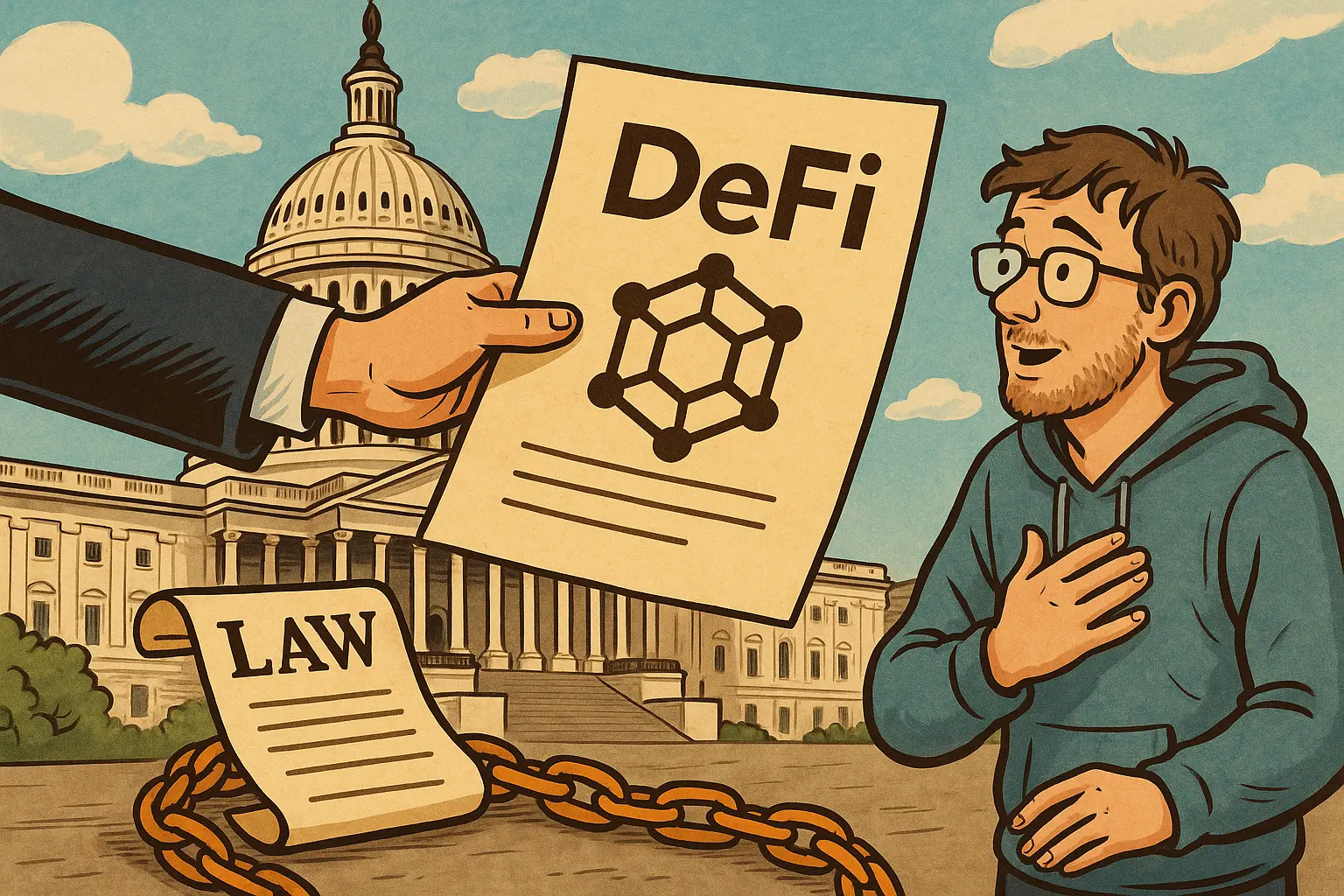
On Thursday, a bipartisan group composed of Representatives Scott Fitzgerald (Republican from Wisconsin), Ben Klein (Republican from Virginia), and Zoe Lofgren (Democrat from California) introduced the “Blockchain Development and Innovation Act” in the House. The bill aims to amend the language of Section 1960 of the U.S. Code to ensure it applies only to individuals who have actual control over others’ funds, thereby formally establishing criminal immunity boundaries for decentralized software developers. The introduction of this bill creates a complex legislative interaction with the currently stalled cryptocurrency market structure bill, and industry stakeholders are closely watching its potential impact on the overall DeFi legislative landscape.
Significance of the Core Provisions of the “Blockchain Development and Innovation Act”
Section 1960 of the U.S. Code defines illegal money remittance businesses and has historically been used to prosecute cryptocurrency software developers. Notable cases include: Roman Storm, the developer of Ethereum privacy tool Tornado Cash, who in 2025 was found guilty by a Manhattan jury of violating Section 1960, despite claiming that the software was decentralized and never held user funds; and two developers of Bitcoin privacy tool Samourai Wallet, who were pressured into guilty pleas by the Department of Justice under the same regulation and are currently serving federal prison sentences.
The proposed DeFi bill seeks to amend the language at its source, explicitly stating that developers who do not hold or control others’ funds should not be considered engaged in currency transfer activities as defined by Section 1960.
Industry advocacy group DeFi Education Fund publicly supports the bill, stating: “This clearly indicates that developers who do not hold or control others’ funds can develop neutral technology domestically without facing criminal prosecution as financial intermediaries.”
Legislative Relationship with the Cryptocurrency Market Structure Bill
A source familiar with the legislative background revealed to the media that this new DeFi bill surpasses the current market structure bill in terms of the strength of its language—though this does not mean that the protections for developers in the market structure bill are too weak, nor that the bill itself will necessarily fail because of this.
The cryptocurrency market structure bill is still expected to include relevant provisions related to Section 1960, but it will do so by adding regulations within the bill framework (e.g., “non-controlling developers should not be considered engaged in currency transfer activities”) rather than directly rewriting the original code. Currently, the main obstacles facing the market structure bill include:
-
Stablecoin Yield Dispute: The banking sector and crypto industry are at odds over whether idle stablecoin yields can be provided to holders, with the White House’s March 1 negotiation deadline approaching.
-
Conflict of Interest Clauses: Senate Democrats and the White House continue to clash over language concerning conflicts of interest related to President Trump’s multiple cryptocurrency investments.
-
DeFi Provisions: Although not finalized, sources suggest that this section is unlikely to be the key factor causing the bill’s ultimate stall.
Legislators have explicitly warned that if significant progress is not made on the market structure bill within the coming weeks, the entire bill could be shelved as Congress enters a legislative deadlock during the spring, triggered by the midterm elections in November.
Frequently Asked Questions
How does the “Blockchain Development and Innovation Act” define the boundaries of “control of funds”?
The bill aims to amend Section 1960 to ensure it only constrains individuals or entities with actual control over others’ funds. For decentralized protocol developers, if their software’s technical architecture does not hold user funds (e.g., purely open-source code tools), they should not be considered engaged in illegal remittance activities. The precise boundaries remain to be clarified in the final legislative text.
Does this DeFi bill affect the passage process of the market structure bill?
Current assessments suggest that protections for DeFi developers in this bill are unlikely to be the main reason for the failure of the market structure bill. The real legislative hurdles are the disagreements over stablecoin yield mechanisms and the conflict of interest language related to Trump’s crypto investments. These issues are far more politically sensitive than the technical protections for DeFi developers.
Will the verdict in the Tornado Cash case change due to this new bill?
The introduction of the bill does not automatically alter existing rulings. Its provisions will apply to future cases once enacted. The case of Tornado Cash developer Roman Storm will not be retroactively affected; however, if the bill ultimately passes, future developers of similar software will have clearer legal protections against criminal liability.
Disclaimer: The information on this page may come from third parties and does not represent the views or opinions of Gate. The content displayed on this page is for reference only and does not constitute any financial, investment, or legal advice. Gate does not guarantee the accuracy or completeness of the information and shall not be liable for any losses arising from the use of this information. Virtual asset investments carry high risks and are subject to significant price volatility. You may lose all of your invested principal. Please fully understand the relevant risks and make prudent decisions based on your own financial situation and risk tolerance. For details, please refer to
Disclaimer.
Related Articles
Stock and bond sell-off, BTC holds the 70,000 level, Bitcoin outperformed gold this week
The ongoing military actions by the US and Israel against Iran continue to impact the market. Oil prices surged, causing US stocks and Bitcoin to decline, but Bitcoin's decline was smaller, and it outperformed gold this week. Disrupted energy supplies have sparked inflation concerns, leading to simultaneous declines in stocks and bonds. Investors remain optimistic about cryptocurrencies, with significant capital inflows.
ChainNewsAbmedia32m ago
U.S. chip stocks decline in the short term, Micron Technology drops 3.4%
ChainCatcher reports that according to Gate Market Data, U.S. chip stocks are declining in the short term. Micron Technology fell 3.4%, AMD dropped 2.2%, and NVIDIA decreased by 1.8%. The news states that the United States plans to require a license for AI chip exports worldwide.
GateNews6h ago
ZeroHash Applies for National Trust Bank Charter as OCC Crypto Pipeline Grows
ZeroHash has applied for a national trust bank charter for digital asset custody and stablecoin services, while Revolut seeks a full U.S. bank charter to offer various financial services including crypto.
Decrypt6h ago
Russia plans to introduce the "Stablecoin Special Law" with the earliest implementation in July this year, optimistic about the cross-border payment potential of stablecoins.
The Russian Ministry of Finance announced the promotion of a "Stablecoin Legislation," aimed at unlocking economic potential through a legal framework, promoting cross-border trade, and responding to international sanctions. The bill is expected to be submitted for review this spring, granting stablecoins legal status. Additionally, the authorities plan to strengthen regulation and hope to balance economic interests and security through the special legislation, marking a clear strategic shift by Russia in the digital finance sector.
動區BlockTempo7h ago
Russia plans to introduce a stablecoin bill, claiming it has "huge potential"
The Russian Ministry of Finance is considering introducing an independent stablecoin bill to regulate fiat-backed digital assets, expected to be implemented outside the existing cryptocurrency regulatory framework. Stablecoins are seen as a tool to counter Western sanctions and may be used for cross-border payments in the future.
GateNews8h ago
Christopher Harborne Donates £3M to Nigel Farage’s Reform UK
Reform UK, led by Nigel Farage, received a £3 million donation from crypto investor Christopher Harborne, enhancing its leading position in UK political funding. The party supports crypto initiatives, aiming to reshape the UK's digital currency landscape.
TodayqNews9h ago


