
Tiger Research based on the interest rate cut cycle, M2 growth, and the CLARITY Act, sets Bitcoin’s Q1 target price at $185,500, representing a 100% upside from the current $96,000. Despite ETF outflows of $4.57 billion, record-high M2 indicates ample liquidity.
Tiger Research sets $185,500 target based on TVM model
Tiger Research applies the TVM valuation framework, deriving a neutral baseline valuation of $145,000 for Q1 2026 (slightly below the previous report’s $154,000). Combining 0% fundamental adjustment and +25% macro adjustment, the revised target price is set at $185,500. This implies approximately 100% upside from the current price.
Tiger Research adjusts the fundamental factor from -2% to 0%. Although network activity changes little, renewed market focus on the BTCFi ecosystem effectively offsets some bearish signals. Meanwhile, due to slowing institutional inflows and geopolitical factors, macro adjustment is lowered from +35% to +25%.
This downward revision of the target price should not be viewed as a bearish signal. Even after adjustment, the model still indicates about 100% potential upside. The lower baseline mainly reflects recent volatility, while Bitcoin’s intrinsic value is expected to continue rising in the medium to long term. Tiger Research believes the recent pullback is a healthy rebalancing process, with a bullish outlook remaining intact.
The TVM (Time Value Model) valuation framework is a proprietary model developed by Tiger Research, viewing Bitcoin as an evolving asset over time, incorporating network effects, scarcity, adoption rate, and macro liquidity factors. Unlike pure technical analysis or sentiment indicators, TVM aims to establish a valuation anchor based on fundamentals, a method widely used in traditional financial analysis now applied to the crypto market.
Derivation of Tiger Research’s target price
Baseline valuation: $145,000 (based on network value, adoption, and other fundamentals)
Fundamental adjustment: 0% (BTCFi ecosystem attention offsets decline in network activity)
Macro adjustment: +25% (interest rate cut cycle, M2 growth, but lowered from previous +35%)
Final target price: $145,000 × (1 + 25%) = $185,500
This valuation approach’s advantage lies in its systematic and traceable nature. Each adjustment factor is supported by clear data rather than subjective judgment. When macro conditions change, the model adjusts accordingly, maintaining dynamic forecasts.
Fed rate cuts and record-high M2 lay liquidity foundation
(Source: Tiger Research)
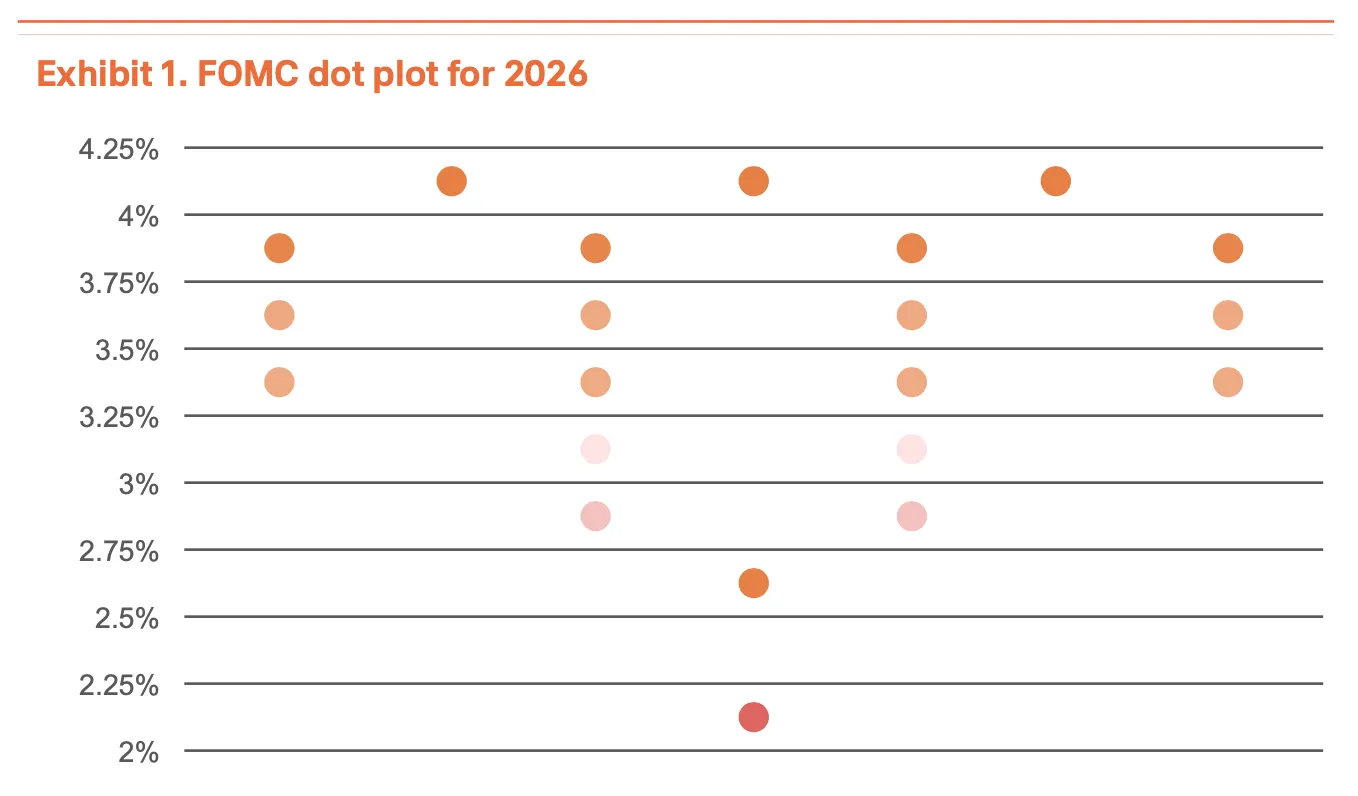
Bitcoin is currently trading around $96,000. Since Tiger Research published the previous report on October 23, 2025, the price has fallen 12%. Despite recent corrections, the macro backdrop supporting Bitcoin remains solid. The Fed has cut rates three consecutive times from September to December 2025, totaling 75 basis points, with current rates at 3.50%-3.75%. The December dot plot projects rates to fall to 3.4% by end-2026.
While a 50 basis point or larger single rate cut this year seems unlikely, with Powell’s term ending in May, the Trump administration may appoint a more dovish successor, ensuring continued monetary easing. Such political expectations provide important market guidance. If the new Fed chair favors easing, rate cuts could accelerate or other liquidity expansion measures could be taken.
Liquidity is another key variable besides regulation. Global M2 supply hit a record high in Q4 2024 and continues to grow. Historically, Bitcoin tends to lead liquidity cycles, rising before M2 peaks and consolidating at peak phases. Current signs suggest further liquidity expansion, implying Bitcoin still has upside potential. If stock valuations appear excessive, capital may rotate into Bitcoin.
Tiger Research notes that Bitcoin’s current performance lags behind liquidity expansion. This lag is not weakness but creates room for future gains. Historically, during early liquidity expansion, Bitcoin may consolidate or dip slightly, but once the market fully recognizes liquidity signals, Bitcoin’s gains often surpass other assets.
Contradiction between institutional outflows and corporate accumulation
(Source: Glassnode)
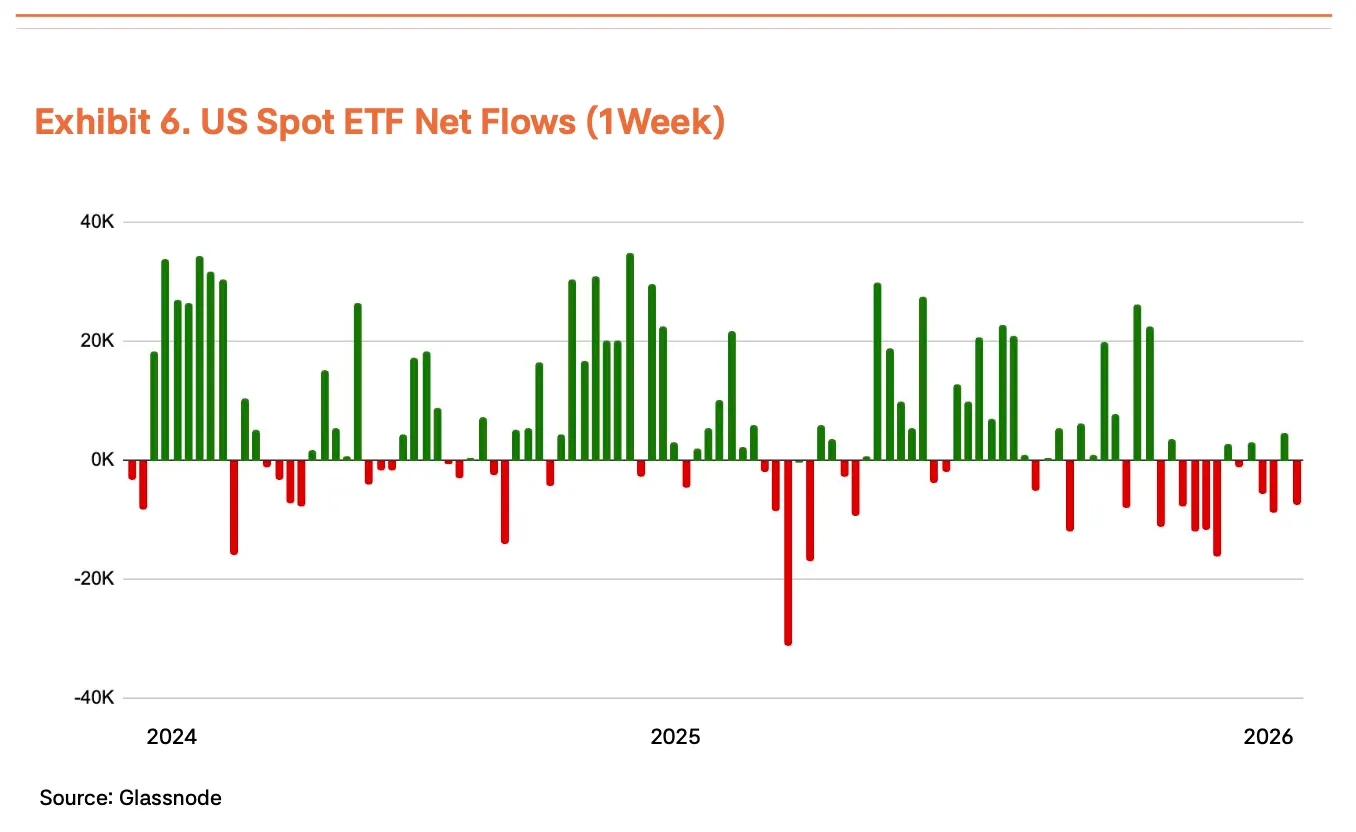
Despite favorable macro conditions, institutional demand has recently been weak. Spot ETF outflows of $4.57 billion occurred in November and December, the largest since product launch. The annual net inflow was $21.4 billion, down 39% from last year’s $35.2 billion. Although asset rebalancing in January brought some inflows, the sustainability of the rebound remains uncertain.
Meanwhile, companies like MicroStrategy (holding 673,783 BTC, about 3.2% of total supply), Metaplanet, and Mara continue to accumulate. This divergence reflects different institutional strategies. ETF investors tend to favor short-term trading and asset rebalancing, reacting to market sentiment and technical signals. Corporate holders like MicroStrategy adopt long-term accumulation strategies, less affected by short-term volatility.
This contradiction actually supports Tiger Research’s bullish outlook. ETF outflows mainly occurred in Nov-Dec during Bitcoin’s consolidation at high levels, which is normal profit-taking behavior. Meanwhile, ongoing corporate buying indicates confidence in Bitcoin’s long-term prospects. When ETF selling pressure subsides and corporate accumulation continues, supply-demand dynamics will shift favorably for price appreciation.
CLARITY Act may trigger bank capital inflows
Against the backdrop of stagnant institutional demand, regulatory developments are becoming a potential catalyst. The House-passed CLARITY Act clarifies the jurisdictional boundaries between the SEC and CFTC, allowing banks to offer digital asset custody and pledge services. Additionally, it grants CFTC oversight of the spot digital commodities market, providing clear legal frameworks for exchanges and brokers.
Tiger Research emphasizes that the Senate Banking Committee is scheduled to review the bill on January 15. If passed, it could prompt long-waiting traditional financial institutions to enter officially. The logic is that regulatory uncertainty has been the main obstacle for banks entering crypto. CLARITY, if enacted, would provide a clear compliance pathway, reducing legal risks.
Once major banks start offering Bitcoin custody and pledge services, it could bring significant capital inflows. U.S. banks manage over $20 trillion in assets; even 1% flowing into Bitcoin would mean an additional $200 billion demand. Such a scale of capital inflow could substantially boost Bitcoin prices.
Three impacts of the CLARITY Act
Clear banking compliance path: permits custody and pledge services, removes legal barriers
Institutional capital unlocked: traditional financial institutions can officially allocate to Bitcoin
Market structure improvement: regulatory clarity enhances market stability and investor confidence
$84,000 support and $98,000 resistance determine short-term trend
(Source: Glassnode)
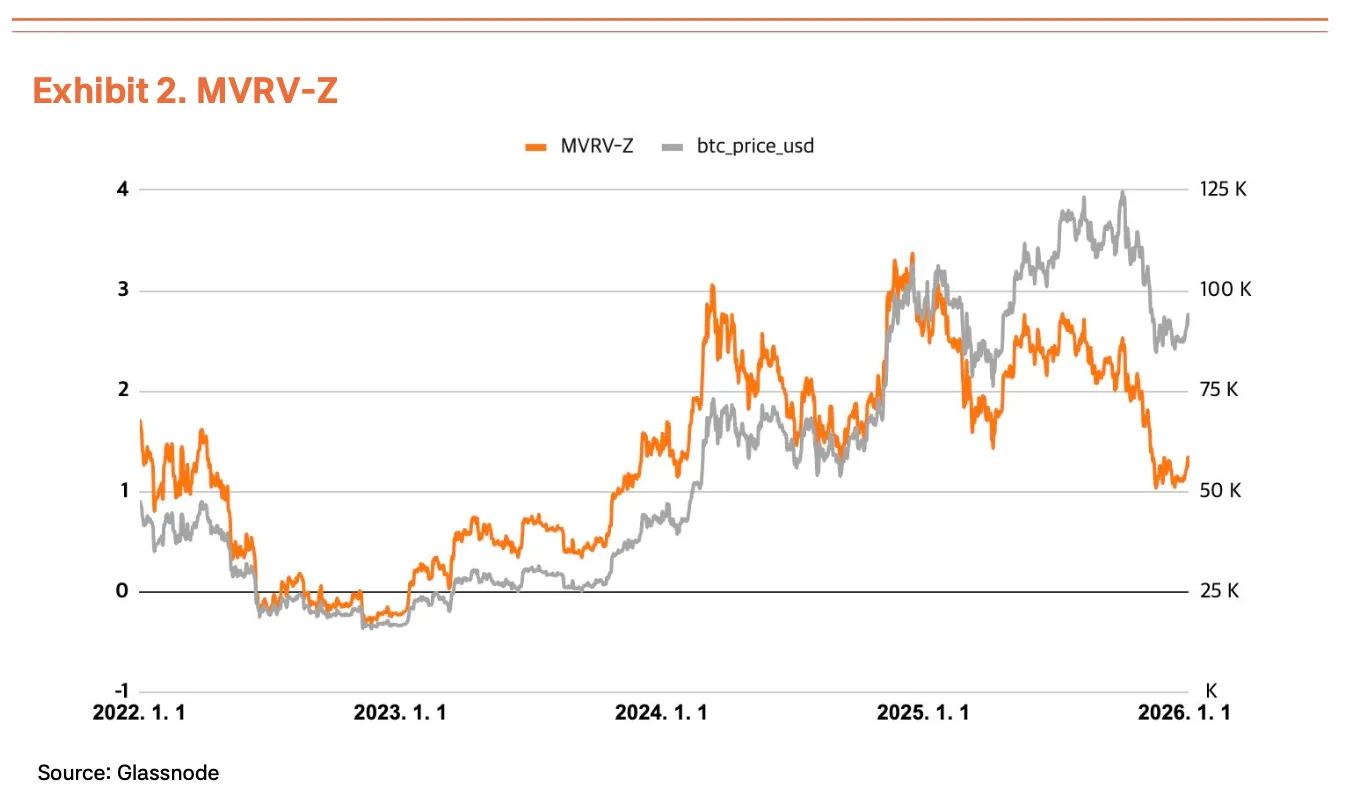
On-chain indicators provide auxiliary signals for Tiger Research’s macro analysis. During the November 2025 correction, buy-the-dip funds concentrated around $84,000, forming a clear support zone. Bitcoin has now broken above this zone. The $98,000 level corresponds to the average cost basis of short-term holders, serving as recent psychological and technical resistance.
On-chain data shows market sentiment shifting from short-term panic to neutrality. Key indicators like MVRV-Z (1.25), NUPL (0.39), and aSOPR (1.00) have exited undervaluation zones, entering equilibrium. This suggests that while panic-driven explosive rallies are less likely, the market structure remains healthy. Combined with macro and regulatory context, the statistical basis for medium- to long-term price appreciation remains strong.
It is noteworthy that the current market structure differs significantly from previous cycles. The increased proportion of institutional and long-term capital reduces the likelihood of panic capitulation driven by retail investors. Recent corrections are more gradual rebalancing. Despite short-term volatility, the overall upward structure remains intact. Tiger Research believes that this mature market structure is more conducive to steady growth rather than the past boom-and-bust pattern.
Overall, the macro trend of rate cuts and liquidity expansion remains unchanged. However, due to slowing institutional inflows, leadership change at the Fed, and rising geopolitical risks, Tiger Research adjusts the macro adjustment factor from +35% to +25%. Despite the reduction, this weight remains in the positive zone, as regulatory progress and continued M2 expansion are expected to support medium- to long-term growth.


