Author: BlockWeeks
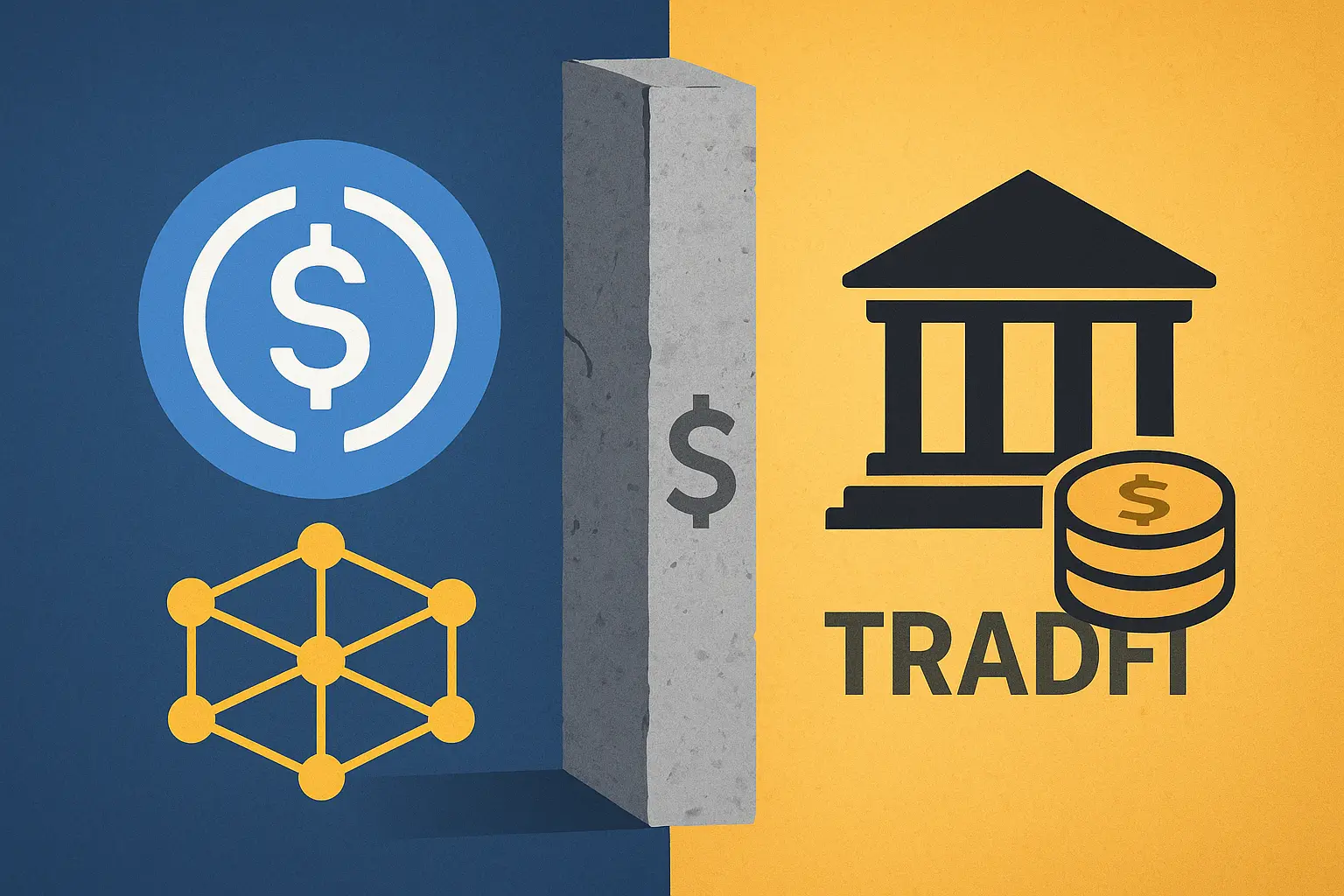
Between the cryptocurrency market and traditional financial markets (TradFi), there has long been an invisible wall: friction costs of fiat currency channels.
Recently, the globally renowned electronic broker Interactive Brokers (IBKR) announced a milestone update: official support for clients to deposit funds using stablecoins (mainly USDC) for trading stocks, futures, and forex, among other traditional assets.
If not analyzed carefully, this might seem like a simple payment feature update. But to observers well-versed in financial infrastructure transformation, this is Wall Street’s top broker making a substantial acknowledgment of the “on-chain settlement network.” When the US Dollar becomes USDC, and SWIFT transforms into ERC-20, it reflects a paradigm shift in global capital flow efficiency.
1. Breaking Barriers: From “T+N” to “7×24” Dimensionality Reduction
For a long time, the biggest pain point for global investors (especially non-U.S. investors) using U.S. stock brokers has been fund deposits.
The traditional wire transfer process is: local bank currency purchase -> SWIFT cross-border transfer -> intermediary bank -> U.S. receiving bank -> broker account credit. This process not only incurs high fees (wire transfer + intermediary fees), but is also limited by banking hours and the inefficiency of the SWIFT system, typically taking 1-3 business days.
IBKR’s introduction of stablecoin deposits effectively leverages blockchain as a “new clearing layer,” providing a dimensionality reduction for traditional bank wire transfers:
- 24/7 Liquidity: On-chain transfers have no “bank closing” concept. Deposits made on Friday evening no longer need to wait until Monday morning for processing.
- Instant Settlement: Compared to SWIFT’s layered confirmations, USDC’s on-chain confirmation only takes seconds to minutes.
- Capital Efficiency Revolution: For high-frequency traders and cross-market arbitrageurs, seamless transfer of funds on (Web3) blockchain and securities accounts (Web2) means extremely reduced capital lock-up costs.
Technical black box reveal: It’s important to clarify that IBKR does not directly “hold” these tokens for stock settlement. Its backend logic most likely involves cooperation with compliant entities like Paxos or Circle — when users transfer USDC, it is exchanged 1:1 into USD with the partner, and instantly credited to the IBKR client’s fiat balance. On the surface, it’s tokens, but fundamentally it’s money; the channel just moved onto the chain.
2. Strategic Move: Contending for the Asset Pricing Power of “Web3 New Giants”
IBKR is renowned for serving professional traders and institutions, with a reputation for strict risk control. Why would such a conservative giant take this first step?
The answer lies in the battle for incremental wealth.
Past bull markets have produced a large number of “Crypto Natives” and Web3 institutions holding millions or even billions of dollars in positions. Their wealth mainly exists on-chain in USDT/USDC or ETH.
Previously, if they wanted to allocate into U.S. stocks (such as NVIDIA or Coinbase), they had to endure painful “off-ramp” processes, risking bank freeze or seizure, and suffering huge FX costs.
IBKR’s move is a classic “capital attraction strategic move”:
- For users: It is the safest “off-ramp” channel. Depositing USDC into IBKR to buy U.S. Treasuries or S&P 500 is currently the most compliant path to “bringing crypto assets into traditional finance.”
- For IBKR: It directly locks in the most liquid and risk-tolerant high-net-worth clients worldwide. This is not just about earning commissions but about accumulating large client margin (Float).
3. Signal: Stablecoins Evolving into “Super Sovereign SWIFT”
Broadening the perspective, this event is a reverse reflection of the RWA (Real-World Asset) narrative.
If RWA is about “bringing” U.S. Treasuries onto the blockchain, then IBKR’s support for stablecoin deposits is about “bringing” liquidity from the blockchain back into traditional finance. This marks a qualitative change in the historical positioning of stablecoins:
- 1.0 Era: Trading chips within exchanges.
- 2.0 Era: Safe-haven assets within DeFi protocols.
- 3.0 Era (present): The true global payment settlement infrastructure.
When a Nasdaq-listed broker giant begins to use blockchain networks to replace SWIFT for processing client funds, it indicates that blockchain as a “payment pipeline” has passed Wall Street’s most rigorous stress tests in terms of security, compliance, and efficiency.
4. Worries and Game Theory: The Damocles Sword of Compliance
Despite the promising outlook, we must not ignore the regulatory game.
- KYC/AML challenges: Supporting stablecoin deposits will inevitably require extremely strict on-chain address reviews. Has the user’s deposit address interacted with sanctioned entities (like Tornado Cash)? How to identify “black U”? This will test IBKR’s compliance technology capabilities.
- Tax transparency: This channel’s opening also implies a strong link between on-chain assets and real-name securities accounts. For users seeking to evade taxes via cryptocurrencies, this channel might be akin to “self-incrimination” to tax authorities. It’s a double-edged sword.
Conclusion: The First Brick to Tearing Down the Berlin Wall
IBKR’s small step is a giant leap for financial integration.
It heralds that within the next five years, the boundary between “securities accounts” and “crypto wallets” will be thoroughly blurred. Future investors may no longer need to care whether they hold dollars on bank ledgers or USDC on-chain—they only need to focus on asset appreciation.
For other brokers (such as Charles Schwab, Futu, etc.), the window to follow suit is closing. In this era where liquidity equals justice, whoever masters the stablecoin channel holds the key to the Web3 wealth treasury.
Disclaimer: The information on this page may come from third parties and does not represent the views or opinions of Gate. The content displayed on this page is for reference only and does not constitute any financial, investment, or legal advice. Gate does not guarantee the accuracy or completeness of the information and shall not be liable for any losses arising from the use of this information. Virtual asset investments carry high risks and are subject to significant price volatility. You may lose all of your invested principal. Please fully understand the relevant risks and make prudent decisions based on your own financial situation and risk tolerance. For details, please refer to
Disclaimer.


