





#US-Iran #Gate13thAnniversaryLive 1) Has the ceasefire narrative truly collapsed?
In the short term, yes, but not necessarily structurally.
Markets were pricing in reduced tension → a lower risk premium.
Now we have:
* Direct signals of escalating tension (Iran targeting US-linked assets)
* Rhetoric of retaliation
* A sudden increase in uncertainty
This necessitates:
A risk-averse stance
Repricing of the geopolitical premium
But there's a nuance here:
* This is event-driven, not yet a long-term war cycle.
* Markets will now be dependent on Wednesday-type catalysts (political response, level of military tension, diplomatic tone).
If tension remains under control → volatility decreases.
If tension increases → a multi-week trend reversal.
2) WTI crude oil: chase the breakout or wait?
The 5% upside potential in WTI crude oil is an example of classic geopolitical risk pricing.
These types of movements are usually:
* Fast
* Emotional
* Weak liquidity (especially at the open)
* Risk of real supply (continuous rise)
If:
* Strait of Hormuz concerns emerge
* Shipping disruption is confirmed
* US-Iran military tensions deepen
Then:
Oil has not yet reached its peak
Retracements become buying opportunities
Sudden surge in headlines (retracement setup)
If:
* No real supply disruption
* Diplomatic tone stabilizes
* No ongoing attacks
Then:
This becomes a "gap opening and retracement" movement
Chasing = getting stuck at the peak
* Don't chase the sudden surge at the open
* Watch the retracement behavior
* Strong support → trend continuation
* Sharp rejection → dispersal
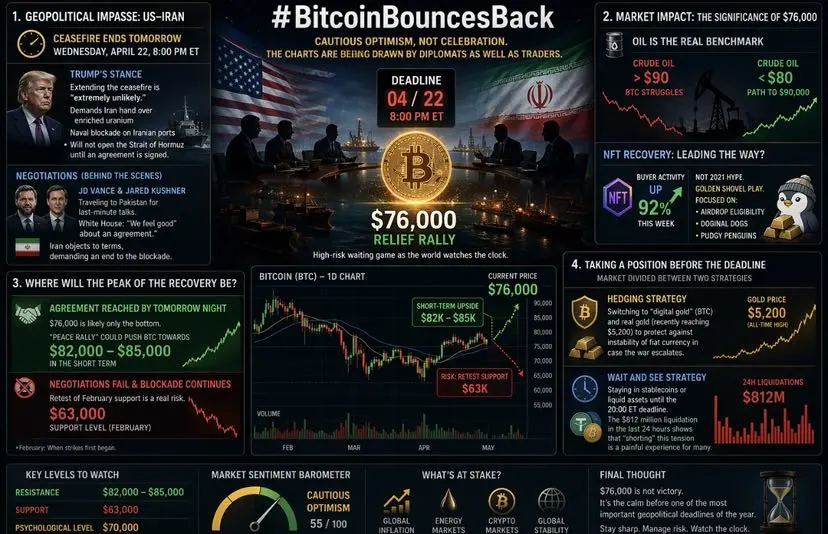
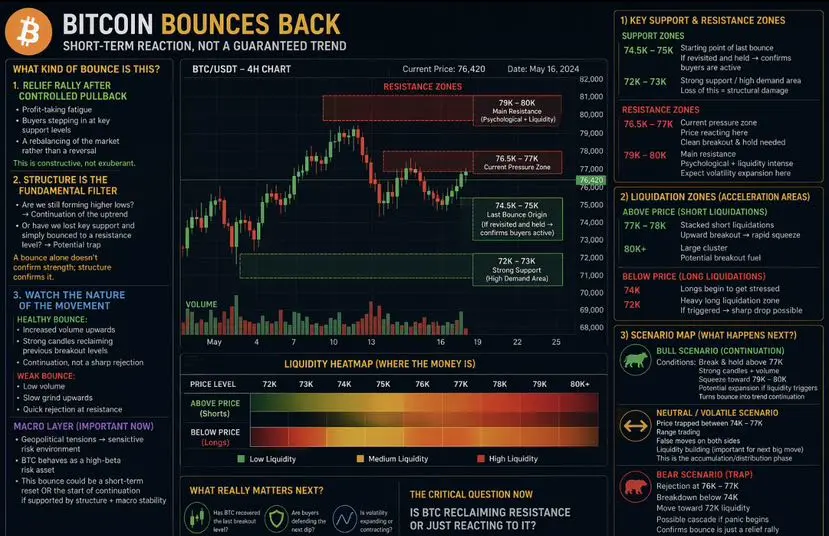
3) Bitcoin below $74,000: what happens now?
BTC is behaving exactly like a liquidity-sensitive risk asset.
The key distinction:
This is NOT a weakness specific to cryptocurrencies.
This is the spread of macro risk aversion.
What matters most right now:
Structure control:
As long as BTC maintains the following conditions:
* Higher lows (in a higher timeframe)
* No panic liquidation wave
Uptrend still solid
Bull scenario:
* Slow, controlled pullback
* Spot purchases absorb dips
* Funding rates normalize
Healthy correction
Bear scenario:
* High volatility + prolonged liquidations
* Sharp drops without a bounce
* Increased correlation with stocks
Then you are in risk aversion mode.
4) Strategy in volatile conditions
This is where most investors get ruined by giving emotional reactions. Adjust your mindset:
You are no longer in a clean trend.
You are in a headline-driven environment.
Tactical adjustments:
1) Reduce position size.
Volatility is not an opportunity unless controlled.
2) Avoid chasing extremes.
* Do not take long positions in oil after vertical candlestick patterns.
* Do not take short positions in BTC after bearish bounces.
3) Trade based on reactions, not headlines.
Wait for:
* Confirmation
* Retests
* Liquidity zones
4) Pay attention to correlations.
* Oil ↑ + BTC ↓ = classic risk aversion.
* If this divergence occurs → signal change.
5) What happens after Wednesday?
Three realistic scenarios:
Tensions ease
* Oil retreats
* BTC recovers
* Risky assets stabilize
Tensions remain under control
* Volatile markets
* December trading dominates
Tensions escalate
* Oil continues to rise
* BTC faces a deeper correction
* Volatility increases across all assets
* Current oil price = event premium, not a confirmed trend
* BTC decline = macro reaction, not a structural failure (yet)
* Market = fragile, sensitive to headlines.
BTC — Key Levels and Liquidity Map
You mentioned a drop below $74,000—that's the first signal of short-term weakness, but not yet a full-blown collapse.
Main Support Zone: $70,500 – $71,500
* Previous demand + breakout base
* Potential spot buyer interest
* If price stabilizes here → continuation of the uptrend is still possible
This is a “defense or trend reversal” zone
Intermediate Support: $72,800 – $73,200
* Weak support (recent structure)
* Often becomes a liquidity sweep area
Expect wicks, not strong hold
Breakout Trigger: Below $70,000
* This is where things accelerate
* Possible:
* Liquidation of long positions
* Accumulation of momentum short positions
Next Magnet: $67,000 – $68,000
Upward Levels:
Resistance: $74,800 – $75,500
* Breakout point
* Possibly high Supply
Main Resistance: $77,000 – $78,000
* If this level is reclaimed → the market will say:
“This drop was a false break”
Liquidation Zones (High Probability Traps)
Below the price:
* $72,500 → small liquidations
* $70,000 → large long position wipeout zone
Above the price:
* $75,000 – $76,000 → short position squeeze possible
BTC Strategy (Current)
If the price enters the $71,000 zone:
* Watch the reaction:
* Strong bounce → long scalping / swing
* Weak bounce → stay away or open short positions on uptrends
If the price reclaims the $75,000 level:
* This is strength
Return to trend following tendency You can return
If it breaks $70,000:
* "Don't get your hopes up"
The market will likely enter a rapid downward expansion
WTI Crude Oil — Trade Setup
This move is news-driven, so structure is more important than sentiment.
Uptrend Continuation Zone:
$82 – $83 (retracement buying zone)
If:
* Price slowly pulls back
* Stays above this zone
This is a strong continuation behavior
Rejection Zone:
$85 – $87
* Gap extension zone
* Likely profit-taking zone
First test usually results in rejection
Failure Signal:
If oil:
* Quickly falls below $81
This means:
* No real supply fear
* Just a headline jump
Oil Strategy
DO:
* Wait for pullbacks
* Follow confirmations, not candles
DON'T:
* Don't chase green candles after a 5% gap
* Don't assume "War = direct bullish" "Forever"
Combined Reading (This is important)
The market is currently saying:
* Oil ↑ = fear pricing
* BTC ↓ = Liquidity tightening
Classic risk aversion response
Key change to watch for:
If suddenly:
* Oil pauses
* BTC stabilizes
This is your "panic fading" signal
Simple Game Plan
* BTC around $71,000 → decision zone
* Oil around $83 → decision zone
No need to guess—just react to behavior at these levels.
$BTC