GateUser-78aae297

vip
Age 0.1 Yıl
Peak Tier 0
No content yet
These days, after the market calmed down, I realized that the word "bottom fishing" is quite a luxury. When liquidity dries up, slippage feels like a knife, and order placements are more like decorations. Honestly, it's about surviving first and then talking about bravery. The community is also arguing whether the extreme funding rates mean a reversal or just more bubble squeezing. I'm a bit timid: the more exaggerated the rates, the less I want to leverage up, preferring to wait for it to cool down on its own. The same goes for bridges and L2s—when panic sets in, the more we want to take shor
View Original
  • Reward
  • Comment
  • Repost
  • Share
The number 20k is very eye-catching, like a clickbait headline designed to hype the market, but it really works.
View Original
TheBuzzingBee
🚨Something big just dropped, and you could feel the energy shift instantly.
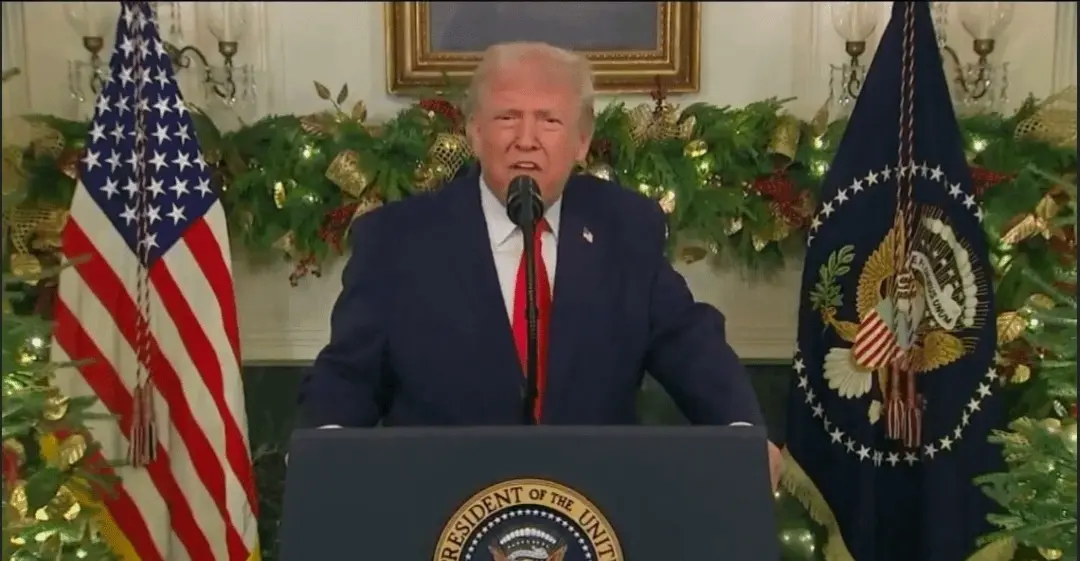
🇺🇸During a live announcement, President Trump said a massive tax cut is on the way — not just any cut, but what he called the biggest in U.S. history. That alone would turn heads, but what really caught people off guard was the claim that American households could keep around $20,000 more every year.
That’s the kind of number that makes people pause and think. For some, it means breathing room — paying off debt, saving more, maybe finally getting ahead. For others, it signals something even bigger: a push to supercharge the economy.
Markets love this kind of talk. Lower taxes usually mean more spending, more investment, and more momentum across businesses. You can almost feel the optimism building, even before anything officially kicks in.
Of course, big promises always bring big questions. People will want to know how it’s funded, who benefits the most, and what it really looks like in practice. But right now, the headline alone is enough to spark conversations everywhere.
Whether this becomes reality or not, one thing is certain — moments like this grab attention, shift expectations, $20Kand get everyone watching what happens next.
#GatePreIPOsLaunchesWithSpaceX #Gate13thAnniversaryLive
$ETH $BTC $AAVE
repost-content-media
  • Reward
  • Comment
  • Repost
  • Share
Doing well means reducing the pain of cold starts; doing poorly means replacing the recommendation algorithm with a more prominent button.
View Original
CryptoFrontier
X Rolls Out Starterpacks Feature for Faster User Discovery
X announced on January 21, 2026, that it is launching Starterpacks, a platform-curated feature enabling users to follow bulk groups of accounts with a single click, according to Nikita Bier, X's head of product. The company compiled over 1,000 pre-made categories of curated accounts across niches an
  • Reward
  • Comment
  • Repost
  • Share
Since I started tracking testnet points, my mindset has noticeably changed: originally it was just practice, but once I started thinking about "how much it might be worth," I easily get hooked. Even though it's just a couple of interactions, I can't stop. To put it simply, practice turns into expectations, and expectations push you to increase time and risk.
My stop-loss is now very simple: set a limit for each chain / each bridge, and stop when it exceeds; if I find myself frequently cross-chain, repeatedly authorizing, or using unfamiliar contracts just to run more tests, that's a red flag.
View Original
  • Reward
  • Comment
  • Repost
  • Share
I used to pay close attention to stablecoin supply, and whenever it rose, I would imagine "money is flowing in." Now I tend to ask first: Is this money going on-chain to earn yield, being used as collateral on exchanges, or just institutions moving funds off-chain? ETFs are more like shifting the entry point into traditional channels; the on-chain water level changes we see may not be synchronized. To put it plainly, don’t mistake correlation for causation. Recently, I saw someone complain about the lag in labels on on-chain data tools, or even being misled by them, and I can relate... A wrong
View Original
  • Reward
  • Comment
  • Repost
  • Share
Modularization is a very abstract topic; in reality, for end users, it boils down to two points: don't lag when using it, don't be expensive, and don't inexplicably lose money. In the past, a single chain handled everything by itself; when congestion occurred, you just increased Gas, and if a bridge had issues, you couldn't sleep at night. Now, it's more like "division of labor": execution runs faster, data layers are more stable, and theoretically, the experience should be smoother. But the premise is that cross-chain processes must be reliable; otherwise, modularization is just spreading out
View Original
  • Reward
  • Comment
  • Repost
  • Share
Recently, the hot topics change so quickly, it feels like my attention is being pulled along... It's both funny and frustrating: every time I see words like "shared security" or "profit stacking," it’s like someone ringing a bell in your ear. I can also understand the criticism of the "staking" method being called a "pyramid scheme"; honestly, the source of the returns isn’t clearly explained, and no matter how many layers of packaging there are, it’s still risk stacking on top of risk.
I’ve now set a simple process for myself: first, check if the actual costs of L2 have become cheaper, if the
View Original
  • Reward
  • Comment
  • Repost
  • Share
A quick reminder: It's better to miss this kind of order than to hold a heavy position; entering in batches and setting strict stop-losses are the only ways to have a chance to survive.
View Original
Original content no longer visible
  • Reward
  • Comment
  • Repost
  • Share
  • Pin