PatchNotePaladin

vip
Age 0.1 Yıl
Peak Tier 0
No content yet
These days, I've noticed the funding rates are starting to become extreme again, and a bunch of people in the group are shouting "sending money," which makes me a bit hesitant. To be honest, extreme rates don't mean you're guaranteed to win; they just tell you that one side is too crowded, and the remaining question is: when will the next spike come? My habit is to first avoid volatility, wait until the market isn't so skewed before considering taking the other side; if I do go in, I’ll also cut my position size very small, preferring to earn less than get emotionally wrecked by a sudden spike
View Original
  • Reward
  • Comment
  • Repost
  • Share
If it really can help families keep an extra $20k, the boost in consumer spending would be significant, and market sentiment would indeed pick up first.
View Original
TheBuzzingBee
🚨Something big just dropped, and you could feel the energy shift instantly.
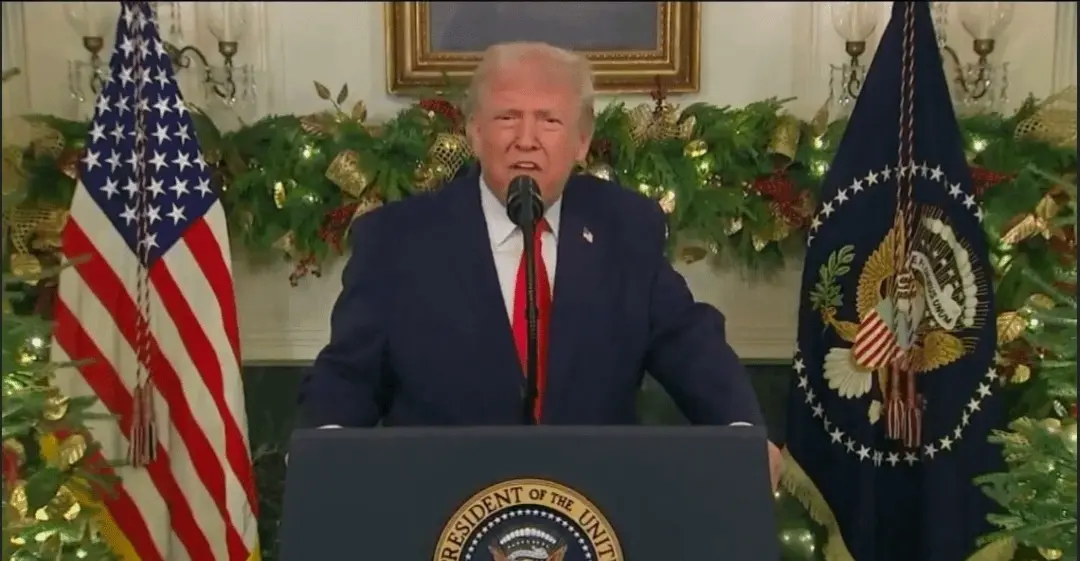
🇺🇸During a live announcement, President Trump said a massive tax cut is on the way — not just any cut, but what he called the biggest in U.S. history. That alone would turn heads, but what really caught people off guard was the claim that American households could keep around $20,000 more every year.
That’s the kind of number that makes people pause and think. For some, it means breathing room — paying off debt, saving more, maybe finally getting ahead. For others, it signals something even bigger: a push to supercharge the economy.
Markets love this kind of talk. Lower taxes usually mean more spending, more investment, and more momentum across businesses. You can almost feel the optimism building, even before anything officially kicks in.
Of course, big promises always bring big questions. People will want to know how it’s funded, who benefits the most, and what it really looks like in practice. But right now, the headline alone is enough to spark conversations everywhere.
Whether this becomes reality or not, one thing is certain — moments like this grab attention, shift expectations, $20Kand get everyone watching what happens next.
#GatePreIPOsLaunchesWithSpaceX #Gate13thAnniversaryLive
$ETH $BTC $AAVE
repost-content-media
  • Reward
  • Comment
  • Repost
  • Share
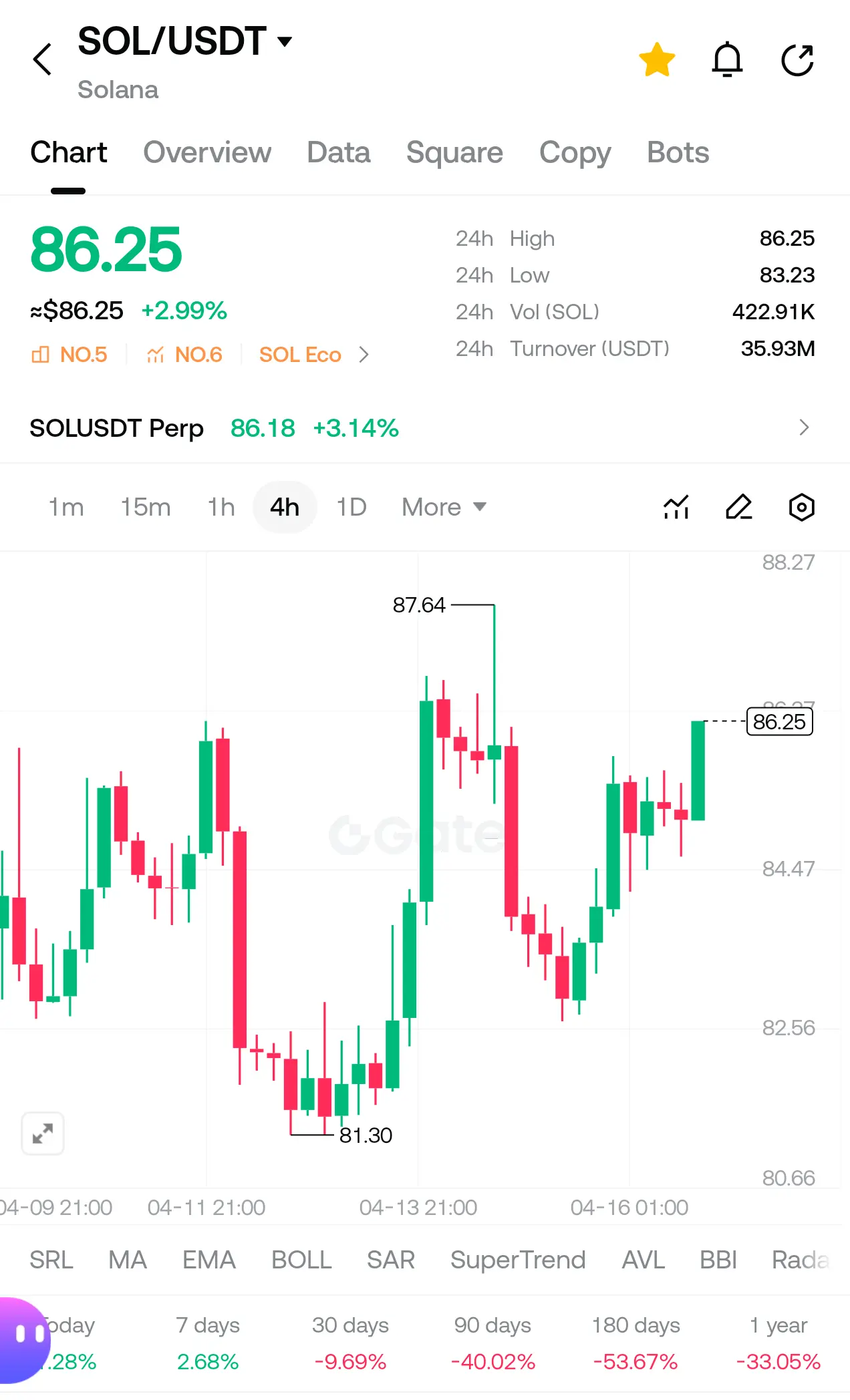
SOL has recently experienced significant fluctuations. You can follow the trades, but avoid full positions, especially around 87.6, as false breakouts are common.
SOL-3,21%
View Original
MarcusCorvinus
$SOL bullish recovery, structure turning strong
I’m seeing a clean bounce from 81.3 and price reclaiming higher levels.
Momentum is building again after the dip.
Entry : 85 – 86
Target : 88 → 92
Stop Loss : 82.5
How it’s possible :
Liquidity grabbed below 82 → strong reaction → now higher lows forming.
If 87.6 breaks, continuation accelerates.
I’m bullish while this recovery holds.
Let’s go and Trade now $SOL ‌
repost-content-media
  • Reward
  • Comment
  • Repost
  • Share
Recently, I've been translating updates from several NFT marketplaces again. The old topic is still about how secondary market royalties are "enforced." To put it simply, many protocol layers can only provide prompts or recommendations; if forced, it either gets bypassed or patched in a way that ruins the user experience. Creators naturally want ongoing income, but buyers also think: Why should I passively pay an extra layer of tax? Especially when liquidity cools down, everyone runs faster than anyone else.
Watching this, I always think of the current "yield stacking" model of staking and sha
View Original
  • Reward
  • Comment
  • Repost
  • Share
If we can break through higher highs and lower lows, taking profit step-by-step at TP1/2/3 feels quite comfortable.
View Original
LedgerBull
$XRP3S showing reactive strength after sharp downside extension.
Structure attempting recovery with buyers stepping in at demand.
EP
0.52100 - 0.52650
TP
TP1
0.53300
TP2
0.54000
TP3
0.54800
SL
0.50800
Liquidity sweep below recent lows triggered a strong reaction, and price is now pushing back into prior range. Any pullback into the entry zone looks like absorption, with structure shifting toward a relief continuation if higher lows start forming.
Let’s go $XRP3S ‌
  • Reward
  • Comment
  • Repost
  • Share
A bearish structure at a glance, look for a pullback to retest.
View Original
LedgerBull
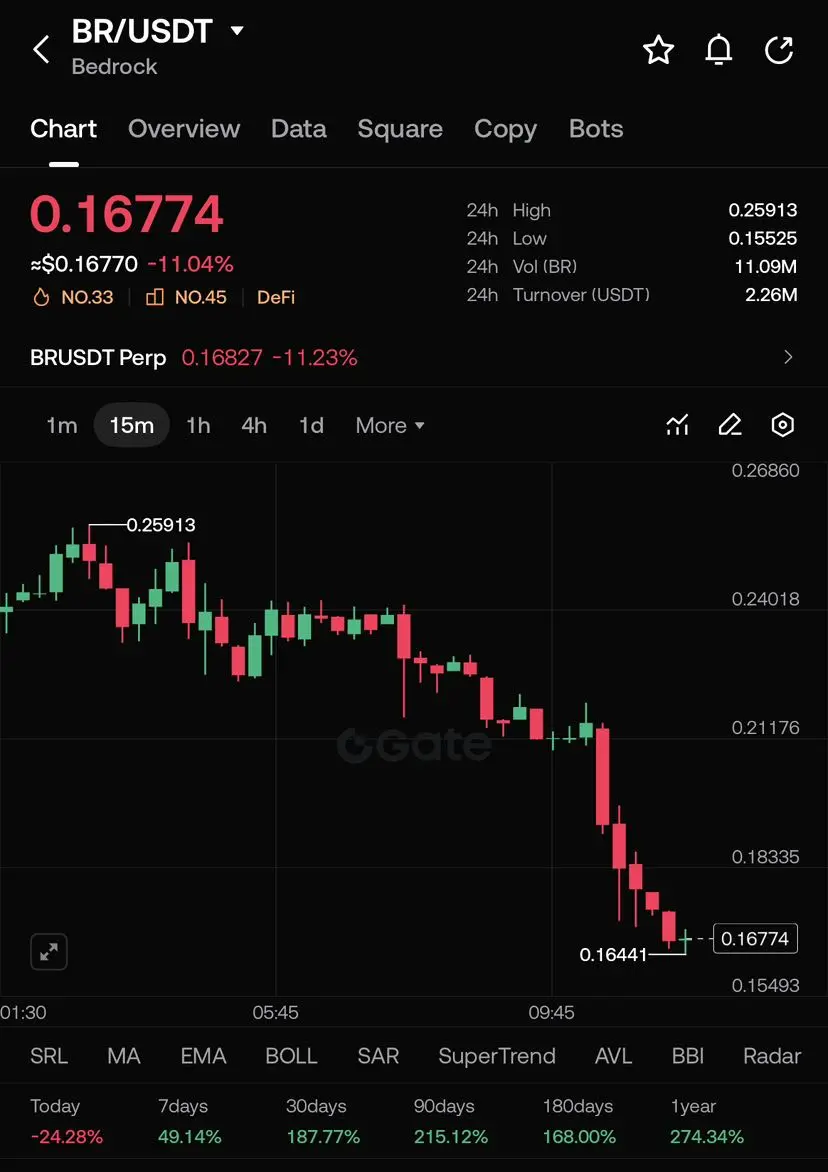
$BR showing strong bearish momentum with continuous lower highs and lower lows.
Structure is weak after a sharp breakdown, with price now attempting a minor bounce from 0.1644.
EP
0.165 - 0.175
TP
TP1 0.155
TP2 0.140
TP3 0.120
SL
0.185
Price is reacting after heavy sell pressure, but trend remains bearish. Liquidity sits below recent low — expect continuation if sellers stay in control, while any upside is likely a relief bounce unless structure shifts.
Let’s go $BR ‌
repost-content-media
  • Reward
  • Comment
  • Repost
  • Share
Do you think clicking "Confirm" means the transaction goes through immediately?
Actually, most of the time it just goes into the mempool queue: if you set a low gas fee, you'll be pushed to the back, and during congestion, it might even be replaced by someone else with the same nonce, or get stuck for half a day and finally be dropped by the node... You only see "pending" on your side; on the blockchain, miners/packagers are choosing the more profitable transactions. To put it simply, if you're in a hurry, just raise the gas or directly accelerate/cancel; if you're not in a rush, don't keep
View Original
  • Reward
  • Comment
  • Repost
  • Share
Someone said, "Delegated voting is just about increasing participation," and I can't help but laugh... Honestly, once delegation opens up, who exactly is the governance token really governing? In the end, it often ends up governing those few large institutional or resident addresses. Ordinary people are too lazy to read proposals and just hand their votes over to "the knowledgeable," but even the knowledgeable may not care about your risk preferences—they only care whether their proposed change can pass.
Not to mention recent issues with cross-chain bridges and oracles reporting outrageous pri
View Original
  • Reward
  • Comment
  • Repost
  • Share
Summarize in one sentence: First look at TIPS and DXY, then talk about bottoming out BTC; otherwise, it's just a direct confrontation with macroeconomics.
BTC-2%
View Original
BraveBullsAreNotAfra
What is the true impact of the central bank selling U.S. Treasuries on the crypto market?
Let's start with the conclusion: the impact is real, but not direct—it propagates through the chain of "yield → liquidity → risk appetite" into the crypto market.
1. Transmission Path: How does the central bank's sale of U.S. Treasuries affect BTC?
First step: Treasuries are sold → yields rise. When the central bank reduces its holdings of Treasuries, bond prices fall, and yields go up correspondingly. The 10-year U.S. Treasury yield is the "anchor" for global risk pricing; when it rises, the relative attractiveness of all risk assets declines.
Second step: Higher yields → pressure on crypto assets. If yields stubbornly stay high (recent data shows the 10-year yield above 4%), the opportunity cost of holding "zero-yield" assets like BTC increases—your money in Treasuries earns a steady return, so why take risks on buying coins? This directly suppresses BTC valuation logic.
Third step: Dollar appreciation → further pressure on crypto. If, after selling bonds, some central banks switch to holding cash in dollars, it can temporarily boost the dollar index, and historically, a strong dollar often correlates negatively with crypto asset performance.
2. Recent real-world cases confirm this logic—In March 2026, after the Fed adopted a hawkish stance and hinted at slowing rate cuts, BTC dropped 5% in a single day, and the entire crypto market lost over $100 billion in market cap, with over $117 million BTC being sold from OG addresses in one day.
In late March 2026, the 10-year Treasury yield approached a high of 4.5% for the year, and Bitcoin simultaneously fell below $68,000. The movement of these data points was almost synchronized.
3. However, an important counter-narrative deserves attention: not all central bank bond sales are bearish for crypto.
Recent data shows that emerging markets like China and India have indeed been reducing their U.S. debt holdings (China has reduced about $71.5 billion in the past two years), but at the same time: private buyers have stepped in to buy, and foreign holdings have actually increased from $8.77 trillion to $9.25 trillion; gold demand hit record highs, interpreted as "de-dollarization and diversified allocation"; some analyses suggest that this macro anxiety (fiscal risks, geopolitical tensions, expectations of a weaker dollar) could be long-term bullish for BTC’s "hard asset" narrative—since some are starting to see BTC as a tool to hedge against sovereign currency risks.
But it’s important to emphasize: this narrative is currently more "emotional resonance" than quantifiable capital inflow, and empirical data backing it is not yet solid.
4. Key variable: How to interpret rising yields?
There’s a subtlety here—how the market perceives rising yields determines BTC’s direction:
- If rising yields are seen as inflation expectations heating up (real yields low), it’s bullish for BTC, strengthening its inflation hedge narrative.
- If yields are driven by liquidity tightening (real yields high), it’s bearish, as the cost of holding zero-yield assets increases.
Currently, the environment leans more toward the latter, so short-term bond sell-offs pushing yields higher generally create a bearish macro backdrop for crypto.
5. Bottom-line short-term judgment:
If large-scale bond sales push U.S. Treasury yields higher and strengthen the dollar, the crypto market is likely to face short-term pressure, with BTC and high-beta altcoins falling more than gold.
In the medium to long term: if this bond sell-off is interpreted as a signal of "de-dollarization + fiscal unsustainability," it could actually reinforce BTC’s scarcity narrative and attract some long-term capital.
Variable monitoring: Keep an eye on the 10-year real yield (TIPS) and the dollar index DXY, as they are the most direct leading indicators.
Markets are not monolithic; how macro signals are interpreted often matters more than the signals themselves.
This is also what makes the crypto market the most challenging and interesting.
  • Reward
  • Comment
  • Repost
  • Share
  • Pin