EraPuzzleMaster

vip
Age 0.1 Yıl
Peak Tier 0
No content yet
Lately, I’ve been looking at governance votes for a few protocols again—they say it’s “the community decides.” But when I clicked in, I saw delegated votes layered on top of delegated votes, until in the end it still came down to just a few people’s signatures carrying the most weight… It’s not that they’re necessarily bad, but if this kind of structure goes on long enough, it starts to feel rather oligarchic. In the end, who is the governance token really governing? Plainly speaking, it may be governing the people who “don’t have time” first.
What’s more awkward is that everyone still loves t
View Original
  • Reward
  • Comment
  • Repost
  • Share
Lately, I keep hearing people talk about “modular blockchains.” Honestly, for someone like me—a terminal user—my first impression isn’t “more advanced technology,” but this: in the future, I might not have to keep staring at which “chain” things are on. The experience may feel more like using an application itself. For example, when transferring funds, minting, or doing a small task—what gets settled in the background, where the data is stored—ideally, none of that should be my concern… I just care that it doesn’t lag, doesn’t cost too much, and doesn’t fail all the time.
But the other side is
View Original
  • Reward
  • Comment
  • Repost
  • Share
I just checked my holdings and suddenly realized: grid/DCA strategies that "take it slow" are actually buying sleep; a single all-in trade is driven by emotion—feeling great when it rises, then writing little inner monologues when it falls. Honestly, it's not that I’m afraid to go all-in, but I don’t want to stare at candlesticks until midnight every day, and when the interest rates or risk appetite change the next day, I start doubting myself... Anyway, I now prefer to break my positions into smaller parts, leaving a little bit for that "itchy" feeling of wanting to trade. Recently, social mi
View Original
  • Reward
  • Comment
  • Repost
  • Share
The correct direction for pushing forward together: product, community, implementation.
View Original
CryptoRevolutionMaster
Let's keep building together 🔥💪
repost-content-media
  • Reward
  • Comment
  • Repost
  • Share
Core vault/satellite vaults are really suitable for now; don't go all-in on a single piece of news.
View Original
Furan86999
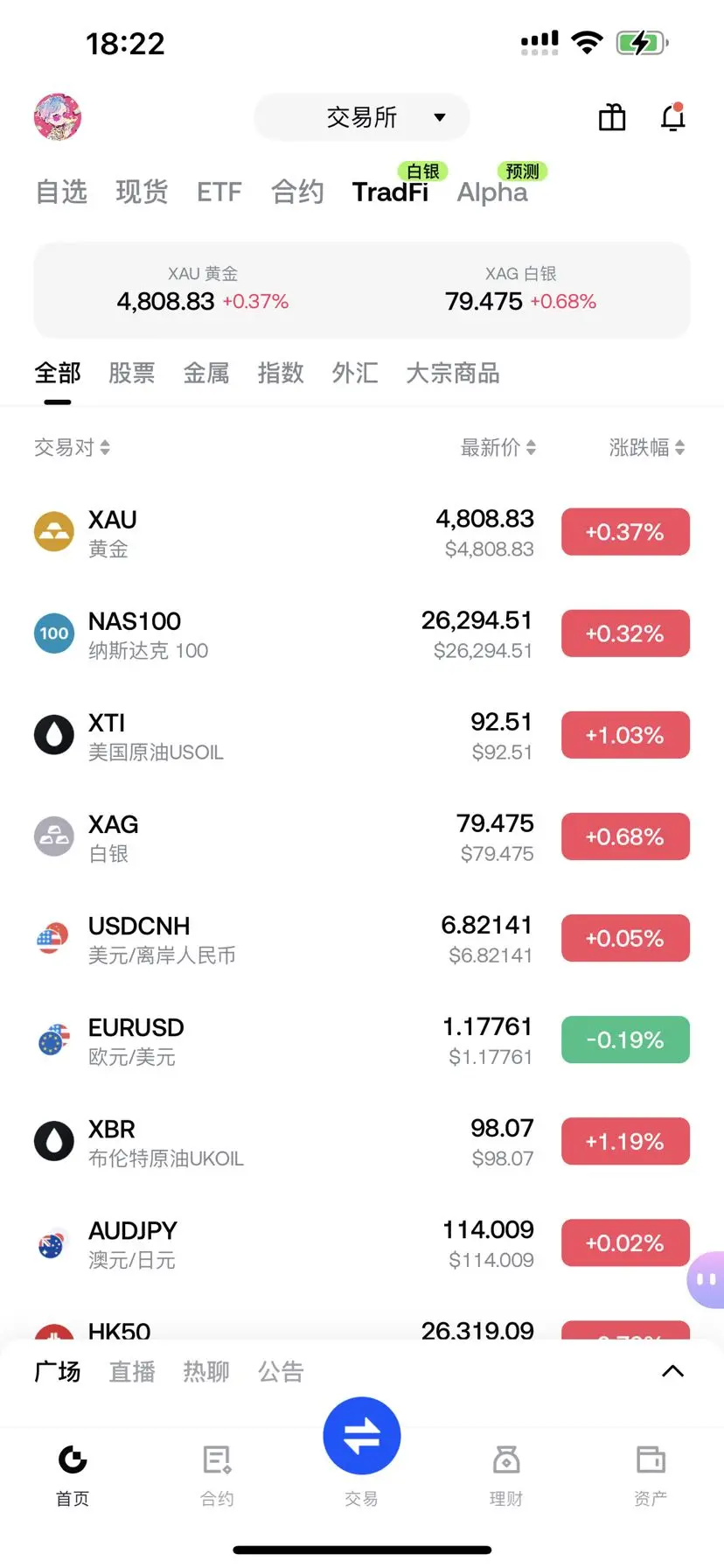
What does this situation between Iran and the U.S. look most like right now? It’s like one side is talking about “reconciling today,” while the other raises their fists even higher. Diplomats shuttle back and forth and try to mediate in Tehran, but the Pentagon reports actions of troop increases and redeployments. As the April 21 “ceasefire deadline” gets closer, the market feels more like it’s playing an emotional betting game: the S&P hits new highs, risk assets rebound, and even crypto gets excited along with it. The problem is— is this dawn, or a lure to buy before the storm?
First, lay out the core contradiction clearly: whether the so-called talks can succeed is not about whether people are willing to shake hands, but whether both sides can find a plan that they can both explain to their people internally on hard conditions such as uranium enrichment timeframes, restrictions on nuclear activities, and the easing of sanctions. Economic interests are naturally the catalyst—everyone wants oil prices not to run wild, inflation not to come back, and capital not to flee. But don’t ignore the other side: troop increases, deterrence, and red-line statements are also bargaining chips on the negotiation table. In many cases, the closer you get to the deadline, the bigger the moves become— which actually shows that both sides are stepping up and probing by adding more.
The logic behind the market’s preemptive celebration isn’t complicated: it’s betting on “the most comfortable script”—talks succeed, oil prices fall, inflation pressure eases, rate-cut expectations become more stable, and risk assets keep rising. But the point at which the market is most likely to lose money is exactly this: expectations are running ahead of reality. When everyone is talking about talks, and the price has already priced in “successful negotiations,” at the moment it truly lands, a typical “good-news realization” may occur— it may not be a trend reversal, but short-term pullbacks and taking profits are almost certain events. Conversely, if negotiations don’t advance as expected, or sudden breaking news sparks a close call, the market will instantly switch to another script: oil prices jump, the dollar strengthens, and risk assets retreat collectively— you’ll see “the same group of people shift from optimism to panic at the same speed.”
How should you allocate during that period of turbulence? I’ll give you a more practical “three-tier approach”—not aiming for a single decisive answer, only for something steadier:
First tier: keep cash/keep rounds.
The most valuable thing in a volatile period is liquidity. Don’t put all your positions in at once; leave room to respond to unexpected volatility, so you won’t be forced to cut losses due to emotion.
Second tier: separate a core position from a satellite position.
The core position is more defensive: large-cap assets, cash-like allocations, and low-volatility positioning, with the goal of withstanding volatility. The satellite position is more offensive: thematic assets and flexible assets, using smaller positions to chase expectations. Separating “wanting to make more” from “not being allowed to lose big” makes your mindset much more comfortable.
#美伊局势和谈与增兵博弈 #美股创下历史新高
repost-content-media
  • Reward
  • Comment
  • Repost
  • Share
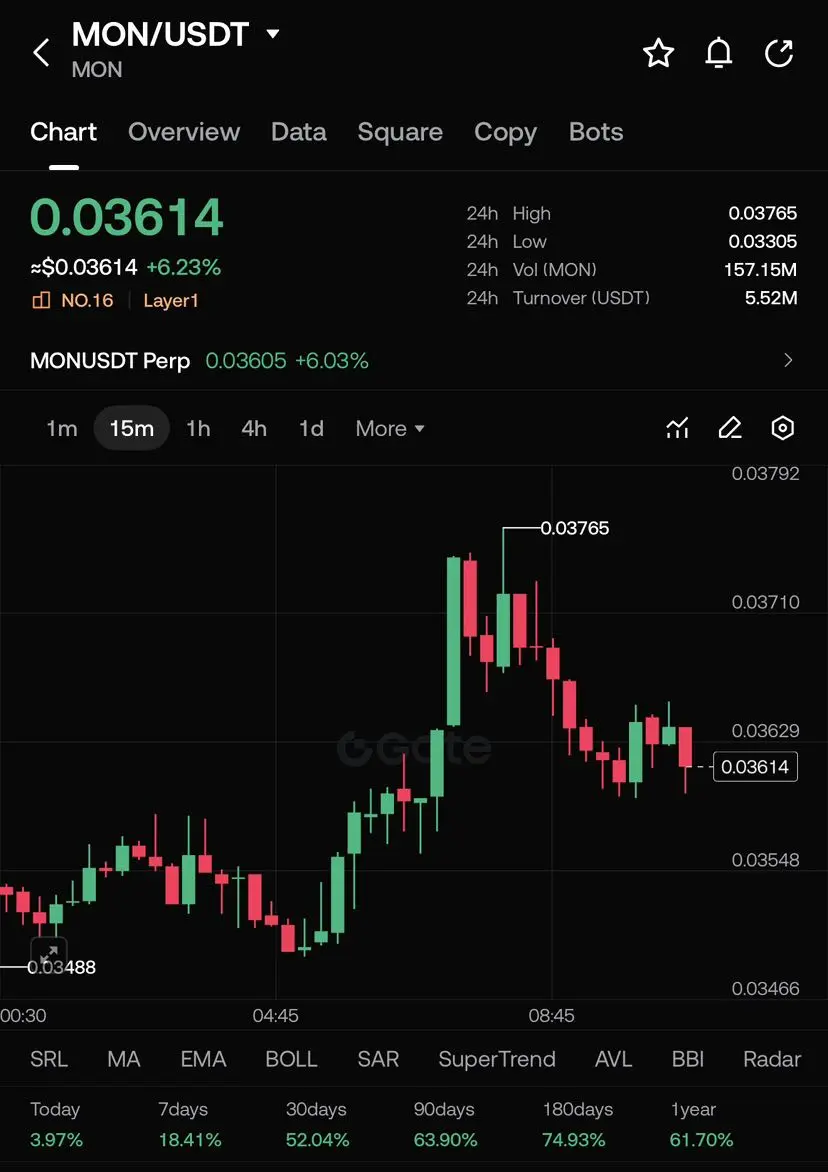
Note SL 0.0344, don't fight the trend, discuss TP only after the trend is confirmed.
View Original
LedgerBull
$MON showing steady momentum after a clean breakout, now consolidating below resistance.
Structure remains bullish with higher lows forming, while price cools after the push to 0.03765.
EP
0.0355 - 0.0362
TP
TP1 0.0378
TP2 0.0395
TP3 0.0420
SL
0.0344
Price is ranging just below resistance with liquidity resting above 0.03765. A breakout and retest could trigger continuation, while downside is supported by prior consolidation zone.
Let’s go $MON ‌
repost-content-media
  • Reward
  • Comment
  • Repost
  • Share
I used to think that on-chain transactions were simply "who clicks first, who completes first," a straightforward sense of fairness.
Now, after learning about MEV and transaction ordering, I realize that many times it's others who help you "arrange the sequence"—the profit from cutting in line isn't just taken from someone else; more often, it's quietly erasing ordinary people's slippage, transaction prices, or even a trade that could have gone through.
To put it simply, the biggest influence isn't the big players (they'll use smarter routing), but those who just want to save effort and cl
View Original
  • Reward
  • Comment
  • Repost
  • Share
Over the past couple of days, I’ve been scrolling through task platforms, and it really has that vibe of “clocking in to work”: sign in every day, do some interactions, take screenshots to submit assignments, and keep an eye on the ratings while watching participants go offline one by one. Before, it was like grabbing loose fur—if you were lucky, you could get a bite. Now it feels more like performance evaluation, with one layer of witch rules after another, and it makes people start instinctively calculating, “Will I get judged for doing this?”—and their mindset gets tense, too.
I can underst
View Original
  • Reward
  • Comment
  • Repost
  • Share
  • Pin