BabaJi

vip
Age 1 Yıl
Peak Tier 5
No content yet
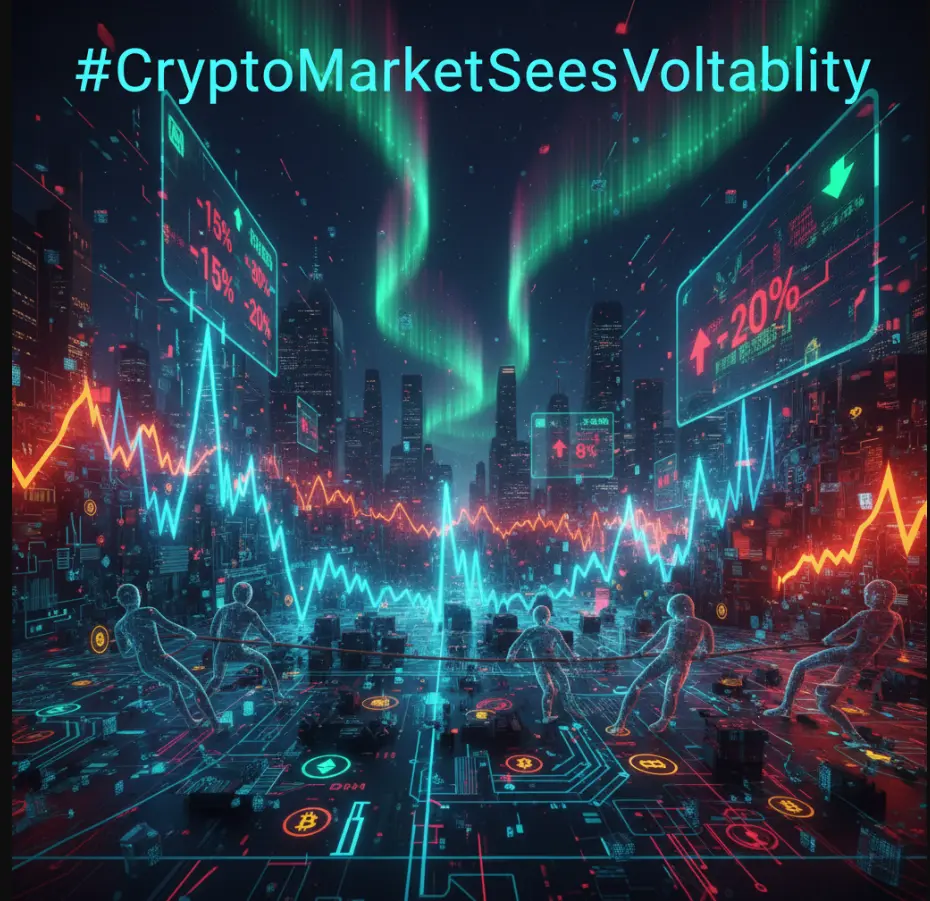
📊 #CryptoMarketSeesVolatility — Reality Check
Crypto market is back in a high-volatility regime, not a trendless phase
⚠️ What’s driving swings:
• Geopolitical headlines shifting risk sentiment
• Liquidity + ETF flow uncertainty
• Derivatives leverage building up
• Altcoins reacting stronger than BTC
📉 BTC & ETH remain relatively stable, but altcoins are amplifying moves as capital rotates fast
🧭 Market truth:
This isn’t random chaos — it’s a liquidity + macro reaction cycle where every headline gets overpriced
BTC-0,09%
ETH-0,12%
DragonFlyOfficial
📊 #CryptoMarketSeesVolatility — Smart Traders See Opportunity, Not Fear
The crypto market is once again showing strong volatility, and this is exactly where disciplined traders separate themselves from emotional traders.
Bitcoin and Ethereum are moving in sharp waves, while altcoins are reacting even faster due to lower liquidity and leverage pressure. Recent market data shows the broader crypto market cap near $2.39 trillion, with BTC dominance still leading the market structure. ()
But volatility does not automatically mean danger.
It means opportunity with risk control.
Here’s what smart traders should focus on:
✅ key support and resistance zones
✅ confirmation candles before entry
✅ stop-loss discipline
✅ controlled leverage
✅ no revenge trading
Most retail traders lose during volatile phases because they chase candles and enter based on emotions.
Professional traders do the opposite.
They wait for liquidity sweeps, breakout confirmation, and volume expansion.
Current market movement suggests this is more of a repositioning phase rather than panic selling, where large players are testing liquidity before the next trend direction becomes clear. ()
My focus in this phase is simple:
protect capital first, trade only high-probability setups second.
Volatility is not the enemy.
Poor risk management is.
#CryptoMarketSeesVolatility
repost-content-media
  • Reward
  • 1
  • Repost
  • Share
ybaser:
Just charge forward 👊Just charge forward 👊
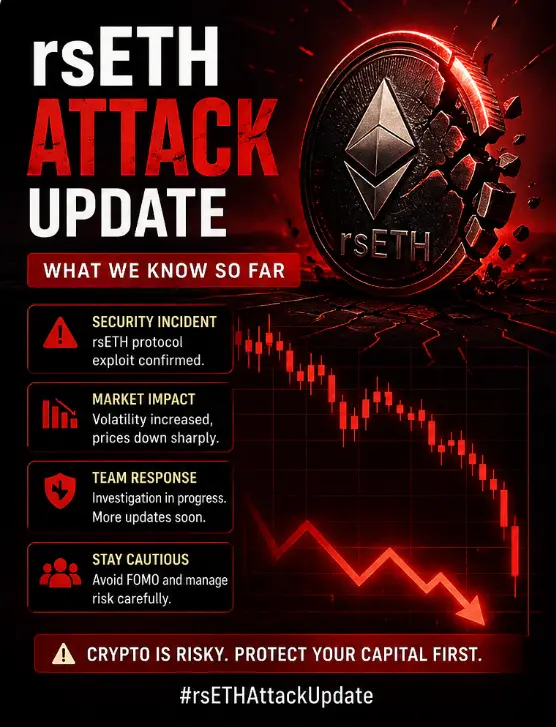
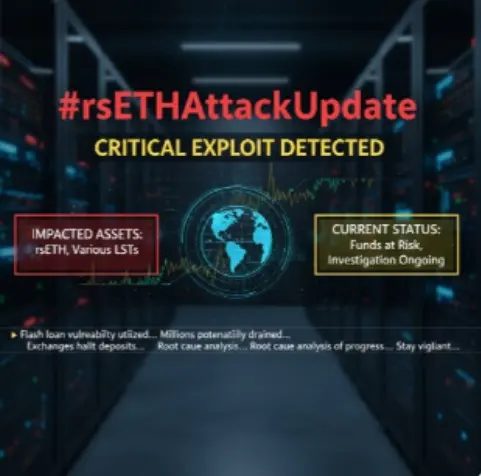
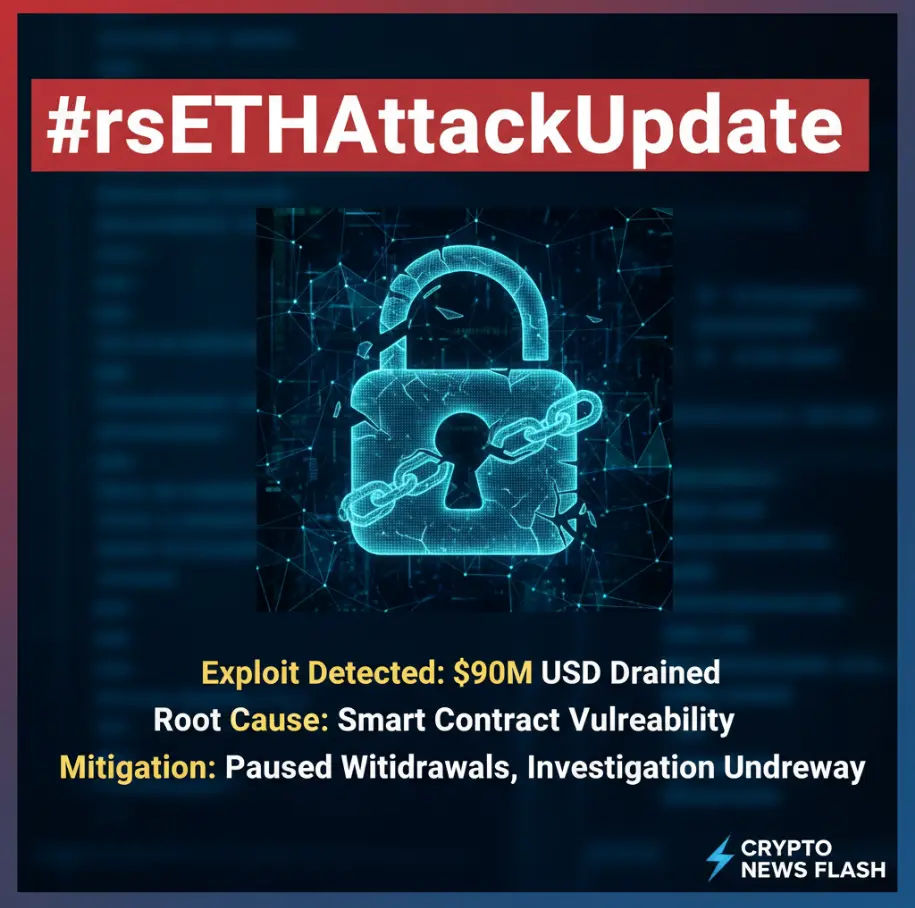
📊 #rsETHAttackUpdate — KelpDAO Bridge Exploit Explained (Reality Only)
This is not a normal “DeFi hack” — it’s a cross-chain infrastructure failure attack targeting trust layers, not smart contracts
⚠️ What happened:
• ~116,500 rsETH drained (~$290M+)
• Attack targeted LayerZero bridge verification layer
• Fake cross-chain message approved via single-point DVN
• Funds then used as collateral on lending protocols
📉 Why it matters:
• On-chain transactions looked completely valid
• Problem was OFF-chain verification manipulation
• Created massive downstream bad debt across DeFi
🧠 Core truth:
T
ZRO-4,06%
DragonFlyOfficial
🚨 #rsETHAttackUpdate — Market Reacts to Security Concerns
The latest rsETH update has created fresh volatility across the market, and traders are closely watching how liquidity and sentiment respond.
Whenever the market reacts to attack-related news, the first impact is usually seen in confidence, liquidity flow, and leveraged positions.
This is exactly why disciplined risk management matters.
Smart traders should focus on:
✅ avoiding emotional entries
✅ waiting for trend confirmation
✅ reducing leverage during uncertainty
✅ protecting capital with strict stop loss
News-driven volatility often creates sudden fake moves.
The market may first overreact, then stabilize once more details become clear.
For now, the best approach is to trade only confirmed setups and avoid panic decisions.
Events like this remind us that security updates and protocol trust directly affect price action.
Capital protection comes first.
#rsETHAttackUpdate
#CryptoTrading
repost-content-media
  • Reward
  • 1
  • Repost
  • Share
ybaser:
Just charge forward 👊Just charge forward 👊
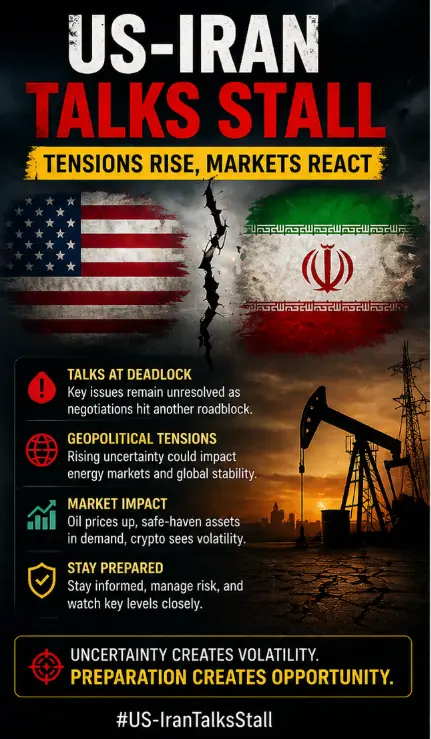
📊 #US-IranTalksStall — What Market Misses
Talks between the US and Iran are stuck again — but this isn’t just diplomacy failure, it’s a strategy deadlock
⚠️ Core reality:
• No trust between both sides
• Sanctions relief vs nuclear limits still unresolved
• Backchannel diplomacy not producing results
📉 Why it matters:
• Geopolitical risk stays elevated
• Energy markets stay sensitive
• Any headline can trigger sharp volatility
🧭 Key insight:
Stall doesn’t mean peace — it means tension is being stored, not solved
DragonFlyOfficial
#US-IranTalksStall
US–Iran Talks Stall: What It Really Means for Markets, Energy, and Global Risk Sentiment
The breakdown or slowdown in US–Iran diplomatic progress is not just a political headline—it’s a direct trigger for volatility across global energy markets, crypto sentiment, and risk appetite in trading ecosystems. When negotiations stall between two geopolitical powers with influence over the Middle East, the market doesn’t wait for confirmation. It prices fear first, and clarity later.
From a trader’s perspective, this is not about taking sides. It is about understanding liquidity shocks, volatility expansion, and sentiment rotation.
1. Why stalled talks matter more than “bad news”
Markets don’t react equally to all geopolitical developments. A stalled negotiation is often more destabilizing than an outright failure because:
It removes clarity without providing resolution
It keeps sanction risk alive
It increases speculation instead of reducing it
It creates “headline-driven spikes” instead of structured trends
This environment typically leads to:
Sudden oil price swings
Crypto volatility spikes (especially BTC correlation breaks)
USD strength fluctuations
Safe-haven demand (gold, bonds)
In simple terms: uncertainty becomes the product being traded.
2. Energy markets: the real pressure point
Any US–Iran tension immediately feeds into crude oil pricing psychology because Iran remains a key player in global oil supply dynamics.
What usually happens in stalled talks:
Traders price in potential export constraints
Shipping and Strait of Hormuz risk premiums increase
OPEC+ expectations get re-evaluated
Energy futures become sentiment-driven, not demand-driven
Even without actual supply disruption, “fear of disruption” is enough to move markets aggressively.
This is where many retail traders misjudge the move—they wait for fundamentals, while institutions trade positioning shifts.
3. Crypto market reaction: indirect but sharp
Crypto does not react to geopolitics directly—it reacts through liquidity and dollar strength.
When US–Iran tensions rise:
Risk-off sentiment strengthens → BTC often becomes unstable
Altcoins suffer faster drawdowns due to liquidity thinning
Stablecoin inflows increase temporarily
Derivatives funding rates become erratic
But here is the critical truth most ignore:
Crypto rallies can still happen during geopolitical tension—but only when liquidity expansion overrides fear.
If dollar strength rises simultaneously, crypto usually struggles regardless of internal narratives.
4. Institutional behavior: what smart money actually does
Large players don’t react emotionally—they reposition.
During stalled geopolitical talks, institutions typically:
Hedge exposure in energy and FX markets
Reduce leverage in high-beta assets
Rotate into cash, gold, or short-duration instruments
Wait for policy confirmation, not headlines
This creates a “silent liquidity vacuum” in retail-heavy markets like altcoins.
That vacuum is where most retail traders get trapped.
5. Market psychology: the hidden driver
The most dangerous part of stalled negotiations is not the event itself—it is expectation fatigue.
You see this pattern:
Initial fear spike
Partial stabilization
Conflicting headlines
False breakout attempts
Liquidity trap moves
This cycle destroys overleveraged positions more than the actual geopolitical outcome.
If you are trading this environment, you are not trading direction—you are trading reaction speed.
6. Key risk zones for traders
In environments like this, the biggest mistakes are predictable:
Overusing leverage during headline volatility
Assuming “no war = safe market”
Ignoring USD strength correlation
Trading altcoins as if they are isolated assets
Chasing breakout moves without confirmation volume
The market often fakes direction before real positioning begins.
7. Strategic outlook (practical, not emotional)
A disciplined approach in this scenario is simple:
Focus on liquidity, not narrative
Wait for confirmation after news shocks
Prioritize major pairs over low-cap volatility
Reduce leverage until trend clarity returns
Treat spikes as distribution zones unless proven otherwise
This is not a “predict the news” environment. It is a “survive volatility and capitalize on structure” environment.
8. Final perspective
“US–Iran Talks Stall” is not a single event—it is a volatility regime.
Markets will continue to oscillate between fear pricing and correction phases until either:
Clear diplomatic resolution emerges
or
A material escalation changes supply-risk assumptions
Until then, every spike is temporary, and every dip is conditional.
Dragon Fly Official perspective: The real edge is not predicting geopolitical outcomes—it is staying positioned correctly while others get forced out by noise.
Risk Warning (Trading Context)
This environment carries elevated volatility risk. Price movements may be sharp, fast, and liquidity-dependent. Avoid high leverage, avoid emotional entries, and confirm moves with structure and volume before execution. Losses often come from impatience, not analysis failure.
repost-content-media
  • Reward
  • 1
  • Repost
  • Share
ybaser:
Just charge forward 👊Just charge forward 👊
📊 #US-IranTalksStall — Reality Check
United States × Iran talks have stalled again — not because of silence, but because of hard geopolitical positions
⚠️ What’s actually happening:
• Talks in Pakistan-mediated channel failed to progress
• No agreement on sanctions + nuclear + Hormuz access
• Both sides blaming each other for breakdown
📉 Why it matters:
• Diplomacy stuck in “pressure vs refusal” cycle
• Military tension still active in background
• Markets reacting to uncertainty + energy risk
🧭 Market angle:
Stalled talks = higher volatility in oil, gold, and risk assets
DragonFlyOfficial
#US-IranTalksStall
🌍 US–Iran Talks Stall: Market Pressure Builds Beneath the Surface
The stalled diplomatic progress between the US and Iran is not just another geopolitical headline—it’s a slow-burning risk factor that quietly reshapes global market positioning.
What matters here is not the news itself, but the market’s reaction cycle that follows uncertainty.
📉 1. Why markets stay sensitive to this situation
When talks stall, traders don’t wait for confirmation of escalation. They immediately reprice risk.
That leads to:
Higher crude oil volatility expectations
Short-term USD strength fluctuations
Risk-off positioning in equities and crypto
Sudden liquidity shifts in futures markets
This is not directional trading—it’s fear pricing in advance.
⚡ 2. The hidden driver: liquidity repositioning
Most retail traders focus on headlines. Institutions focus on liquidity.
In stalled negotiations:
Funds reduce leverage exposure
Hedging activity increases in energy markets
Capital rotates into safer assets (gold, cash, bonds)
High-beta assets lose momentum even without bad news
The result is a market that looks “calm” but trades unpredictably underneath.
📊 3. Crypto reaction pattern (important)
Crypto doesn’t move on geopolitics directly—it moves on liquidity and dollar strength.
Typical pattern:
Initial fear spike → BTC volatility rises
Altcoins bleed faster due to low liquidity
Funding rates swing sharply
False breakouts appear and trap traders
The biggest mistake?
Thinking crypto is independent of macro risk sentiment.
It is not.
🧠 4. What experienced traders focus on
Instead of predicting outcomes, professionals track:
USD strength direction
Oil volatility expansion
Funding rate instability
Volume confirmation after news spikes
Because in this phase, structure matters more than narrative.
⚠️ Final insight
This isn’t a trend market—it’s a reaction market.
Until clarity returns, price action will remain:
fast
emotional
liquidity-driven
The edge belongs to those who stay patient while others chase every headline.
repost-content-media
  • Reward
  • 1
  • Repost
  • Share
ybaser:
Just charge forward 👊Just charge forward 👊
📊 #USMilitaryMaduroBettingScandal — Reality Breakdown
This isn’t a “random betting rumor” — it’s a real insider-trading-style case linked to a military operation
A U.S. Army Special Forces soldier allegedly used classified info from a Venezuela operation to place prediction market bets on Nicolás Maduro’s removal.
⚠️ What happened (core facts)
• Soldier involved in the Maduro capture operation
• Placed ~$33K in bets on outcome timing
• Turned it into $400K+ profit
• Charged with fraud + misuse of classified information
📉 Why it matters
• First major “prediction market insider trading” case
DragonFlyOfficial
#USMilitaryMaduroBettingScandal
⚠️ US–Military–Maduro “Betting Scandal” Claims: What’s Known vs What’s Noise
Recent online discussions around a so-called “USMilitaryMaduroBettingScandal” are circulating heavily, but at this stage there is no verified evidence or official confirmation that any structured scandal of this nature actually exists.
What is visible is a familiar pattern: when geopolitical names like the US military and Venezuelan leadership are mentioned together, it often triggers rapid misinformation cycles, speculation threads, and narrative trading online.
This is less about confirmed events—and more about how fast rumor-driven sentiment spreads in politically sensitive environments.
🧠 1. Why this type of rumor spreads so quickly
In digital markets and social platforms, three forces amplify stories like this:
High geopolitical sensitivity (US + Venezuela context)
Viral keyword structures (“military”, “scandal”, “betting”)
Algorithmic engagement boosting controversial terms
Even without proof, narratives can gain traction simply because they are emotionally charged.
This creates a dangerous gap between:
what is true vs what is trending
📉 2. Market and sentiment impact (if narratives spread)
Even unverified geopolitical rumors can briefly influence:
Risk sentiment in forex markets
Short-term volatility in oil-related instruments
Crypto “risk-off” reactions
Sudden spikes in safe-haven demand
But these moves are usually:
short-lived
liquidity-driven
quickly corrected once clarity returns
Smart capital does not trade the headline—it trades the confirmation gap.
🧭 3. The real risk: misinformation cycles
The biggest issue here is not the rumor itself—it’s how it evolves:
Unverified claim appears
Social amplification begins
Traders and influencers speculate
Price action reacts temporarily
Reality correction wipes late positioning
This cycle repeats constantly in geopolitics-linked narratives.
⚠️ 4. What traders should focus on instead
Instead of reacting to unconfirmed stories, focus on:
Confirmed geopolitical developments
USD strength direction
Oil volatility structure
Liquidity conditions in risk assets
Actual news from credible agencies
Markets punish emotional entries based on unverified information.
🧩 5. Key takeaway
At this stage, the “USMilitaryMaduroBettingScandal” narrative should be treated as unverified social noise, not a tradable macro event.
The real edge is filtering signal from speculation before positioning capital.
Dragon Fly Official insight: In modern markets, misinformation moves faster than money—but only money decides what survives.
⚠️ Risk Warning
Do not base trading or investment decisions on unverified geopolitical rumors. Such narratives often create short-term volatility traps followed by rapid reversals once facts emerge.
repost-content-media
  • Reward
  • 1
  • Repost
  • Share
ybaser:
Just charge forward 👊Just charge forward 👊
📊 #US-IranTalksStall — Reality Check
Talks didn’t fail randomly — they stalled due to hard positions on both sides
• US canceled key negotiations
• Iran refused pressure-based terms
• No agreement on sanctions & nuclear limits
⚠️ Result:
Diplomacy paused → tension rising → market uncertainty
🧭 Market impact: Oil + geopolitical risk stay elevated
DragonFlyOfficial
#US-IranTalksStall
US–Iran Talks Stall: What It Really Means for Markets, Energy, and Global Risk Sentiment
The breakdown or slowdown in US–Iran diplomatic progress is not just a political headline—it’s a direct trigger for volatility across global energy markets, crypto sentiment, and risk appetite in trading ecosystems. When negotiations stall between two geopolitical powers with influence over the Middle East, the market doesn’t wait for confirmation. It prices fear first, and clarity later.
From a trader’s perspective, this is not about taking sides. It is about understanding liquidity shocks, volatility expansion, and sentiment rotation.
1. Why stalled talks matter more than “bad news”
Markets don’t react equally to all geopolitical developments. A stalled negotiation is often more destabilizing than an outright failure because:
It removes clarity without providing resolution
It keeps sanction risk alive
It increases speculation instead of reducing it
It creates “headline-driven spikes” instead of structured trends
This environment typically leads to:
Sudden oil price swings
Crypto volatility spikes (especially BTC correlation breaks)
USD strength fluctuations
Safe-haven demand (gold, bonds)
In simple terms: uncertainty becomes the product being traded.
2. Energy markets: the real pressure point
Any US–Iran tension immediately feeds into crude oil pricing psychology because Iran remains a key player in global oil supply dynamics.
What usually happens in stalled talks:
Traders price in potential export constraints
Shipping and Strait of Hormuz risk premiums increase
OPEC+ expectations get re-evaluated
Energy futures become sentiment-driven, not demand-driven
Even without actual supply disruption, “fear of disruption” is enough to move markets aggressively.
This is where many retail traders misjudge the move—they wait for fundamentals, while institutions trade positioning shifts.
3. Crypto market reaction: indirect but sharp
Crypto does not react to geopolitics directly—it reacts through liquidity and dollar strength.
When US–Iran tensions rise:
Risk-off sentiment strengthens → BTC often becomes unstable
Altcoins suffer faster drawdowns due to liquidity thinning
Stablecoin inflows increase temporarily
Derivatives funding rates become erratic
But here is the critical truth most ignore:
Crypto rallies can still happen during geopolitical tension—but only when liquidity expansion overrides fear.
If dollar strength rises simultaneously, crypto usually struggles regardless of internal narratives.
4. Institutional behavior: what smart money actually does
Large players don’t react emotionally—they reposition.
During stalled geopolitical talks, institutions typically:
Hedge exposure in energy and FX markets
Reduce leverage in high-beta assets
Rotate into cash, gold, or short-duration instruments
Wait for policy confirmation, not headlines
This creates a “silent liquidity vacuum” in retail-heavy markets like altcoins.
That vacuum is where most retail traders get trapped.
5. Market psychology: the hidden driver
The most dangerous part of stalled negotiations is not the event itself—it is expectation fatigue.
You see this pattern:
Initial fear spike
Partial stabilization
Conflicting headlines
False breakout attempts
Liquidity trap moves
This cycle destroys overleveraged positions more than the actual geopolitical outcome.
If you are trading this environment, you are not trading direction—you are trading reaction speed.
6. Key risk zones for traders
In environments like this, the biggest mistakes are predictable:
Overusing leverage during headline volatility
Assuming “no war = safe market”
Ignoring USD strength correlation
Trading altcoins as if they are isolated assets
Chasing breakout moves without confirmation volume
The market often fakes direction before real positioning begins.
7. Strategic outlook (practical, not emotional)
A disciplined approach in this scenario is simple:
Focus on liquidity, not narrative
Wait for confirmation after news shocks
Prioritize major pairs over low-cap volatility
Reduce leverage until trend clarity returns
Treat spikes as distribution zones unless proven otherwise
This is not a “predict the news” environment. It is a “survive volatility and capitalize on structure” environment.
8. Final perspective
“US–Iran Talks Stall” is not a single event—it is a volatility regime.
Markets will continue to oscillate between fear pricing and correction phases until either:
Clear diplomatic resolution emerges
or
A material escalation changes supply-risk assumptions
Until then, every spike is temporary, and every dip is conditional.
Dragon Fly Official perspective: The real edge is not predicting geopolitical outcomes—it is staying positioned correctly while others get forced out by noise.
Risk Warning (Trading Context)
This environment carries elevated volatility risk. Price movements may be sharp, fast, and liquidity-dependent. Avoid high leverage, avoid emotional entries, and confirm moves with structure and volume before execution. Losses often come from impatience, not analysis failure.
repost-content-media
  • Reward
  • 1
  • Repost
  • Share
ybaser:
Just charge forward 👊Just charge forward 👊
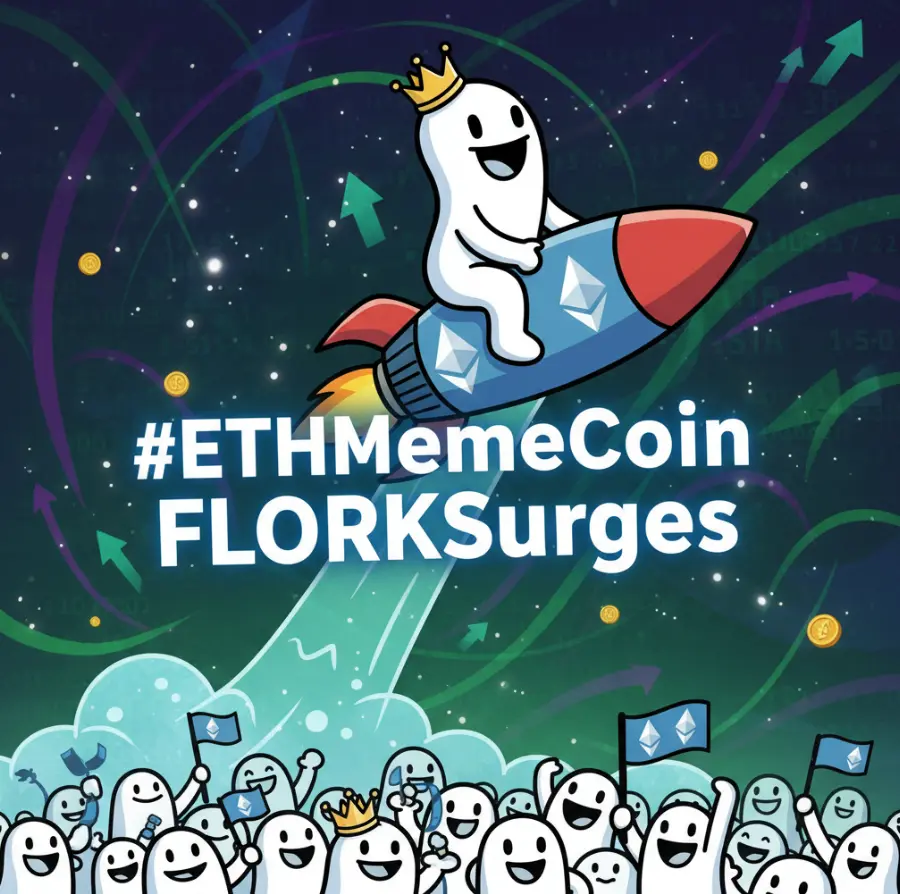
📊 #ETHMemeCoinFLORKSurges — What’s Really Happening
FLORK surge ≠ fundamentals
Driven by:
• Viral exposure on X feature launch
• Pure community + meme momentum
• Low liquidity = explosive moves
🚀 Result: 17x–20x spike in hours
⚠️ Reality:
No utility + hype-driven = extreme risk
🧭 Play smart: Meme coins = timing game, not investing
DragonFlyOfficial
#ETHMemeCoinFLORKSurges
🚀 ETH Meme Sector Update: “FLORK” Surge Highlights Speculative Liquidity Rotation in Crypto Markets
The recent surge in ETH-linked meme assets, led by tokens like FLORK, is not just another hype cycle. It reflects a deeper and more structural behavior in crypto markets: liquidity rotation during uncertainty phases in major assets like Ethereum.
When traders see sudden explosive moves in meme coins, they often assume “new money is entering.” In reality, most of these moves are internal capital rotation—money shifting within the ecosystem rather than fresh inflows.
This distinction matters because it determines whether a rally is sustainable or fragile.
📊 1. What the FLORK surge actually signals
The sharp upside movement in FLORK-style meme tokens is usually driven by:
Low-liquidity amplification (small capital moves large price)
Short-term speculative positioning
Social momentum cycles (not fundamentals)
Derivatives spillover from ETH volatility
Retail chasing breakout candles
But the key insight is this:
Meme coin surges often increase when major assets like Ethereum enter consolidation or uncertainty phases.
When ETH slows down or becomes range-bound, traders search for higher volatility elsewhere. Meme coins become that outlet.
⚠️ 2. Why these surges are misleading for most traders
The biggest mistake retail traders make is interpreting meme rallies as “bull market confirmation.”
In reality, these moves often indicate:
Capital fragmentation
Risk appetite shifting into lower-quality assets
Short-term leverage buildup
Exit liquidity formation for early entrants
This creates a dangerous illusion:
“Everything is pumping, so the market is strong.”
But structurally, it may actually be the opposite—capital is rotating away from high-conviction assets into speculative noise.
🧠 3. Ethereum’s role in this cycle
Ethereum is not just another token—it is the liquidity backbone of the altcoin ecosystem.
When ETH experiences:
sideways movement
reduced volatility
unclear trend structure
Then capital naturally spills into meme sectors.
Why?
Because traders still want movement. If ETH is not moving, they go hunting for volatility.
This is why meme coins often outperform during ETH consolidation phases—but that outperformance is usually short-lived and unstable.
📉 4. The hidden risk behind meme surges
The FLORK-type moves come with structural risks that are often ignored:
1. Liquidity risk
Most meme tokens have thin order books. Large holders can move price dramatically in both directions.
2. Exit liquidity trap
Early buyers distribute into late FOMO buyers. When momentum slows, price collapses quickly.
3. Correlation snap-back
When ETH volatility returns, meme coins typically underperform sharply.
4. Sentiment overextension
Social hype peaks before price peaks—never after.
📊 5. Market psychology behind the surge
The psychology cycle usually follows this pattern:
ETH stabilizes → traders get bored
Meme coin starts moving → attention shifts
Social media amplifies gains
Retail FOMO accelerates entries
Early holders distribute positions
Sharp reversal begins
This cycle repeats constantly across crypto cycles because human behavior does not change.
🧭 6. What smart traders are watching instead
Professionals are not chasing FLORK-style moves blindly. They are tracking:
ETH volatility expansion signals
Funding rate imbalance across meme tokens
Volume sustainability after breakout
BTC dominance shifts (macro liquidity signal)
On-chain flow consistency (not spikes)
Because the real question is not:
“Which meme coin is pumping?”
It is:
“Is this liquidity expansion sustainable or just rotation?”
🧩 7. Strategic interpretation (not hype-driven thinking)
From a disciplined trading perspective, the FLORK surge suggests:
Short-term speculative phase is active
Risk appetite is temporarily elevated
ETH is not currently driving directional momentum
Market is rotating rather than expanding
This is important because rotation phases often end with:
sharp rebalancing
liquidity resets
sudden drawdowns in low-cap assets
🧱 8. Risk framework for traders
If you are participating in this type of market:
Avoid chasing vertical candles
Reduce exposure size in low-liquidity tokens
Treat meme rallies as timed trades, not investments
Always assume distribution is happening during parabolic moves
Respect ETH and BTC structure before alt exposure
Most losses in this phase come from ignoring liquidity mechanics, not wrong predictions.
🧭 Final perspective
The FLORK surge is not a standalone event—it is a symptom of broader market rotation behavior inside the Ethereum ecosystem.
When Ethereum is stable but not trending, capital doesn’t disappear—it moves sideways into higher-risk narratives.
That movement creates opportunity, but also traps.
Dragon Fly Official view: In these conditions, survival is not about catching every pump—it’s about avoiding the collapse that follows overextended rotation cycles.
⚠️ Risk Warning
Meme coin markets are highly speculative and extremely volatile. Prices can reverse sharply without warning due to low liquidity and concentrated holdings. Never use high leverage in these conditions. Most losses occur during late-stage entry, not early-stage opportunity.
repost-content-media
  • Reward
  • Comment
  • Repost
  • Share
📊 #TopCopyTradingScout — Reality Check
Copy trading ≠ guaranteed profit
You’re not copying success — you’re copying risk behavior
⚠️ What matters:
• Drawdown stability > ROI
• Consistency > spikes
• Risk control > win rate
🧭 Smart move: Filter risk, not returns
DragonFlyOfficial
📊 #TopCopyTradingScout — Copy Trading Reality Check (No Hype, Only Edge)
Copy trading sounds easy: follow a “pro”, copy trades, earn passive profit. Reality is different. Most people lose not because copy trading is broken—but because they pick the wrong traders and misunderstand risk structure.
If you want this hashtag to actually perform, you need to position it like a strategy breakdown, not a promise of profit.
🧠 1. The biggest myth in copy trading
Most beginners think:
“If a trader is profitable, copying them = guaranteed profit”
That is wrong.
Even profitable traders can destroy accounts if:
they use high leverage
they have hidden drawdown spikes
they survive on risky martingale behavior
they blow up during volatility events
Copy trading is not copying success. It’s copying risk behavior.
📉 2. What actually matters (not what people check)
Most users check:
ROI %
win rate
total profit
Smart scouts check:
🔴 Drawdown pattern
If drawdown is unstable → account is dangerous even if profitable.
🔴 Trade frequency vs volatility
High frequency + high leverage = liquidation risk over time.
🔴 Recovery behavior
Does trader recover losses aggressively? (big red flag)
🔴 Consistency curve
Slow, stable growth beats explosive spikes.
⚠️ 3. Hidden risk most people ignore
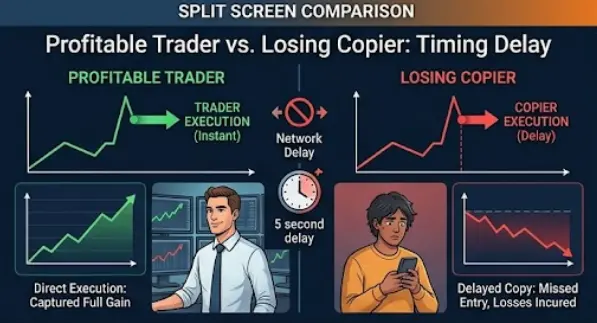
Copy trading fails mainly because of timing mismatch:
Trader enters early
Copier enters late
Exit signals mismatch
Market moves during copy delay
Result:
trader wins, copier loses
This is why “same trades” does NOT mean same results.
🧩 4. Smart selection framework (practical)
Before copying anyone, filter like this:
Minimum 3–6 months verified history
Controlled drawdown (<25–30% ideal)
No extreme leverage spikes
Consistent equity curve (not vertical jumps)
Transparent trade history
If any of these are missing → skip.
There are always more traders. Your capital is not replaceable.
📊 5. Market conditions matter more than trader skill
Even good traders struggle in:
low liquidity phases
sudden macro shocks
sideways chop markets
geopolitical volatility spikes
That’s why copy trading should NEVER be “set and forget”.
It needs monitoring like a portfolio, not automation like a robot.
🧭 6. Strategy mindset (what pros actually do)
Professional copy trading approach:
diversify across multiple strategies
limit exposure per trader
scale in gradually (not full allocation at start)
withdraw profits regularly
stop copying during unstable market regimes
This is portfolio risk management, not gambling.
🚨 Final truth
Copy trading is not passive income.
It is:
risk delegation + execution dependency + timing exposure
If you ignore risk structure, you are not copying a trader—you are copying their worst possible moment.
Dragon Fly Official insight: The edge is not finding “best trader”—it is avoiding worst risk cycles.
repost-content-media
  • Reward
  • Comment
  • Repost
  • Share
#rsETHAttackUpdate rsETH Attack Update: April 26, 2026 On April 18, 2026, at approximately 17:35 UTC, attackers exploited a critical vulnerability in Kelp DAO's LayerZero V2 cross-chain bridge for
ZRO-4,06%
BeautifulDay
#rsETHAttackUpdate
rsETH Attack Update: April 26, 2026
On April 18, 2026, at approximately 17:35 UTC, attackers exploited a critical vulnerability in Kelp DAO's LayerZero V2 cross-chain bridge for rsETH. This incident stands as the largest DeFi exploit of 2026 to date, with approximately 116,500 unbacked rsETH minted and drained—valued at roughly $292-293 million at the time of the attack, representing about 18% of rsETH's circulating supply.
How the Attack Worke
The exploit targeted Kelp's rsETH bridge mechanism, which uses a LayerZero lock-and-mint system. Under normal operation, funds are locked on the source chain and minted on the destination chain, with verification handled by a Decentralized Verifier Network. The vulnerability lay in the Unichain to Ethereum route, which was configured with a single verifier node rather than a multi-signature quorum.
Attackers, attributed to North Korea's Lazarus Group and its TraderTraitor sub-group, compromised two LayerZero Labs RPC nodes. They injected forged data simulating an rsETH burn on Unichain while simultaneously launching DDoS attacks on external RPCs to force failover to their compromised infrastructure. This manipulation tricked the lone verifier into approving a fraudulent LayerZero packet, releasing funds without any actual burn transaction occurring on the source chain.
Importantly, this was not a smart contract bug but rather an off-chain infrastructure attack involving RPC poisoning. The malware employed self-deleted after the exploit. A second attempted attack targeting approximately 40,000 rsETH valued at $95-100 million was successfully blocked by Kelp's emergency pause mechanism.
**Immediate Response and Market Impact**
Within one to two hours of detection, multiple protocols implemented emergency measures. Kelp DAO paused rsETH contracts across Ethereum and all Layer 2 networks while blacklisting attacker addresses. Aave V3 and V4 froze rsETH and wrsETH markets, setting loan-to-value ratios to zero, and later froze WETH on several chains before partially unfreezing Ethereum markets by April 21. Other affected protocols including SparkLend, Fluid, Upshift, Compound, Euler, and Lido similarly paused rsETH-exposed markets.
The attacker deposited 89,567 rsETH worth approximately $221 million as collateral on Aave V3 across Ethereum and Arbitrum, borrowing roughly 82,650 WETH valued at $190.9 million plus 821 wstETH worth $2.3 million. Health factors on these positions hovered between 1.01 and 1.03, indicating extremely leveraged and risky collateralization. Additional smaller deposits were made on Compound V3 and Euler.
The broader market felt significant shockwaves. Approximately $13 billion in total value locked exited DeFi platforms within two days. WETH utilization rates hit 100% on key chains, and rsETH depegged on Layer 2 networks. April 2026's total hack losses reached approximately $606 million, making it one of the costliest months in DeFi history.
**Current Recovery Status**
As of April 26, several positive developments have emerged. The Arbitrum Security Council successfully froze 30,766 ETH worth approximately $71 million from an attacker address on April 21. These funds are now held in a governance-controlled wallet, with coordination ongoing between the council and law enforcement agencies.
DeFi protocols have pledged approximately 43,500 ETH toward restoring rsETH reserves. Aave DAO has proposed contributing 25,000 ETH worth roughly $58 million through a DeFi United fund, which now totals approximately $161 million. Kelp and LayerZero are coordinating recovery efforts, with Aave's Umbrella module holding around $54 million in aWETH being considered as a potential offset mechanism.
Aave's April 20 incident report outlined two primary scenarios for handling potential bad debt. The first involves uniform loss socialization across all rsETH supply, resulting in a 15.12% depeg and approximately $124 million in total bad debt. The second scenario targets L2-only haircuts of 73.54% on remote rsETH holdings, which would create roughly $230 million in bad debt with severe impacts on chains like Mantle facing 71% shortfalls.
LayerZero has deprecated the vulnerable 1-of-1 DVN configuration and replaced compromised RPC infrastructure. They have confirmed no other applications were affected by this specific vulnerability.
**Key Takeaways**
The rsETH exploit highlights critical risks in cross-chain bridge architectures, particularly those relying on single-point-of-failure verification mechanisms and centralized RPC infrastructure. The attack demonstrates how off-chain components can be compromised even when smart contracts themselves are secure.
Ethereum mainnet rsETH remains fully backed by Kelp's staking deposits. The core issue lies in the Layer 2 bridge adapter, where 40,373 rsETH backs 152,577 claims, creating a shortfall of approximately 112,000 rsETH.
Full recovery of the initial $292 million remains unlikely in the near term. Chainalysis and Certik continue tracking fund flows. Aave's treasury of approximately $181 million plus ongoing revenues provide a buffer against realized losses. Both Kelp and Aave governance proposals remain active as the community debates loss allocation mechanisms.
Moving forward, the industry faces pressure to implement multi-DVN quorums, invariant monitoring systems, and comprehensive off-chain infrastructure audits. While restaking TVL has been shaken, Ethereum mainnet staking remains intact. All stakeholders should monitor Aave and Kelp governance forums plus LayerZero post-mortem reports for evolving developments.
repost-content-media
  • Reward
  • 1
  • Repost
  • Share
ybaser:
Just charge forward 👊Just charge forward 👊
📊 #TopCopyTradingScout — Hidden Truth
Copy trading fails slowly — not in one crash
You’re not copying a strategy… you’re copying behavior under pressure
⚠️ Red flags:
• Smooth profits (often hidden risk)
• Small consistent gains (delayed losses)
• Sudden drawdowns in volatility
🧭 Smart move: Focus on risk stability, not ROI
DragonFlyOfficial
📊 #TopCopyTradingScout — Why Most Copy Trading Accounts Fail Quietly (The Hidden Cycle)
Copy trading failures rarely happen in one big crash. They usually die slowly through small, repeated losses that feel “normal” until it’s too late.
This is the part most beginners never understand:
You are not copying a trader’s “strategy” — you are copying their behavior under pressure.
🧠 1. The silent killer: equity curve illusion
Many traders look “stable” on the surface:
smooth profit growth
low visible drawdowns
consistent daily returns
But underneath, what’s often hidden is:
delayed risk exposure
occasional high leverage bursts
recovery trades after losses
This creates an illusion of safety until one market shift breaks the pattern.
📉 2. Why small profits are more dangerous than losses
In copy trading, slow consistent gains can actually be riskier than volatile gains.
Why?
Because it often means:
low stop-loss discipline
over-leveraged hedging systems
delayed exit strategies
So when volatility hits, the system doesn’t adjust — it collapses.
⚠️ 3. The most ignored factor: market regime mismatch
A trader can be profitable in one environment and dangerous in another.
Example:
trending market → high profit
sideways market → small gains
volatile market → sudden drawdown explosion
Copy traders often join during peak performance phase — exactly before regime changes.
That timing mismatch is where most losses happen.
📊 4. Smart capital doesn’t follow returns — it follows stability
Instead of chasing high ROI profiles, experienced allocators focus on:
drawdown consistency over time
risk per trade behavior
survival during volatility spikes
capital preservation patterns
Because in trading:
surviving is more important than growing fast
🧭 5. Practical scout framework (what actually works)
Before copying any trader:
Analyze worst drawdown phase (not best month)
Check behavior during news volatility
Avoid exponential equity spikes
Prefer slow linear growth curves
Start with small allocation first
If a trader cannot survive stress periods, they are not a “copy candidate”.
🚨 Final insight
Copy trading doesn’t fail because of markets.
It fails because people copy results instead of risk structure.
Dragon Fly Official perspective: The real skill is not finding winning traders—it’s filtering out unstable risk systems before they touch your capital.
repost-content-media
  • Reward
  • Comment
  • Repost
  • Share
🚀 #OpenAIReleasesGPT55 — Beyond the Hype
OpenAI shift isn’t just a smarter chatbot — it’s workflow-level AI
• Better reasoning + task continuity
• Faster building for solo devs
• Real impact on content & trading
⚠️ Risk: AI feels right… but can still be wrong
🧭 Edge = verify, don’t blindly trust
DragonFlyOfficial
🚀 #OpenAIReleasesGPT-5.5 — What This Shift Actually Means (Beyond the Hype)
If this release trend is real and widely adopted, it’s not just “a better chatbot update.” It signals a structural shift in how software, content, and even trading tools will be built.
But here’s the important part: most people will overestimate the demo capability and underestimate the real-world constraint layer (cost, latency, reliability, and user misuse).
🧠 1. The real upgrade: from answers → execution thinking
The key improvement you described isn’t just smarter responses. It’s:
better multi-step reasoning
improved ambiguity handling
more stable conversational memory flow
stronger task continuity
This pushes AI from:
“tool that replies”
to
“system that completes workflows”
That changes everything in product design.
⚙️ 2. Why solo developers suddenly look “superhuman”
When one person builds RPGs, physics engines, or complex apps quickly, it’s not magic—it’s compressed labor cycles:
Instead of:
idea → team → prototype → revision → production
It becomes:
idea → AI-assisted architecture → instant iteration → deployment-ready drafts
But the hidden truth:
speed increases, but architectural discipline still matters more than ever
Bad planning still breaks fast systems—just faster.
📉 3. The risk people ignore: dependency inflation
As models become more capable, developers may:
over-rely on generated logic
skip system design fundamentals
trust outputs without validation
build fragile “AI-dependent stacks”
This creates a new problem:
faster production, but weaker understanding of what was built
That’s dangerous in finance, trading tools, and real systems.
🧩 4. The real shift: ambiguity handling is the game-changer
Most models fail not on simple tasks—but on unclear ones.
Improved ambiguity handling means:
better decision continuity in conversations
fewer “broken context” moments
more reliable multi-step workflows
stronger assistant-style collaboration
This is what enables “AI as teammate” behavior instead of “AI as tool.”
📊 5. Impact on content, trading, and creators
For your world (content + trading + automation), this matters more than most people realize:
📌 Content creation
faster script generation
better narrative structuring
automated multi-format repurposing
📌 Trading workflows
faster research synthesis
macro → sentiment → strategy mapping
risk explanation systems
📌 Automation systems
reduced coding dependency
faster prototype cycles
easier testing loops
But again:
speed increases → but noise also increases
⚠️ 6. The hidden danger: “illusion of correctness”
More fluent AI = more convincing wrong answers.
So the risk shifts from:
“AI is slow”
to
“AI is confidently wrong at scale”
That means verification becomes a core skill again—not optional.
🧭 Final perspective
This type of model evolution is not just about capability—it’s about workflow compression. Work that used to require teams now becomes solo-executable, but only for those who can still think structurally.
Dragon Fly Official insight: The real advantage won’t go to people who use AI the most—it will go to those who can still validate, structure, and control AI output under pressure.
repost-content-media
  • Reward
  • Comment
  • Repost
  • Share
📊 #IntelandTexasInstrumentsSurge — Real Story Behind the Chip Rally
This isn’t hype. This is a semiconductor cycle shift.
The recent move in Intel and Texas Instruments is not about one stock pumping — it’s about AI-driven demand reshaping the entire chip sector.
🚀 What’s actually happening?
3 real forces are driving this move:
• Earnings came in stronger than expected
• AI infrastructure demand is expanding beyond GPUs
• The entire semiconductor sector is moving together
This is broad participation, not isolated momentum.
📈 Intel: Comeback + AI Narrative
Intel’s surge is powered by:
• Stro
DragonFlyOfficial
📊 #IntelandTexasInstrumentsSurge — Chip Rally Explained (No Noise, Only Reality)
The recent surge in Intel and Texas Instruments is not random hype—it’s a sector-wide semiconductor re-rating driven by AI infrastructure demand, earnings beats, and improving forward guidance.
But here’s the key truth most people miss:
This is not a “single-stock pump” — it’s a macro chip cycle expansion.
🚀 1. What’s actually driving the surge
Both companies moved higher because of three real catalysts:
🔹 Strong earnings beats
Intel and TI both reported revenue and EPS above expectations
Guidance for next quarter also came in stronger than expected
🔹 AI infrastructure demand spillover
Data centers are expanding aggressively
Demand is not just GPUs anymore—it’s also CPUs, analog chips, and power systems
🔹 Market-wide semiconductor rally
Chip index hitting multi-year highs
Broad sector participation, not isolated movement
📈 2. Intel: turnaround momentum narrative
Intel is leading headlines because of:
strong data center performance
improved CPU demand
better-than-expected revenue growth
AI-driven server upgrade cycle
Its stock jump reflects a turnaround + AI demand combination, not just earnings strength.
But important reality:
Intel is still in a structural recovery phase — volatility will remain high.
⚡ 3. Texas Instruments: silent AI beneficiary
TI is not an “AI hype stock,” but it benefits indirectly:
analog chips used in power management
data center infrastructure components
industrial + automotive recovery
Key driver:
Data center demand spike (~90% YoY growth in segment)
This is why TI moved sharply despite being a “boring” semiconductor company.
🧠 4. What the market is actually pricing in
This rally is pricing:
AI infrastructure buildout (not just software AI)
multi-year semiconductor recovery cycle
improved capex visibility from big tech
easing inventory pressure in industrial chips
But here’s the critical risk:
Expectations are now moving faster than actual earnings delivery.
That’s where corrections usually start.
📉 5. Hidden risk traders are ignoring
Even strong rallies like this carry structural risk:
valuation expansion already baked in
earnings expectations rising too fast
geopolitical + macro sensitivity still active
sector becomes over-crowded quickly
When positioning becomes too one-sided:
even good news stops moving price higher
🧭 Final insight
This is not a “buy everything chip stock” environment. It is a:
AI-driven semiconductor re-pricing phase with elevated volatility risk
Intel represents turnaround momentum, while Texas Instruments represents steady industrial AI exposure.
Both are strong—but for different risk profiles.
Dragon Fly Official perspective: The edge is not entering the surge—it’s understanding when the surge becomes over-positioned.
repost-content-media
  • Reward
  • 1
  • Repost
  • Share
FenerliBaba:
2026 GOGOGO 👊
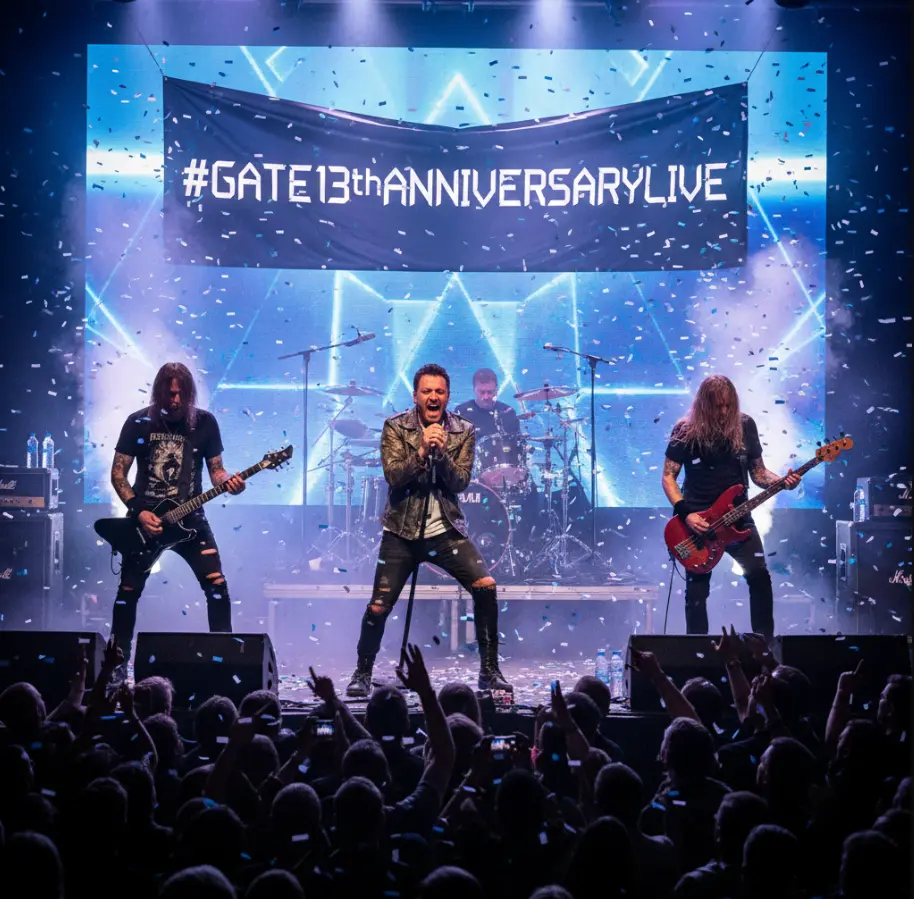
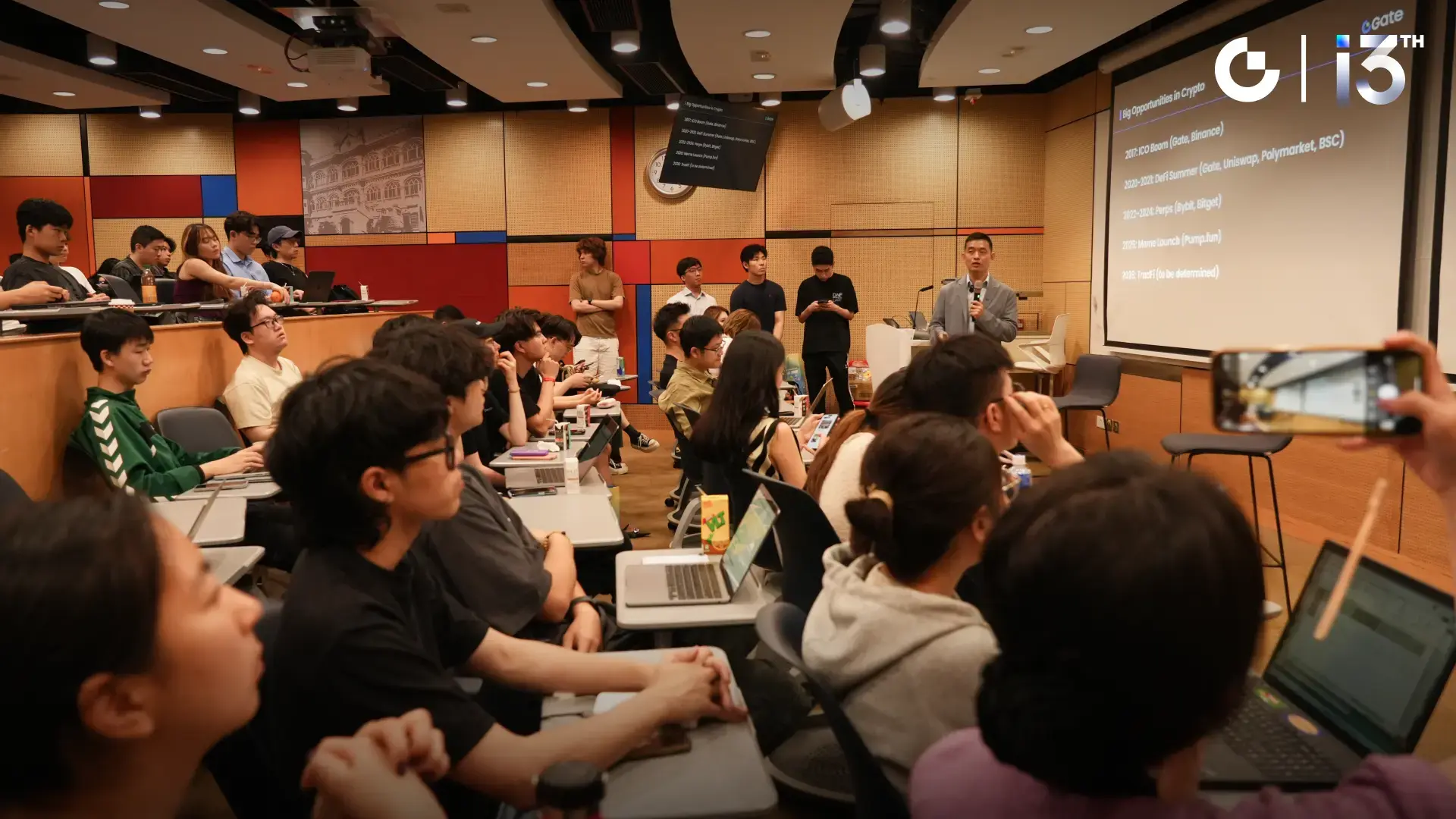
🎉 #Gate13thAnniversaryLive — Inside the Mega Celebration, Brand Strategy & Market Attention Flow
DragonFlyOfficial
🎉 #Gate13thAnniversaryLive — Inside the Mega Celebration, Brand Strategy & Market Attention Flow
The Gate 13th anniversary celebration is not just a corporate event—it is a multi-layer brand activation campaign designed to merge entertainment, lifestyle branding, and crypto ecosystem visibility into one high-impact narrative.
With three major experiences running simultaneously—F1 Red Bull Racing Exhibition, Blue Carpet Ceremony, and Gate Gala 13 Dinner—this event is engineered for one core outcome:
Maximum attention capture across both mainstream audiences and crypto-native communities.
But beyond the visuals and celebrity moments, there is a deeper layer worth analyzing: how exchanges and platforms are increasingly using real-world events to strengthen digital trust and user engagement.
🧠 1. Why this event matters beyond celebration
On the surface, this looks like a luxury anniversary showcase. But structurally, it serves three strategic purposes:
🔹 1. Brand legitimacy building
Large-scale physical events help exchanges move from “digital-only perception” to institution-grade credibility.
🔹 2. User retention psychology
Events like this create emotional attachment:
“I’m part of something big”
“This platform is growing globally”
“This ecosystem is expanding”
🔹 3. Attention liquidity injection
Crypto platforms compete not only on trading fees—but on attention flow. Events like this temporarily increase:
social mentions
trading curiosity
platform engagement
onboarding interest
🏎️ 2. F1 Red Bull Racing Exhibition — speed, branding & association
The inclusion of an F1-themed experience is not random.
Formula 1 represents:
precision engineering
global elite branding
high-speed performance culture
By associating with this, the event taps into:
“high-performance identity transfer”
aspirational lifestyle positioning
global sports prestige signaling
In marketing psychology, this is called:
brand adjacency amplification
💙 3. Blue Carpet Ceremony — controlled visibility & influencer economy
Unlike traditional red carpets, a “blue carpet” format often signals a modernized branding tone.
This segment is typically designed for:
influencers
KOLs (key opinion leaders)
crypto personalities
media amplification figures
Its real function:
generate viral photo content
create shareable identity moments
drive organic social reach
This is where most of the “event buzz” is manufactured for digital platforms.
🍽️ 4. Gate Gala 13 Dinner — high-trust networking layer
The Gala Dinner is the least visible but most strategically important part.
Why?
Because this is where:
partnerships are discussed
institutional relationships are strengthened
long-term strategic collaborations begin
private ecosystem alignment happens
Public sees luxury.
Behind the scenes sees deal flow and ecosystem planning.
📊 5. Why crypto exchanges invest heavily in events like this
This is not just marketing—it is competitive positioning.
In the current market environment:
exchanges compete for trust
user acquisition costs are rising
regulatory pressure increases need for legitimacy
brand differentiation is harder than ever
So physical mega-events act as:
“trust acceleration tools”
Instead of explaining credibility, they display it visually.
⚠️ 6. Hidden risk angle (important for users)
Whenever large branded crypto events trend online, there is always a parallel risk layer:
🔴 Fake giveaways
Scammers often replicate:
event logos
fake livestream links
impersonated accounts
🔴 Phishing campaigns
Users are targeted with:
“exclusive event airdrops”
“VIP access links”
“limited anniversary rewards”
🔴 Misleading hype trading
Some traders may assume:
“event = bullish price action”
But events do NOT guarantee market movement. Price depends on liquidity, not celebration.
Always verify:
official domains
verified accounts
platform announcements
🧭 7. What content creators should actually focus on
If you are covering this event as a creator, don’t just repost visuals.
Focus on:
✔ Narrative framing
brand expansion story
ecosystem growth angle
user adoption psychology
✔ Engagement hooks
“What does this mean for crypto adoption?”
“Is this branding or real utility expansion?”
“How exchanges compete beyond trading?”
✔ Avoid
overclaiming price impact
fake insider interpretations
unverified celebrity or partnership claims
📈 8. Strategic insight (Dragon Fly Official perspective)
Large exchange events like this are not random celebrations—they are part of a broader shift where:
crypto platforms are evolving into full-scale global lifestyle + finance ecosystems
The competition is no longer just:
fees
listings
liquidity
It is:
attention
trust
cultural relevance
global branding presence
And that is the real battlefield.
🧩 Final perspective
The #Gate13thAnniversaryLive event represents more than a celebration. It is a structured attempt to:
strengthen brand authority
increase global visibility
deepen user emotional connection
and position itself within the broader financial entertainment ecosystem
But users and traders should separate:
marketing momentum vs market reality
Because they are not always connected.
repost-content-media
  • Reward
  • Comment
  • Repost
  • Share
🎯 #Gate13thAnniversaryLive — What This Event Really Signals About the Future of Crypto Exchanges
DragonFlyOfficial
🎯 #Gate13thAnniversaryLive — What This Event Really Signals About the Future of Crypto Exchanges
Big anniversary events like this are not just celebration content. They are strategic positioning moves in a highly competitive exchange market where attention, trust, and branding now matter almost as much as liquidity.
What you’re seeing is not just a party. It’s a market perception campaign.
🧠 1. The real objective behind large exchange events
Modern exchanges are no longer just trading platforms. They are evolving into:
global financial brands
lifestyle ecosystems
media-driven communities
user identity platforms
Events like this help answer one question in the user’s mind:
“Can I trust this platform long-term?”
And trust is now a bigger driver than fees or features.
📊 2. Why exchanges invest in physical world visibility
Crypto is still digital, but user psychology is physical.
That’s why we see:
luxury galas
sports partnerships
influencer-heavy events
global exhibitions
These create:
emotional credibility
brand memorability
social proof amplification
In simple terms:
visibility creates perceived stability
🏎️ 3. F1-style branding is not random
The inclusion of high-performance motorsport imagery is intentional.
It communicates:
speed
precision
global elite positioning
performance culture
This is classic “association marketing”:
users connect platform performance with real-world high-performance brands
💙 4. Blue carpet + gala strategy = content engine
These segments are designed for one purpose:
🔹 Social amplification loop
influencers capture content
media reposts visuals
community shares highlights
algorithm boosts engagement
🔹 Emotional engagement
users feel “inside access”
exclusivity perception increases
community attachment strengthens
This is not random—it’s engineered virality.
📉 5. What this does NOT guarantee
Here is where most traders misinterpret these events:
❌ Not a price pump trigger
Events do not directly move markets.
❌ Not a bullish confirmation
Brand growth ≠ short-term price increase.
❌ Not investment signal
Marketing ≠ trading edge
Markets still depend on:
liquidity conditions
macro sentiment
BTC/ETH structure
derivatives positioning
⚠️ 6. Hidden risk layer (important for users)
Whenever such events trend:
🔴 Scam amplification risk increases
fake event airdrops
impersonated accounts
phishing “VIP access” links
🔴 Hype trading mistakes
assuming “big event = bullish breakout”
entering late momentum trades
ignoring broader market structure
Most losses come from emotion-driven interpretation, not actual news.
🧭 7. Strategic insight (real takeaway)
This type of event shows a major shift:
Crypto exchanges are competing in the attention economy, not just the trading economy.
The battleground is now:
branding strength
cultural relevance
user loyalty
global perception
Not just order books.
📈 Final perspective
The #Gate13thAnniversaryLive event is best understood as:
a long-term brand trust accelerator, not a short-term market catalyst
It strengthens perception—but does not override market structure.
Dragon Fly Official insight: In crypto, marketing can attract attention, but only liquidity decides direction.
repost-content-media
  • Reward
  • 3
  • Repost
  • Share
CryptoDiscovery:
To The Moon 🌕
View More
Gate Square Hot Discussion WCTC S8 Countdown:
DragonFlyOfficial
#WCTCTradingChallengeShare8MUSDT
🚀 Gate WCTC S8 Trading Challenge Is Live | Share 8 Million USDT
The World Crypto Trading Competition (WCTC) Season 8 is officially back, bringing one of the biggest global trading events of 2026 with a massive 8,000,000 USDT prize pool.
Launched as part of Gate’s 13th anniversary celebration, this globally recognized competition returns with a fully upgraded format designed for traders of every level — from beginners to experienced professionals.
This season introduces multiple ways to compete, making the event more dynamic and engaging than ever before:
Team Trading Competitions
Individual Trading Contests
1v1 Champion PK Matches
Mystery Box Rewards
Cash Box Giveaways
Exclusive New User Bonuses
Whether you prefer to trade solo, join a team, or challenge others in direct one-on-one battles, WCTC S8 offers several paths to compete and win.
One of the most exciting aspects of this event is that both new and existing users are eligible to participate, giving everyone a fair opportunity to earn rewards and showcase their trading skills on a global stage.
The competition officially started in April 2026 and runs for 28 days, bringing together traders from around the world in one of the largest crypto trading tournaments of the year.
With millions in rewards available, this is more than just a competition — it is a chance to test your strategies, measure your performance against global participants, and potentially secure a share of one of the largest prize pools in the industry.
Whether you are an experienced trader looking to climb the leaderboard or a newcomer ready to enter the market, WCTC S8 offers an accessible and exciting opportunity to compete.
Trade smart. Manage risk. Compete globally.
Risk Warning: Trading cryptocurrencies and leveraged products involves significant risk and may not be suitable for all investors. Always use proper risk management and never trade more than you can afford to lose.
Dragon Fly Official
repost-content-media
  • Reward
  • 1
  • Repost
  • Share
ybaser:
To The Moon 🌕
Gate Square Hot Discussion | WCTC S8 Countdown:
DragonFlyOfficial
🏆 Gate Square Hot Discussion | WCTC S8 Countdown: Only 1 Day Left
The countdown is almost over — WCTC Season 8 begins in just 1 day, and the battle for a share of the massive 8,000,000 USDT prize pool is about to start.
This is one of the biggest global crypto trading competitions of 2026, launched as part of Gate’s 13th anniversary celebration, bringing together traders, teams, and strategy leaders from around the world.
🚀 Team Competition Highlights
The team competition alone offers 3,600,000 USDT, making it one of the most exciting opportunities for competitive traders and content creators.
3,600,000 USDT exclusive team pool
Priority team creation reward: instant 3,000 USDT
New users receive 20 USDT experience voucher
Daily mystery box drops
USDT, gold, and exclusive merchandise rewards
This is the perfect moment to build your squad, share your team link, and push toward the leaderboard.
🎁 Limited-Time Square Extra Rewards
Gate Square is also offering special bonus rewards for active community participation:
⭐ Lucky Star
100 random team sharers will be selected
50 USDT each
💎 Real Deal
10 high-quality strategy or competition experience posts
200 USDT each
These community rewards make this event ideal not only for traders but also for content creators, livestreamers, and strategy sharers.
💬 How to Participate
Post and share your team invite link
Invite teammates to join
Share your trading strategy, market insights, or competition experience
Stay active before the deadline
⏰ Deadline: 4/24 18:00 (UTC+8)
The global competition officially returns with multiple formats including team battles, individual contests, and 1v1 champion matches, all under the massive 8M USDT pool.
Join now, trade smart, and climb the ranks.
Risk Warning: Crypto trading involves substantial risk and market volatility. Always use proper risk management and never trade more than you can afford to lose.
Dragon Fly Official
#WCTC交易赛瓜分800万USDT
repost-content-media
  • Reward
  • Comment
  • Repost
  • Share
View Original
DragonFlyOfficial
#rsETHAttackUpdate
🚨 The rsETH Exploit: A $293M Wake-Up Call for Cross-Chain DeFi Infrastructure
The recent exploit targeting KelpDAO’s liquid restaking token rsETH has emerged as one of the most significant DeFi security failures of 2026, resulting in approximately $293.7 million in losses and exposing deep structural risks across cross-chain finance.
This incident is not just a protocol-level hack — it represents a systemic breakdown in cross-chain infrastructure security, particularly within bridge and verification mechanisms that underpin modern DeFi ecosystems.
🔍 Incident Overview
On April 18, 2026, attackers exploited a critical vulnerability in KelpDAO’s LayerZero-powered bridge system, draining around 116,500 rsETH (~$293M).
The attack leveraged a weakness in Decentralized Verifier Network (DVN) configuration, specifically a 1-of-1 verification setup, which created a single point of failure in cross-chain message validation.
This design flaw allowed attackers to forge verification data and execute unauthorized cross-chain transfers, ultimately draining a significant portion of circulating rsETH supply.
⚙️ How the Exploit Worked
The attack followed a carefully structured sequence:
Funding via privacy channels (Tornado Cash)
Exploitation of LayerZero’s EndpointV2 lzReceive function
Forged DVN verification data injection
Cross-chain extraction of rsETH across multiple networks
Once extracted, the stolen assets were not idle. Instead, they were actively deployed across lending markets such as Aave, creating a cascading liquidity and collateral crisis.
💥 Contagion Across DeFi Markets
The exploit rapidly expanded beyond KelpDAO:
~89,567 rsETH deposited into lending protocols
~$190M in WETH borrowed against unbacked collateral
Positions distributed across Ethereum and L2 ecosystems
Because the collateral was not backed by real ETH, these positions became structurally unliquidatable, introducing permanent bad debt into DeFi lending pools.
📉 Aave’s Bad Debt Exposure
Internal assessments from protocol analysts estimate:
$123M–$230M potential bad debt
Up to 15%+ haircut scenarios across rsETH markets
Concentrated losses in L2 ecosystems such as Arbitrum, Base, and Mantle
In worst-case simulations, additional market stress could trigger another $100M+ exposure if ETH prices decline further.
This event has already forced emergency freezes and governance discussions across major DeFi protocols.
🧠 Core Structural Failures Identified
1. Bridge ≠ Just Infrastructure
Cross-chain bridges are now proven to be core asset risk vectors, not peripheral systems.
2. Composability Risk
DeFi protocols functioned correctly individually — but system-wide interaction failure caused collapse propagation.
3. Infrastructure Blind Spots
The exploit bypassed smart contracts entirely and targeted:
RPC nodes
DVN verification layers
Cross-chain messaging infrastructure
⚖️ Industry Response & Recovery Efforts
The DeFi ecosystem has responded rapidly:
Emergency market freezes across lending protocols
Partial recovery of stolen assets (~40K rsETH)
Multi-party recovery pledges totaling ~38,500 ETH
Governance-driven recovery proposals underway
Key contributors include major DeFi stakeholders and infrastructure providers, signaling unprecedented collaboration.
⚠️ Market Impact
The exploit triggered:
Sharp price volatility in DeFi tokens
Temporary liquidity crunch across lending pools
rsETH depeg pressure across multiple chains
Elevated stress across stablecoin lending markets
🧭 What This Means for DeFi
This incident highlights a fundamental shift in risk understanding:
DeFi security is no longer just about smart contract audits — it now includes:
Cross-chain bridge design
Verification network integrity
Infrastructure dependency mapping
Default configuration risk
As one analyst noted:
“Most protocols are completely exposed at the infrastructure layer.”
🔮 Final Takeaway
The rsETH exploit is not simply a $293M loss — it is a stress test of DeFi’s interconnected architecture.
It demonstrates that:
Risk is no longer isolated per protocol
Cross-chain design increases systemic exposure
Infrastructure security is now mission-critical
The recovery process may stabilize markets temporarily, but the structural questions raised by this exploit will shape the next era of DeFi development.
⚠️ Risk Warning
Cryptocurrency and DeFi investments involve high risk and extreme volatility. Past performance does not guarantee future results. Always conduct independent research and apply strict risk management.
Dragon Fly Official
repost-content-media
  • Reward
  • 1
  • Repost
  • Share
ybaser:
Just charge forward 👊
DragonFlyOfficial
#CryptoMarketSeesVolatility
📊 Crypto Market Volatility Intensifies as Investors Reassess Risk and Opportunity
The cryptocurrency market is currently moving through a period of heightened volatility, with major digital assets experiencing sharp price fluctuations across the board. These rapid movements reflect a combination of shifting investor sentiment, regulatory headlines, and broader macroeconomic pressure that continues to influence the sector.
From large-cap assets like Bitcoin and Ethereum to emerging altcoins, price action remains highly reactive as market participants reassess short-term direction and long-term positioning.
Elevated trading volume suggests that both retail and institutional investors are actively adjusting their exposure in response to ongoing developments. Factors such as interest rate expectations, global liquidity conditions, ETF-related sentiment, and blockchain ecosystem updates are all contributing to the current market structure.
During volatility phases like this, traders often face both increased risk and increased opportunity.
On one hand, rapid swings can trigger stop losses, liquidations, and emotional decision-making.
On the other, these same conditions may create opportunities for disciplined traders who rely on strong risk management, strategic entries, and position sizing.
For investors, this remains a crucial period to focus on:
market structure
support and resistance zones
volume confirmation
catalyst-based news flow
portfolio risk exposure
As the crypto ecosystem continues to evolve, participants are closely monitoring developments across exchanges, regulatory frameworks, and blockchain projects that may shape the next major trend.
The market remains dynamic, and adaptability will continue to be one of the most valuable strengths for traders and long-term holders alike.
Risk Warning: Cryptocurrency trading and investing involve substantial risk and extreme volatility. Always conduct your own research and never invest more than you can afford to lose.
Dragon Fly Official
repost-content-media
  • Reward
  • 1
  • Repost
  • Share
ybaser:
Just charge forward 👊
DragonFlyOfficial
🚀 #ETHMemeCoinFLORKSurges | Meme Sector Heat Returns
The meme coin sector is once again showing strong momentum, with renewed interest and rapid price movement across trending tokens like **Floki-style ecosystem assets and emerging community-driven meme projects such as FLORK-themed coins.
This surge reflects a classic pattern in crypto markets where community hype, liquidity rotation, and social sentiment drive sharp short-term momentum across meme assets.
Traders are closely watching:
sudden volume spikes
social media engagement growth
whale accumulation patterns
short-term breakout zones
While meme coins often deliver fast gains during bullish cycles, they also carry high volatility and unpredictable corrections, making timing and risk control extremely important.
In such conditions, market participants typically focus on:
quick entry/exit strategies
profit-taking discipline
avoiding over-leverage
sentiment tracking across X and communities
As momentum builds, the meme sector continues to remain one of the most reactive and high-risk/high-reward segments in the crypto ecosystem.
Risk Warning: Meme coins are highly volatile and speculative. Prices can rise or fall sharply within short periods. Always manage risk carefully.
Dragon Fly Official
repost-content-media
  • Reward
  • 1
  • Repost
  • Share
ybaser:
Just charge forward 👊
#USMilitaryMaduroBettingScandal | Geopolitical & Market Risk Alert
DragonFlyOfficial
⚠️ #USMilitaryMaduroBettingScandal | Geopolitical & Market Risk Alert
Reports of escalating political tension surrounding alleged betting activity linked to Nicolás Maduro and US military-linked narratives have triggered renewed attention across geopolitical and financial markets.
While details remain under verification, the situation highlights how political uncertainty and military positioning rumors can rapidly influence global sentiment, particularly in already sensitive emerging market environments.
🌍 Market Sensitivity Rising
Traders and analysts are closely monitoring developments due to potential spillover effects on:
Emerging market currencies
Oil and commodity volatility
Risk-off sentiment in global equities
Safe-haven asset demand
Even unconfirmed geopolitical headlines can significantly impact short-term liquidity flows and speculative positioning.
📊 Key Market Behavior Pattern
In similar geopolitical rumor cycles, markets typically react with:
Sharp volatility spikes
Short-term risk aversion
Increased hedging activity
Rapid sentiment-driven price swings
This reinforces the importance of information verification and disciplined risk management during politically sensitive periods.
⚠️ Caution for Traders
In environments driven by geopolitical uncertainty:
Avoid over-leveraged positions
Confirm news from reliable sources
Focus on risk-adjusted strategies
Expect sudden volatility bursts
🧭 Conclusion
Whether confirmed or not, such developments demonstrate how closely geopolitics and financial markets are interconnected, with sentiment often moving faster than facts.
Risk Warning: Geopolitical news can significantly impact financial markets. Always verify information and manage risk carefully.
Dragon Fly Official
repost-content-media
  • Reward
  • Comment
  • Repost
  • Share
  • Pin