HypeVaccinated

vip
Age 0.1 Yıl
Peak Tier 0
No content yet
Yesterday, I looked at some "smart money tags/address clustering" panels. To be honest, they can be referenced but shouldn't be taken as gospel. Clustering is essentially rules plus guesses: you can't catch an entity that's split into a dozen addresses, and conversely, merging several exchange hot wallets can mistakenly label retail investors as "whales."
Now, I trust the sense of capital flow more: net inflows/outflows during a specific period, which chain funds move from and to, whether they go into contracts or spot markets, and ultimately whether they end up in CEX.
As for recent compa
View Original
  • Reward
  • Comment
  • Repost
  • Share
This is not the kind of sky-high false surge; a controlled upward movement makes people feel more at ease.
View Original
MarcusCorvinus
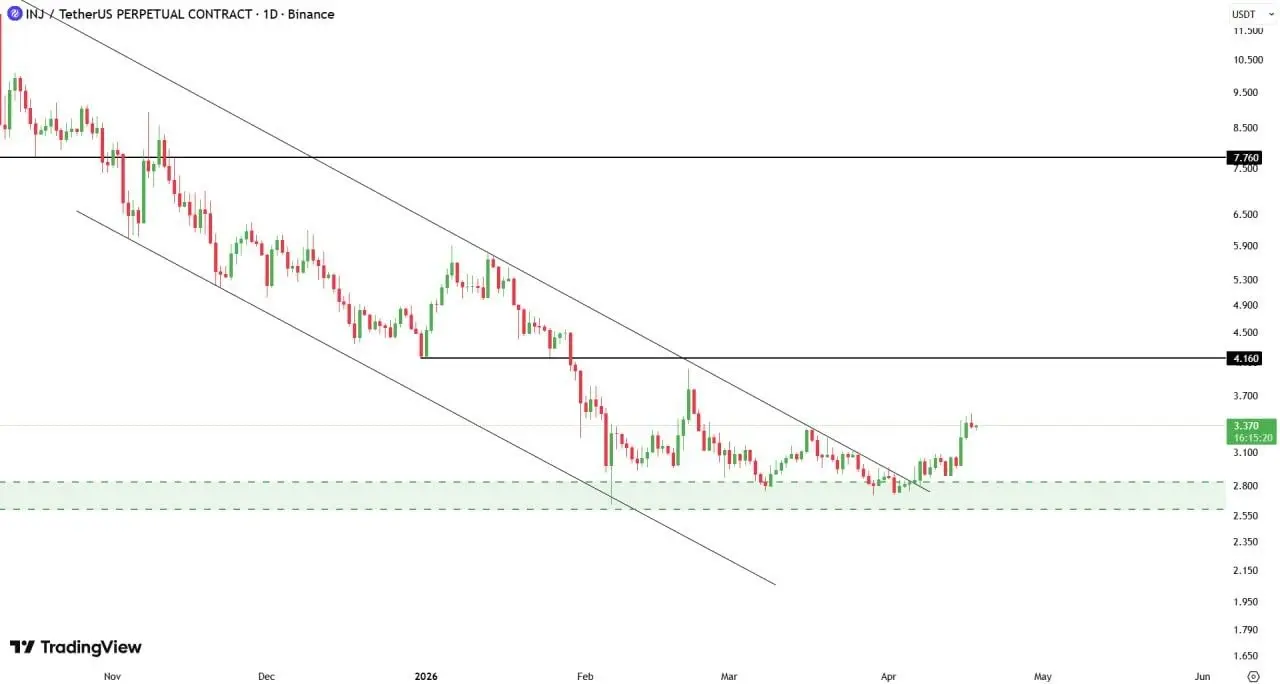
$INJ flipping the script. From breakdown to buildup real quick.
Market tapped 2.6–2.8 and instantly found buyers. That reaction matters.
Structure shift confirmed with the descending trend taken out.
Now price is grinding higher, not rushing — controlled strength.
3.5–3.7 is the battlefield. That’s where things get aggressive.
Acceptance above it turns this into a continuation leg toward 4.1.
3.0 is the line in the sand. As long as that holds, dips stay buyable.
This is how reversals start. Slow shift… then expansion.
repost-content-media
  • Reward
  • Comment
  • Repost
  • Share
This move $HIGH is really aggressive, but I won't chase it until it retraces.
View Original
MarcusCorvinus
$HIGH vertical bullish explosion with extreme momentum
I’m seeing aggressive buying because $HIGH pumped straight from base
No pullbacks yet pure momentum
Entry Point 0.30 to 0.34
Target Point 0.45 then 0.60
Stop Loss 0.25
I’m expecting high volatility
Needs consolidation for safer entry
This is possible because low liquidity plus hype creates spikes
Let’s go and Trade now $HIGH ‌
  • Reward
  • Comment
  • Repost
  • Share
Got the reminder, don't expect to double your money in a single weekend.
View Original
CurrencyGodfather
Weekend off, everyone trades on their own.
  • Reward
  • Comment
  • Repost
  • Share
Recently, I saw someone describe "market making = passive earning from fees" as if it were the same as earning interest from a fixed deposit... To put it plainly, the AMM curve is just letting you passively rebalance during price fluctuations—selling when it goes up, buying when it goes down. Fees are just compensation; whether they cover the loss depends on the volatility and trading volume. Impermanent loss isn't some mysterious concept; essentially, you're taking the other side of the "volatility" trade. By the way, I want to criticize that now everyone is linking ETF capital flows and U.S.
View Original
  • Reward
  • Comment
  • Repost
  • Share
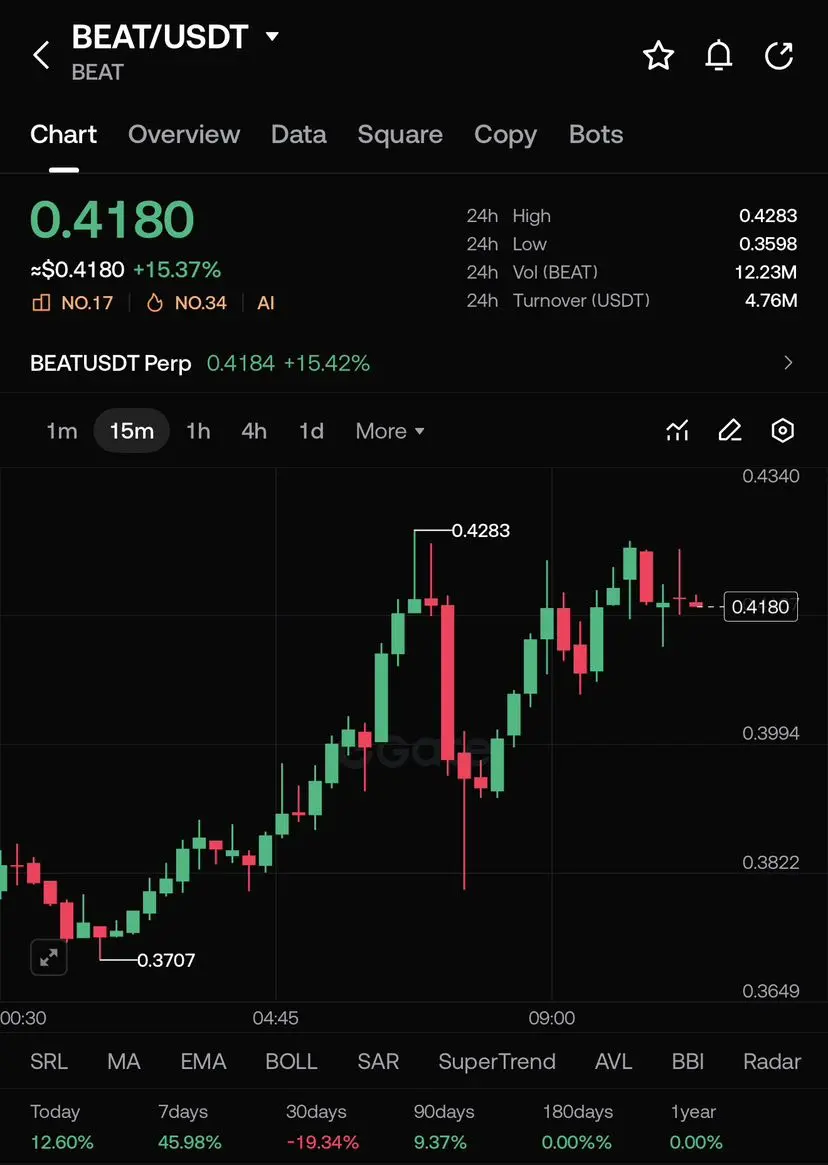
The range of 0.405-0.418 is comfortable for batch ambushes, and the stop loss at 0.385 is also clear.
View Original
LedgerBull
$BEAT showing strong bullish structure with steady higher highs and higher lows.
Momentum remains intact after the push to 0.4283, with price now consolidating near resistance.
EP
0.405 - 0.418
TP
TP1 0.435
TP2 0.460
TP3 0.500
SL
0.385
Price is holding above key support while building under resistance. Liquidity rests above 0.4283 — a breakout could trigger continuation, while downside remains supported by prior trend structure.
Let’s go $BEAT ‌
repost-content-media
  • Reward
  • Comment
  • Repost
  • Share
Stopping loss is really like a breakup; the more you drag it out, the more unwilling you become. That little bit on the ledger that says "maybe they'll come back" is actually just interest accumulating, and your mindset also gets worse. I used to always want to wait for a slight rebound before leaving, but when the rebound didn't come, I ended up losing sleep and focus first... To put it plainly, admitting defeat and leaving early means the remaining money can be used for other things.
Recently, watching new L1/L2 projects start to promote TVL incentives again, veteran users complain about "mi
View Original
  • Reward
  • Comment
  • Repost
  • Share
Lately I’ve been seeing a lot of narratives about “yield stacking” from re-pledging plus shared security. To put it simply, it’s just splitting the same risk into a bunch of different nameplates. Stacking APR feels great, but the risks at the tail end stack up too—not because you didn’t see it, but because you don’t want to see it. When the protocol says “shared security,” my first reaction is: who, exactly, is sharing responsibility to cover the downside, when is it triggered, and after it’s triggered can you still exit?
These past two days, as expectations for rate cuts heat up, discussions
View Original
  • Reward
  • Comment
  • Repost
  • Share
Seeing you say you want to celebrate that I have also been infected, I wish you continued success ahead.
View Original
SituLieqiMarketTrend
TK has surpassed 1,000 followers; let's celebrate!
  • Reward
  • Comment
  • Repost
  • Share
  • Pin