According to the report “The State of Stablecoins 2025” jointly released by Dune and Artemis, the stablecoin market has experienced significant rise over the past year, with accelerated institutional adoption, the emergence of decentralized stablecoins, and a continuous increase in on-chain trading activity.
Written by: Artemis, Dune
Compiled by: Yuliya, PANews
Stablecoins are reshaping the global financial system at an unprecedented pace. According to the “2025 Stablecoin Landscape” report jointly released by Dune and Artemis, the stablecoin market has seen significant rise over the past year, with accelerated institutional adoption, the emergence of decentralized stablecoins, and continued growth in on-chain transaction activity.
Market Size and Growth Trends
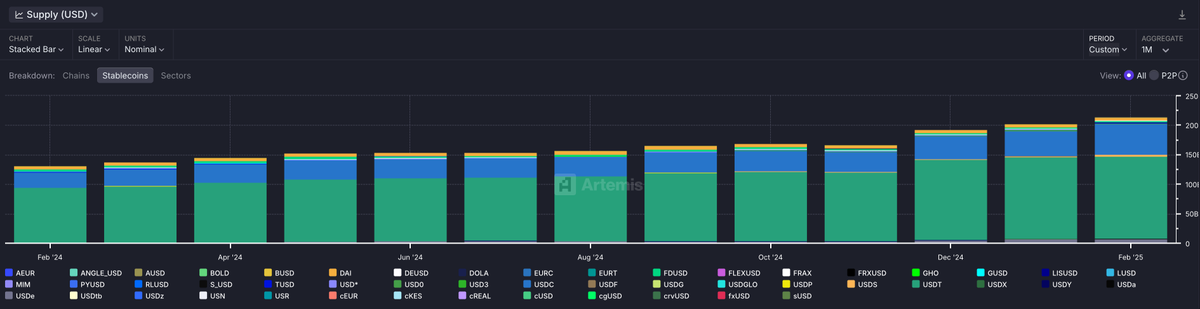
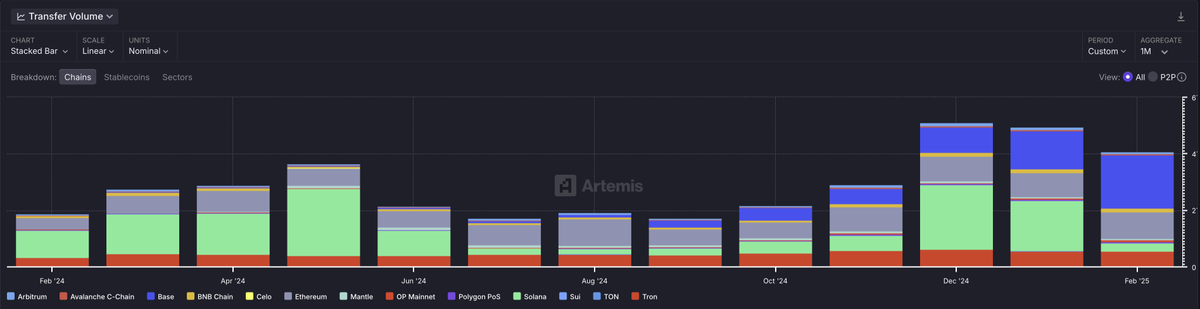
By February 2025, the supply of stablecoins had reached 214 billion USD, with an annual transaction volume as high as 35 trillion USD, which is twice the annual transaction volume of Visa. Market activity has risen in parallel, with the number of on-chain active addresses increasing by 53%, surpassing 30 million. Institutional funds are flowing in on a large scale, driving the deep integration of traditional finance (TradFi) and the crypto market.
The change in dominance of USDC and USDT
With the push of compliance processes and market strategies, USDC and USDT still dominate, but there are subtle changes in market share.
USDC’s market capitalization has doubled to $56 billion, mainly due to the approvals of MiCA and DIFC regulations, the addition of important strategic partners such as Stripe and MoneyGram, and the rapid expansion of the global market.
The total market capitalization of USDT has risen to 146 billion USD, still the largest stablecoin by market cap, but its market share has declined, with institutional adoption decreasing, gradually shifting focus towards the P2P remittance market, solidifying its position in the global payment sector.

Decentralization stablecoin rise
In the Decentralization Finance (DeFi) ecosystem, the influence of decentralized stablecoins has significantly increased, with several emerging projects achieving breakthrough rise.
- USDe (Ethena Labs): Market capitalization soared from $146 million to $6.2 billion, becoming the third largest stablecoin in the market. The key to this rise lies in its innovative yield strategy and Delta neutral hedging mechanism.
- USDS (MakerDAO): The MakerDAO brand has been rebranded to Sky, and a compliance-friendly USDS has been launched, with a market cap reaching $2.6 billion by February 2025. This adjustment enhances its competitiveness in the Decentralization stablecoin market.

Capital Flow and Industry Distribution
The liquidity trends of stablecoins reflect the positioning and competitiveness of different public chains in the market:
- Ethereum remains the primary issuance platform for stablecoins, accounting for 55% of the supply share.
- Base and Solana have rapidly increased in trading volume, driven by the DeFi and Meme coin markets, becoming important on-chain ecosystems for stablecoin capital circulation.
- TRON continues to occupy a core position in the global P2P payment and cross-border remittance market, especially in emerging markets, where stablecoins are widely used for payments and savings.
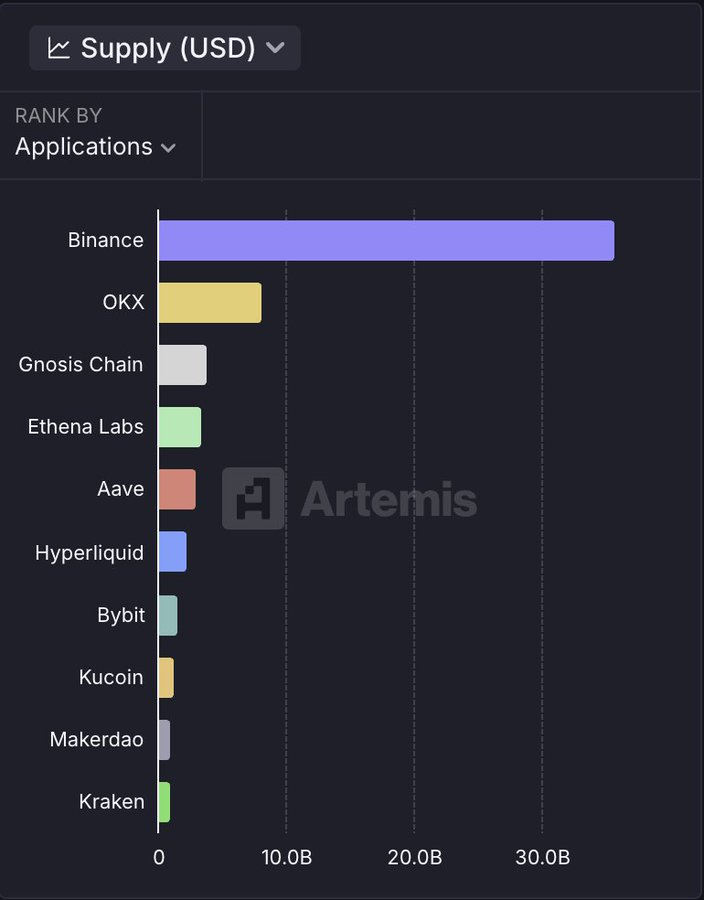
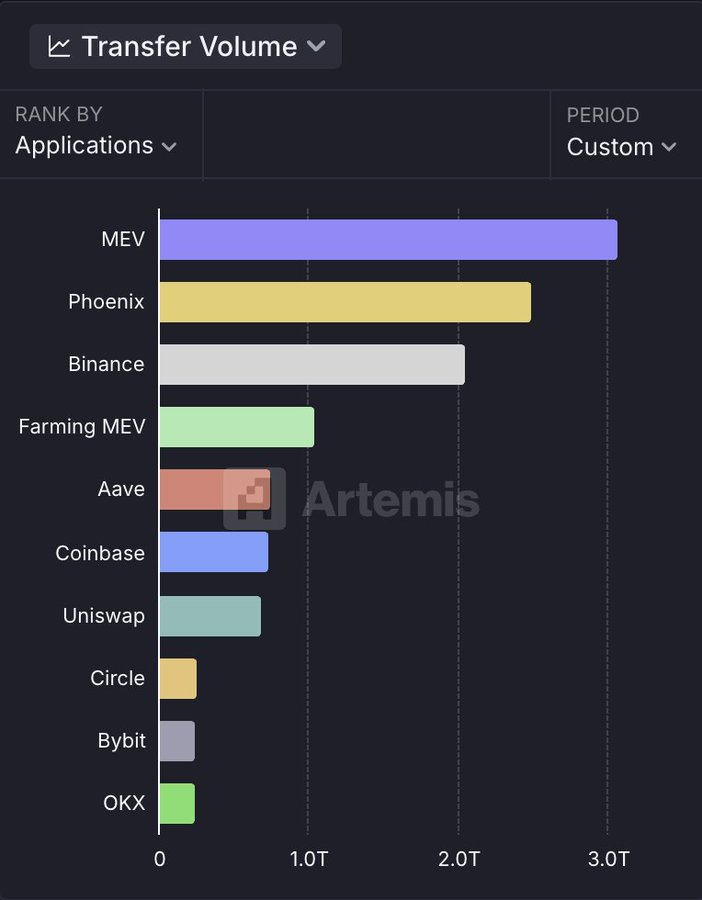
Most stablecoin liquidity is mainly concentrated in centralized exchanges (CEX), and trading volume is primarily driven by DeFi (DEX, lending, yield farming), reflecting the efficient flow and innovation of funds.
Core Functions and Future Development
Stablecoins have become a key infrastructure in the crypto market, while also driving innovation in the traditional financial sector. Industry experts are optimistic about the future development of stablecoins:
“Stablecoins are the lifeline of the crypto market and the superconductor of the financial system. They open up new markets and financial opportunities, driving innovations that were previously hard to reach.”
——Dragonfly General Partner Rob Hadick
“The advantages of stablecoins in cross-border payments are significant. We hope Base will support more local currency stablecoins, allowing global users to transact on-chain using familiar currencies, thereby increasing the adoption of blockchain technology.”
——Base Product Lead Neodaoist
“The new generation of stablecoins must have market resilience. The core of USDe is a yield-supported stability mechanism that ensures users receive a reliable alternative to the dollar.”
——Head of Research at Ethena Labs Conor Ryder
“The flow of stablecoins depends on the quality of the infrastructure - low cost, fast transactions, and market demand. On Solana, the liquidity and instant settlement needs for Meme coin trading pairs are extremely high, making stablecoins an indispensable part.”
——Herd founder and data analysis expert Andrew Hong
“TRON has become the preferred blockchain for stablecoin transactions, with daily trading volumes reaching billions of dollars. USDT on TRON has driven real economic activity, especially in emerging markets, and has become a key tool for payments and savings.”
——TRON DAO community spokesperson Sam Elfarra
Disclaimer: The information on this page may come from third parties and does not represent the views or opinions of Gate. The content displayed on this page is for reference only and does not constitute any financial, investment, or legal advice. Gate does not guarantee the accuracy or completeness of the information and shall not be liable for any losses arising from the use of this information. Virtual asset investments carry high risks and are subject to significant price volatility. You may lose all of your invested principal. Please fully understand the relevant risks and make prudent decisions based on your own financial situation and risk tolerance. For details, please refer to
Disclaimer.


