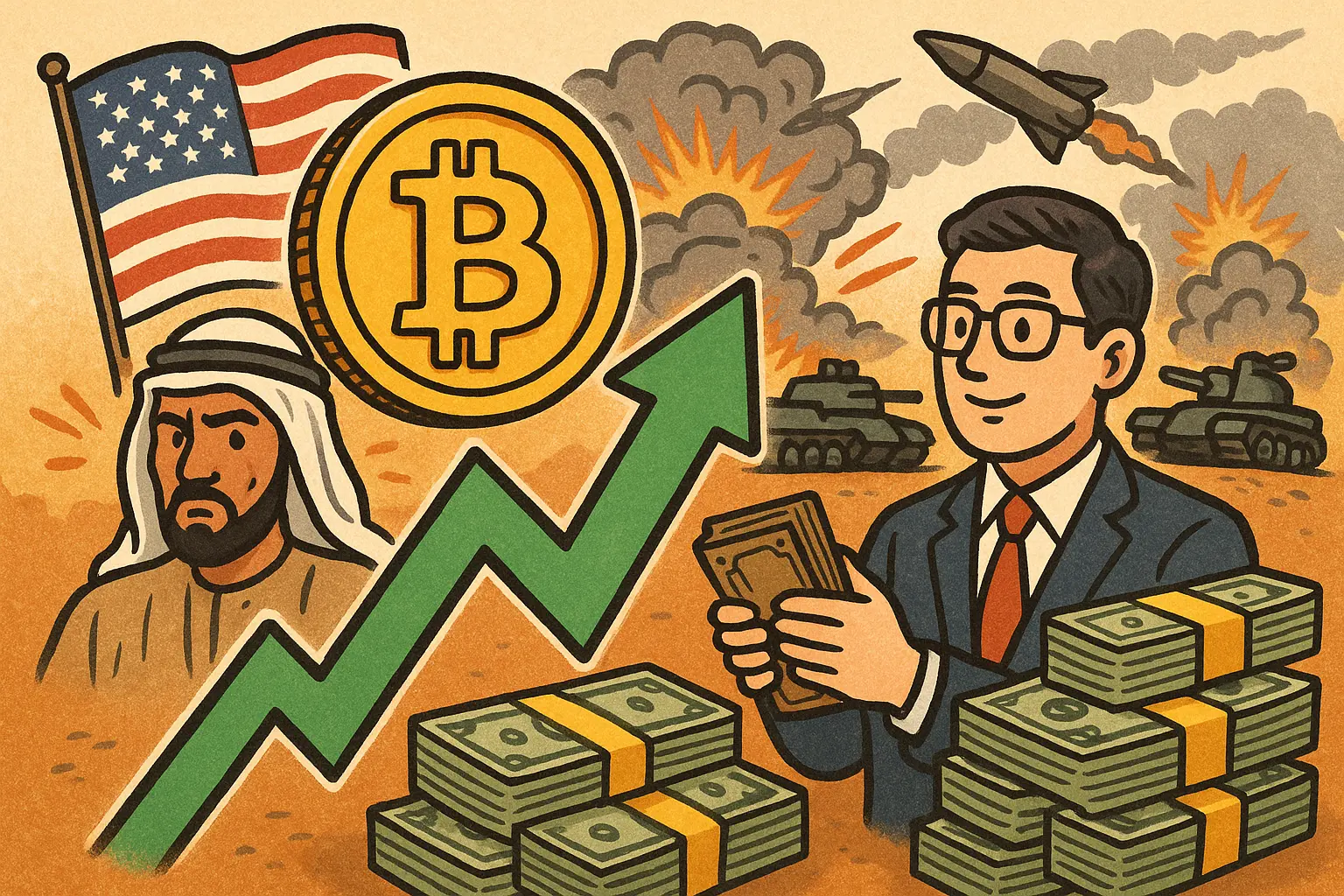
Bitcoin broke the $75,000 threshold, reaching its intraday high since early February. The core factors driving this rally include three aspects: BlackRock’s IBIT attracted over $600 million in weekly inflows; since the outbreak of the US-Iran conflict on February 28, Bitcoin has gained more than 11%, while the S&P 500 has fallen about 3%, and gold has declined about 5%; technical bearish squeeze patterns continue to accumulate, and short-term breakout momentum is forming.
BlackRock IBIT weekly inflows exceed $600 million, ETF capital landscape improves across the board
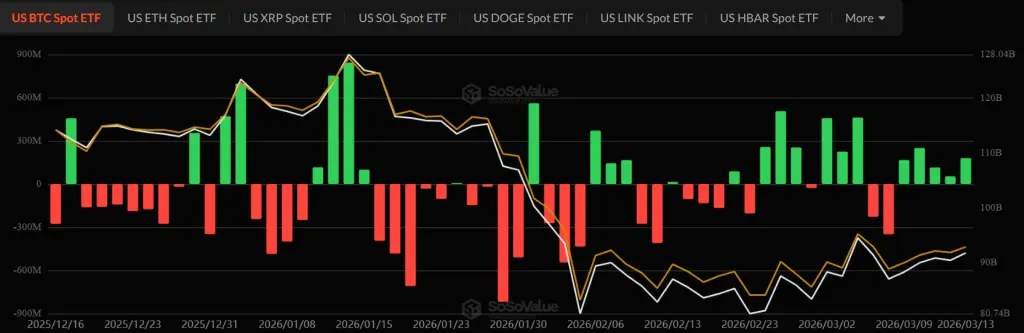
(Source: SoSoValue)
According to SosoValue data, from March 9 to 13, the weekly net inflow of spot Bitcoin ETFs reached $767 million, marking the first five consecutive days of positive inflows since 2026. BlackRock’s IBIT accounted for over 78% of the total with a weekly net inflow of $600.1 million, and its asset management scale has surpassed $55 billion. Grayscale’s GBTC was the only significant seller during the same period, with a weekly net outflow of $25.9 million.
Ethereum ETFs followed suit, with a weekly net inflow of $160.9 million, led by Fidelity’s FETH with $90.1 million; only XRP spot ETFs recorded a net outflow of $28.07 million, making it the only major crypto ETF category experiencing capital outflow during the same period.
Post US-Iran conflict: capital differentiation — gold ETFs lose funds, Bitcoin ETFs attract inflows
After the outbreak of the US-Iran military conflict on February 28, Bitcoin initially plummeted over 7% during market closures, raising doubts about its safe-haven function. However, market data two weeks later showed a completely different picture:
- Bitcoin (BTC): Up over 11%, approaching $73,000
- S&P 500 Index: Down about 3%
- Nasdaq Index: Down about 2%
- Gold: Down about 5%
JPMorgan Chase Managing Director Nikolaos Panigirtzoglou pointed out that since the escalation of the Middle East conflict, a clear divergence has emerged between gold ETFs and Bitcoin ETFs. Data shows that the world’s largest gold ETF, SPDR Gold Shares (GLD), has reduced its assets by about 2.7%, while BlackRock’s IBIT saw approximately 1.5% capital inflow during the same period. Analysts believe that Bitcoin, as a 24/7 global asset, was the first to reprice risk amid geopolitical shocks. After traditional markets reopen, institutions are reallocating funds through ETF channels into Bitcoin as a beneficiary asset.
Technical outlook: accumulation of bearish squeeze, $75,000 as key breakout level
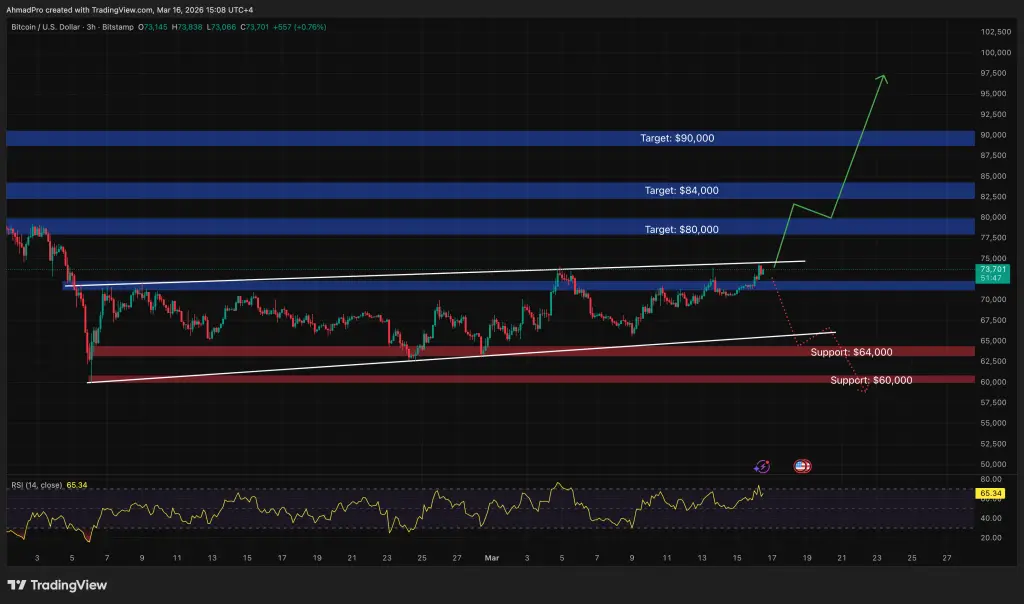
(Source: Trading View)
From a technical perspective, Bitcoin is currently hugging the ascending wedge trendline. Over the past six weeks, this level has faced resistance six times, leading most traders to expect a correction to $64,000 or lower. However, the bearish squeeze pattern accumulated under previous negative financing rates has not dissipated, and each failed breakout has further reinforced this pattern. Technical analysts suggest that if BTC can break through and hold above $75,000, the chain reaction of short covering will push prices higher, with short-term targets at $80,000, $84,000, and $90,000; if resistance is encountered again, support levels return to $64,000 and $60,000 zones.
This week’s FOMC decision: policy signals are the biggest macro variable
The most critical macro event this week is the Federal Reserve’s Federal Open Market Committee (FOMC) meeting on March 17-18. The market generally expects interest rates to remain unchanged, but the policy path signals conveyed by the dot plot will be the real market mover. If the Fed maintains expectations of one to two rate cuts this year, crypto assets are likely to receive further support; conversely, if hawkish signals are sent, Bitcoin will face additional macro pressure. The breakout of the $74,000 resistance level and the FOMC policy signals together will determine the continuation of this rally.
Frequently Asked Questions
Why did Bitcoin rise today? What are the main drivers?
This rally is driven by three main factors: BlackRock’s IBIT attracted $600 million in weekly inflows, spot Bitcoin ETFs achieved their first five consecutive days of net inflows since 2026; since the US-Iran conflict outbreak, Bitcoin has gained over 11%, outperforming gold and major stock indices; technical bearish squeeze patterns have accumulated, increasing the pressure on shorts to cover.
Why did Bitcoin rise after the US-Iran conflict while gold fell?
JPMorgan analysis indicates that initially, Bitcoin dropped because it was the only liquidity asset that could be priced in real-time during market closures. However, subsequently, institutions reallocated funds via ETF channels, making Bitcoin a beneficiary. Meanwhile, gold ETFs saw about a 2.7% reduction in assets, indicating some institutional funds shifted from traditional safe-haven assets to Bitcoin.
How does the FOMC rate decision affect Bitcoin’s trend?
If the Fed maintains expectations of one to two rate cuts this year, crypto assets are expected to benefit from improved liquidity outlooks; if hawkish signals are sent, Bitcoin will face additional macro pressures. The market is closely watching whether the $74,000 resistance can be successfully broken after the FOMC meeting to confirm the continuation of this rally.
Disclaimer: The information on this page may come from third parties and does not represent the views or opinions of Gate. The content displayed on this page is for reference only and does not constitute any financial, investment, or legal advice. Gate does not guarantee the accuracy or completeness of the information and shall not be liable for any losses arising from the use of this information. Virtual asset investments carry high risks and are subject to significant price volatility. You may lose all of your invested principal. Please fully understand the relevant risks and make prudent decisions based on your own financial situation and risk tolerance. For details, please refer to
Disclaimer.


