Author: Jae, PANews
The end of a cycle often begins with the smallest indicators.
Since September 2025, the DeFi (Decentralized Finance) market has entered a “interest rate winter.” The average annual percentage yield (APY) for mainstream stablecoins in top lending protocols has fallen to its lowest level since June 2023.
On Ethereum’s mainnet Aave V3, deposit rates for USDC and USDT have dropped below 2%. Meanwhile, the yield on the 10-year U.S. Treasury bond has risen back to 4.24%. For DeFi players who experienced the DeFi Summer and are accustomed to high APYs, this is not just a numbers decline but a warning bell signaling the end of a cycle.
Is this simply cyclical fluctuation, or is the market undergoing a structural transformation?
Supply and demand mismatch, liquidity overload triggers rate collapse
Over the past six months, the interest rate curves of major lending protocols have been trending downward, reflecting a “surplus supply” that causes yield compression.
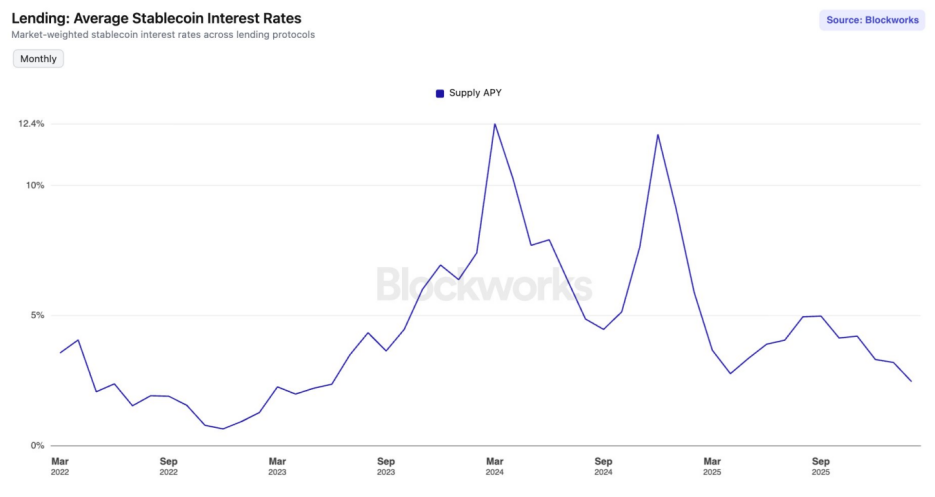
Interest rates are the price of capital, and the physical basis for setting this price is the supply of capital.
Since 2024, the stablecoin sector has experienced an unprecedented “expansion wave,” with total market cap soaring from under $130 billion to over $310 billion, with a compound annual growth rate of about 55%.
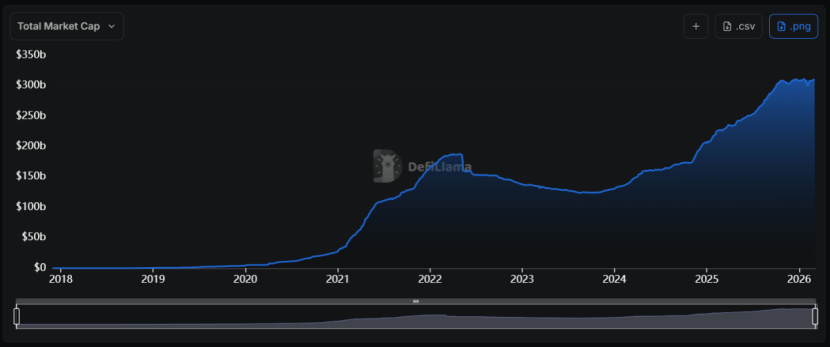
The problem is that the surge in supply has not been matched by a proportional increase in on-chain demand.
When the supply of a certain asset (liquidity of stablecoins) increases significantly while demand remains weak, its price (interest rate) must fall. This is a fundamental economic principle, and DeFi is no exception.
Taking Aave, the leading lending platform, as an example, its stablecoin utilization rate is declining sharply. As of March 12, Aave’s total value locked (TVL) reached $42.5 billion.
Examining the fund structure reveals an unsettling figure: active loans amount to only $16.3 billion. Over 60% of deposited assets are idle. This supply-demand imbalance directly causes interest rates to plummet rapidly.
This means funds are only deposited but not borrowed, leading to severe liquidity congestion. Protocol algorithms are forced to automatically lower the interest rate curve to attract more borrowers.
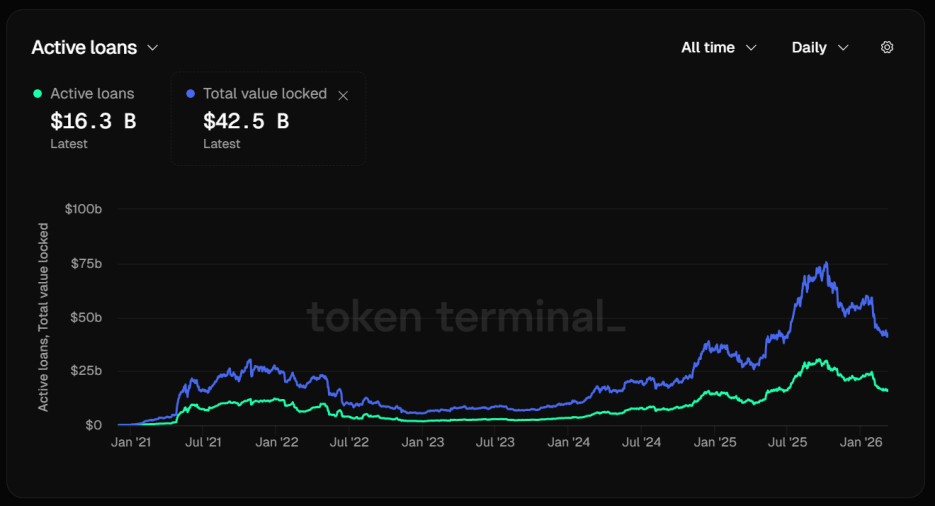 However, this effort has yielded little success. On Aave V3, the baseline interest rates for USDC and USDT on Ethereum have already fallen below 2%, starkly contrasting with the double-digit returns during the bull market.
The stablecoin market has fallen into a “liquidity trap.” When the market is flooded with low-cost capital but lacks high-yield investment opportunities, these funds accumulate in lending pools.
Collapse of funding rates, cooling of cyclic borrowing, and stalled leverage
The prosperity of stablecoin interest rates in DeFi is fundamentally driven by “leverage.” When arbitrage activity in the perpetual futures market cools, the borrowing demand for stablecoins quickly shrinks, causing rates to plummet.
In a bullish market, high long sentiment results in positive and elevated funding rates. Arbitrageurs use a delta-neutral strategy—borrowing stablecoins to buy spot and selling perpetual contracts—to earn funding fees. In this process, stablecoins serve as fuel.
However, recent performance in derivatives markets has been sluggish. On major centralized exchanges (CEX), the funding rates for BTC and ETH have repeatedly turned negative or remained extremely low positive. This indicates that bearish forces dominate or bullish traders are extremely cautious.
Regardless of the explanation, the result is the same: arbitrageurs lack motivation.
When annualized funding rates decline significantly, considering borrowing costs and transaction fees, net profits for arbitrageurs are greatly reduced. Their demand for borrowing stablecoins drops sharply.
Another major source of stablecoin borrowing demand is cyclic borrowing. This profit-enhancing strategy involves depositing yield-bearing assets like sUSDe into Aave, borrowing USDC, then swapping the borrowed USDC for more sUSDe and depositing again.
This strategy was once popular because USDe yields reached as high as 30%, while borrowing costs were around 10%, leaving a 20 percentage point arbitrage margin.
However, after the “1011” event, the interest spread narrowed catastrophically, and USDe faced a scalability ceiling, shrinking from nearly $15 billion to the current $6 billion.
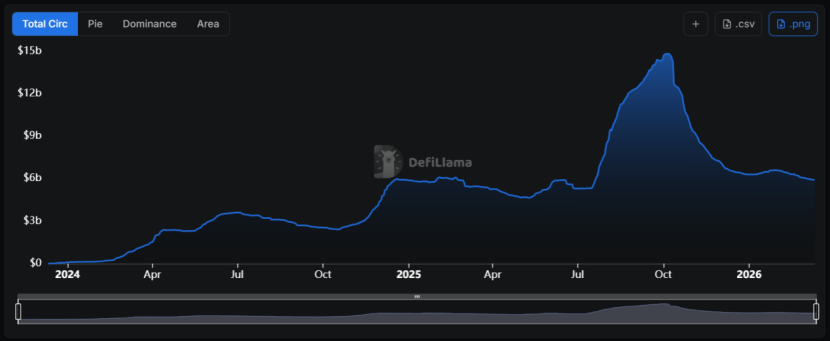 The yield of USDe heavily depends on the scale of short positions in the market. Since the total open interest in perpetual contracts is limited, when USDe’s scale expands beyond a certain point, the hedging short positions needed to offset it will lower the overall market funding rate, further suppressing sUSDe yields.
For ordinary traders, declining sUSDe yields reduce their strategy margins. Their decreased demand for leveraged positions further diminishes their need for stablecoin collateral.
This creates a self-reinforcing negative cycle: demand shrinks → rates fall → demand shrinks further.
Market risk appetite shifts toward certainty
A decline in overall risk appetite in the crypto market is another key factor driving stablecoin rates lower.
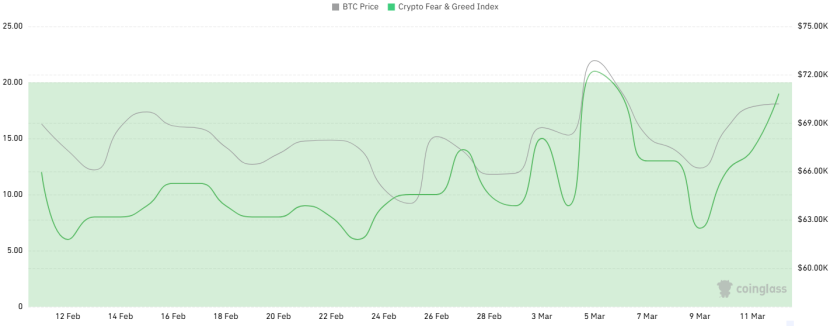
Over the past month, the Crypto Fear & Greed Index has frequently hit “extreme fear” levels, even when BTC prices remain around $70,000, with no sustained improvement in sentiment.
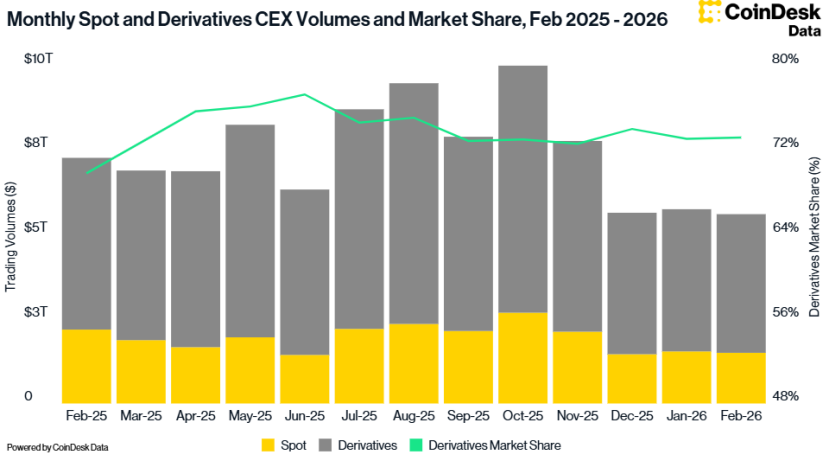
CoinDesk data shows that February’s total trading volume on CEXs fell by 2.41%, to $5.61 trillion, the lowest since October 2024.
 The decline in risk appetite prompts investors to shift toward more certain market segments.
Since January 2024, the Federal Reserve’s effective federal funds rate has remained above 3.6%. Although markets expect a mild rate cut in the future, current actual rates remain relatively high.
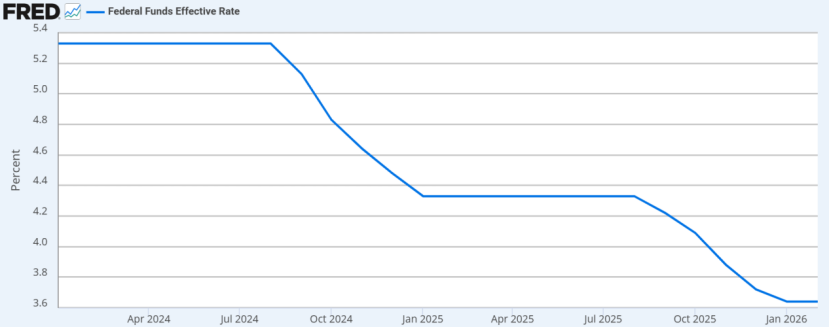 This macro environment also exerts a profound downward pressure on DeFi stablecoin interest rates. When risk-free U.S. Treasury yields are higher than DeFi deposit rates, rational investors will withdraw funds from on-chain protocols or shift into RWA (Real World Asset)-backed protocols, which offer higher yields with less risk premium.
During this interest rate winter, not all protocols are shrinking. Sky (formerly MakerDAO) has built a unique “yield moat.”
Compared to Aave, which relies more on on-chain lending demand, Sky’s yields also come from $1.5 billion in mature RWA assets, including U.S. Treasuries and AAA corporate bonds. These assets are unaffected by crypto market volatility and provide stable underlying cash flows.
This model of converting RWAs into collateral has driven USDS supply to grow at an annualized rate of 68% per month, with a market cap approaching $8 billion.
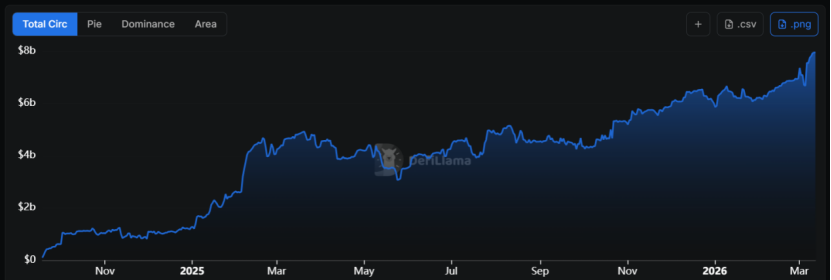 As of now, sUSDS yields around 3.75%, serving as a “de facto floor” for on-chain yields. Its deposit rates in USDC and USDT treasuries can reach over 5%.
This positions Sky as a sort of “benchmark rate platform.” In comparison, similar assets on Aave offer rates that are hardly competitive.
Thus, Sky is transforming from a simple stablecoin protocol into a “fixed income asset management” protocol, leveraging its large RWA portfolio to hedge against crypto market downturns. When DeFi demand wanes internally, it can seek yields externally—through traditional finance markets.
For investors, learning to analyze whether yield is backed by government bond dividends or by volatility premiums in futures markets will be a crucial skill in this cycle. Strategies should shift from “chasing APY” to “seeking differentiated risk exposure.”
The “interest rate winter” is not only a cyclical fluctuation but also an inevitable pain point in DeFi’s “bubble deflation.”
Perhaps, just as the lows of 2023 laid the groundwork for the prosperity of 2024, this rate bottoming could also be DeFi’s way of accumulating energy for the next leap.
Disclaimer: The information on this page may come from third parties and does not represent the views or opinions of Gate. The content displayed on this page is for reference only and does not constitute any financial, investment, or legal advice. Gate does not guarantee the accuracy or completeness of the information and shall not be liable for any losses arising from the use of this information. Virtual asset investments carry high risks and are subject to significant price volatility. You may lose all of your invested principal. Please fully understand the relevant risks and make prudent decisions based on your own financial situation and risk tolerance. For details, please refer to
Disclaimer.


