SingularityNET CEO predicts AI strategic thinking will surpass humans within 2 years. The study also warns that over-reliance on ChatGPT for writing assistance may reduce brain engagement, weaken critical thinking, and lead to cognitive decline.
SingularityNET: AI strategic thinking ability to surpass humans within two years
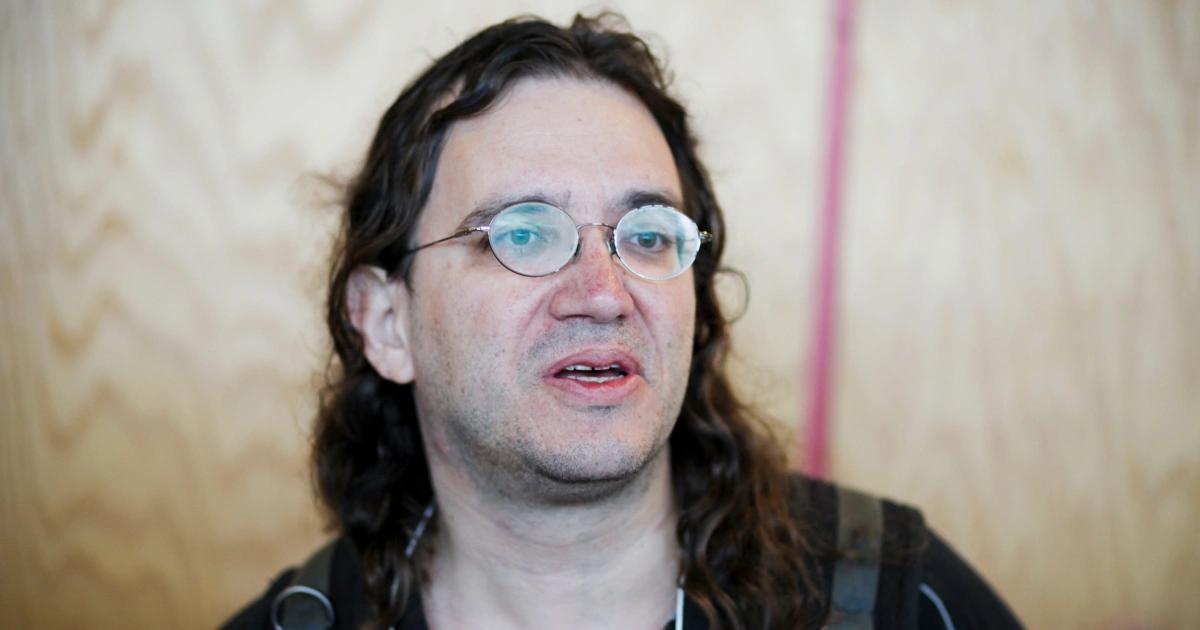
Decentralized AI project SingularityNET CEO Ben Goertzel predicted during the CoinDesk Consensus Hong Kong conference that AI’s ability in high-level market thinking and strategic planning will surpass humans within 2 years.
Goertzel observed that, although AI systems like Quantium can currently accurately predict short-term Bitcoin fluctuations, in long-term and imaginative strategic thinking, humans still hold a unique advantage, able to use imagination to cross unknowns, but this advantage may only last a few years.
He also stated that decentralized AI projects are experiencing explosive growth, and blockchain technology will provide the necessary data sovereignty and security for the next generation of AI, indicating that the technology is gradually maturing and capable of application in complex real-world scenarios.
Are AI chatbots causing brain degeneration?
As AI demonstrates powerful capabilities, academia is also beginning to focus on its potential negative impacts on the human brain.
Time magazine cited research by Nataliya Kosmyna, a researcher at MIT Media Lab, exploring the specific effects of AI-assisted writing on neural and behavioral aspects.
The research team invited 54 participants to wear EEG devices and completed multiple writing tasks over four months in batches. The results confirmed that, compared to the “pure brain group” relying solely on their own thinking, participants using ChatGPT showed consistently lower performance in neural activity, language expression, and writing scores.
Data shows that over-reliance on generative AI tools significantly reduces brain engagement, which could, in the long run, weaken humans’ critical thinking abilities.
Outsourcing the brain to AI without necessary challenges may lead to superficial knowledge
iKala founder Cheng Shijia previously cited this study, stating that brain ability is “use it or lose it.” When humans actively think and solve problems, relevant neural connections are strengthened. If these cognitive tasks are outsourced to AI long-term, these connections will weaken, leading to gradual brain decline.
Cheng believes that the best way to effectively strengthen brain connectivity includes deliberate practice and maintaining necessary difficulty. The brain learns best and retains long-term memory when facing challenges beyond the comfort zone with a certain level of difficulty.
However, current AI provides convenience but also deprives humans of valuable opportunities to experience difficult learning paths, often causing knowledge to remain superficial and hard to deeply embed in the brain.
Related report:
83% of ChatGPT users experience memory loss! iKala founder: outsourcing the brain has more consequences than this
Disclaimer: The information on this page may come from third parties and does not represent the views or opinions of Gate. The content displayed on this page is for reference only and does not constitute any financial, investment, or legal advice. Gate does not guarantee the accuracy or completeness of the information and shall not be liable for any losses arising from the use of this information. Virtual asset investments carry high risks and are subject to significant price volatility. You may lose all of your invested principal. Please fully understand the relevant risks and make prudent decisions based on your own financial situation and risk tolerance. For details, please refer to
Disclaimer.
Related Articles
Stablecoins surpass $313 billion: How digital dollars are reshaping the global financial system
The total market capitalization of stablecoins has surpassed $313 billion, gradually becoming an important infrastructure in the global financial system. The article analyzes the rapid growth of the stablecoin market, the competition between USDT and USDC, their widespread applications in trading, payments, and DeFi, as well as their macro impact on the U.S. dollar system and the government bond market, indicating a future trend of increased institutional participation, market expansion, and gradual regulatory improvement.
PANews33m ago
Goldman Sachs becomes one of the largest institutional holders of XRP spot ETFs, ranking among the top in holdings by the end of 2025.
By the end of 2025, Goldman Sachs will become one of the largest holders of XRP spot ETFs, with a large number of anonymous investors remaining in the market. Analysis suggests that core supporters dominate the capital inflows, with the top 30 holders collectively owning approximately $211 million, and the overall ETF product attracting over $1 billion.
GateNews1h ago
Tom Lee’s BitMine Acquires 60,976 ETH, Holdings Now $10.3B
Bitmine Immersion Technologies reports total assets of $10.3 billion, including 4.53M ETH. With 3.04M ETH staked, it generates $174M annually at a 2.91% yield. The firm seeks to reach 5% of total ETH supply and is expanding its staking infrastructure.
CryptoFrontNews8h ago
Hong Kong family office plans to increase allocations to cryptocurrencies and private markets over the next three years
Multiple family offices in Hong Kong plan to increase investments in private equity and digital assets over the next three years, with wealthy families expected to show a significant rise in interest in these assets. The government aims to attract more high-net-worth individuals and their families to invest, and it is projected that by the end of 2025, the number of single-family offices in Hong Kong will grow to 3,384.
GateNews9h ago
IOTA Co-Founder Highlights Trade Finance Innovation With TWIN
IOTA founder Dominik Schiener says TWIN supports digital trade records, faster checks, and smoother data sharing across cross-border finance networks.
TWIN has been linked to Kenyan pilots, Rwanda trade finance use cases, and live consignments on the IOTA mainnet.
IOTA co-founder Dominik Sch
CryptoNewsFlash10h ago
Hangzhou Xiaoshan issues development policies supporting OpenClaw, offering free deployment and token consumption subsidies
Xiaoshan District, Hangzhou City, has issued policies to support the development of OpenClaw and OPC-STC, encouraging the establishment of intelligent agent service zones, free deployment of related technologies, and providing subsidies. Companies using intelligent agents to invoke models can receive a 30% subsidy on the costs, with a maximum annual subsidy of 100,000 yuan.
GateNews10h ago


