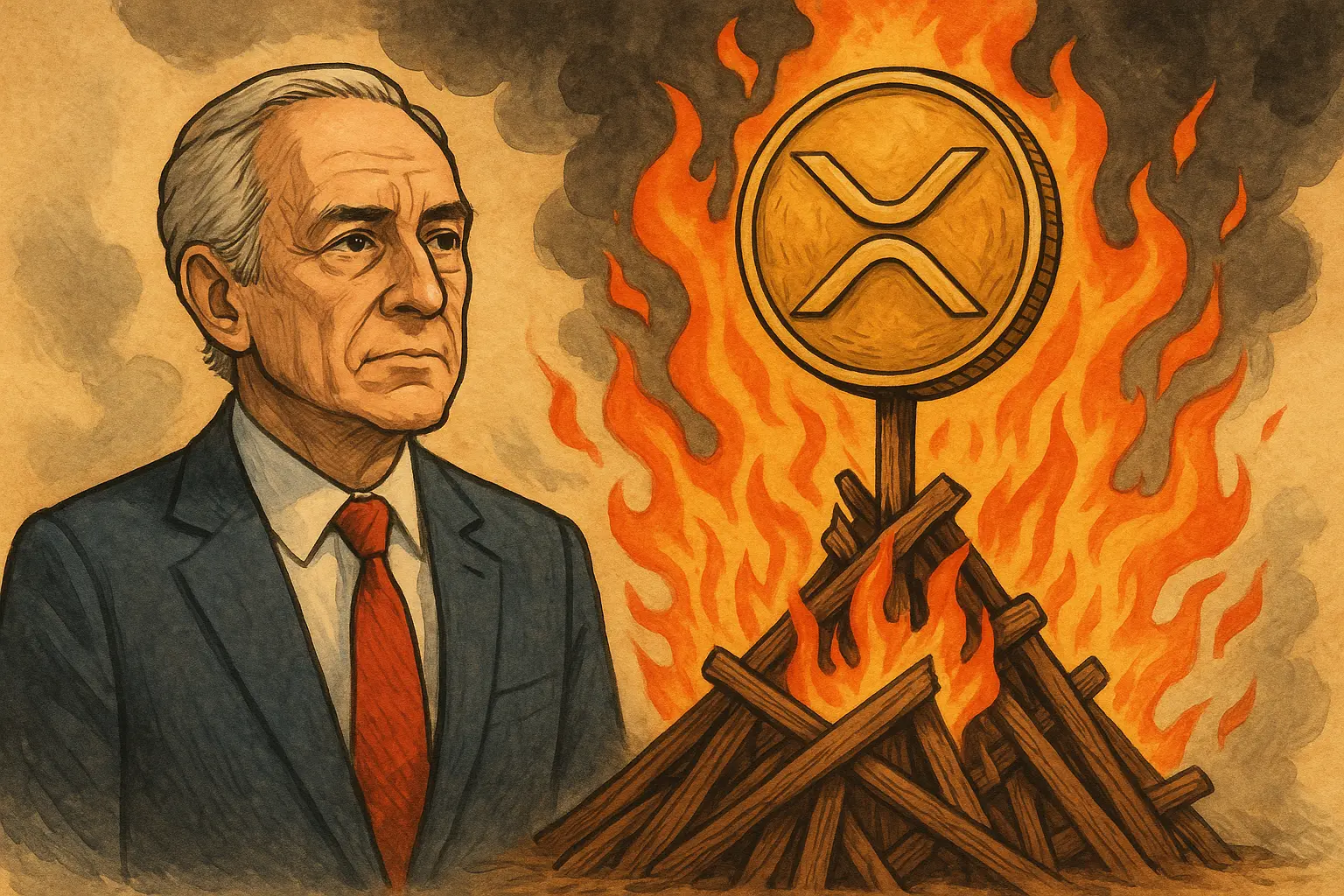
Former CFTC Chairman Chris Giancarlo describes XRP as a typical example of Washington regulatory suppression, yet it has survived and stood tall. He emphasizes the importance of regulatory clarity and warns that traditional U.S. banks may fall behind. Ripple has received approval under Europe’s MiCA framework, allowing regulated banks to hold and use it. Despite advantages in Europe, the U.S. remains cautious due to uncertainty.
XRP Becomes a Flagship of Regulatory Suppression in the Gensler Era
Giancarlo discussed the prolonged legal battle between XRP and the U.S. Securities and Exchange Commission, calling it a decisive moment for the crypto industry. He states that XRP was a key target in the crackdown led by former SEC Chair Gary Gensler. Despite facing years of legal pressure, he notes that XRP “has withstood the test, remains standing, and continues to stand tall.”
The legal dispute between Ripple and the SEC revolves around whether XRP should be classified as a security. It has been closely watched by the crypto market and seen as a litmus test for U.S. digital asset regulation. The SEC filed suit against Ripple in December 2020, accusing it of conducting an unregistered securities offering through XRP sales, demanding hefty fines and halting XRP sales. The case has lasted over three years, during which XRP’s price has been depressed, many U.S. exchanges delisted XRP, and Ripple’s business expansion has been hindered.
In July 2023, a federal judge issued a partially favorable ruling for Ripple, determining that XRP sales in the secondary market do not constitute securities offerings. While not a complete victory, it marked a major turning point for Ripple. Following the ruling, XRP’s price surged, reflecting market desire for regulatory clarity. Giancarlo calls XRP a “typical representative,” implying it is a landmark case of SEC crackdown on the crypto industry during the Gensler era, with other projects seeing the true face of regulatory hostility through XRP’s experience.
Three Major Significances of the XRP vs SEC Lawsuit
Litmus Test: The ruling will influence the legal status of other crypto projects
Regulatory Symbol: SEC’s tough stance on XRP represents an overall anti-crypto policy
Industry Unity: XRP’s resistance has garnered moral support from the entire crypto industry
Giancarlo’s phrase “has withstood the test” suggests that XRP is not only partly victorious legally but also demonstrates resilience in business. Despite ongoing litigation, Ripple continues to expand internationally, establishing partnerships with global banks and launching new products like the RLUSD stablecoin. This “indestructible” trait has transformed XRP from a victim into a hero of resistance, greatly enhancing its brand image.
Europe’s MiCA Outshines America’s Fragmented Regulation
Giancarlo uses Ripple as an example to illustrate how clear rules can stimulate innovation. Recently, Ripple received approval from European regulators, enabling its stablecoins and XRP to be more widely used within the region’s financial infrastructure. Under Europe’s MiCA framework, banks can now hold and use these digital assets in a regulated manner. Giancarlo states this gives European banks a significant advantage, while U.S. banks remain cautious due to regulatory uncertainty.
“Clarity is better than no clarity,” he says, adding that although Europe’s rules may not be perfect, they at least allow institutions to move forward. This assessment is very pragmatic. MiCA (Markets in Crypto-Assets), set to be implemented by the EU in 2024, is a comprehensive crypto regulation framework that clearly defines the legal status of different types of crypto assets, issuance requirements, trading rules, and consumer protections. While MiCA’s compliance costs are high and some provisions face criticism, it at least provides a predictable regulatory pathway.
In contrast, the U.S. regulatory environment remains chaotic. The SEC and CFTC are embroiled in jurisdiction disputes, different states have varying regulations, and federal market legislation has yet to pass. This uncertainty discourages U.S. banks from adopting crypto tech, due to compliance risks. European banks, on the other hand, can confidently launch crypto products and services, gaining a competitive edge in innovation.
Ripple’s case exemplifies this regulatory disparity. In the U.S., Ripple has been entangled with the SEC for years, limiting its business growth. In Europe, after receiving MiCA approval, Ripple quickly established partnerships with multiple European banks and launched compliant cross-border payment solutions. This contrast makes Giancarlo lament that the U.S. is losing its leadership in crypto innovation.
Banking Innovation Requires Regulatory Push
Giancarlo believes that U.S. banks tend to innovate only when forced by regulation. He states that once clear crypto rules are established, banks will no longer have an excuse to avoid adopting digital network technologies, and will be compelled to do so. This reveals the conservative nature of traditional financial institutions.
Banks are highly regulated industries; any new business must undergo compliance review. When regulations are unclear, legal and compliance departments tend to say “no,” because the potential benefits of new tech are uncertain, while the risks of regulatory penalties are real. Only when regulation explicitly permits or encourages such innovation will banks actively move forward. Giancarlo’s point is that the U.S. needs a clear framework like Europe’s MiCA to “push” banks into the crypto space.
He also adds that the future of digital finance will not be dominated by a single blockchain. Instead, multiple networks are likely to coexist, much like how Visa, Mastercard, and American Express operate side by side today. “The future of digitization will be as complex as our current financial system,” Giancarlo says. This multi-chain future differs from the “winner-takes-all” view of some crypto purists but may be more realistic.
For XRP, Giancarlo’s stance provides important moral support. As a former CFTC Chairman and an authority in regulation, his public defense of XRP, acknowledging it has suffered unfair regulatory suppression, lends additional legitimacy. More importantly, his praise for XRP’s resilience positions it as a symbol of resistance, which is highly beneficial for community cohesion and brand image.
Disclaimer: The information on this page may come from third parties and does not represent the views or opinions of Gate. The content displayed on this page is for reference only and does not constitute any financial, investment, or legal advice. Gate does not guarantee the accuracy or completeness of the information and shall not be liable for any losses arising from the use of this information. Virtual asset investments carry high risks and are subject to significant price volatility. You may lose all of your invested principal. Please fully understand the relevant risks and make prudent decisions based on your own financial situation and risk tolerance. For details, please refer to
Disclaimer.


