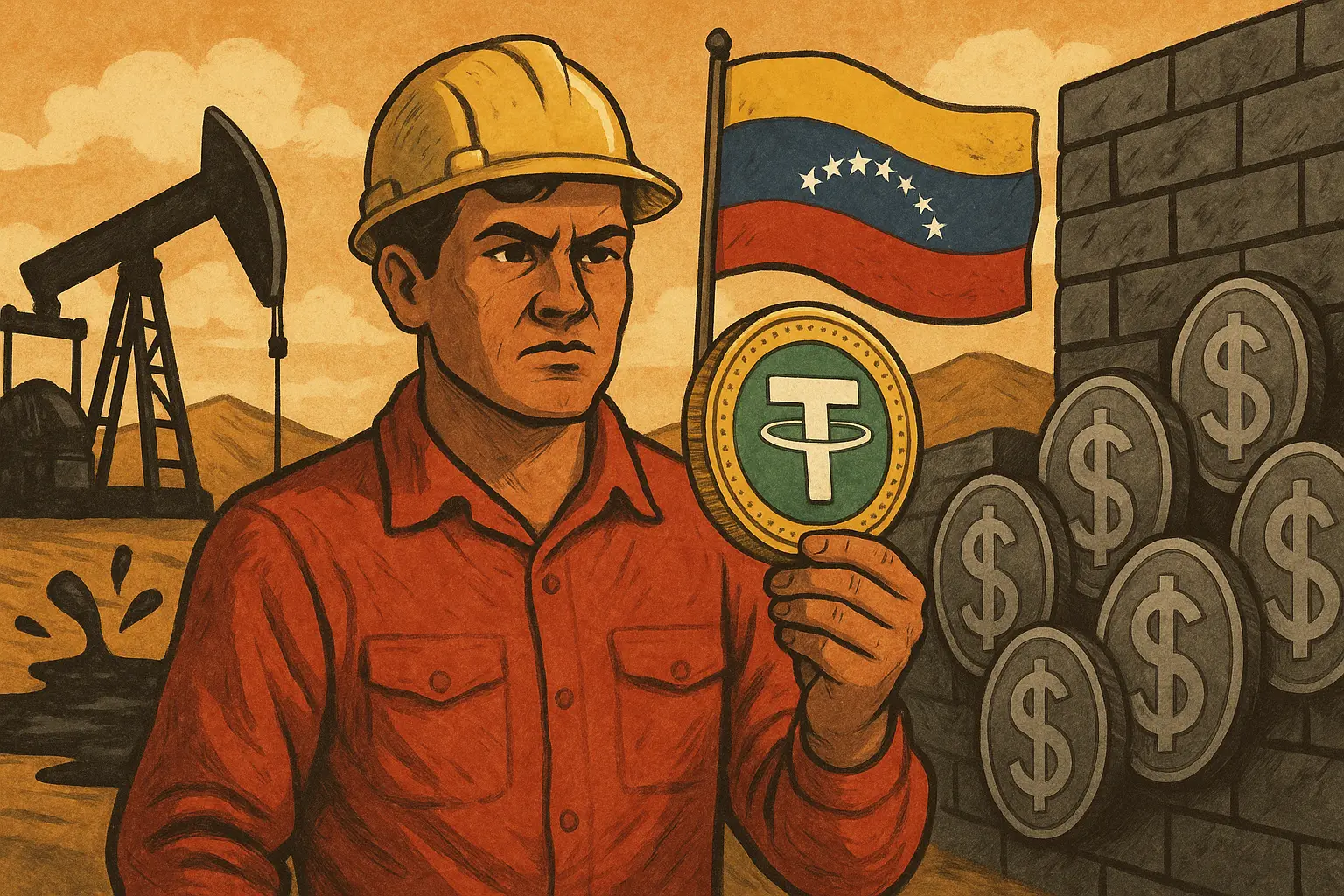
《The Wall Street Journal》 reveals that Venezuela’s state oil company (PDVSA) is using USDT to evade US sanctions, with nearly 80% of oil revenue flowing through stablecoins. Starting in 2024, customers are required to prepay in USDT, and in a country with inflation rates exceeding 270%, USDT accounts for 10% of grocery payments. Tether has frozen 41 related wallets.
How Oil Transactions Use USDT to Break Through Bank Blockades
US sanctions have fundamentally changed Venezuela’s oil export methods. In 2020, PDVSA began accepting USDT as payment for oil. This is not optional but a matter of survival. US sanctions hinder PDVSA from using the US banking system for international transactions, with traditional SWIFT transfer channels completely cut off. Any international bank dealing with PDVSA faces the risk of being excluded from the US financial system.
In this extreme situation, USDT offers a clever solution. As a stablecoin pegged to the US dollar, USDT technically does not need to go through the banking system. As long as both parties have crypto wallets and internet access, cross-border transfers can be completed. By early 2024, PDVSA has institutionalized this payment method, requiring clients to maintain cryptocurrency wallets and mandating prepayment in USDT.
In practice, PDVSA mainly sells oil to Chinese refineries. Settlement funds are sent directly to the client’s wallet address or exchanged for Tether through third-party intermediaries. This mode bypasses all banking monitoring mechanisms set up by the US Department of the Treasury’s Office of Foreign Assets Control (OFAC). Traditional oil transactions require letters of credit, escrow accounts, and SWIFT messaging, each of which can be monitored and intercepted. USDT transactions, however, only leave wallet addresses on the blockchain, making tracking much more difficult.
This shift in payment methods was not achieved overnight. Early on, PDVSA attempted barter, gold payments, and other methods but abandoned them due to inefficiency or high tracking risks. USDT’s advantage lies in its ability to retain the stability of the US dollar while possessing the decentralized features of cryptocurrency. For buyers like Chinese refineries, accepting USDT means they can quickly convert it into other assets or fiat currency without leaving evidence of direct transactions with PDVSA in banking records.
80% of Oil Revenue Flows Through Stablecoin Channels
Venezuelan economist Asdrúbal Oliveros revealed in a podcast that 80% of the country’s cash flow is now influenced by USDT. This ratio indicates that Venezuela’s national finances are effectively “dollarized,” but in the form of digital dollars via stablecoins.
This transformation is both a solution and a risk for the Venezuelan government. On one hand, USDT allows PDVSA to continue exporting oil and generating revenue, maintaining basic fiscal needs for the regime. On the other hand, heavy reliance on a single payment channel means that if Tether cooperates with US authorities to freeze related wallets, Venezuela’s oil income could be cut off instantly. In fact, according to the Atlantic Council, by 2024, Tether has frozen 41 wallets related to Venezuela.
USDT in Venezuela’s Oil Economy
Revenue Share: Nearly 80% of oil income flows through USDT and other stablecoins
Transaction Volume: In 2024, PDVSA exports approximately 600,000–800,000 barrels per day, with annual revenue estimated at $10–15 billion based on oil prices at the time
Settlement Speed: USDT transfers typically complete within minutes, far faster than the 3-5 business days of traditional banks
Fee Costs: USDT transfers on the Tron network cost less than $1, significantly lower than hundreds of dollars for international bank transfers
From State Tool to Civilian Currency: A Dual Role
The story of USDT in Venezuela extends beyond oil trade. In a country with hyperinflation exceeding 270% annually, USDT has become a lifeline for the economy. Tether CEO Paolo Ardoino pointed out that over ten years of Bolivar devaluation against the dollar, its value has shrunk by 99.8%. This devastating currency collapse has forced Venezuelans to seek alternatives.
By November 2025, cryptocurrencies account for about 10% of payments for groceries in Venezuela. This ratio is even higher in major cities like Caracas. Many supermarkets, restaurants, and small shops have installed USDT payment systems. Users are employing it for cross-border payments and daily shopping. In contrast, the Petro, launched by the Venezuelan government in 2018, failed due to lack of public trust and international recognition.
Researchers believe reliance on stablecoins stems from distrust in domestic banks. Additionally, capital controls limiting physical dollar supplies are a factor. The Venezuelan government strictly restricts dollar exchanges, with black market rates often several times higher than official rates. USDT provides a way to bypass official controls, allowing citizens to hold dollar assets at relatively market-based rates.
Inca Digital CEO Adam Zarazinski stated that cryptocurrency use in Venezuela may continue. He noted that stablecoins offer everyday users a hedging tool. Even if Maduro is arrested in the US on January 3, 2026, and faces drug trafficking charges, sanctions on Venezuela remain in effect. High inflation and weak institutions remain the fundamental reasons for strong demand for stablecoins.
Tether’s Dilemma and Regulatory Game
Tether’s spokesperson said the company works closely with OFAC and often assists law enforcement in freezing addresses related to sanctions violations. Tether claims to actively cooperate with authorities to combat illegal activities, but in practice, faces complex moral and commercial dilemmas.
TRM Labs’ Global Policy Director Ali Reda Bard commented that the dual nature of stablecoins is at the core of the issue. He claims stablecoins can serve as a lifeline for civilians while also helping them evade sanctions. This dilemma is vividly illustrated in the Venezuela case: when Tether cooperates with US sanctions to freeze PDVSA-related wallets, it may simultaneously impact ordinary Venezuelans relying on USDT to buy food.
From Tether’s perspective, excessive cooperation with sanctions could harm its competitiveness in global markets, especially in developing countries. Conversely, non-cooperation might trigger severe US regulatory crackdowns, threatening its position within the US financial system. Currently, Tether’s strategy is selective enforcement: freezing large wallets clearly linked to PDVSA, while maintaining relative leniency toward small transactions by ordinary users.
Disclaimer: The information on this page may come from third parties and does not represent the views or opinions of Gate. The content displayed on this page is for reference only and does not constitute any financial, investment, or legal advice. Gate does not guarantee the accuracy or completeness of the information and shall not be liable for any losses arising from the use of this information. Virtual asset investments carry high risks and are subject to significant price volatility. You may lose all of your invested principal. Please fully understand the relevant risks and make prudent decisions based on your own financial situation and risk tolerance. For details, please refer to
Disclaimer.


