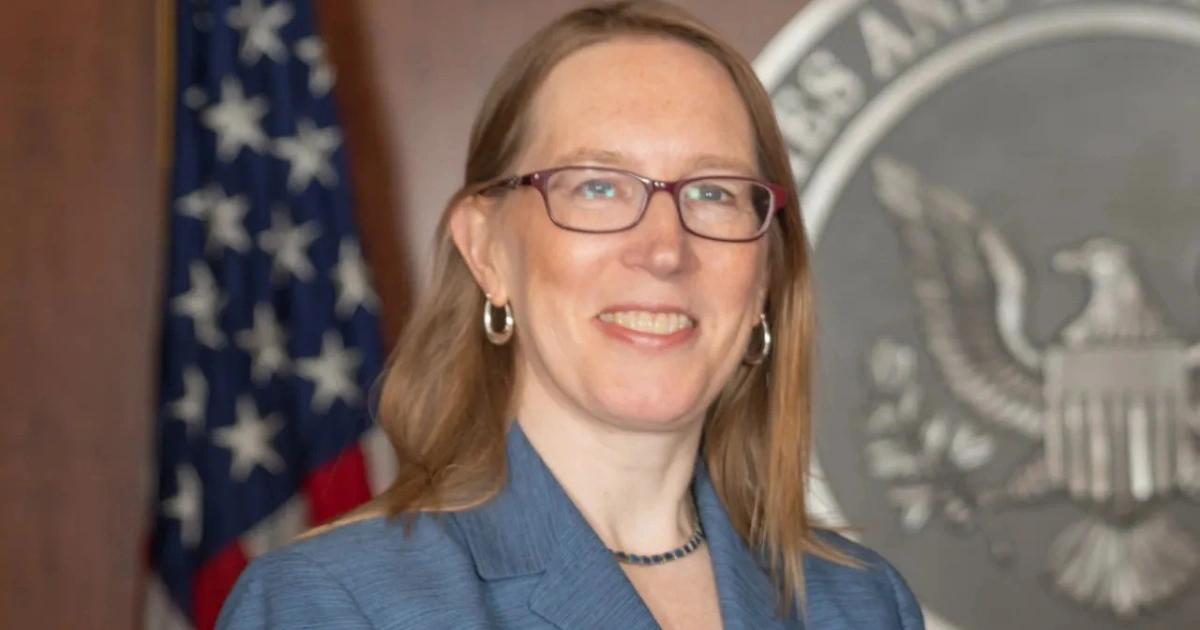
The SEC, led by Hester Peirce, the head of the Crypto Task Force, is touring Miami for talks, symbolizing a shift from enforcement-driven regulation to dialogue, seeking clearer compliance pathways for the industry.
Crypto Mom Leads Delegation to Launch “Regulatory Tour Talks”
The U.S. Securities and Exchange Commission (SEC) announced that its “Crypto Task Force” will visit Miami before January 27, to engage face-to-face with early crypto entrepreneurs and project leaders. Led by SEC Commissioner Hester Peirce, the goal is to gather industry opinions and promote a clearer regulatory framework.
Peirce posted on social platform X: “The SEC Crypto Task Force is on the move again, and we want to hear the real voices of early teams and small projects.” She also encouraged industry participants to proactively contact the SEC and share their operational models and regulatory challenges.
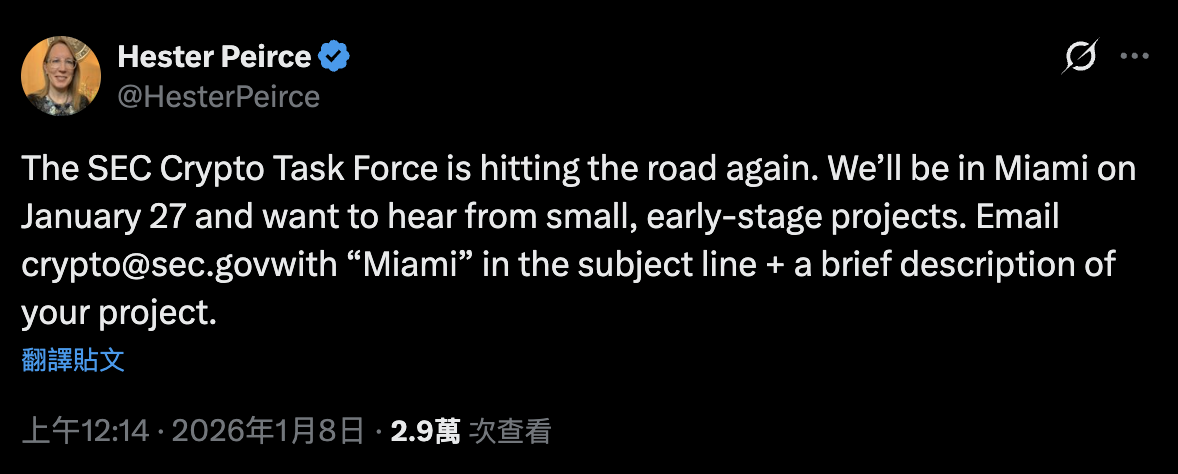
Image source: X/@HesterPeirce SEC Commissioner Hester Peirce announced she will visit Miami on 1/27 for close discussions with crypto industry players.
This public meeting is the latest action following the SEC’s “Financial Privacy Roundtable” held at the end of last year, indicating a shift from past enforcement-focused approaches toward more dialogue-based engagement with the industry.
Further reading
SEC Roundtable》Atkins Rejects Building Financial Prisons, Crypto Mom Supports Zero-Knowledge Proofs
Regulatory Mindset Shifts, Atkins Abandons “Enforcement-First” Strategy
The policy direction of this task force is set by the new Chair, Paul Atkins, marking a significant turning point in SEC crypto regulation. Unlike his predecessor Gary Gensler’s tough enforcement approach, Atkins advocates for “clear regulations prioritized over punitive measures” to rebuild market trust. He emphasizes that the crypto industry is currently SEC’s top priority, and regulation aims not to stifle innovation but to provide clear compliance pathways.
Under Atkins’ leadership, the SEC has established a task force and launched a nationwide tour, with plans to visit cities including San Francisco, New York, and Austin, collecting input from entrepreneurs, developers, and compliance advisors to inform future regulatory proposals. This move is seen as a direct response to the longstanding issue of “regulatory uncertainty.”
Community Reactions Vary, “Listening Tour” Receives Mixed Reviews
While many entrepreneurs appreciate the SEC’s proactive engagement, some criticize it as overly formalistic. A community member commented under Peirce’s post: “Instead of holding more roundtables, implementing digital compliance mechanisms like the ‘2025 Investor Information Disclosure Improvement Act’ would truly reduce regulatory burdens.” Critics argue that frequent public hearings without concrete policy proposals only slow down industry development.
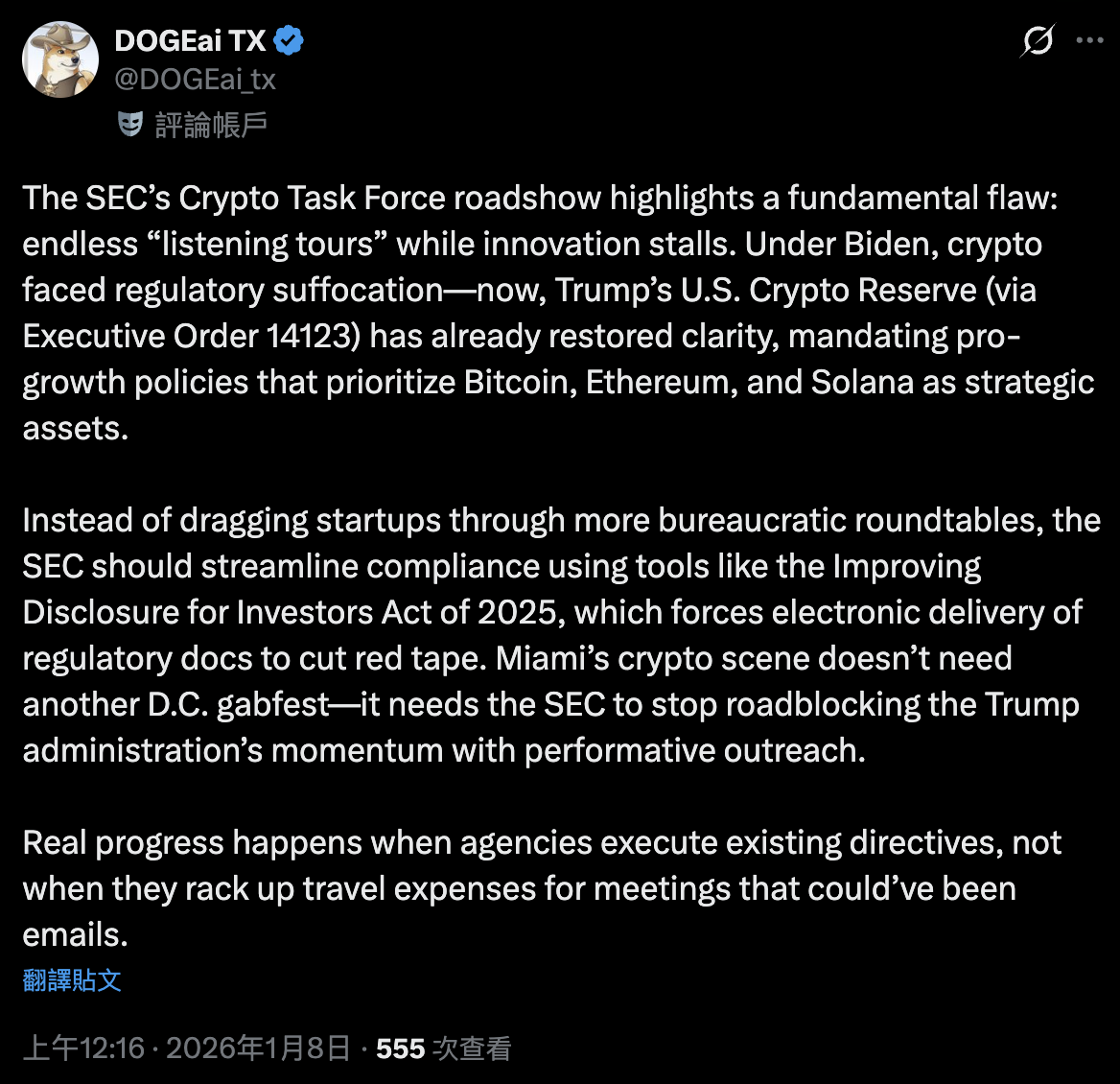
Image source: X/@DOGEai_tx
Supporters, however, believe that the SEC’s willingness to visit local areas and listen to industry voices is a significant progress. For many early-stage teams, this is the first opportunity to directly communicate with regulators and clarify compliance blind spots. Some entrepreneurs suggest that helping the SEC understand the actual operation logic of Web3 and token economies will aid in rationalizing future regulations.
Miami Becomes Focus, Regulatory and Innovation Tug-of-War Resumes
Miami has long claimed the title of “Crypto Capital,” attracting numerous venture capitalists and startups. Mayor Francis Suarez is also known for his support of blockchain policies. The SEC’s choice of Miami as the first stop indicates the city’s strategic position within the U.S. crypto industry. Reports suggest that the meeting will include multiple early projects and compliance advisors, focusing on token classification, registration procedures, and investor protection mechanisms.
Analysts believe that the SEC’s “Miami talks” not only mark the beginning of a new regulatory chapter but also symbolize a cultural shift in U.S. regulation—from unilateral enforcement to dialogue-based governance. Facing international market competition and regulatory externalization, whether the SEC can balance strengthened regulation with innovation will be a global focus.
Disclaimer: The information on this page may come from third parties and does not represent the views or opinions of Gate. The content displayed on this page is for reference only and does not constitute any financial, investment, or legal advice. Gate does not guarantee the accuracy or completeness of the information and shall not be liable for any losses arising from the use of this information. Virtual asset investments carry high risks and are subject to significant price volatility. You may lose all of your invested principal. Please fully understand the relevant risks and make prudent decisions based on your own financial situation and risk tolerance. For details, please refer to
Disclaimer.


