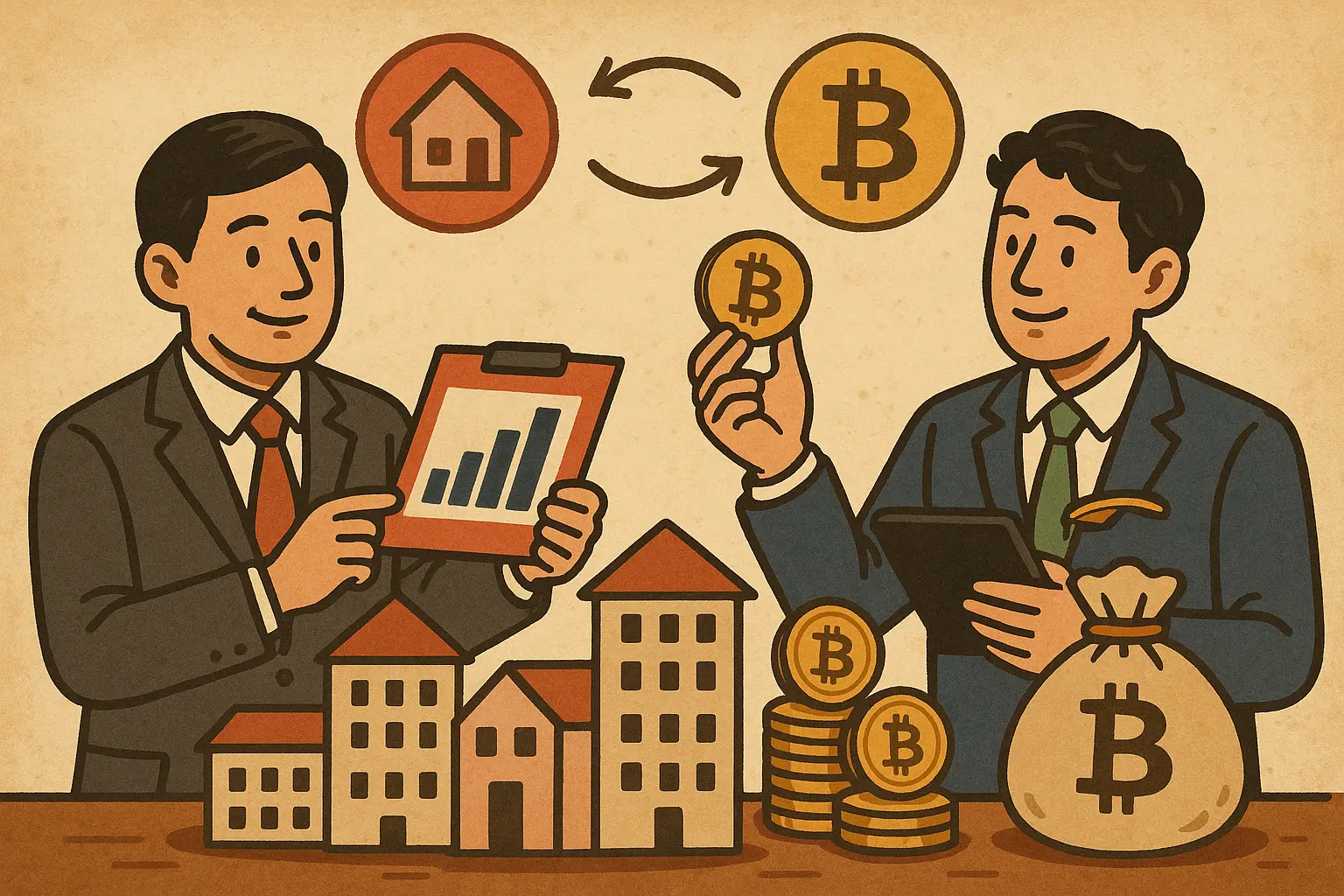
HSBC releases the 2025 Global Entrepreneur Wealth Report, surveying 165 Taiwanese entrepreneurs. 61% allocate funds to their primary residence real estate (above the global average of 53%), and 26% have invested in cryptocurrencies. The participation rate of Taiwanese family businesses reaches 87%, with 75% having multi-generational inheritance. However, only 63% have established independent governance structures (compared to the global average of 80%), and 58% are concerned about the next generation’s lack of professional succession skills.
Real estate remains the top asset allocation choice
According to this survey, 61% of Taiwanese entrepreneurs allocate funds to their primary residence real estate, higher than the global average of 53%. This preference reflects Taiwanese entrepreneurs’ trust in tangible assets and their emphasis on asset preservation. Real estate, as a traditional hedge asset, has always held a special position in Taiwanese culture, with the concept of “Having land is having wealth” deeply ingrained.
Taiwanese entrepreneurs’ real estate investments are not limited to personal housing needs but also serve as important tools for wealth preservation and family inheritance. Compared to the volatility of stocks and bonds, real estate offers a more stable store of value. Additionally, Taiwan’s real estate market has continuously appreciated over the past decades, reinforcing entrepreneurs’ confidence in these assets.
Next is luxury goods, such as high-end fashion and jewelry (47%) and automobiles (46%). These expenditures reflect entrepreneurs’ pursuit of quality of life and social status symbols after accumulating wealth. Notably, nearly 40% (37%) of respondents indicate they would allocate part of their wealth to charitable donations, demonstrating that Taiwanese entrepreneurs, while seeking wealth growth, also pay attention to social responsibility and giving back.
Looking ahead, 14% of respondents plan to reduce their cash holdings, and 20% will continue investing in the growth of their personal businesses. This reallocation of funds indicates entrepreneurs are shifting from defensive asset allocation to more active growth-oriented investment strategies. Reducing cash holdings suggests they believe current market conditions offer better investment opportunities, while continued investment in their own businesses reflects confidence in their long-term prospects.
Cryptocurrencies become the new favorite in asset allocation
In terms of portfolio, entrepreneurs show strong interest in cryptocurrencies, with 26% of respondents already including cryptocurrencies in their personal asset portfolios, demonstrating high sensitivity to the digital economy. This proportion is significantly higher than that of the general high-net-worth population, indicating that entrepreneurs, as innovators and risk-takers, are more willing to embrace emerging asset classes.
The motivations for Taiwanese entrepreneurs to allocate to cryptocurrencies are diverse. First, for diversification—seeking low-correlation assets outside traditional stocks, bonds, and real estate to reduce portfolio volatility. Second, as a hedge against fiat currency devaluation, especially amid ongoing quantitative easing by major global central banks, cryptocurrencies are viewed as tools against inflation. Third, as a forward-looking move towards the digital economy, many entrepreneurs believe blockchain and digital assets will be key components of future economies.
Three characteristics of cryptocurrency allocation
Cautious allocation ratio: Although the 26% adoption rate is notable, most entrepreneurs allocate only 1% to 5% of their portfolios to cryptocurrencies, indicating they see cryptocurrencies as high-risk, high-reward satellite assets rather than core holdings.
Mainly Bitcoin and Ethereum: The survey shows Taiwanese entrepreneurs primarily allocate to mainstream cryptocurrencies like Bitcoin and Ethereum, with less involvement in high-risk altcoins or memecoins. This choice reflects their risk management awareness.
Via compliant channels: Most entrepreneurs conduct their cryptocurrency allocations through regulated exchanges in Hong Kong or Singapore and private banks, rather than decentralized exchanges. This preference underscores their focus on compliance and fund security.
It is also noteworthy that Taiwanese entrepreneurs’ private equity holdings account for only 18%, below the global average of 48%. This gap may stem from the relatively undeveloped private equity market in Taiwan and entrepreneurs’ tendency to invest more in their own businesses rather than external private funds. As Taiwan’s private equity market gradually opens and matures, this ratio may increase in the future.
Wealth governance and succession challenges coexist
Although Taiwanese family businesses have a strong willingness to pass on, they still face challenges in governance structures and succession preparation. Only 63% of entrepreneurs have established independent and clear governance frameworks, significantly below the global average of 80%. This governance gap could lead to decision-making chaos, equity disputes, and divergent business directions during family succession.
More concerning is that 58% of business owners worry that the next generation lacks sufficient professional skills for succession. This “capability anxiety” reflects the gap in business philosophy, management style, and market understanding between generations. Many second-generation successors have received education abroad and may encounter conflicts with the family business culture upon returning to Taiwan, requiring time and professional guidance to bridge.
Nishi Bo, acting head of HSBC Taiwan’s Private Banking, states that Taiwanese entrepreneurs, facing asset inheritance and sustainable management issues, care not only about wealth transfer but also about the continuation of business achievements. They need to leverage professional expertise and start dialogue early, optimize asset allocation within a global context, and establish customized succession blueprints through broad options.
Disclaimer: The information on this page may come from third parties and does not represent the views or opinions of Gate. The content displayed on this page is for reference only and does not constitute any financial, investment, or legal advice. Gate does not guarantee the accuracy or completeness of the information and shall not be liable for any losses arising from the use of this information. Virtual asset investments carry high risks and are subject to significant price volatility. You may lose all of your invested principal. Please fully understand the relevant risks and make prudent decisions based on your own financial situation and risk tolerance. For details, please refer to
Disclaimer.
Related Articles
Kevin O'Leary Allocates 90% of Crypto Portfolio to Bitcoin and Ethereum, Dismisses Other Tokens
Kevin O'Leary has shifted 90% of his crypto investments to Bitcoin and Ethereum, dismissing other assets as "garbage." He emphasizes their liquidity and market dominance, while also investing in Bitcoin mining and AI infrastructure.
GateNews3h ago
Bitmine Records Largest Weekly Ethereum Accumulation in 4 Months with 101,627 ETH
Bitmine recently acquired 101,627 ETH, bringing its total to 4,976,485 ETH, which is 4.12% of the circulating supply. The company aims to reach 5% of total ETH supply and is the world’s largest ETH staker, recently launching an institutional staking platform.
GateNews4h ago
Whale Address 0x8Ad4 Withdraws 12,000 ETH from CEX to Repay Aave Loans
Gate News message, whale address 0x8Ad4 withdrew 12,000 ETH, valued at $27.6 million, from centralized exchanges over the past 3 hours. The withdrawn ETH was used to repay loans on Aave.
GateNews4h ago
Vitalik Buterin Outlines Ethereum's 5-Year Roadmap Focused on Quantum Security and Scalability
Vitalik Buterin presented Ethereum's five-year roadmap, focusing on quantum security and scalability. Key goals include increasing gas limits, implementing Zero Knowledge Proofs, and enhancing transaction confirmation times by 2028, despite challenges with quantum-resistant signatures.
GateNews6h ago
Bitmine bought 101,627 ETH in a single week, worth $230 million: the largest single-week purchase in 2026, with ETH holdings nearing 5 million coins
Bitmine Immersion Technologies bought 101,627 ETH against the market trend, with a total value exceeding $230 million, becoming the largest one-week purchase in 2026. The company holds nearly 5 million ETH, accounting for 4.12% of the total supply, and may affect ETH’s circulating supply and market valuation. While other treasury firms are reducing their purchases, Bitmine has strengthened its position in the ETH space with an advantage-driven strategy. Investors in Taiwan can participate by directly buying ETH, joining Bitmine, or waiting for authorization of an ETH ETF.
ChainNewsAbmedia7h ago
ETH Whale Takes Profit on 20,000 ETH Worth $46.33M, Realizes $551K Gain
On April 20, an ETH whale closed a 4,000 ETH long position, earning $144,000, while another address took profit on 20,000 ETH, realizing $551,000 in gains and holding an additional 20,000 ETH.
GateNews8h ago


