Author: David Feliba, CoinTelegraph; Translated by: Bai Shui, Golden Finance
Although the Trump administration laid the initial groundwork for regulating the U.S. crypto industry (with the expectation that the new crypto czar in the White House will set the direction in the coming months), these digital assets have already been thriving in emerging markets.
Stablecoins are pegged to fiat currencies and are becoming an important financial tool in many developing countries, facilitating remittances and cross-border trade, bridging the gap in financial inclusivity, and providing an inflation hedge in countries where traditional banking services are often insufficient and millions of people have little to no access to financial services.
Stablecoins (primarily pegged to the US dollar) have seen explosive growth in recent years, with their actual use cases rapidly expanding to Africa, Latin America, and some developing countries in Asia. While the United States is still exploring how to apply this technology beyond the crypto space, emerging markets have already demonstrated the importance of stablecoins.
In these regions, they are not just a financial experiment, but a solution.
Stablecoins as a Hedge Against Inflation in South America
In economies plagued by inflation, such as Argentina and Venezuela, stablecoins provide a dollar-pegged safe haven to avoid local currency depreciation, especially when foreign exchange channels are tightly controlled. Throughout Africa and Central America, they serve as a cost-effective tool for remittances and cross-border payments, while in places like Indonesia, they can offer an alternative that is easier to access than traditional dollar banking, which may involve complex requirements.
Cornell University trade policy professor Eswar Prasad stated that while stablecoins are primarily used in decentralized finance and serve as a bridge between traditional banking and DeFi in wealthier, more developed economies, their role is more fundamental yet essential in emerging markets with limited financial infrastructure.
“In low- and middle-income economies where the financial system is underdeveloped, they can play a beneficial role by providing citizens and businesses with convenient, widespread, low-cost digital payment systems.”
The US dollar is widely regarded as a global store of value, and access to the dollar is a key driving factor for emerging markets to adopt stablecoins. Compared to the volatility of early cryptocurrencies like Bitcoin, stablecoins aim to provide stability, with most stablecoins pegged to the US dollar, among which USDT Tether holds nearly 60% of the global market share, followed by another dollar-backed asset, USDC.
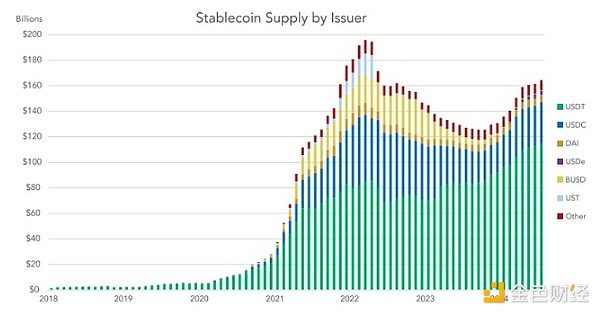
Stablecoin provided by the issuer. Source: Castle Island Ventures.
“Some issues in the world need to be solved with a cryptocurrency that does not constantly fluctuate in price,” said Julián Colombo, senior executive of the Mexican cryptocurrency exchange Bitso, in an interview. Bitso has official offices in Argentina, Brazil, and Colombia.
“Stablecoins provide a way to bring all the benefits of cryptocurrency into real-world use cases - not just the potential to get rich off of Bitcoin.”
Stablecoins are the top priority of Trump, the crypto czar.
As bipartisan senators introduced legislation to establish a regulatory framework on February 4, the momentum around stablecoins in the United States is increasing. White House AI and cryptocurrency czar David Sacks emphasized in his first address to the industry that stablecoin regulation is a top priority for the government. The task force led by the former venture capitalist will draft key policies over the next six months.
Regardless, the growth of stablecoins is nothing short of astonishing. According to data from DelfiLlama, their market capitalization reached an incredible $100 billion in just the past year, soaring to $225 billion by February 2025. USDT still dominates, holding over 60% of the market share, but challengers—including those backed by financial giants like PayPal—are rapidly emerging.
“Stablecoins - the tokenized representation of fiat currency circulating on the blockchain - are undoubtedly the ‘killer application’ of cryptocurrency,” a report written by Castle Island Ventures and sponsored by VISA mentioned.
“We believe that stablecoins represent a payment innovation that has the potential to provide secure, reliable, and convenient payment services to more people in more places,” said Cuy Sheffield, global cryptocurrency head at the American payment giant.
The report states: “Although they initially emerged as a type of crypto-native collateral and settlement medium for traders and exchanges, they have crossed the chasm and are widely adopted in the global mainstream economy.”
“Based on the differences between stablecoin activities and cryptocurrency market cycles, it is clear that the adoption of stablecoins has gone beyond merely serving cryptocurrency users and trading use cases.”
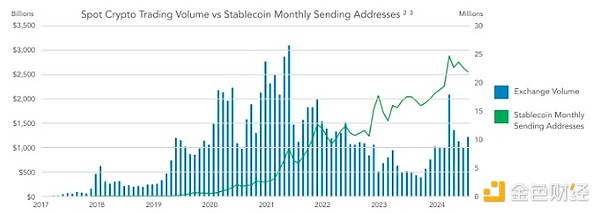
Spot cryptocurrency trading volume and stablecoin monthly sent addresses. Source: Castle Island Ventures.
Stablecoins are seen as a store of value, a tool for hedging against inflation, and a means for cross-border transactions, gaining significant appeal in emerging markets. A recent report from Chainalysis found that the adoption rate of stablecoins in regions such as Africa, Eastern Europe, Latin America, and Asia far exceeds that of Bitcoin, accounting for nearly half of all cryptocurrency transactions in some cases.
In contrast, the adoption rate of stablecoins in the United States and North America is the lowest, although it still holds a significant share.
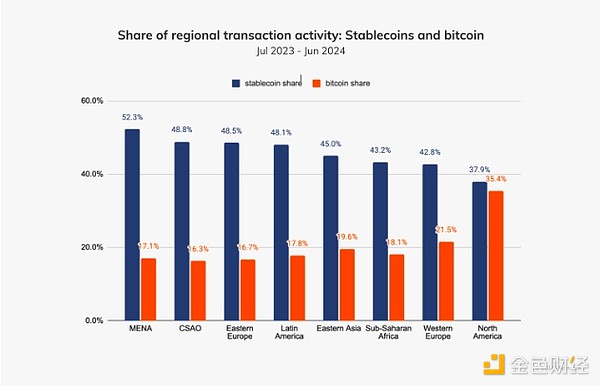
Share of regional trading activity: stablecoins and Bitcoin. Source: Chainalysis.
Gabriel Galipodo, the president of the Central Bank of Brazil, stated that the use of stablecoins has significantly increased in Brazil and other regions in recent years. Brazil is a strong country in Latin America, with a population of 216 million and a GDP of $2.2 trillion. This economist mentioned at an event of the Bank for International Settlements held in Mexico City on February 6 that up to 90% of the entire cryptocurrency circulation is related to stablecoins.
“Most of it is about buying things and shopping from abroad,” Galipolo said, emphasizing that this new trend has brought severe regulatory challenges in terms of taxation.
But Julián Colombo, who leads the local operations of the regional exchange Bitso, stated that no place in Latin America is more popular for stablecoins than Argentina. Amid long-term inflation and economic instability in the country, they provide citizens with an important financial refuge.
Colombo stated: “In Argentina, just like in other high-inflation countries, stablecoins have become a solution to a very real and urgent problem.”
“Argentinians do not trust the local currency and prefer to save in dollars, but the foreign exchange controls and restrictions implemented by the government make it difficult to obtain dollars. Stablecoins fill this gap, providing a way to hold and trade in dollars.”
He said that in Argentina, about two-thirds of the cryptocurrencies purchased through exchanges are done with assets pegged to the US dollar. Although Argentina’s financial indicators have improved under the market-driven government led by pro-crypto President Javier Milei (, the inflation rate still stands at 84.5%.
Although recent monthly data shows a downward trend, rebuilding trust in the local currency in a country long plagued by triple-digit inflation and severe currency depreciation takes time to ensure sustained demand for stablecoins pegged to the US dollar.
Similarly, Venezuela’s adoption of such digital assets is significant as the country suffers from prolonged inflation and extensive regulations, making it very complicated to obtain foreign currencies such as the US dollar. In more stable emerging markets like Brazil or Mexico, they can play a different but equally important role: facilitating fast, low-cost remittances without the volatility associated with traditional cryptocurrencies.
Businesses use them to pay for international service fees, hire remote employees, send dividends, and facilitate remittances, making cross-border transactions more efficient and convenient.
“Stablecoins have a promise of stability compared to other crypto assets,” said the Bank for International Settlements in a report on stablecoins. “Due to this potential, they are increasingly entering mainstream finance, and many jurisdictions have developed regulatory approaches for stablecoin issuers pegged to a single fiat currency.”
Stablecoins Drive Remittances in Central America and Africa
One of the most powerful use cases for stablecoins is cross-border transfers and remittances, especially in Central America and Africa, where these digital assets provide a cheaper and faster alternative for cross-border money flows. Immigrants working in the United States often find stablecoins to be a more convenient tool for sending money back to their families at home.
“Stablecoins have gained some attention in domestic and cross-border payments,” said Prasad, a professor of trade policy at Cornell University in the United States, to Cointelegraph. “They have played a particularly useful role in overcoming the inefficiencies, high costs, and slow processing times of cross-border transactions conducted through traditional payment channels.”
Speaking about the popularity of stablecoins in remittances, Colombo said, “Before the emergence of cryptocurrencies, remittance services could charge fees of up to 10% just to transfer money from one country to another. With cryptocurrencies, you might have some extra money to send to Mexico, and the transfer could cost just one cent — it can arrive in minutes instead of hours or days.”
The Increase of Stablecoin Use Cases Beyond Cryptocurrency
In a report sponsored by Visa, researchers surveyed approximately 500 cryptocurrency users in Nigeria, Indonesia, Turkey, Brazil, and India, totaling 2,541 adults. While acquiring cryptocurrency remains the most popular motive for using them, non-cryptocurrency uses such as obtaining dollars, generating profits, or trading purposes are also very popular.
![Z4BsxtyMxUbe8QIchEQhyRE88sS4LVw8txd6yG3m.jpeg])https://img.jinse.cn/7350106_watermarknone.png “7350106”(
Stablecoin survey results. Source: Castle Island Ventures.
Surveys show that, compared to other surveyed countries, Nigerian users have the strongest affinity for stablecoins. Nigerians trade with stablecoins most frequently, have the largest share of stablecoins in their portfolios, use them for the widest range of non-crypto purposes, and self-report the highest level of understanding of stablecoins. Saving in US dollars is their top priority.
Zekarias Dubale, co-founder of the Africa Fintech Summit, stated that stablecoins have become the “holy grail” for cross-border trade, international remittances, and value transfer across the African continent. He believes that these digital assets can provide the financial infrastructure needed to facilitate global trade.
However, stablecoins are not without risks. While the most widely used stablecoins have essentially maintained their peg to the strong fiat currencies they are designed to reflect, the market is rapidly expanding, with hundreds of digital assets currently in circulation. However, many of these assets lack transparency regarding the reserves that support them, and instances of stablecoins decoupling occur from time to time, with some even collapsing.
Nevertheless, under the leadership of the Trump administration, the development momentum of stablecoins in the United States and emerging markets is strong, proving to be a powerful tool to help citizens overcome challenges related to financial inclusion and underdeveloped infrastructure.


