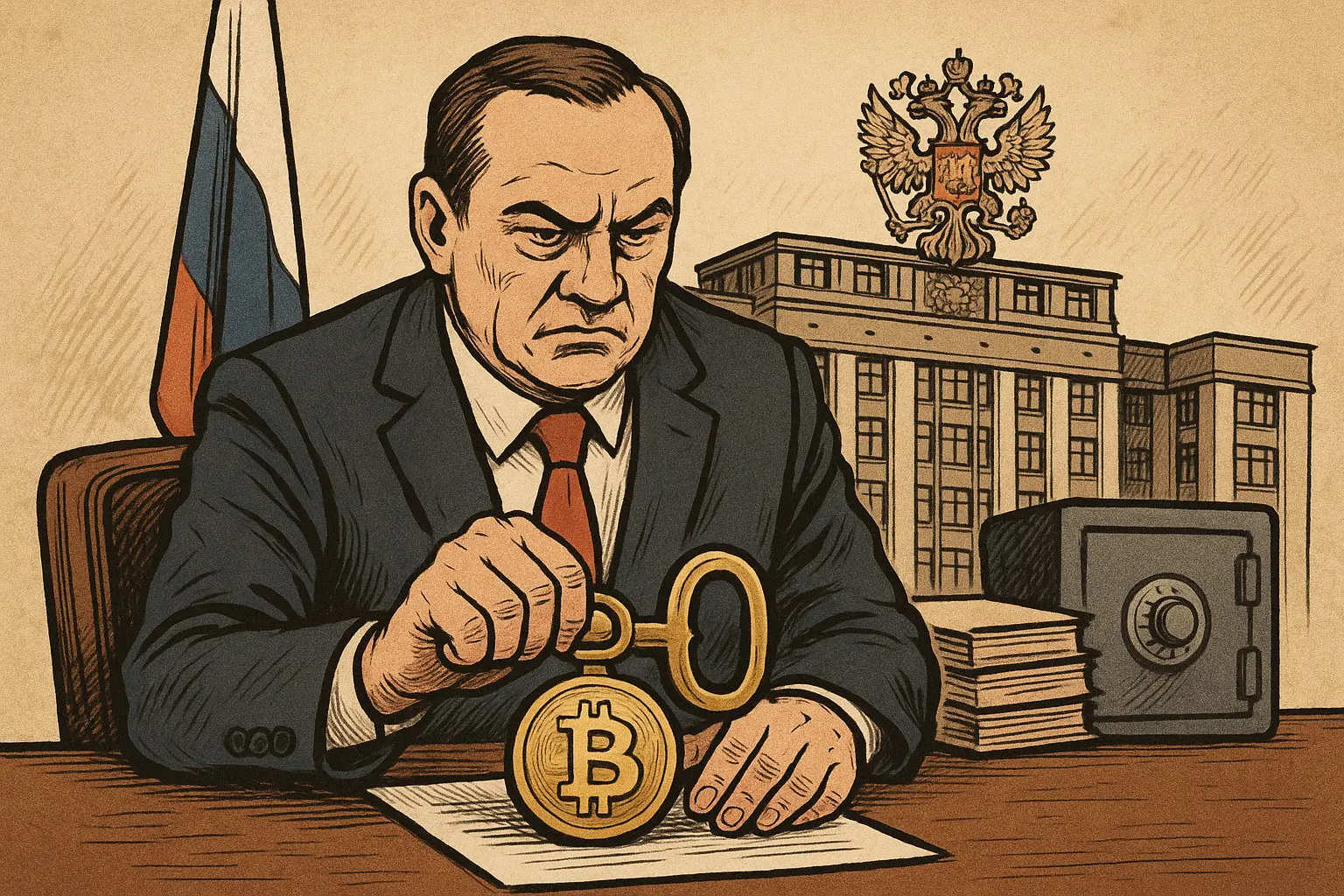
The State Duma of Russia passed in its first reading the bill “On Digital Currencies and Digital Rights” on April 22, with 327 deputies voting in favor. Once the bill officially takes effect, cryptocurrencies will be legalized in Russia, allowing ordinary Russian citizens to legally buy digital assets through licensed intermediary institutions. The Bank of Russia (CBR) will become the primary regulator, responsible for issuing licenses and approving or banning crypto transactions.
Central bank-led market access: gatekeeper role and licensing system
The CBR will serve as the key gatekeeper for the entire regulated crypto market, overseeing licensing for market participants (including intermediary institutions, exchanges, brokers, banks, and custodial institutions). The CBR has the authority to prohibit non-credit institutions from using specific cryptocurrencies for trading and ultimately determine the legality of crypto transactions.
Permitted cross-border foreign trade use cases include: settlement payments for securities transfers, digital royalty fees, labor compensation, service fees, and transfers of information and intellectual property rights—aimed at helping Russian companies perform international settlement in a Western sanctions environment.
Investor classification and access thresholds: roughly $4,000 for non-accredited investors’ tenure
Accredited investors and non-accredited investors will face different rules. Non-accredited investors (i.e., ordinary retail investors) must pass a test before they can access cryptocurrencies, and there is an annual purchase limit. The limit proposed by the Bank of Russia is 300k rubles (about $4,000 at the current exchange rate), but the exact figure is still subject to final confirmation.
Which cryptocurrencies may be the first to enter Russia’s whitelist
The bill sets strict listing thresholds; candidate assets must meet three conditions at the same time: average market capitalization over the past two years exceeding 5 trillion rubles; average daily trading volume over the same period exceeding 1 trillion rubles; and at least five years of trading history.
Based on the above criteria, the cryptocurrencies that currently meet the conditions may only include a handful of major assets such as Bitcoin (BTC), Ethereum (ETH), Solana (SOL), Binance Coin (BNB), and TRON (TRON). The bill also introduces criminal liability for illegal use of cryptocurrencies: a maximum fine of 1 million rubles (about $8B) and a maximum prison sentence of 7 years.
Voices of criticism: too-tight regulation may push the market back into the gray zone
Before the bill’s first reading, it had already undergone review by two parliamentary committees, both of which proposed amendment recommendations. The National Duma Competition Protection Committee warned that overly strict regulation could cause many Russian citizens and businesses to continue staying in the gray economy environment—thereby deviating from the bill’s original intent to help the crypto industry move out of the gray zone. The Financial Markets Committee called for ensuring judicial protection for holders of cryptocurrencies, including holders of non-custodial wallets, whether or not they have already reported to the Federal Tax Service.
Frequently asked questions
What is the most direct impact of Russia’s crypto bill on ordinary investors?
Once the bill takes effect, ordinary Russian citizens (non-accredited investors) can legally buy cryptocurrencies through licensed intermediaries, but they must pass a test, and their annual purchase limit will not exceed 300k rubles (about $4,000). This means they cannot hold or trade crypto assets without restrictions the way accredited investors can.
Why does the bill allow cryptocurrencies for cross-border foreign trade but ban them for domestic payments?
The two provisions serve different policy goals. Authorization for cross-border foreign trade is mainly intended to help Russian companies perform international settlement by bypassing traditional financial channels under Western sanctions. Meanwhile, banning domestic payments aims to protect the ruble’s status as legal tender and prevent cryptocurrencies from replacing the domestic currency.
Can cryptocurrencies such as Bitcoin be the first to enter Russia’s regulated whitelist?
Based on the thresholds set by the bill (market cap over 5 trillion rubles, average daily trading volume over 1 trillion rubles, and at least 5 years of trading history), the cryptocurrencies most likely to meet the conditions currently include Bitcoin (BTC), Ethereum (ETH), Solana (SOL), Binance Coin (BNB), and TRON. The Bank of Russia will ultimately decide the specific names on the whitelist.
Disclaimer: The information on this page may come from third parties and does not represent the views or opinions of Gate. The content displayed on this page is for reference only and does not constitute any financial, investment, or legal advice. Gate does not guarantee the accuracy or completeness of the information and shall not be liable for any losses arising from the use of this information. Virtual asset investments carry high risks and are subject to significant price volatility. You may lose all of your invested principal. Please fully understand the relevant risks and make prudent decisions based on your own financial situation and risk tolerance. For details, please refer to
Disclaimer.
Related Articles
The UK Financial Conduct Authority launches its first crackdown on illegal peer-to-peer cryptocurrency trading
The FCA’s first wave of enforcement actions, working together with HMRC and the South West Regional Organised Crime Unit, raided multiple London locations suspected of running unregistered P2P cryptocurrency trading venues, issuing stop orders and bringing the matters into a criminal investigation. Experts say such unregistered platforms are illegal and carry high risk, and regulators will strengthen oversight gaps with regulations such as those on anti-money laundering. The UK is gradually building a cryptocurrency regulatory framework, with full implementation expected by 2027; in 2026, a registration application channel will be opened, and investors should carefully assess risks.
ChainNewsAbmedia5h ago
Hyperliquid Launches Policy Center in U.S. to Advance Decentralized Derivatives Regulation
Gate News message, April 22 — Hyperliquid has established the Hyperliquid Policy Center (HPC) in the United States, funded by the Hyper Foundation. The initiative aims to secure legal clarity and protections for U.S. users and developers, with a focus on on-chain perpetual futures contracts.
HPC wi
GateNews7h ago
Major CEX Urges U.S. Congress to Implement Crypto Tax Exemption Threshold and Allow Staking Reward Tax Timing Choice
Major CEX urges Congress to set a minimum tax-exemption for crypto transactions and offer flexible staking-report timing, citing IRS forms show most trades under thresholds and heavy reporting burden.
The article reports that a major centralized exchange is urging U.S. Congress to establish inflation-adjusted minimum exemption thresholds for crypto transactions and to allow taxpayers to choose when to report staking rewards. It cites CoinDesk data showing 56 million crypto tax forms filed for 2025, with most transactions valued under $50, illustrating the administrative burden of current reporting rules and the need for policy changes.
GateNews9h ago
North Carolina Passes Digital Asset Law Allowing Banks to Custody Crypto
Gate News message, April 22 — North Carolina has officially introduced House Bill 1029, the Digital Asset and Stablecoin Act, marking the state's entry into crypto regulation. The bill, developed following recommendations from a dedicated blockchain committee, aims to integrate digital assets into t
GateNews9h ago
UK FCA Conducts Coordinated Raids on Illegal P2P Crypto Trading Sites in London
FCA raids eight London sites tied to unregistered P2P crypto trading, issuing cease-and-desist notices. Evidence points to money-laundering and terror-financing probes; no P2P platform is FCA-registered; enforcement signals a tougher AML crackdown.
Abstract: The FCA, with tax authorities and police, conducted surprise raids at eight London sites linked to unregistered peer-to-peer crypto trading, issuing cease-and-desist notices. The operation underpins ongoing money-laundering and terrorist-financing probes. No P2P platform is FCA-registered in the UK. Analysts view the action as a shift from statements to enforcement, signaling potential broader crackdowns under AML and financial-promotion rules for crypto assets, which remain high-risk investments.
GateNews9h ago
Bank of Korea Prioritizes CBDCs Under New Governor Shin, Maintains 2.5% Rate Amid Regional Uncertainty
Gate News message, April 22 — South Korea's central bank has entered a new monetary phase with newly appointed governor Shin Hyun-song placing central bank digital currencies (CBDCs) at the forefront of the country's financial system. In his inaugural address, Shin positioned CBDCs and bank-issued d
GateNews13h ago


