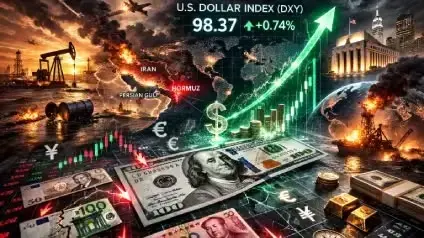
The US Consumer Price Index (CPI) data for March 2026 indicates a critical period for global macroeconomic balances. According to the data, headline inflation rose to 3.3% year-on-year, while core inflation (core CPI) reached 2.6%. These results once again highlight the decisive role of energy price shocks on inflation dynamics.
1. Sharp Rise in Headline Inflation
The rise in headline inflation from 2.4% to 3.3% is considered one of the most significant inflationary accelerations in recent times. The main reason for this increase is the dramatic jump in energy prices.
Approximately 20%+ increase in gasoline prices
The spread of energy costs through the transportation and production chain
This constitutes a strong example of the classic cost-push inflation mechanism.
2. Relatively Moderate Core Inflation
The fact that core inflation remained below expectations (2.7%) at 2.6% can be considered a positive signal on the surface.
Monthly increase of only 0.2%
Limited increases in services and healthcare items
Decreases observed in some items (pharmaceuticals, food)
This indicates that inflation has not yet spread broadly and is largely energy-driven.
3. Expectations and Impacts on Monetary Policy
Although core inflation appears to be under control, the current picture is complex for the central bank:
Headline inflation is still well above the 2% target
The lagged effects of energy shocks could push core inflation upwards
Expectations for interest rate cuts are weakening
Market pricing suggests that a cautious stance will continue in the short term rather than easing.
4. Geopolitical Risks and the Structural Dimension of Inflation
Recent data shows that inflation has become not only an economic but also a geopolitical phenomenon:
Energy supply shocks originating from the Middle East
High volatility in oil prices
Increased supply chain costs
These developments reveal that inflation is evolving into a structure that carries not temporary but volatile and persistent risks.
March 2026 US CPI data clearly shows that inflation dynamics exhibit a two-way structure:
Negative aspect: A significant and rapid rise in headline inflation
Positive aspect: Core inflation remaining below expectations
However, the overall assessment points to upward risks. Pressures stemming from energy prices may also be reflected in core inflation in the coming months, creating additional tightening pressure on monetary policy.
In conclusion, the current data set weakens the "controlled recovery" narrative and strengthens the possibility of the US economy entering a new inflationary period. In this context, energy prices and geopolitical developments will continue to be the focus of the markets in the short term.
#CryptoMarketRecovery
#CPI
#GateSquareAprilPostingChallenge
1. Sharp Rise in Headline Inflation
The rise in headline inflation from 2.4% to 3.3% is considered one of the most significant inflationary accelerations in recent times. The main reason for this increase is the dramatic jump in energy prices.
Approximately 20%+ increase in gasoline prices
The spread of energy costs through the transportation and production chain
This constitutes a strong example of the classic cost-push inflation mechanism.
2. Relatively Moderate Core Inflation
The fact that core inflation remained below expectations (2.7%) at 2.6% can be considered a positive signal on the surface.
Monthly increase of only 0.2%
Limited increases in services and healthcare items
Decreases observed in some items (pharmaceuticals, food)
This indicates that inflation has not yet spread broadly and is largely energy-driven.
3. Expectations and Impacts on Monetary Policy
Although core inflation appears to be under control, the current picture is complex for the central bank:
Headline inflation is still well above the 2% target
The lagged effects of energy shocks could push core inflation upwards
Expectations for interest rate cuts are weakening
Market pricing suggests that a cautious stance will continue in the short term rather than easing.
4. Geopolitical Risks and the Structural Dimension of Inflation
Recent data shows that inflation has become not only an economic but also a geopolitical phenomenon:
Energy supply shocks originating from the Middle East
High volatility in oil prices
Increased supply chain costs
These developments reveal that inflation is evolving into a structure that carries not temporary but volatile and persistent risks.
March 2026 US CPI data clearly shows that inflation dynamics exhibit a two-way structure:
Negative aspect: A significant and rapid rise in headline inflation
Positive aspect: Core inflation remaining below expectations
However, the overall assessment points to upward risks. Pressures stemming from energy prices may also be reflected in core inflation in the coming months, creating additional tightening pressure on monetary policy.
In conclusion, the current data set weakens the "controlled recovery" narrative and strengthens the possibility of the US economy entering a new inflationary period. In this context, energy prices and geopolitical developments will continue to be the focus of the markets in the short term.
#CryptoMarketRecovery
#CPI
#GateSquareAprilPostingChallenge