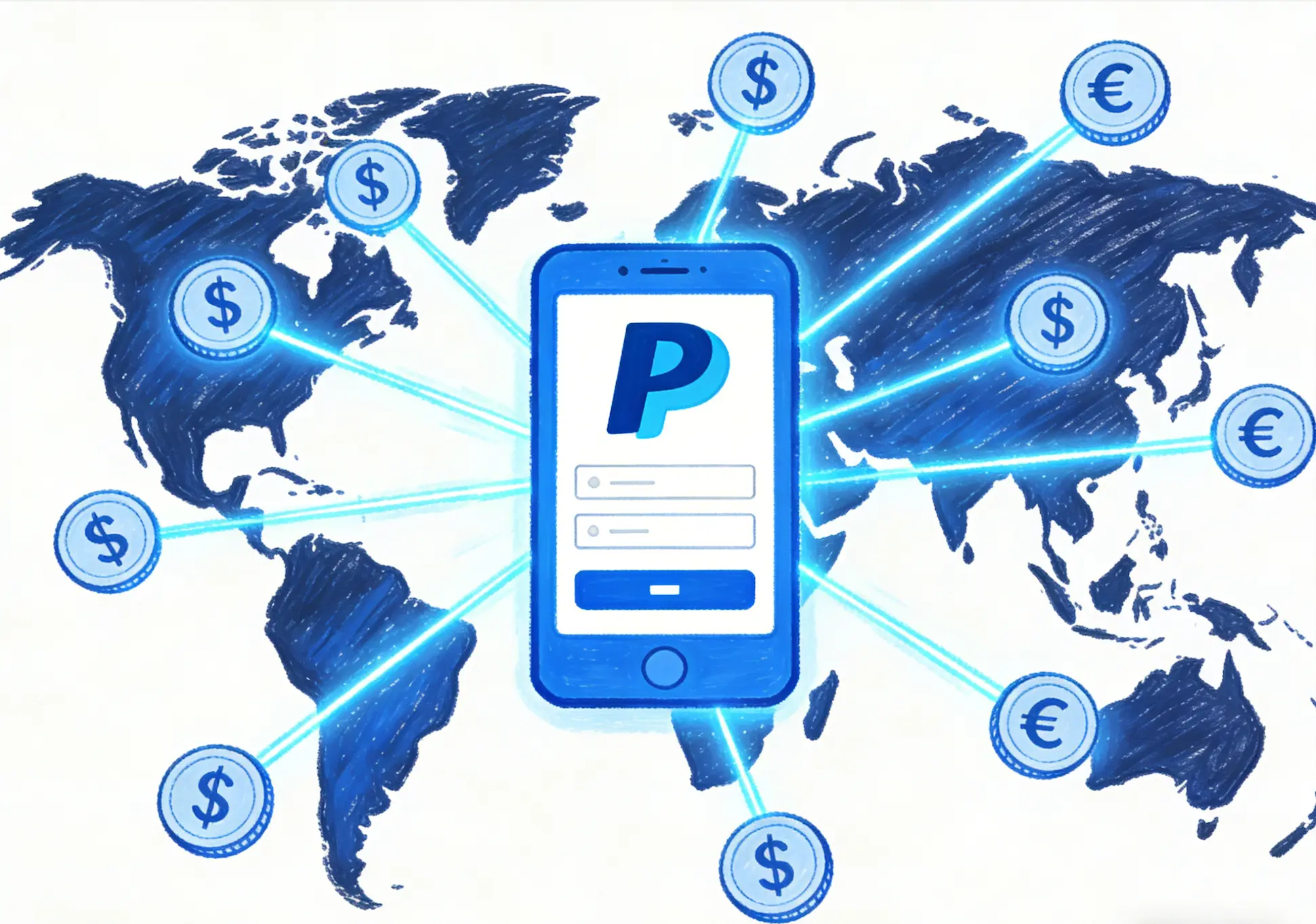
 PayPal announced on March 17, 2026, the expansion of its dollar-backed stablecoin, PayPal USD (PYUSD), to users in 70 international markets, enabling faster and lower-cost cross-border payments through the PayPal platform.
The rollout spans regions including Asia-Pacific, Europe, Latin America, and North America, with countries such as Singapore, the United Kingdom, Colombia, Costa Rica, and Peru gaining access, and remaining markets expected to be added in the coming weeks. PYUSD’s circulating supply has exceeded $4 billion, ranking it as the seventh-largest stablecoin globally, according to CoinGecko data.
Users in newly supported markets can buy, hold, send, and receive PYUSD directly through their PayPal accounts, with additional features including rewards on holdings, instant transfers to third-party digital wallets, and conversion to local currency for everyday spending.
Global Rollout Details
Market Coverage
The expansion makes PYUSD available to millions of PayPal consumers and merchants across multiple regions:
Asia-Pacific: Singapore (business accounts only) and additional markets
Europe: United Kingdom and other European countries
Latin America: Colombia, Costa Rica, Dominican Republic, Guatemala, Honduras, Panama, Peru
North America: United States and other regional markets
Additional territories: Faroe Islands, Greenland
PayPal stated that users in remaining markets will gain access in the coming weeks as the rollout continues.
Regional Limitations
Certain restrictions apply based on local regulatory requirements:
-
Rewards are unavailable to users in Singapore and the United Kingdom
-
Singapore access is currently restricted to business account holders only
-
Specific features may vary by jurisdiction
Product Features and User Benefits
Consumer Functionality
Users in supported markets can access PYUSD through their PayPal accounts with the following capabilities:
Buy, hold, send, and receive: Full wallet functionality for the stablecoin
Rewards: Eligible users can earn rewards on PYUSD holdings
Instant transfers: Funds can be sent immediately to friends, family, or third-party digital wallets
Local currency conversion: PYUSD can be converted to local currency when withdrawing funds for spending
Merchant Benefits
Businesses accepting PYUSD gain significant operational advantages:
Faster settlement: Access to proceeds within minutes rather than days or weeks
Improved liquidity: Reduced reliance on traditional settlement cycles
Cross-border efficiency: Lower fees and faster access for international operations
Working capital management: Faster fund availability supports business operations
Strategic Rationale
Addressing Payment Inefficiencies
May Zabaneh, PayPal Senior Vice President and General Manager of Crypto, framed the expansion within broader payment system challenges: “Consumers and businesses around the world are looking for faster, more seamless ways to transact globally, and the current system still charges too much, takes too long, and settles on timelines that were designed for a different era.”
The expansion aims to demonstrate how stablecoins can integrate with existing distribution networks to provide tangible value through cost savings, speed improvements, and settlement efficiency for both consumers and merchants.
Building Global Commerce Ecosystem
Following the 2023 U.S. launch of PYUSD, this international expansion represents PayPal’s effort to create sufficient liquidity, utility, and ubiquity for the stablecoin to support a more inclusive global commerce ecosystem. By making PYUSD available in more jurisdictions, PayPal aims to enable lower-cost international fund transfers for consumers while providing businesses with faster settlement and reduced payment fees.
Regulatory and Issuance Framework
Issuer and Backing
PYUSD is issued by Paxos Trust Company, N.A., a fully-chartered trust company regulated by the Office of the Comptroller of the Currency (OCC). The stablecoin’s reserves are fully backed by:
-
U.S. dollar deposits
-
U.S. Treasuries
-
Similar cash equivalents
PYUSD can be bought or sold through PayPal and Venmo at a rate of $1.00 per token, maintaining its dollar peg through this redemption mechanism.
Federal Regulation
The token is described by PayPal as a “U.S. federally regulated stablecoin,” reflecting the regulatory oversight of its issuer and the composition of its reserve assets.
Market Position and Context
Supply Growth
PYUSD’s circulating supply has surpassed $4 billion, reaching this milestone for the first time in February 2026. This positions the token as the seventh-largest stablecoin by market capitalization.
Competitive Landscape
The stablecoin sector remains dominated by established players:
Tether (USDT): Market capitalization of approximately $184 billion, maintaining its position as market leader
Circle (USDC): Market capitalization of approximately $78 billion
PYUSD: Currently at $4 billion, with growth potential through PayPal’s distribution network
Industry Context
Stablecoins have emerged as one of the fastest-growing segments of the digital asset market, with total sector supply climbing into the hundreds of billions of dollars as demand for dollar-linked digital payments increases. Traditional financial institutions and payments companies, including Visa and Mastercard, are exploring stablecoin integrations and blockchain-based settlement solutions.
Future Expansion
PayPal indicated that additional markets will be added in the coming weeks, suggesting a phased approach to global availability as the company navigates regulatory requirements across different jurisdictions.
Frequently Asked Questions
What is PYUSD and how does it work?
PayPal USD (PYUSD) is a dollar-backed stablecoin issued by Paxos Trust Company, a federally regulated trust company. It is fully backed by U.S. dollar deposits, U.S. Treasuries, and cash equivalents, and can be bought, sold, held, sent, and received through PayPal accounts at a rate of $1.00 per token. Users can transfer PYUSD to external wallets, earn rewards on holdings where available, and convert to local currency for spending.
Which countries are included in the PYUSD expansion?
The initial rollout covers 70 markets across Asia-Pacific (including Singapore for business accounts), Europe (including the United Kingdom), Latin America (Colombia, Costa Rica, Dominican Republic, Guatemala, Honduras, Panama, Peru), North America, and additional territories including Faroe Islands and Greenland. PayPal will add remaining markets in the coming weeks, with regional availability continuing to expand.
How does PYUSD benefit merchants and businesses?
Businesses accepting PYUSD gain access to payment proceeds within minutes rather than waiting days or weeks for traditional settlement cycles. This faster access improves liquidity, reduces reliance on conventional settlement timelines, and supports cross-border operations. Merchants can also reduce foreign payment fees and manage working capital more effectively through quicker fund availability.


