


Futures
Access hundreds of perpetual contracts
TradFi
Gold
One platform for global traditional assets
Options
Hot
Trade European-style vanilla options
Unified Account
Maximize your capital efficiency
Demo Trading
Introduction to Futures Trading
Learn the basics of futures trading
Futures Events
Join events to earn rewards
Demo Trading
Use virtual funds to practice risk-free trading
Launch
CandyDrop
Collect candies to earn airdrops
Launchpool
Quick staking, earn potential new tokens
HODLer Airdrop
Hold GT and get massive airdrops for free
Launchpad
Be early to the next big token project
Alpha Points
Trade on-chain assets and earn airdrops
Futures Points
Earn futures points and claim airdrop rewards


More





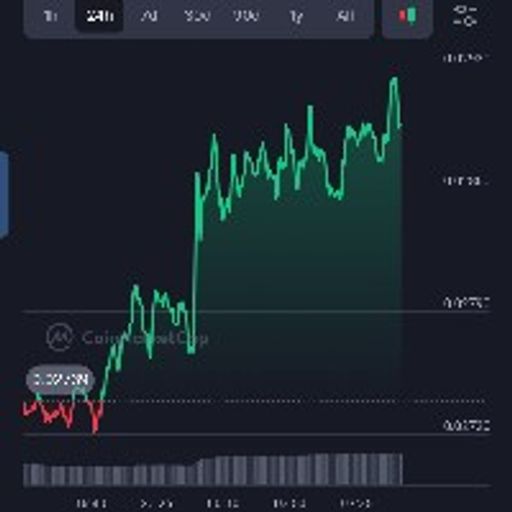
here are some basic rules for navigating the crypto world, along with how charts can help you out. It's a wild ride out there, so it's good you're looking into this!
Basic Crypto Rules to Live By:
1. Only Invest What You Can Afford to Lose This is probably the most crucial rule in crypto. Because of how volatile the market can be, you should only put in money that, if it vanished tomorrow, wouldn't impact your life. Think of it as a high-risk, high-reward playground, not your retirement fund. Some suggest limiting crypto to 5-10% of your total portfolio, or even 1-2% for beginners.
2. Do Your Own Research (DYOR) Don't just jump into a coin because someone on social media said it's going "to the moon". Really dig into projects:
◦ Understand the Technology: What problem does it solve?
Team & Credibility: Who is behind the project? Are they transparent? ◦ Community: How active and engaged is the community?
Tokenomics: How is the coin distributed and used? ◦ Competitive Advantage: What makes it stand out from similar projects? 3. Start with the Basics & Diversify Wisely Many experts recommend starting with established coins like Bitcoin (BTC) and Ethereum (ETH), as they are generally more stable and widely adopted. Then, you can diversify into other promising altcoins, perhaps dedicating a smaller percentage to higher-risk, lower-cap projects. Some follow a 60% BTC, 30% high-cap altcoins, 10% low-cap/meme coins allocation.
4. Security First! Protect your investments like a digital fortress!
◦ Use Secure Wallets: Move larger amounts off exchanges into hardware wallets (like Ledger or Trezor) for better security.
Strong Passwords & 2FA: Always use unique, complex passwords and enable two-factor authentication (2FA) wherever possible.
Verify Links: Always double-check URLs to avoid phishing scams.
5. Develop a Strategy & Stick to It (Patience is Key) Emotional decisions, driven by fear (FUD) or greed (FOMO), are often the biggest portfolio killers.
◦ Dollar-Cost Averaging (DCA): Invest a fixed amount regularly (e.g., weekly or monthly) regardless of price. This averages out your entry price and reduces the impact of volatility.
Take Profits: Don't be afraid to sell some of your holdings when they've made significant gains. "Plan your exit or the market will plan it for you". Avoid Leverage: Trading with borrowed money amplifies both gains and losses, making it extremely risky for beginners.
◦ Don't Panic Sell: Market downturns are inevitable. Stick to your long-term plan and consider them buying opportunities if your research holds up.
How Charts Can Help You:
Crypto charts are like the market's diary, showing you what prices have done over time. Understanding them can help you make more informed decisions.
$BTC $ETH $BNB
1. Types of Charts: ◦ Line Charts: These are the simplest, connecting closing prices to show overall trends. Great for a quick overview. Candlestick Charts: These are super popular and give you more detail! Each "candlestick" shows the opening, closing, highest, and lowest prices for a specific time period (like an hour or a day). Green (or white) means the price went up, and red (or black) means it went down.
Candlestick Anatomy: The "body" shows the open and close, and the "wicks" or "shadows" show the high and low.
2. Timeframes: Charts can be viewed in different timeframes (e.g., 1-minute, 1-hour, 1-day, 1-week).
◦ Short Timeframes (1m-15m): Used by day traders for quick moves. ◦ Medium Timeframes (1h-4h): Good for swing traders looking at trends over a few days. ◦ Long Timeframes (1D-1W): Best for long-term investors to spot major trends and avoid getting caught up in daily "noise".
3. Key Concepts Charts Show: ◦ Price Action: The movement of the price itself (open, high, low, close).
◦ Volume: This shows how much of a cryptocurrency was traded during a specific period. High volume often confirms the strength of a price move.
◦ Support and Resistance: ▪ Support: A price level where buying interest is strong enough to stop a price from falling further. Think of it as a "floor." ▪ Resistance: A price level where selling pressure is strong enough to prevent the price from rising higher. Think of it as a "ceiling".
◦ Trends: Charts help you see if a price is generally moving up (uptrend), down (downtrend), or sideways (sideways trend).
◦ Technical Indicators: These are mathematical calculations based on past price and volume data that can help predict future price movements. Common ones include Moving Averages (MA), Relative Strength Index (RSI), and MACD.
4. Charting Tools: Platforms like TradingView are popular for analyzing crypto charts, offering many tools and indicators. Most crypto exchanges also have built-in charting tools.
Remember, while charts provide valuable insights, no indicator is 100% reliable, and crypto markets can be unpredictable. Combine chart analysis with your fundamental research and a solid risk management strategy. Happy investing!
#OilPricesSlide #MetaPlansLayoffs #BTCReclaims70k #UseAIforCryptoTrading #PCEMarketWatch