

Trade
Basic
Futures
Futures
Hundreds of contracts settled in USDT or BTC
Options
HOT
Trade European-style vanilla options
Unified Account
Maximize your capital efficiency
Demo Trading
Futures Kickoff
Get prepared for your futures trading
Futures Events
Futures Mall
Participate in events to win generous rewards
Demo Trading
Use virtual funds to experience risk-free trading
Earn
Launch
CandyDrop
Collect candies to earn airdrops
Launchpool
Quick staking, earn potential new tokens
HODLer Airdrop
Hold GT and get massive airdrops for free
Launchpad
Be early to the next big token project
Alpha Points
NEW
Trade on-chain assets and enjoy airdrop rewards!
Futures Points
NEW
Earn futures points and claim airdrop rewards
Investment
Simple Earn
Earn interests with idle tokens
Auto-Invest
Auto-invest on a regular basis
Dual Investment
Buy low and sell high to take profits from price fluctuations
Soft Staking
Earn rewards with flexible staking
Crypto Loan
0 Fees
Pledge one crypto to borrow another
Lending Center
One-stop lending hub
VIP Wealth Hub
Customized wealth management empowers your assets growth
Private Wealth Management
Customized asset management to grow your digital assets
Quant Fund
Top asset management team helps you profit without hassle
Staking
Stake cryptos to earn in PoS products
Smart Leverage
NEW
No forced liquidation before maturity, worry-free leveraged gains
GUSD Minting
Use USDT/USDC to mint GUSD for treasury-level yields

More




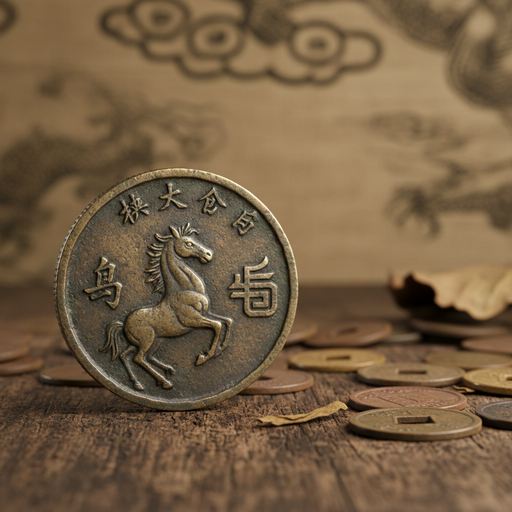


Understanding Commodity Money: How Intrinsic Value Shaped Currency History
Commodity money is money that derives its purchasing power from the material it’s made of rather than government decree. Unlike modern paper currency, commodity money is money that carries actual worth—gold, silver, salt, or other valued commodities possess inherent value independent of any authority’s backing. This fundamental characteristic distinguished commodity money from the representative and fiat systems that would later replace it, yet its influence on monetary evolution remains profound.
The Historical Journey: Why Ancient Societies Chose Commodity Money
Before standardized currency existed, trade relied on barter—a system where direct exchange of goods occurred between parties. However, barter created a persistent problem: the double coincidence of wants. Both traders needed to desire exactly what the other possessed, making transactions inefficient. As civilizations grew more complex, societies recognized that commodity money is money that could solve this problem by serving as a universally accepted medium of exchange.
Different regions independently discovered this solution. In ancient Mesopotamia, barley functioned as commodity money. Egyptian economies relied on grain, cattle, and precious metals. African and Pacific communities valued cowry shells as currency due to their scarcity and beauty. Salt held monetary significance in certain societies because of its practical importance as a preservative and trading commodity. These diverse examples reveal a universal truth: commodity money is money that communities trusted enough to accept in transactions repeatedly.
As economies matured, precious metals—particularly gold and silver—emerged as superior options. Their natural durability meant commodity money could withstand centuries of use without degradation. Their divisibility into standardized coins enhanced convenience. Their scarcity ensured value couldn’t be inflated through oversupply. These qualities made gold and silver the dominant forms of commodity money across civilizations from ancient Rome to medieval Europe.
What Made Commodity Money Work: Five Essential Characteristics
Successful commodity money required specific attributes that modern economists recognize as foundational to any currency system:
Durability and Longevity: Unlike grain that spoils or shells that fragment, durable commodity money like metals retained integrity across generations. This durability guaranteed that wealth stored today remained valuable tomorrow, making commodity money suitable for long-term value preservation.
Universal Recognition: Commodity money succeeded because merchants and ordinary citizens recognized its worth instantly. Gold needed no explanation—its value transcended language and cultural barriers, facilitating trade across diverse populations.
Limited Supply: The scarcity that made commodity money precious also protected it from devaluation. Gold and silver couldn’t be printed infinitely; their rarity guaranteed that existing supply wouldn’t suddenly collapse in value due to oversupply.
Distinguishability: Authentic commodity money was easily identifiable, preventing counterfeiting and maintaining user confidence. The weight, color, and purity of precious metals could be verified through simple testing.
Wealth Storage Capacity: Commodity money served as store of value—wealth could be accumulated and retrieved with minimal loss of purchasing power, allowing individuals to build long-term savings without watching their assets erode.
Global Examples: How Different Societies Used Commodity Money
The diversity of commodity money across civilizations demonstrates how universal the concept became:
Cocoa Beans in Mesoamerica: The Maya initially used cocoa beans for barter before recognizing their potential as commodity money. When the Aztecs dominated Central America, they formalized cocoa beans as an accepted medium of exchange, even using them to price enslaved people and land.
Seashells Across Continents: Cowry shells gained acceptance as commodity money across Africa, parts of Asia, and Pacific island communities. Their naturally attractive appearance, genuine scarcity, and cultural significance made shells a practical choice for societies without precious metal deposits.
Rai Stones on Yap: The Micronesian island of Yap developed perhaps the most unusual commodity money system using large circular stone discs. Despite their size and weight making them impractical to carry, Rai stones represented vast wealth; ownership transferred through verbal agreement rather than physical movement, making them an early example of representative concepts within commodity money.
Precious Metals Across Civilizations: Gold served as commodity money from ancient Egypt through modern times. Its universal desirability, malleability for coinage, and resistance to decay made it ideal. Silver followed similar patterns, offering slightly more abundance while maintaining scarcity, making it accessible for everyday transactions while gold reserves backed larger wealth.
The Decline: Why Commodity Money Couldn’t Support Modern Economies
Despite commodity money’s historical success, fundamental limitations emerged as trade volumes exploded and international commerce accelerated. Transportation of heavy precious metals across continents became economically inefficient. Storage required secure facilities. Wars disrupted supply chains. Economic growth outpaced available commodity supplies, creating bottlenecks.
These practical constraints pushed societies toward representative money—paper certificates backed by physical commodity reserves. This innovation improved transportability but introduced new vulnerabilities. Those controlling reserves gained power to manipulate currency supply, leading eventually to fiat money systems where government decree alone established value.
Fiat money offered flexibility that commodity money couldn’t match. Governments could expand money supplies to stimulate growth, lower interest rates strategically, and implement complex monetary policies. However, this flexibility came with hidden costs. Freed from commodity constraints, authorities could print currency excessively, triggering inflation. Currency wars emerged as nations devalued their own fiat money for competitive advantage. Economic bubbles inflated as loose monetary policies fueled speculation, occasionally triggering severe recessions or hyperinflation—phenomena less common during commodity money eras.
Commodity Money Versus Fiat Money: Comparing Stability and Control
The fundamental distinction between commodity money and fiat systems revolves around stability versus flexibility. Commodity money offered predictability; its value remained relatively independent of political decisions or monetary policy shifts. Citizens couldn’t be surprised by sudden currency devaluation through government action since the commodity’s value derived from scarcity and utility, not official decree.
Fiat money provides flexibility but sacrifices stability. Interest rate adjustments, quantitative easing, and currency creation follow no physical constraints. While such tools can temporarily stimulate economies, they also enable systemic manipulation. Central banks can expand money supplies dramatically within weeks—something impossible under commodity money. This power, frequently wielded with good intentions, occasionally causes unintended consequences: asset price inflation disconnected from productive capacity, wealth inequality exacerbation, and unsustainable debt accumulation.
Bitcoin: Is Commodity Money Making a Modern Comeback?
In 2009, an anonymous creator using the pseudonym Satoshi Nakamoto introduced Bitcoin, a digital asset combining commodity money’s most valuable characteristics with technological innovations fiat money couldn’t replicate. Bitcoin is money that functions as both medium of exchange and store of value while maintaining commodity money’s core properties.
Like commodity money, Bitcoin possesses absolute scarcity—a predetermined maximum of 21 million coins that cannot be exceeded regardless of demand or political pressure. This scarcity mirrors gold’s natural limits; Bitcoin supply cannot expand through government decree. Its divisibility into smaller units (down to one hundred millionths called Satoshis) enables transaction flexibility that bulky metals lacked.
Bitcoin incorporates fiat currency characteristics including divisibility into fractional units and theoretical utility for everyday transactions. However, Bitcoin transcends both systems through decentralization and censorship resistance. No single government controls Bitcoin’s supply or transaction validation. Network consensus mechanisms prevent manipulation that fiat systems permit. These attributes represent commodity money reimagined for digital economies—combining historical reliability with modern technological sophistication.
Whether Bitcoin constitutes “a return to commodity money” remains debated among economists, but the resemblance is undeniable. Like historical commodity money, Bitcoin derives value from scarcity and user acceptance rather than government backing. Like precious metals, Bitcoin functions as bearer asset—ownership transfers through possession of private cryptographic keys without intermediary permission. Like commodity money, Bitcoin offers inflation protection through absolute supply limits that fiat authorities cannot override.
The emergence of Bitcoin suggests that commodity money principles—valuing scarcity, resisting arbitrary supply expansion, and enabling transactions independent of institutional approval—remain deeply appealing even after centuries of fiat currency dominance. Whether viewed as cryptocurrency or modern commodity money, Bitcoin represents humanity’s ongoing search for currency systems that preserve wealth, prevent debasement, and maintain value across time without requiring centralized trust.