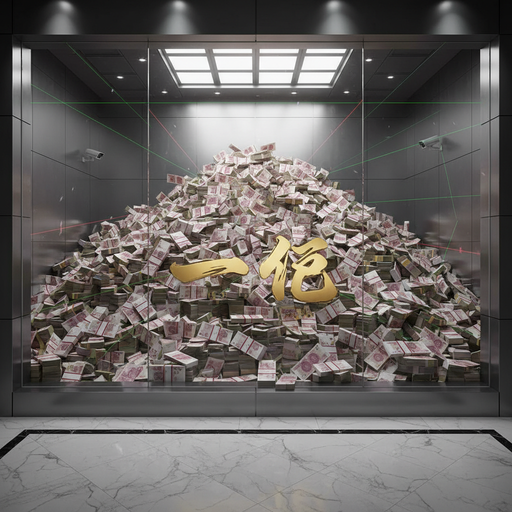
Recognize the Signal of Dumping: Don't Be the "Delicious Bait" on the Shark's Feast

In the crypto market, the long-term survivors are not the ones who win big once, but those who do not lose their capital. Many investors see prices breaking new highs and rush to buy, only to get stuck at the peak while sharks quietly withdraw liquidity. Consider this article as a “risk filter” to help you identify dumping tricks and warning signs before it’s too late. I. Four Common Shark Dumping Tricks

  1. One-Sided Liquidity Break: Creating the Illusion of “Only Going Up, Never Down” Some projects create liquidity pools with only (tokens and no stablecoins). In the early stages, prices are driven up beautifully because selling pressure is almost nonexistent. When FOMO becomes large enough, the team withdraws the pool, funds are drained, tokens fall freely, and liquidity disappears. Lesson: Check the pool structure on DEX, prioritize pairs with clear two-way liquidity and transparent lock-up.
  2. “Buyback” on Paper, Actual Dumping in Reality Announcing buybacks – burning tokens sounds very attractive. But if the project’s wallet moves back and forth between related wallets to create “buyback proof,” while in reality, tokens are still being dumped on the market, the price will soon break. Lesson: Cross-check on-chain: where does the buyback money come from, is it real revenue or just internal circles.
  3. Controlling Spot, Harvesting in Contracts Sharks gather spot to tighten supply, push prices with small capital to create a short squeeze effect. When retail traders follow and open longs, they switch to opening large shorts on derivatives and simultaneously dump spot. The result is double kill: crashing the price and liquidating longs. Lesson: Avoid pairs with high leverage, strong volatility, and a history of “liquidation sweeps.”
  4. High-Yield Staking Games The higher the staking yield and the longer the lock-up period, the greater the risk. When most of the supply is locked, sharks have a “highway” to dump. When unlocking day comes, panic selling pushes the price down sharply, and they buy back cheaply. Lesson: Carefully read the unlock schedule, circulating supply ratio, and token distribution. II. Warning Signs Before Price Collapse
  5. Strong Volume but Price Fails to Break Resistance Price moves sideways at the peak, volume surges but candles do not close above resistance — often a push to dump. Long upper wicks resemble “lightning rods”: attracting buyers then reversing. Principle: Break resistance with solid candles, close above resistance, and hold the retest.
  6. Fake Breakout: Long Wicks, Weak Bodies A true breakout requires the candle body to occupy most of the range and volume to be sustained. Fake breakouts often have wicks piercing up, closing lower, with quickly weakening volume. Quick tip: Low volume – hollow body: don’t trust. High volume – solid body: worth watching.
  7. Divergence Signals Price hits new highs but RSI, MACD lag behind → momentum wanes. On daily charts, divergence often signals a significant correction. Action: Reduce positions, move stop-loss up to protect profits.
  8. Overwhelming Good News, Price “Stands Still” Media hype, KOL support, but price does not rise — very likely a dump following news. Many projects “front-run” news, only to be heavily sold off on announcement day. Action: Don’t chase just before news release; wait for price reaction after the news. III. Survival Rules for Real Investors
  9. Stop-Loss Is a Safety Net Set a hard stop-loss (for example -8% to -12%, depending on volatility). Breaking support means leaving the game, no more hope. Discipline > emotions.
  10. Avoid FOMO Chat groups shouting “100x trades,” “the train is leaving the station” are often campaigns to lure liquidity. Good projects grow through products, users, and revenue — not slogans. 3@ E0@ Rational Capital Allocation Maintain core holdings in high-liquidity assets; use only risk-capital for altcoins. When the market is bad, larger assets tend to hold better.
  11. Check On-Chain Data Large inflows into exchanges → potential selling pressure. Stablecoins flowing into the market → buying power preparing to strike. Use large wallet analysis tools to monitor whale behavior. Conclusion Crypto is not a casino. The winners are those who preserve their capital to seize the entire bull cycle. When everything looks “too good to be true,” be suspicious. Calmness, discipline, and data verification will help you avoid becoming “easy prey” on the sharks’ table. Preserve capital – maintain positions – wait for the right time. The market always offers opportunities, but only for those who stay in.
TOKEN2,33%
LONG-2,95%
View Original
This page may contain third-party content, which is provided for information purposes only (not representations/warranties) and should not be considered as an endorsement of its views by Gate, nor as financial or professional advice. See Disclaimer for details.
  • Reward
  • Comment
  • Repost
  • Share
Comment
0/400
No comments
  • Pin

Trade Crypto Anywhere Anytime
qrCode
Scan to download Gate App
Community
  • 简体中文
  • English
  • Tiếng Việt
  • 繁體中文
  • Español
  • Русский
  • Français (Afrique)
  • Português (Portugal)
  • Bahasa Indonesia
  • 日本語
  • بالعربية
  • Українська
  • Português (Brasil)