

Trade
Basic
Futures
Futures
Hundreds of contracts settled in USDT or BTC
Options
HOT
Trade European-style vanilla options
Unified Account
Maximize your capital efficiency
Demo Trading
Futures Kickoff
Get prepared for your futures trading
Futures Events
Participate in events to win generous rewards
Demo Trading
Use virtual funds to experience risk-free trading
Earn
Launch
CandyDrop
Collect candies to earn airdrops
Launchpool
Quick staking, earn potential new tokens
HODLer Airdrop
Hold GT and get massive airdrops for free
Launchpad
Be early to the next big token project
Alpha Points
NEW
Trade on-chain assets and enjoy airdrop rewards!
Futures Points
NEW
Earn futures points and claim airdrop rewards
Investment
Simple Earn
Earn interests with idle tokens
Auto-Invest
Auto-invest on a regular basis
Dual Investment
Buy low and sell high to take profits from price fluctuations
Soft Staking
Earn rewards with flexible staking
Crypto Loan
0 Fees
Pledge one crypto to borrow another
Lending Center
One-stop lending hub
VIP Wealth Hub
Customized wealth management empowers your assets growth
Private Wealth Management
Customized asset management to grow your digital assets
Quant Fund
Top asset management team helps you profit without hassle
Staking
Stake cryptos to earn in PoS products
Smart Leverage
NEW
No forced liquidation before maturity, worry-free leveraged gains
GUSD Minting
Use USDT/USDC to mint GUSD for treasury-level yields

More




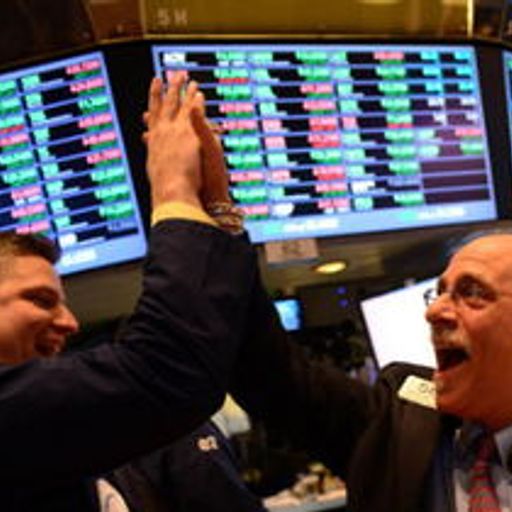


Stocks Edge Up as Investors Gauge Global Tensions and Trade Risks
Energy stocks led Canadian equity gains on Wednesday, with the S&P/TSX Composite Index inching higher despite market volatility. The benchmark index posted a modest advance of 46.11 points, closing at 32,916.47—marking a fresh record high for the measure. This latest uptick reflects investor positioning around geopolitical flashpoints and their ripple effects on commodity markets.
Geopolitical Tensions Lift Oil, Energy Sector Outperforms
The catalyst for Wednesday’s strength came from escalating U.S.-Iran tensions. Protests that erupted in Tehran in December 2025 over inflation and currency depreciation have intensified across multiple cities, prompting harsh government crackdowns. Reports of executions drew sharp rebukes from President Donald Trump, who warned Iran of severe consequences. Tehran responded by threatening military strikes against nations hosting U.S. installations.
These developments sparked legitimate concerns about oil supply disruptions, given Iran’s status as the world’s fourth-largest OPEC producer and its control of a critical maritime chokepoint. Crude oil surged for the fifth consecutive session, with energy equities rallying sharply in response. The Energy sector led all gains with a 2.59% climb, while the Materials sector (+1.11%), Communication Services (+1.04%), and Industrials (+0.60%) also posted advances. Nine of eleven sectors moved higher on the day.
Individual Stocks Signal Broad-Based Strength
Among the day’s prominent gainers, Cenovus Energy Inc jumped 4.54%, while Canadian Natural Resources Ltd climbed 4.44%. Ces Energy Solutions Corp added 3.47%. Beyond energy, Taseko Mines Ltd surged 12.07%, Nutrien Ltd gained 7.99%, and Energy Fuels Inc posted a 7.50% advance.
On the downside, weakness surfaced in Consumer Discretionary (-0.33%) and IT (-4.54%). Aritzia Inc declined 6.32%, Dye & Durham Ltd fell 10.13%, and Shopify Inc dropped 5.94%. Constellation Software Inc, Bitfarms Ltd, and Celestica Inc also registered notable losses, falling between 5.56% and 5.84%.
Trade Uncertainty Clouds the Picture
Canadian Prime Minister Mark Carney embarked on a nine-day diplomatic tour spanning China, Qatar, and Switzerland. Carney is scheduled to meet with Chinese President Xi Jinping on Friday to negotiate trade arrangements covering commerce, agriculture, and security matters. The move underscores Ottawa’s efforts to diversify trading relationships amid persistent U.S. pressure.
Trump’s imposition of a 35% tariff on most Canadian exports last year, combined with his subsequent suspension of trade negotiations, has created significant headwinds. While some Canadian shipments circumvented these duties by routing through the Canada-United States-Mexico trade pact, that agreement faces renewal this year—and Trump has suggested Washington might withdraw entirely. Carney’s balancing act involves securing alternative markets without triggering further Washington retaliation.
Economic Data Points and Policy Signals
U.S. economic indicators offered mixed signals. The Producer Price Index rose 0.2% in November, while retail sales exceeded forecasts with a 0.6% monthly gain. These readings have prompted traders to lower their expectations for interest rate cuts in both Canada and the U.S., particularly given the absence of significant employment deterioration so far.
The spotlight briefly turned to Federal Reserve Chair Jerome Powell, who now faces a criminal investigation from the U.S. Department of Justice regarding a Fed building renovation project. In a show of solidarity, major central bankers released a joint statement emphasizing central bank independence. Bank of Canada Governor Tiff Macklem praised Powell as embodying “the very best in public service,” offering his full support.
With no major domestic data releases scheduled for Wednesday, the Canadian session remained relatively quiet on the economic calendar. The modest 0.14% gain for the S&P/TSX Composite Index reflected traders’ cautious positioning as they weigh geopolitical risks, trade complications, and the path ahead for monetary policy.