

Trade
Basic
Futures
Futures
Hundreds of contracts settled in USDT or BTC
Options
HOT
Trade European-style vanilla options
Unified Account
Maximize your capital efficiency
Demo Trading
Futures Kickoff
Get prepared for your futures trading
Futures Events
Participate in events to win generous rewards
Demo Trading
Use virtual funds to experience risk-free trading
Earn
Launch
CandyDrop
Collect candies to earn airdrops
Launchpool
Quick staking, earn potential new tokens
HODLer Airdrop
Hold GT and get massive airdrops for free
Launchpad
Be early to the next big token project
Alpha Points
NEW
Trade on-chain assets and enjoy airdrop rewards!
Futures Points
NEW
Earn futures points and claim airdrop rewards
Investment
Simple Earn
Earn interests with idle tokens
Auto-Invest
Auto-invest on a regular basis
Dual Investment
Buy low and sell high to take profits from price fluctuations
Soft Staking
Earn rewards with flexible staking
Crypto Loan
0 Fees
Pledge one crypto to borrow another
Lending Center
One-stop lending hub
VIP Wealth Hub
Customized wealth management empowers your assets growth
Private Wealth Management
Customized asset management to grow your digital assets
Quant Fund
Top asset management team helps you profit without hassle
Staking
Stake cryptos to earn in PoS products
Smart Leverage
NEW
No forced liquidation before maturity, worry-free leveraged gains
GUSD Minting
Use USDT/USDC to mint GUSD for treasury-level yields

More


Trending Topics
View More28.5K Popularity
336.93K Popularity
47.27K Popularity
8.79K Popularity
7.58K Popularity




Pin
Ethiopia attempts economic leap with state-owned Bitcoin mining
Source: DigitalToday Original Title: Ethiopia Attempts Economic Leap with State-Run Bitcoin Mining Original Link: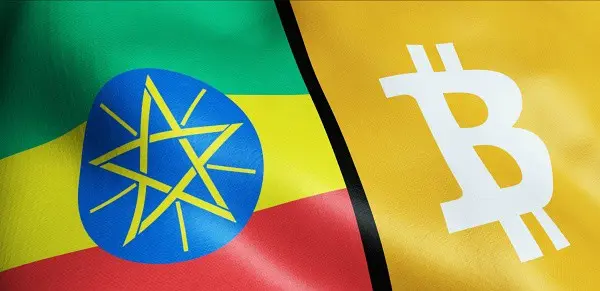
Ethiopia is accelerating its digital economic transition by formalizing a government-led Bitcoin(BTC) mining plan.
Prime Minister Abiy Ahmed recently stated at the ‘Finance Forward Ethiopia 2026’ conference that the government is actively seeking investment partners for state-run Bitcoin mining, and Ethiopia Investment Holdings(EIH), a sovereign fund, is looking for experienced partners who can provide capital, technology, and mining expertise.
Over the past few years, Ethiopia has established itself as one of Africa’s top Bitcoin mining hubs. The country has utilized the Grand Ethiopian Renaissance Dam(GERD) and other hydroelectric projects for Bitcoin and cryptocurrency mining. GERD produces over 6,000MW(MW) of power, but only about half is currently being utilized. By mid-2025, Ethiopia had approximately 23 cryptocurrency mining companies, led by Asian firms, with participation from U.S. and local companies.
The Ethiopian government actively supports cryptocurrency mining, with investments such as UAE-based Phoenix Group collaborating with Ethiopia Electric Power(EEP) to establish new mining data centers. EEP has over 7,900MW(MW) of generation capacity and exports electricity to Kenya and Djibouti, earning $338 million in foreign exchange as of 2024. In the same year, an additional $55 million was generated through Bitcoin mining over ten months.
However, recent suspension of new mining license issuance has slowed expansion, citing that EEP has reached its power supply limits. Nonetheless, other African countries are also entering Bitcoin mining. Kenya’s Gridless Compute is utilizing small hydroelectric plants to lower local electricity costs, while Nigeria is attempting eco-friendly mining by harnessing methane from drilling platforms. Meanwhile, Angola has banned mining altogether.
Globally, countries promoting state-run Bitcoin mining include Russia, France, Bhutan, El Salvador, and the UAE, with Japan recently joining this list. It remains to be seen whether Ethiopia’s state-run Bitcoin mining will drive economic growth.