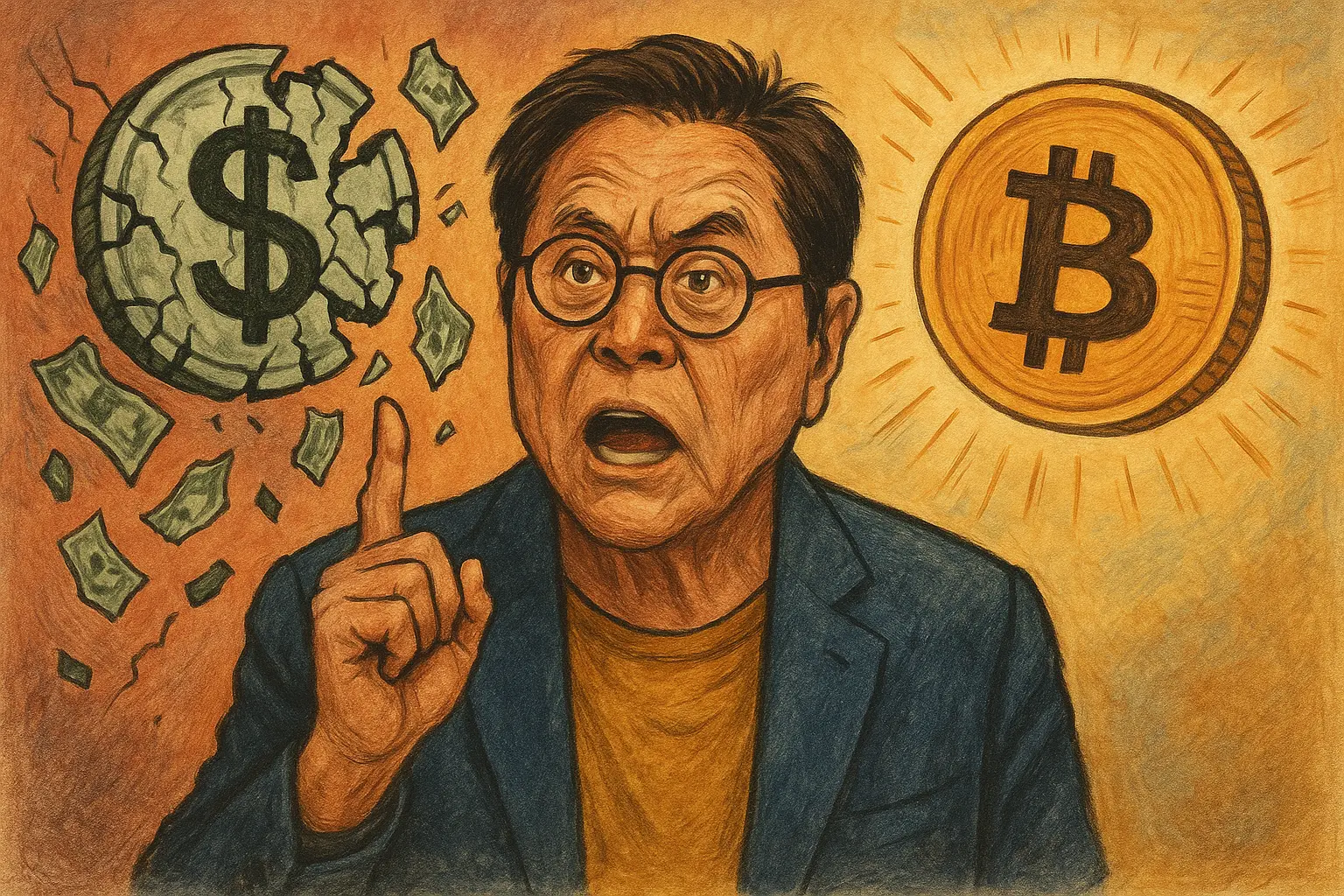
In a recent post on the X platform, Robert Kiyosaki, author of Rich Dad Poor Dad, said that Bitcoin and Ethereum are among the “safest investments” in 2026, citing systematic wealth-eroding risks stemming from the U.S. government’s continued money printing, rising national debt, and worsening inflation. Kiyosaki also criticized the notion that U.S. government bonds are “safe,” calling it the “biggest lie” in modern investing, and said that a surge in oil prices triggered by the U.S.-Iran war would further intensify inflation.
Kiyosaki’s Core Argument: The Triple Pressure of Fiat Currency, Debt, and Inflation
Kiyosaki’s argument is built on several macroeconomic data points. U.S. credit card debt has reached as much as 1.28 trillion dollars, a record high, up 5.5% from the previous year; total U.S. debt has climbed to 38.6 trillion dollars. He believes that continued money printing by governments will inevitably expand debt levels, thereby worsening inflation; and after the outbreak of the U.S.-Iran war, the spike in oil prices will add even more to inflation pressures.
Against this backdrop, Kiyosaki said plainly that traditional “safe assets” such as U.S. Treasury bonds are, in fact, the category with the highest holding risk. On X, he wrote: “In the global oil, debt, bond, currency, banking, and inflation crisis, the only thing that can keep you safe is yourself and the financial education you choose to accept.”
Recommended Asset List for 2026: Real-World Assets and Crypto Side by Side
Based on Kiyosaki’s public statements, the following assets make up the core allocation direction he endorses for 2026:
Cryptocurrency: Bitcoin (BTC) and Ethereum (ETH)
Precious metals: gold and silver
Commodities: oil and food
He further pointed out that investors holding Bitcoin, gold, or silver “may become very wealthy in this crisis” before the crash arrives. The key logic is that the above assets have scarcity that “cannot be arbitrarily printed by the government,” allowing real wealth to be preserved as fiat purchasing power continues to be eroded.
Track Record: What Came True, What Fell Short
Kiyosaki is not always accurate in his predictions. According to data from Fidelity, the average balance of 401(k) retirement accounts in the third quarter of 2025 actually reached an all-time high; as of February 2026, the U.S. has also not fallen into the “crash” more severe than the Great Depression that he has warned about multiple times.
However, some long-term directional predictions have indeed come true. In October 2023, Kiyosaki predicted that gold would break through 2,100 dollars and then kept rising; since then, gold has risen more than 40% over the past 12 months, and is currently around 4,500 dollars per ounce. In November 2024, he predicted that Bitcoin would soon break 100k dollars; in December of the same year, Bitcoin indeed surpassed this milestone.
Kiyosaki’s long-term target remains unchanged: Bitcoin to reach 1 million dollars by 2035, and a gold target of 27k dollars. X co-founder Jack Dorsey has taken a similar stance, saying Bitcoin “at least” could reach 1 million dollars by 2030. When responding to recent volatility, Kiyosaki said: “I don’t care about price going up or down, because I know the purchasing power of the dollar continues to decline.”
Frequently Asked Questions
Why does Robert Kiyosaki think BTC and ETH are the safest investments in 2026?
Kiyosaki’s core logic is that, in an environment where the government keeps piling on debt and printing money, “printable” fiat assets face systematic purchasing-power erosion, while real-world assets with scarcity (gold, silver) and crypto assets (BTC, ETH) can preserve real wealth through that process. He considers BTC and ETH to be a category of “real assets” in the digital age.
Are Kiyosaki’s investment predictions worth considering?
Kiyosaki’s macro framework has been validated in his long-term predictions for gold and Bitcoin, but the specific timing of his “crash” forecasts has historically been inaccurate, and the U.S. is not currently in the severe downturn he has repeatedly warned about. Investors should treat his views as a reference framework for macro discussions, not as specific buy/sell timing guidance.
How does rising U.S. government debt affect the long-term logic for Bitcoin?
Kiyosaki’s argument is: rising debt → more money printing → worse inflation → declining purchasing power of the dollar → increasing appeal of scarce alternative wealth-storing assets such as Bitcoin. This is the core logic behind Bitcoin’s “digital gold” narrative, but the actual correlation between the two can vary significantly across different market conditions and time horizons.
Disclaimer: The information on this page may come from third parties and does not represent the views or opinions of Gate. The content displayed on this page is for reference only and does not constitute any financial, investment, or legal advice. Gate does not guarantee the accuracy or completeness of the information and shall not be liable for any losses arising from the use of this information. Virtual asset investments carry high risks and are subject to significant price volatility. You may lose all of your invested principal. Please fully understand the relevant risks and make prudent decisions based on your own financial situation and risk tolerance. For details, please refer to
Disclaimer.


