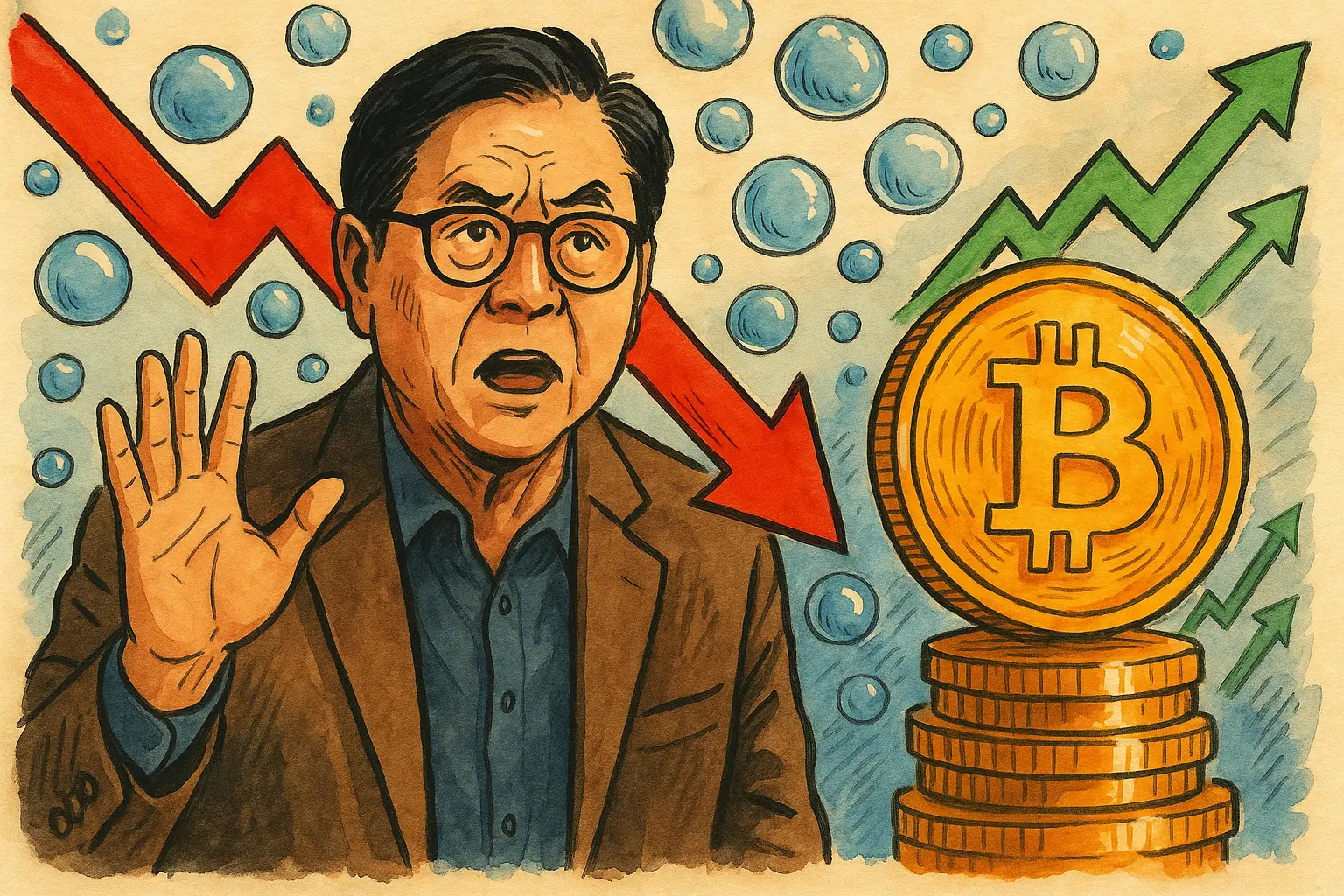
Investor and bestselling author of Rich Dad Poor Dad, Robert Kiyosaki, posted on X on March 16, predicting that one year after a global financial crisis erupts, Bitcoin will reach $750,000 per coin, and Ethereum will reach $95,000 per coin. Kiyosaki also warned that the “largest asset bubble in history” is approaching a critical point, stating, “This is not a question of if it will happen, but when.”
Kiyosaki’s Four Major Asset Targets After the Crisis: Two Precious Metals and Two Cryptocurrencies
In his X post, Kiyosaki outlined his asset valuation predictions one year after the bubble bursts, covering precious metals and cryptocurrencies:
Bitcoin (BTC): $750,000 (more than 10 times current price)
Ethereum (ETH): $95,000 (more than 40 times current price)
Gold: $35,000 per ounce
Silver: $200 per ounce
Kiyosaki explicitly stated in the post that he cannot predict the exact trigger event or timing, but believes “the needle is about to be pricked.” He urged followers to consider how the scale and speed of capital fleeing to scarce assets during an unprecedented global financial shock could redefine these assets’ valuations.
Critique of Fiat Currency and Long-Term Holding Logic
Kiyosaki has long advocated holding “hard assets” such as gold, silver, Bitcoin, and Ethereum, primarily to counteract the long-term erosion of fiat currency purchasing power. Over the years, he has repeatedly warned that excessive sovereign debt levels, prolonged quantitative easing by central banks, and structural flaws in traditional financial systems could trigger a systemic collapse at some point.
This prediction is not Kiyosaki’s first radical statement. Earlier this year, he set a target of $250,000 for Bitcoin and $27,000 for gold within the year, reflecting his consistent bullish stance on alternative stores of value for the long term.
Controversial Perspectives: Market Reality and Analyst Reservations
Kiyosaki’s predictions have sparked debate. Critics point out that Bitcoin has historically shown a positive correlation with other risk assets—in initial stages of major market crashes, BTC may also experience panic selling rather than immediately acting as a safe haven. Several economists believe that his past warnings of market crashes have not always materialized within his expected timeframes, and that predicting exact points under extreme conditions lacks sufficient empirical support.
Supporters argue that Bitcoin’s fixed supply cap of 21 million coins, its decentralized nature, and global liquidity give it a unique appeal in scenarios where fiat credit is fundamentally questioned, surpassing traditional assets.
It’s important to note that Kiyosaki’s comments are personal market opinions and do not constitute investment advice.
Frequently Asked Questions
Q: What is the basis for Robert Kiyosaki’s $750,000 Bitcoin prediction?
A: His core argument is that excessive sovereign debt, long-term fiat currency devaluation, and overprinting by central banks are brewing the “largest asset bubble in history.” He predicts that once the bubble bursts, capital will massively shift into scarce assets with fixed supplies, like Bitcoin, which could reach $750,000 a year after the crisis.
Q: How should we evaluate Kiyosaki’s past prediction record?
A: His multiple warnings of crashes have not always materialized within his set timeframes, but some assets like gold and Bitcoin have shown long-term upward trends consistent with his bullish outlook. The industry remains cautious about his specific target prices but recognizes his long-term concern about systemic risks in traditional finance as having some reference value.
Q: What is the core investment philosophy of Rich Dad Poor Dad, and how does it relate to Kiyosaki’s stance on cryptocurrencies?
A: The core message of Rich Dad Poor Dad is achieving financial freedom through assets rather than income, criticizing traditional savings and pension models. Kiyosaki positions gold, silver, and later Bitcoin as “real assets” to hedge against inflation and fiat currency failure. His stance on cryptocurrencies is an extension of this philosophy into the digital asset era.
Disclaimer: The information on this page may come from third parties and does not represent the views or opinions of Gate. The content displayed on this page is for reference only and does not constitute any financial, investment, or legal advice. Gate does not guarantee the accuracy or completeness of the information and shall not be liable for any losses arising from the use of this information. Virtual asset investments carry high risks and are subject to significant price volatility. You may lose all of your invested principal. Please fully understand the relevant risks and make prudent decisions based on your own financial situation and risk tolerance. For details, please refer to
Disclaimer.


