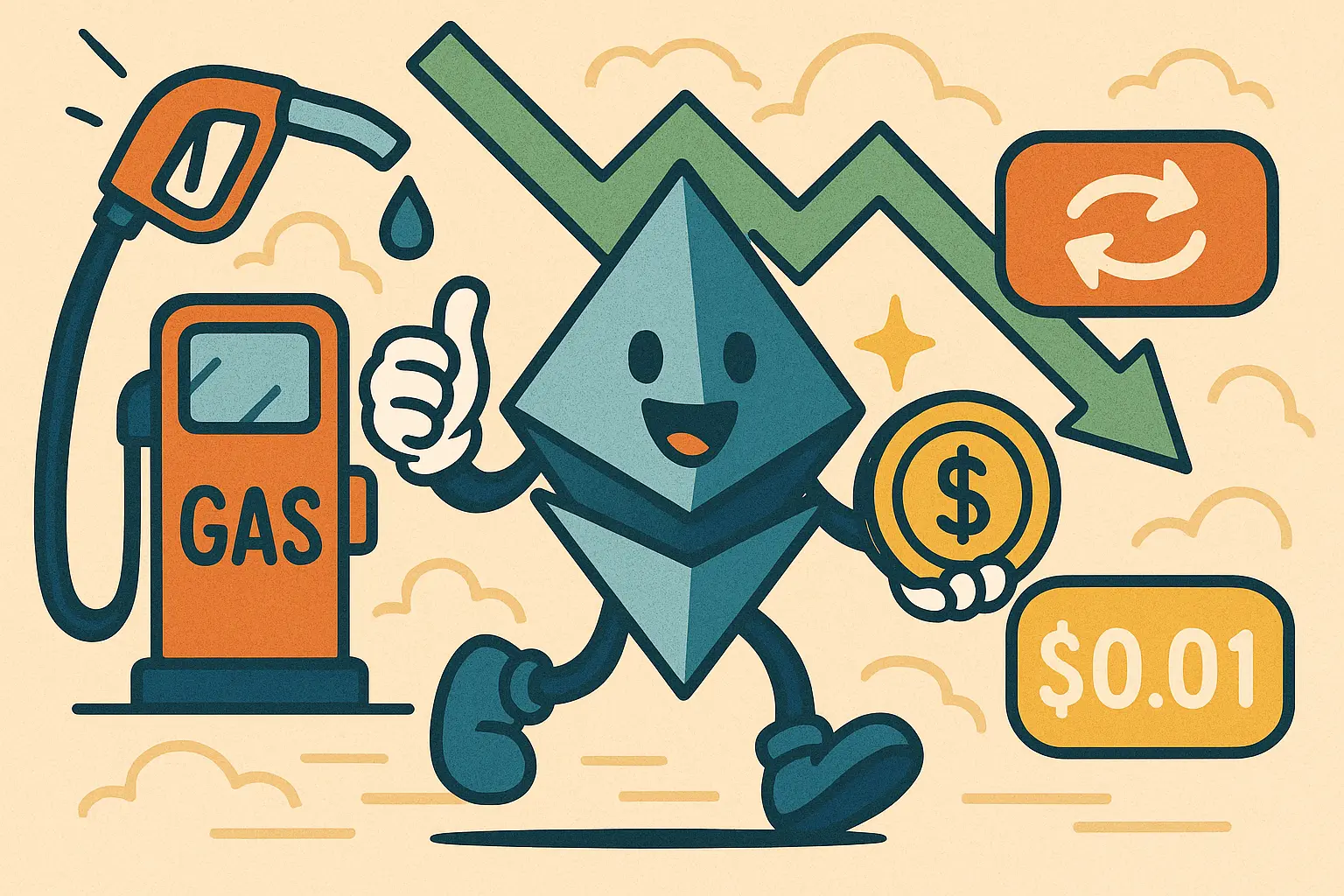
According to the latest data from the on-chain analytics platform Etherscan, the average Ethereum gas price has fallen to approximately 0.045 Gwei, a multi-year low. At this rate, a typical ERC-20 token swap transaction costs only about $0.01, and ETH transfers even less than $0.01. Compared to the same period in 2025, Ethereum gas fees have decreased by over 90% within a year.
Specific Figures on Cost Reduction: From $200 to $0.01
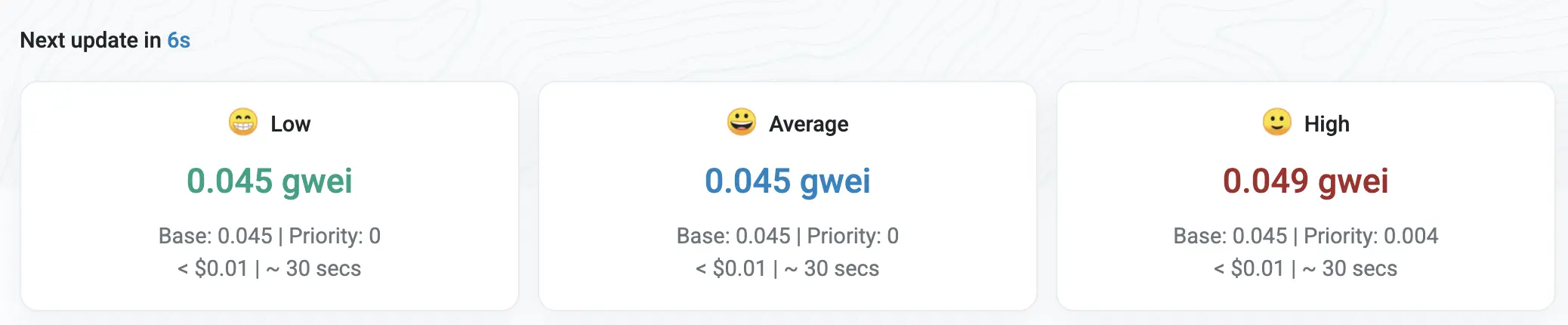
(Source: Etherscan)
This round of fee reduction is evident across multiple levels:
Actual operational costs (calculated at the current rate of about 0.045 Gwei):
- Standard ETH transfer: Less than $0.01
- ERC-20 token swap (Uniswap test): About $0.01
- More complex operations such as cross-chain bridging or DeFi lending: Usually below $0.12
Time-based comparison:
- This week’s average: 0.5 to 0.6 Gwei
- Same period in 2025: About 6 Gwei (over 90% decrease in a year)
- Peak of the 2024 bull market: Single transactions exceeding $200
This means even the most basic DeFi users, performing a dozen on-chain transactions today, may spend less than the cost of a cup of coffee.
Why Ethereum Fees Have Plummeted: Technical Upgrades and Ecosystem Transformation
The structural decline in Ethereum gas fees is not merely market fluctuation but reflects profound network architecture adjustments over the past two years:
Rise of Layer 2 Networks: Many daily transactions have shifted to second-layer solutions like Arbitrum, Base, and Optimism. These L2 networks handle far more transactions per second than the mainnet, often at a fraction of the cost—sometimes even less than one-tenth of the mainnet fee.
Dencun Upgrade (2024): Introduces EIP-4844 (Proto-Danksharding), which provides dedicated Blob space for Rollups to publish data on the mainnet, significantly reducing the cost for L2 to submit data, thereby indirectly improving the overall fee structure.
Fusaka Upgrade (2025): Uses PeerDAS technology to increase Blob capacity, further boosting data throughput, enabling more L2 activities to settle efficiently on the mainnet.
These technological advancements are systematically transforming Ethereum into a “secure settlement layer,” rather than an execution layer for all transactions. Currently, mainnet block utilization is around 46%, significantly easing previous congestion issues.
Challenging the Traditional View of High Cross-Border Payment Costs: “Blockchain Fees Are Expensive” May Be Outdated
The record low gas fees also prompt a reevaluation of previous comparisons between blockchain and traditional financial costs. Some banking experiments indicated that for remittance amounts exceeding certain thresholds (e.g., around $7,000), bank wire transfer costs could be lower than stablecoin transfers (which typically charge a fixed fee of 1-2 USDT plus a percentage fee).
However, with Ethereum mainnet ERC-20 transfers now costing as little as $0.01–$0.02, and some Layer 2 transactions below $0.01, these baseline assumptions have fundamentally changed. Even performing multiple on-chain operations, total costs may be far below any fixed fee scheme. As Ethereum scaling solutions continue to mature, the traditional notion that “blockchain fees are high” is being rewritten by the new cost realities.
Frequently Asked Questions
Q: Why has Ethereum gas fee decreased by 90%, but ETH price hasn’t risen in tandem?
A: The reduction in gas fees reflects decreased network congestion, not a decline in demand. Many activities have migrated to Layer 2 solutions, reducing mainnet transaction volume, which causes gas fees to fall. ETH price is influenced by broader macro factors, including overall crypto market sentiment and ETF capital flows, which are not directly correlated with gas fees at this stage.
Q: Are Layer 2 network transaction costs lower?
A: Yes. Transactions on Layer 2 networks like Arbitrum, Base, and Optimism are generally cheaper—some as low as $0.001 or less. Layer 2 is suitable for high-frequency trading, small-value payments, and DeFi operations, while the mainnet is better suited for high-value settlements requiring maximum security.
Q: Does the decrease in gas fees mean Ethereum ecosystem activity is declining?
A: Not necessarily. On-chain data shows overall activity remains robust; the activity pattern has shifted structurally: high-frequency, low-value transactions are moving to Layer 2, while the mainnet handles more high-value settlements and operations requiring higher security. Stablecoin settlement volumes and smart contract interactions remain active; from the mainnet perspective, it simply appears less congested.
Disclaimer: The information on this page may come from third parties and does not represent the views or opinions of Gate. The content displayed on this page is for reference only and does not constitute any financial, investment, or legal advice. Gate does not guarantee the accuracy or completeness of the information and shall not be liable for any losses arising from the use of this information. Virtual asset investments carry high risks and are subject to significant price volatility. You may lose all of your invested principal. Please fully understand the relevant risks and make prudent decisions based on your own financial situation and risk tolerance. For details, please refer to
Disclaimer.


