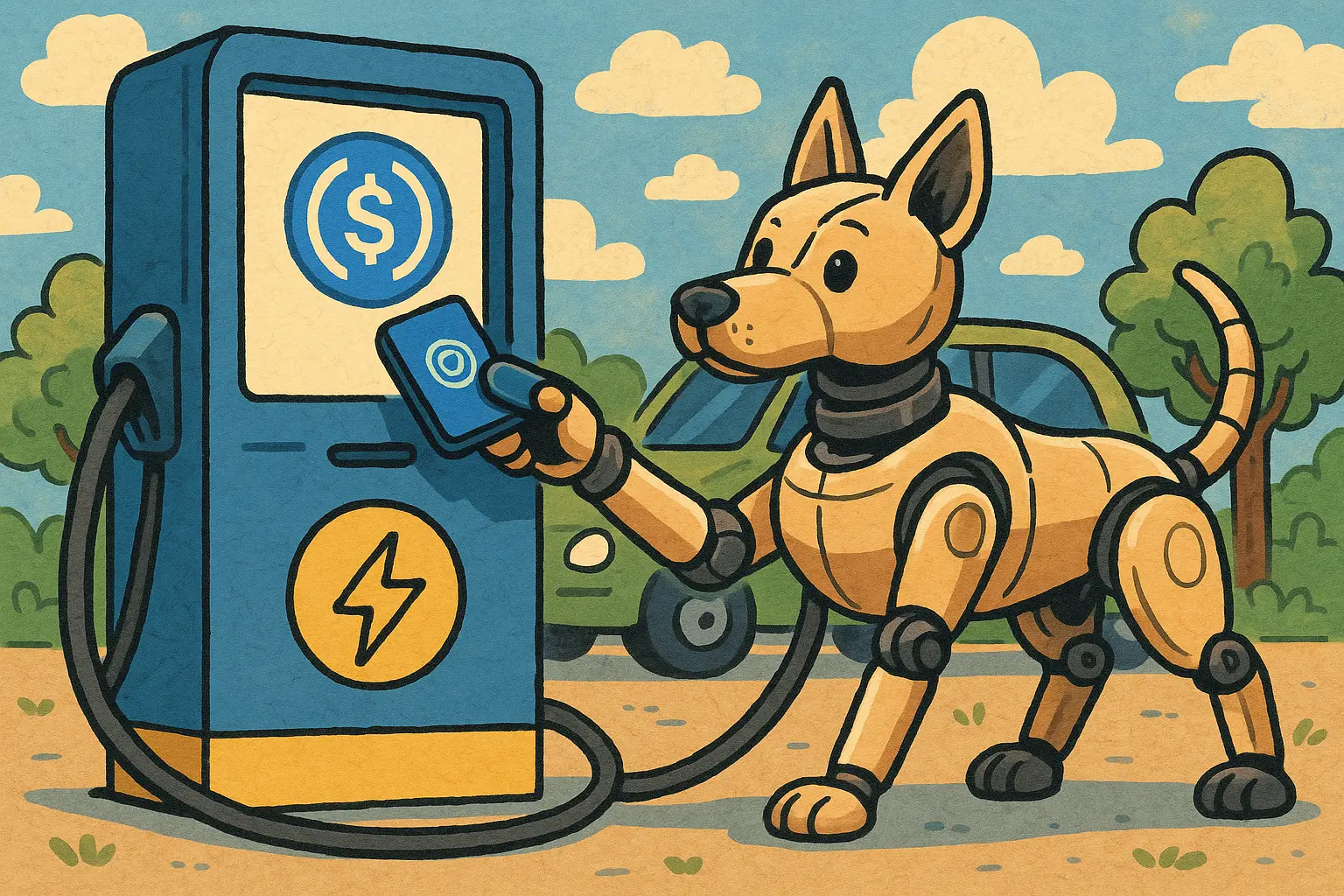
Circle announces that Circle Nanopayments is now live on the testnet. This is a foundational payment infrastructure that supports USDC transfers with zero gas fees as low as 0.000001 USD. Circle Nanopayments has completed real-world validation: an autonomous robot dog used Nanopayments to complete a USDC transaction and recharge itself.
The Double Dilemma of Traditional Payments and On-Chain Costs
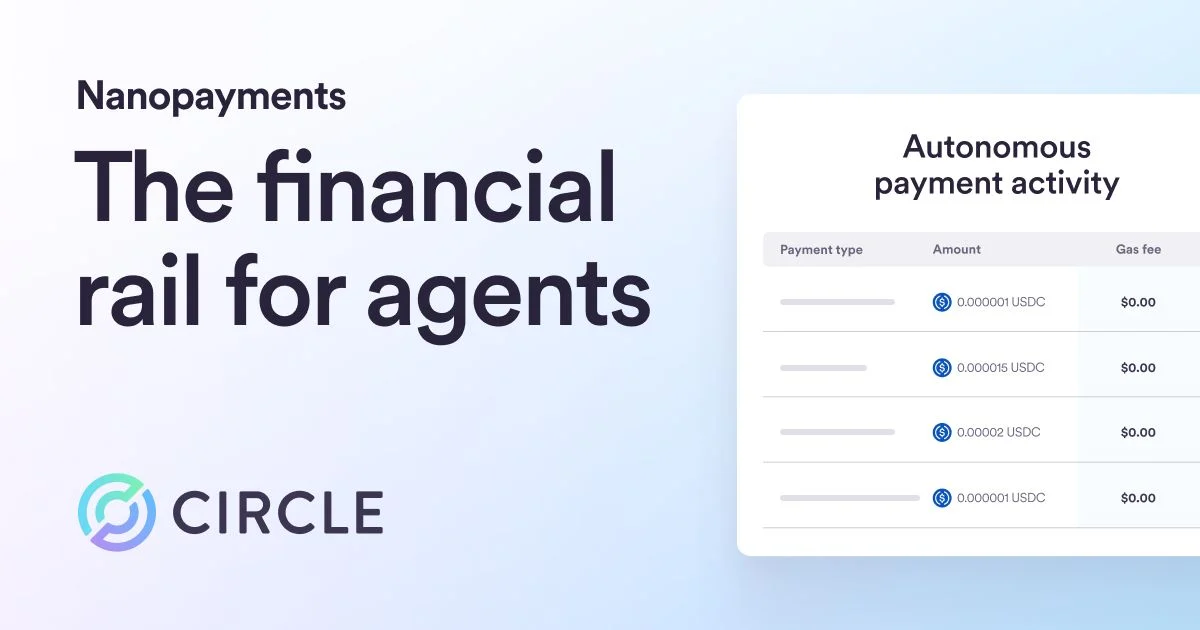 (Source: Circle)
The launch of Circle Nanopayments stems from the inherent limitations of two existing infrastructures:
Design flaws of traditional payment systems: Payment infrastructure built decades ago was not designed for high-frequency, ultra-fine-grained small transactions by AI agents. Fixed fees make ultra-low-value transactions economically unfeasible.
Structural issues of on-chain gas fees: Even on low-cost blockchains, a transfer of $0.0001 can incur gas fees of 1,000% to 5,000% of the transfer amount. The mode of on-chain settlement per transaction prevents scalable micro-payments.
These two limitations create a market gap: emerging agent economies need infrastructure capable of executing massive micro-transactions at extremely low costs and near real-time, which current solutions cannot meet.
Technical Architecture: Four-Step Payment Process Breakdown
The core of Circle Nanopayments’ solution is “off-chain aggregation + delayed batch on-chain settlement.” The specific payment process is as follows:
Step 1: When an agent initiates a payment, it signs an EIP-3009 authorization (a signed token transfer authorization message) and forwards it to the Circle Nanopayments API.
Step 2: Nanopayments verifies the signature and immediately adjusts the agent’s internal ledger balance, providing real-time confirmation to the merchant.
Step 3: Once confirmed, the merchant can immediately deliver goods or services without waiting for on-chain confirmation.
Step 4: Actual on-chain settlement occurs periodically in batches in the backend, with gas fees borne by Circle at the batch settlement layer.
By bundling thousands of transactions into a single on-chain settlement, this architecture completely eliminates developers’ gas fee burden, enabling business models such as pay-per-call APIs, real-time resource billing, pay-per-fetch search, and machine-to-machine (M2M) autonomous service markets to be truly feasible.
First Real-World Case of Agent Economy: Robot Dog Self-Charging Payment
Circle has partnered with open-source robot software developer OpenMind to validate Circle Nanopayments in the real world: an autonomous robot dog used Nanopayments to complete a USDC transaction and recharge itself, demonstrating a complete agent-driven payment cycle—software initiates payment, receives near-instant confirmation, continues its workflow (recharging), with settlement handled in batch in the backend.
It’s noteworthy that Circle Nanopayments follows the x402 standard, requiring no account creation or credit card binding by agents. Any agent can pay any merchant directly and operate on any EVM chain supporting Circle Gateway.
## Frequently Asked Questions
How does Circle Nanopayments enable developers to make micro-payments with zero gas fees?
Circle Nanopayments uses an off-chain aggregation architecture, recording numerous small transfers in Circle’s internal ledger, then periodically batching them into a single on-chain settlement. Gas fees are covered by Circle at the batch layer, so developers and agents using the Nanopayments API pay zero gas fees per transaction.
Which blockchains does Circle Nanopayments currently support?
As of February 2026, Nanopayments has been deployed on testnets of 12 chains: Arbitrum, Arc, Avalanche, Base, Ethereum, HyperEVM, Optimism, Polygon PoS, Sei, Sonic, Unichain, and World Chain, supporting any EVM-compatible chain with Circle Gateway.
What AI agent applications is Circle Nanopayments suitable for?
Main use cases include pay-per-call APIs, real-time resource billing, pay-per-fetch search services, and autonomous machine-to-machine service markets. Circle has completed its first real-world case with OpenMind: an autonomous robot dog used Nanopayments for self-charging payments, providing early validation for agent-driven payment cycles.
Disclaimer: The information on this page may come from third parties and does not represent the views or opinions of Gate. The content displayed on this page is for reference only and does not constitute any financial, investment, or legal advice. Gate does not guarantee the accuracy or completeness of the information and shall not be liable for any losses arising from the use of this information. Virtual asset investments carry high risks and are subject to significant price volatility. You may lose all of your invested principal. Please fully understand the relevant risks and make prudent decisions based on your own financial situation and risk tolerance. For details, please refer to
Disclaimer.


