As the DeFi ecosystem evolves, user needs for yield management are shifting from simply "earning yield" to sophisticated "yield management." In most traditional DeFi protocols, yield assets typically feature floating returns, with ROI fluctuating based on market dynamics.
Pendle addresses the fixed income gap in DeFi by introducing a yield tokenization mechanism. Pendle splits yield-generating assets into two tradable components—principal and return—enabling users to independently lock in fixed returns or trade future yield. This approach brings DeFi yield products closer to traditional financial instruments like bonds and positions Pendle as foundational infrastructure for the on-chain interest rate market.
What Is Fixed Income? Why Does DeFi Need It?
Fixed income means that users can determine their ROI upfront when allocating assets and receive the expected returns at a specified maturity date. In traditional finance, instruments like bonds and fixed-term deposits are considered fixed income products, known for their predictable returns that help mitigate risks from yield volatility.
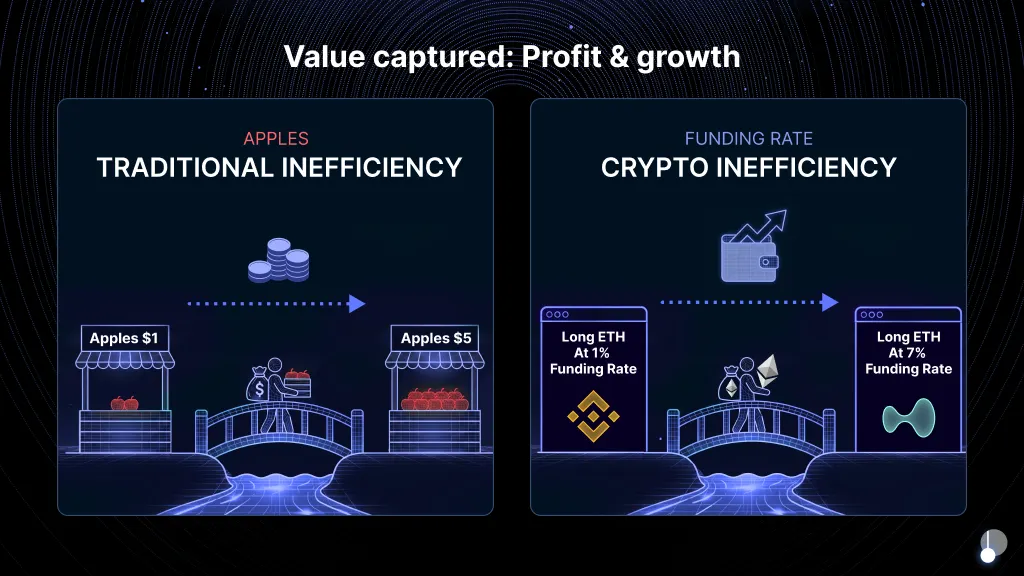
In DeFi, most yield products derive returns from borrowing rates, staking rewards, or liquidity mining, all of which fluctuate with supply, demand, and market conditions. As a result, even holders of yield assets cannot secure future yield in advance. For users seeking stable returns or strategic asset allocation, the absence of fixed income tools is a major shortcoming in DeFi. Pendle bridges this gap with its yield-splitting mechanism.
How Does Pendle Deliver Fixed Income?
Pendle achieves fixed income by splitting yield assets into PT and YT. When users deposit yield-bearing assets into Pendle, the protocol issues two tokens: PT (Principal Token), representing the principal, and YT (Yield Token), representing future returns.
PT typically trades at a discount to its value at expiry. By purchasing PT and holding it until maturity, users can redeem the principal at face value, capturing a predetermined yield spread. For example, if the PT price is below its redemption value at maturity, buyers effectively lock in a fixed return.
This mechanism converts originally floating-yield assets into fixed income instruments, allowing users to pursue bond-like strategies directly on-chain.
Why Does PT Offer Fixed Income?
PT delivers fixed income through a "discounted purchase, redemption at face value upon expiry" model. Since PT exclusively represents principal value and excludes rights to future yield, its market price is generally lower than its redemption value at maturity.
When users purchase PT and hold it to expiry, they redeem the principal at face value—the difference between purchase and redemption constitutes the fixed return. Because the redemption value is predetermined, buyers of PT can effectively secure their expected ROI.
This model closely mirrors traditional zero-coupon bonds, but Pendle brings this logic to on-chain yield assets, making fixed income accessible in DeFi.
What Role Does YT Play in the Fixed Income Structure?
Within Pendle’s yield-splitting system, YT represents the rights to future returns. Buyers of PT forgo future yield, which is instead claimed by YT holders.
YT enables the independent pricing and trading of future yield rights. If the market expects yields to rise, YT prices typically increase; if yield expectations fall, YT prices may decline. YT, therefore, absorbs yield volatility risk, while PT provides fixed income certainty.
By separating PT and YT, Pendle allows some users to lock in fixed returns and others to take on yield risk for potential upside, creating a comprehensive on-chain interest rate market.
How Does Pendle Build the DeFi Interest Rate Market?
Pendle’s innovation lies not only in enabling fixed income, but also in establishing a yield trading marketplace. By splitting yield assets into PT and YT, Pendle empowers market participants to trade and price future returns.
PT prices reflect the level of fixed income, while YT prices capture market expectations for future yield. Together, these market prices determine the overall ROI of the asset. Pendle thus transforms floating protocol-set yields into interest rates determined by open market trading.
This design makes ROI a tradable market variable, establishing DeFi’s first true interest rate market and positioning Pendle as critical infrastructure for on-chain fixed income and interest rate derivatives.
What Are the Advantages of Pendle’s Fixed Income Mechanism?
Pendle’s fixed income mechanism offers greater certainty for returns. Users seeking predictable yields can purchase PT to lock in ROI, reducing exposure to market volatility.
The yield-splitting model also boosts capital efficiency: users can select PT or YT based on risk preference, instead of passively accepting fluctuating yields. This flexibility enhances yield management and endows yield assets with richer financial properties.
Crucially, Pendle’s market-driven pricing establishes an on-chain interest rate market, granting DeFi yield products a mature financial structure and enabling fixed income, yield speculation, and interest rate risk management.
What Are the Risks of Pendle’s Fixed Income Mechanism?
While Pendle offers fixed income tools, its mechanism carries inherent risks. The protocol operates via smart contracts, so smart contract risk is present—vulnerabilities could impact asset security.
Additionally, while PT’s fixed return is guaranteed at maturity, its market price is subject to liquidity. If liquidity is low, selling PT before expiry may not yield optimal prices. YT price volatility can also affect the overall valuation of yield assets.
Pendle’s yield mechanism is complex: users must understand the relationship between PT and YT and the expiry process, or risk incurring additional loss. As such, Pendle is best suited for users with a solid grasp of yield strategies.
Summary
Pendle brings fixed income to DeFi by splitting yield assets into PT and YT. Users can lock in fixed returns by buying discounted PT, while YT holders assume the risk of yield fluctuations. This approach transforms floating-yield assets into tradable fixed income instruments and establishes an on-chain interest rate market.
The mechanism enhances flexibility for yield assets and ushers DeFi yield management into a more advanced phase. As demand for fixed income grows, Pendle is becoming a cornerstone of the DeFi interest rate market and accelerating the development of on-chain fixed income products.
FAQs
How Does Pendle Achieve Fixed Income?
Pendle splits yield assets into PT and YT, allowing users to buy discounted PT and redeem at face value upon maturity, locking in fixed returns.
Why Can PT Offer Fixed Income?
PT trades at a discount and is redeemed at face value at maturity, so users earn a predetermined return from the price difference.
What Role Does YT Play in the Fixed Income Structure?
YT represents rights to future yield, absorbing yield volatility risk, which enables PT to deliver fixed return certainty.
Why Is Pendle Known as the DeFi Interest Rate Market?
Because the trading prices of PT and YT together determine ROI, making interest rates a market-driven, tradable variable.
What Are the Risks of Pendle’s Fixed Income Mechanism?
Key risks include smart contract vulnerabilities, liquidity risk, and operational risk from insufficient understanding of the yield-splitting mechanism.