Ethereum Unveils Security Audit Subsidy Program
 (Source: Areta)
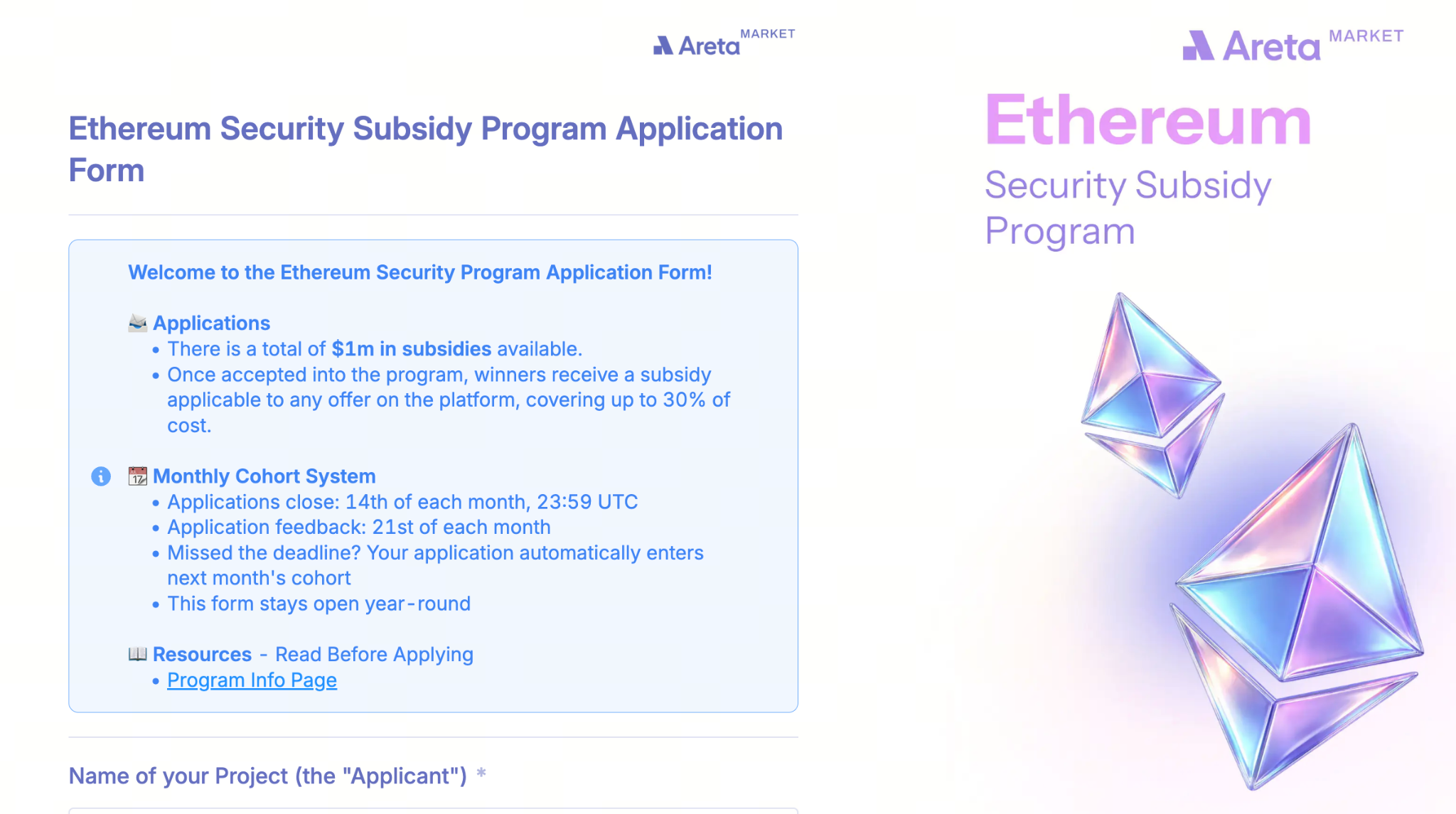
The Ethereum Foundation has recently announced a new security initiative designed to make it easier for blockchain developers to access professional security audit services. The Ethereum Security Subsidy Program aims to lower the high costs of security audits, enabling more teams to thoroughly vet their products before launch.
This program is a joint effort between the Ethereum Foundation and digital asset advisory firm Areta. Through Areta’s audit matchmaking platform, developers can directly connect with around 20 specialized security audit firms.
Here’s how the program operates:
-
Development teams submit applications and undergo a review process
-
Approved projects receive partial subsidies for audit fees
-
Subsidies can cover up to 30% of audit costs
-
New subsidy recipients are selected on a fixed term each month
Additionally, blockchain data provider Chainlink and Ethereum client developer Nethermind participate in the evaluation process, helping to filter and select high-potential projects.
Program Scale and Evaluation Criteria
The program’s initial funding totals $1 million, allocated to support eligible projects in securing professional security audits. Selection criteria include:

(Source: 0xboo)
This initiative is not just about financial support—it also serves as a mechanism to identify and elevate top development teams.
Core Values: Security, Privacy, and Openness
According to the Ethereum Foundation, the program gives priority to projects that align with the CROPs principles: Censorship Resistance, Open Source, Privacy, and Security. These values are recognized as key pillars for the ongoing development of the Ethereum ecosystem.
Previously, the Foundation introduced its Trillion-Dollar Security vision, aiming to raise network security standards to a level capable of safeguarding assets worth trillions of dollars.
Why Security Audits Matter More Than Ever
In blockchain, once a Smart Contract is deployed, it’s nearly impossible to change—meaning any vulnerability can result in severe losses. This makes security audits a critical step in the development lifecycle.
Other projects are also prioritizing security. For example, Aave Labs recently launched a $1.5 million audit program to secure its latest protocol version.
Leading Security Firms Join the Program
More than 20 top security firms have already joined the subsidy program, including Blocksec, Hacken, Quantstamp, and Immunefi. Immunefi is a well-known decentralized bug bounty platform and has received backing from Anchorage Digital.
Conclusion
The audit subsidy program is about more than just cost reduction—it’s about fostering a security-first development culture. As capital and resources continue to flow in, blockchain application security is set to improve, moving the crypto industry toward greater maturity and resilience.







