XELS vs MANA: Which Metaverse Token Offers Better Investment Potential in 2024?

Introduction: XELS vs MANA Investment Comparison
In the cryptocurrency market, comparisons between XELS and MANA have always been a topic that investors cannot overlook. The two assets differ significantly in market capitalization ranking, application scenarios, and price performance, representing distinct positioning within the crypto asset landscape.
XELS (XELS): Launched in 2018, it has gained market recognition by leveraging blockchain technology as a decentralized platform addressing climate change and promoting sustainable development, with a focus on enabling enterprises to generate and maintain certified, traceable NFT-based carbon offset activity records for environmental transparency.
MANA (Decentraland): Since its inception in 2017, it has been recognized as a virtual world platform based on blockchain, designed to solve platform provider profit extraction issues and establish low-cost payment mechanisms between content creators and game players by enabling users to permanently own and operate virtual property rights without intermediary fees.
This article will comprehensively analyze the investment value comparison between XELS and MANA across historical price trends, supply mechanisms, market positioning, and ecosystem development, while attempting to answer the most pressing question for investors:
"Which is the better buy right now?"
I. Price History Comparison and Current Market Status
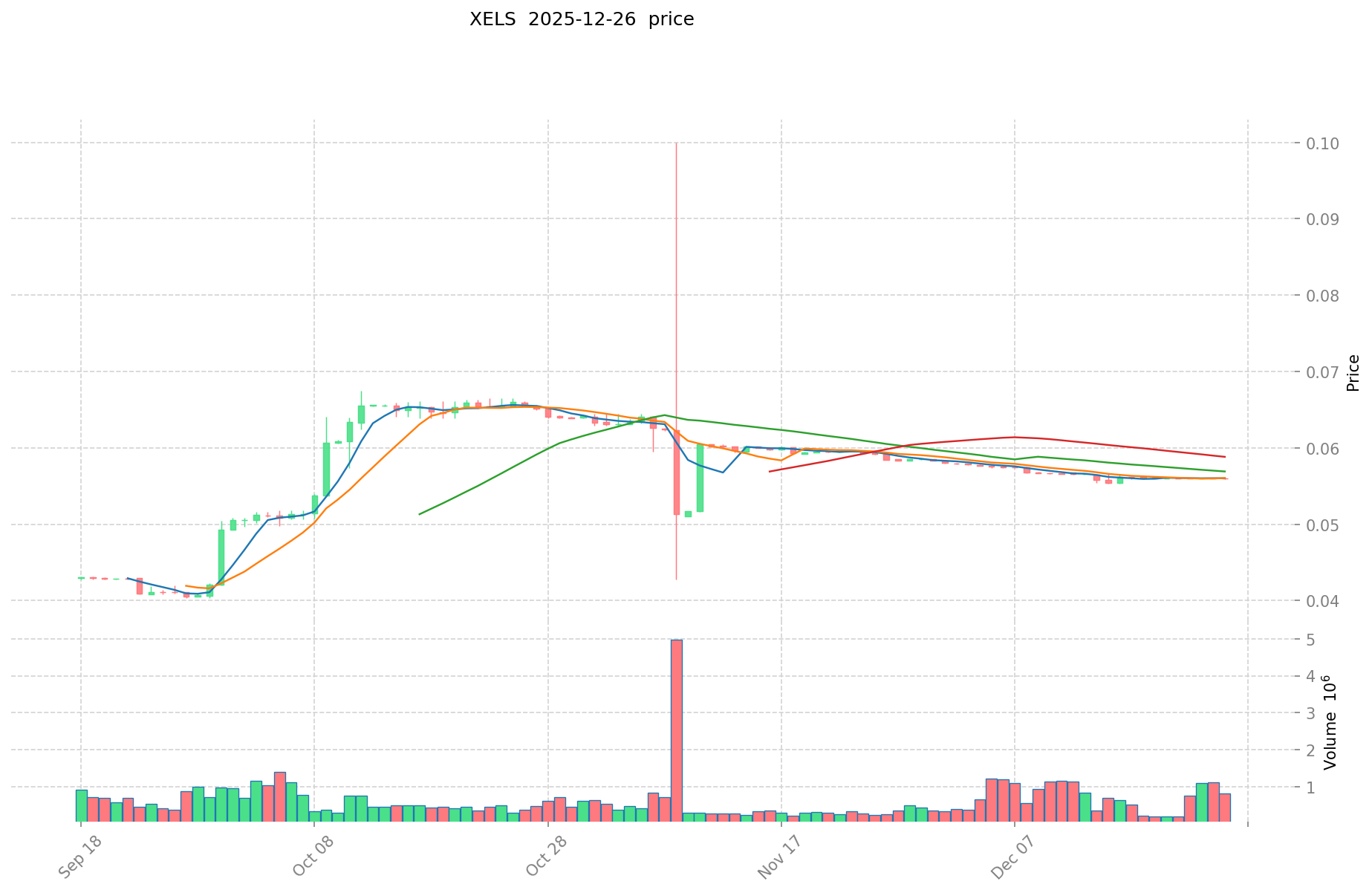
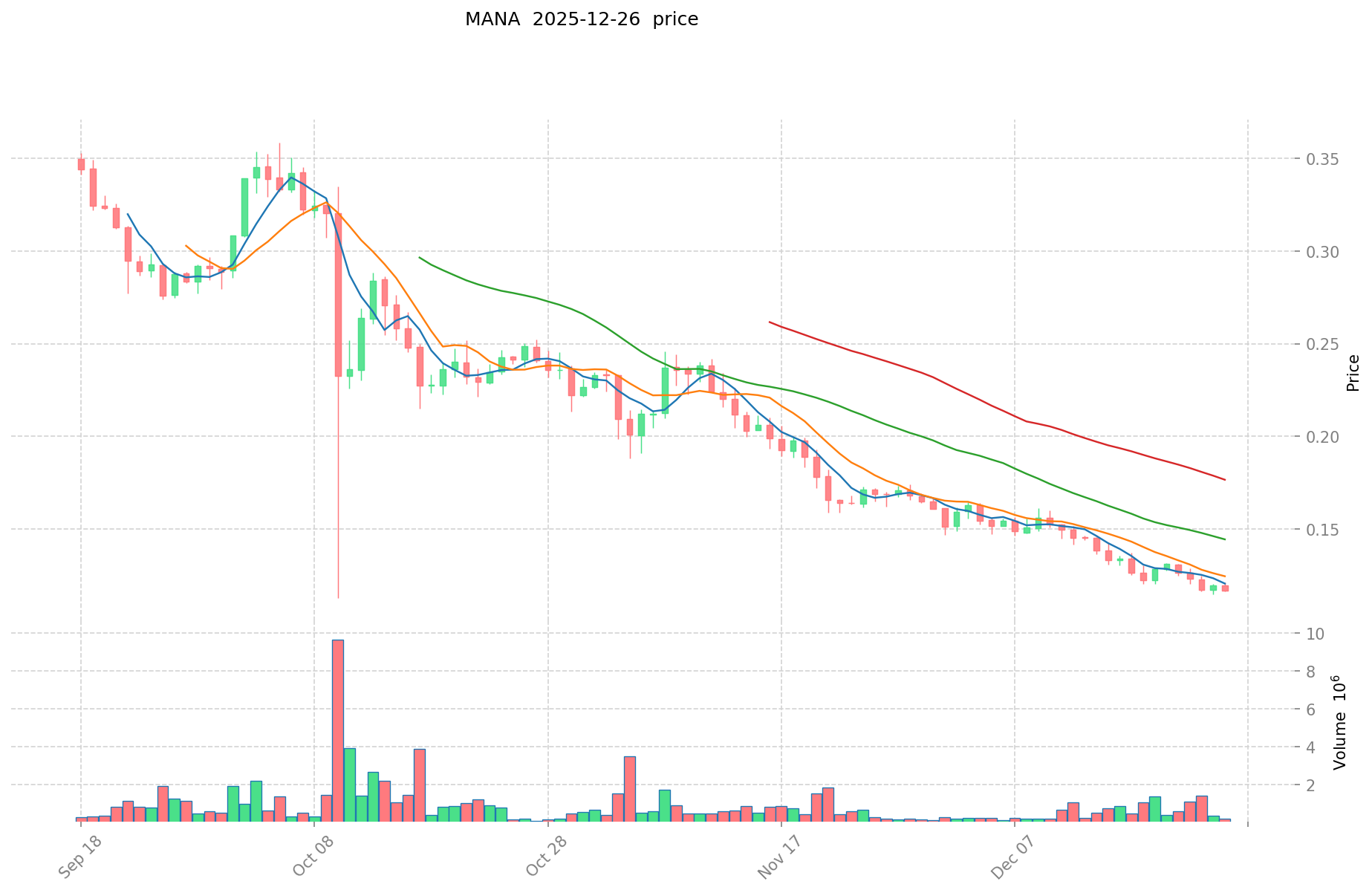
XELS and MANA Historical Price Trends
- December 2021: XELS reached its all-time high of $13.95, driven by increased interest in environmental blockchain solutions. MANA achieved its all-time high of $5.85, fueled by metaverse platform adoption and institutional interest.
- May 2025: XELS hit its all-time low of $0.03664388, reflecting prolonged market downturns and reduced trading activity. MANA reached its all-time low of $0.00923681 in October 2017 during early cryptocurrency market cycles.
- Comparative analysis: Since the 2021 market peak, XELS has declined approximately 99.6% from its historical high, while MANA has depreciated approximately 88% from its peak, indicating significantly greater price deterioration for XELS over the market cycle.
Current Market Status (December 27, 2025)
- XELS current price: $0.05512
- MANA current price: $0.1173
- 24-hour trading volume: XELS recorded $38,630.97 versus MANA's $57,485.84, showing higher trading activity for MANA.
- Market sentiment index (Fear & Greed Index): 20 (Extreme Fear)
Click to view real-time prices:
- View XELS current price Market Price
- View MANA current price Market Price
二、影响 XELS vs MANA 投资价值的核心因素
供应机制对比(Tokenomics)
- XELS:focuses on carbon credits mechanism with climate disclosure technology as core infrastructure
- MANA:tied to Decentraland metaverse economy with dynamic token utility in virtual world transactions
- 📌 Historical patterns: Supply mechanisms drive price cycles through adoption rates and regulatory developments rather than mechanical token release schedules.
机构采用与市场应用
- Institutional holdings: MANA benefits from metaverse narrative appeal to venture capital, while XELS attracts ESG-focused institutional investors
- Enterprise adoption: XELS targets corporate carbon credit markets and climate compliance; MANA serves virtual real estate markets and digital content creators within Decentraland ecosystem
- Regulatory stance: XELS faces evolving carbon market regulations and environmental compliance frameworks; MANA navigates general cryptocurrency regulations with additional scrutiny on virtual asset classification
技术发展与生态建设
- XELS technology trajectory: Climate disclosure technology infrastructure development and integration with carbon credit markets
- MANA ecosystem development: Decentraland platform upgrades, virtual world interoperability, and creator economy tools expansion
- Ecosystem comparison: MANA has established NFT and digital property trading infrastructure; XELS develops environmental credit verification and blockchain-based climate data systems
宏观经济与市场周期
- Inflationary environment performance: XELS positioned as tangible environmental asset hedge; MANA subject to discretionary spending cycles in virtual economy
- Macroeconomic policy impact: Interest rate changes affect both differently—XELS linked to carbon credit market valuations, MANA influenced by risk appetite for speculative digital assets
- Geopolitical factors: Cross-border climate initiatives support XELS demand; MANA adoption varies by regional regulatory stance toward metaverse platforms and virtual property rights
III. 2025-2030 Year Price Prediction: XELS vs MANA
Short-term Prediction (2025)
- XELS: Conservative $0.0341713-$0.055115 | Optimistic $0.055115-$0.0804679
- MANA: Conservative $0.09962-$0.1172 | Optimistic $0.1172-$0.147672
Medium-term Prediction (2026-2028)
- XELS may enter growth consolidation phase, with expected price range of $0.056944818-$0.09475888881, demonstrating 22%-71% upside potential
- MANA may enter recovery phase, with expected price range of $0.07548852-$0.1364388781, showing 12%-16% growth trajectory
- Key drivers: institutional capital inflows, ecosystem development, market sentiment recovery
Long-term Prediction (2029-2030)
- XELS: Base case $0.10376098324695-$0.114655886487879 | Optimistic case $0.125550789728809-$0.127268034001546
- MANA: Base case $0.1575869042055-$0.18280080887838 | Optimistic case $0.20801471355126-$0.204736905943785
XELS:
| 年份 | 预测最高价 | 预测平均价格 | 预测最低价 | 涨跌幅 |
|---|---|---|---|---|
| 2025 | 0.0804679 | 0.055115 | 0.0341713 | 0 |
| 2026 | 0.089484714 | 0.06779145 | 0.056944818 | 22 |
| 2027 | 0.11087969562 | 0.078638082 | 0.06212408478 | 42 |
| 2028 | 0.1127630776839 | 0.09475888881 | 0.0634884555027 | 71 |
| 2029 | 0.125550789728809 | 0.10376098324695 | 0.099610543917072 | 88 |
| 2030 | 0.127268034001546 | 0.114655886487879 | 0.106629974433728 | 108 |
MANA:
| 年份 | 预测最高价 | 预测平均价格 | 预测最低价 | 涨跌幅 |
|---|---|---|---|---|
| 2025 | 0.147672 | 0.1172 | 0.09962 | 0 |
| 2026 | 0.13640908 | 0.132436 | 0.07548852 | 12 |
| 2027 | 0.1384552162 | 0.13442254 | 0.1263571876 | 14 |
| 2028 | 0.178734930311 | 0.1364388781 | 0.100964769794 | 16 |
| 2029 | 0.20801471355126 | 0.1575869042055 | 0.143404082827005 | 34 |
| 2030 | 0.204736905943785 | 0.18280080887838 | 0.111508493415811 | 55 |
IV. Investment Strategy Comparison: XELS vs MANA
Long-term vs Short-term Investment Strategy
- XELS: Suitable for investors focusing on environmental sustainability themes, ESG-aligned institutional portfolios, and those betting on carbon credit market maturation and climate policy expansion
- MANA: Suitable for investors seeking exposure to metaverse narrative, virtual real estate appreciation, and creator economy growth within established digital platforms
Risk Management and Asset Allocation
- Conservative investors: XELS 30% vs MANA 70%
- Aggressive investors: XELS 60% vs MANA 40%
- Hedging tools: Stablecoin allocation, options strategies, cross-asset diversification with other Layer-1 tokens
V. Potential Risk Comparison
Market Risk
- XELS: Limited trading liquidity ($38,630.97 daily volume), concentrated institutional ownership in ESG funds, vulnerability to carbon credit market volatility and policy reversals
- MANA: Metaverse sentiment dependency, discretionary spending cycles during economic downturns, regulatory uncertainty around virtual property classifications
Technology Risk
- XELS: Climate disclosure infrastructure scalability, integration complexity with fragmented carbon credit markets, blockchain interoperability with traditional carbon credit systems
- MANA: Decentraland platform centralization concerns, virtual world user adoption volatility, competition from alternative metaverse platforms
Regulatory Risk
- Global regulatory policies affect both differently—XELS faces evolving carbon market regulations and environmental compliance frameworks requiring alignment with international climate standards; MANA navigates cryptocurrency regulations with additional scrutiny on virtual asset classification, digital property rights, and consumer protection in virtual economies
VI. Conclusion: Which Is the Better Buy?
📌 Investment Value Summary:
- XELS advantages: Environmental asset hedge positioning, ESG investor appeal, tangible climate market linkage, long-term upside potential (108% by 2030)
- MANA advantages: Established metaverse ecosystem infrastructure, higher current trading liquidity, established NFT and digital property markets, lower volatility profile from peak
✅ Investment Recommendations:
- Beginner investors: Start with MANA due to higher trading liquidity, more transparent price discovery mechanisms, and established ecosystem infrastructure; consider small XELS allocation only if committed to ESG themes
- Experienced investors: Maintain XELS 40-50% allocation for climate policy upside exposure with MANA 50-60% for ecosystem diversification; use technical analysis on 2025-2026 price consolidation phases for entry points
- Institutional investors: XELS aligns with ESG mandates and carbon credit market expansion; MANA provides digital asset class exposure; recommend 70/30 MANA/XELS weighting reflecting market maturity and regulatory clarity differences
⚠️ Risk Warning: Cryptocurrency markets exhibit extreme volatility. Both XELS and MANA have declined 88-99.6% from historical peaks. This article does not constitute investment advice. Conduct independent research and consult financial advisors before investing.
FAQ
XELS和MANA分别是什么?它们各自的主要应用场景是什么?
XELS是Elrond区块链网络的原生代币,用于支付交易费用和网络治理。MANA是Decentraland虚拟现实平台的治理代币,用于虚拟地产交易和平台服务。两者分别服务于公链和元宇宙应用场景。
XELS和MANA在技术架构和共识机制上有什么区别?
XELS采用权益证明(PoS)共识机制,侧重可扩展性和去中心化;MANA基于Decentraland虚拟现实平台,采用不同的技术架构。两者在共识方式和应用场景上存在显著差异。
从投资角度看,XELS和MANA哪个更有潜力?风险分别是什么?
MANA运营历史更长,市场基础更稳固,具备元宇宙龙头地位。XELS信息不足,潜力待观察。MANA风险在市场竞争激烈,XELS风险在认知度低、流动性风险。
XELS和MANA的生态发展现状如何?各自有哪些重要的合作伙伴?
MANA是Decentraland生态的核心代币,已与多个游戏平台和元宇宙项目建立合作。XELS生态处于发展初期,正积极拓展应用场景。两者都在NFT和虚拟资产领域有所布局,未来生态扩展空间巨大。
XELS和MANA的代币经济模型有什么不同?流通量和总量分别是多少?
XELS总量1亿,流通量未公开。MANA总量10亿,流通量约6.5亿。两者经济模型差异在于XELS供应量较小,而MANA流通量更大,适用于不同的生态场景。
XELS和MANA在市场流动性和交易对上有什么区别?
MANA在更多交易所上市,交易额较大,流动性充足。XELS流动性相对较低,交易对数量较少,市场深度不足。总体而言,MANA的市场活跃度和可交易性更强。
选择投资XELS还是MANA,主要应该考虑哪些因素?
投资XELS还是MANA,主要考虑项目基本面、市场前景、技术创新和社区活跃度。MANA背靠Decentraland虚拟现实生态,XELS则需评估其独有技术优势和发展潜力。根据交易额、持币地址数等数据综合判断。
Share
Content
Introduction: XELS vs MANA Investment Comparison
XELS and MANA Historical Price Trends
Current Market Status (December 27, 2025)
供应机制对比(Tokenomics)
机构采用与市场应用
技术发展与生态建设
宏观经济与市场周期
III. 2025-2030 Year Price Prediction: XELS vs MANA
IV. Investment Strategy Comparison: XELS vs MANA
V. Potential Risk Comparison
VI. Conclusion: Which Is the Better Buy?
FAQ
How to Buy Cryptocurrency


Trending Cryptocurrencies



2025 APE Price Prediction: Bull Run or Bear Market? Analyzing Key Factors for ApeCoin's Future Value

SN vs MANA: Decoding the Nutritional Battle Between Sports Drinks and Natural Alternatives

Is ArtMeta (MART) a good investment?: Analyzing the potential and risks of this digital art-focused cryptocurrency

2025 XCV Price Prediction: Analyzing Potential Growth Factors and Market Trends for the Cryptocurrency

Is VEMP (VEMP) a good investment?: Analyzing the Potential and Risks of this Emerging Cryptocurrency

TONC vs MANA: Which Metaverse Token Offers Better Investment Potential in 2024?

Google Authenticator Guide: First Step to Crypto Security

Leverage Multiples Explained: Crypto Double-Edged Amplifier
GROK AI Assistant Upgrade: xAI Conversation Tool Benchmark
Tomarket Daily Combo 8 january 2026

Are There Taxes on Cryptocurrencies in Italy?