Ultimate Guide to Cryptocurrency Trading for Beginners in 2025

2025-12-23 18:44:24
Bitcoin
Crypto Trading
Crypto Tutorial
Investing In Crypto
Stablecoin
Article Rating : 4
193 ratings
This comprehensive guide empowers beginners to navigate the cryptocurrency market confidently in 2025. It emphasizes five crucial tips: risk management, sidestepping FOMO, diversification, technical analysis, and choosing reliable platforms, such as Gate. Tailored for new traders, it addresses challenges of market volatility and emotional decision-making. The article's structure follows a logical progression to ensure clarity and provides actionable insights to increase trading success. Keywords like "risk management," "diversification," and "technical analysis" enhance its quick readability, essential for beginners seeking expert guidance.
Ultimate Guide to Cryptocurrency Trading for Beginners in 2025

5 Essential Tips for Beginners in Cryptocurrency Trading

Starting in the world of cryptocurrency trading can be an exciting and potentially profitable experience. However, given the volatility of the crypto market, it is essential to adopt safe and informed strategies to maximize results and minimize risks. For those just entering this world and asking "How do I start trading crypto?", understanding the basics and applying good practices can make the difference between success and failure.

Risk Management: Protect Your Capital Above All

Risk management is the cornerstone of successful cryptocurrency trading. Before starting any trade, clearly define how much you are willing to risk on each trade. A common rule among experienced traders is to not risk more than 1% or 2% of your total capital per trade. This principle helps limit potential losses and protects your investment from sudden market movements that are characteristic of the crypto ecosystem.

A key tool in risk management is the stop-loss order, which allows you to set a limit price to automatically close a position if the market moves against your expectations. For example, if you buy Bitcoin at around $95,000-$98,000 USD, you could set a stop-loss at approximately 5% below your entry point to limit your losses. This automated mechanism prevents excessive losses and protects your capital from rapid downturns. Similarly, take-profit orders are essential to secure gains before the market retraces, allowing you to lock in profits at predetermined levels.

Defining clear trading goals and respecting your own trading rules promotes discipline and helps avoid emotional reactions that often lead to poor decision-making. Keep in mind that not all platforms offer the same protection tools, so it's wise to review the features of the exchange you choose before committing your capital.

Avoid FOMO (Fear of Missing Out): Stay Calm and Focused

FOMO, or fear of missing out, is one of the biggest enemies of novice traders in the cryptocurrency market. It often happens that when a cryptocurrency rises quickly, many investors rush to buy out of fear of 'missing out,' but they do so without proper analysis, risking buying near a peak and facing abrupt corrections.

To avoid succumbing to FOMO when starting to trade crypto, base your trading decisions on both technical and fundamental analysis. Before investing in a cryptocurrency, examine its price history, the adoption it has achieved in the market, and the developments surrounding the project. An asset may skyrocket purely due to speculation, but that doesn't necessarily mean the upward trend will be sustainable or aligned with actual value.

In the crypto community, the principle of DYOR—Do Your Own Research—is frequently emphasized. This matters because each person has a different risk profile and investment goals, and the cryptocurrency that worked well for someone else may not fit your specific circumstances. Those who conduct thorough and independent research face significantly fewer unpleasant surprises and make more informed decisions aligned with their personal strategy.

Diversify Your Portfolio: Don't Put All Your Eggs in One Basket

Putting all your capital into a single digital asset is extremely risky and leaves your entire investment vulnerable. The crypto market is characterized by volatile movements, and a sudden drop can heavily impact your investment if you are only exposed to one token. Diversification across multiple assets reduces risks and provides greater stability to your overall portfolio.

To diversify effectively, consider various types of cryptocurrencies across different categories:

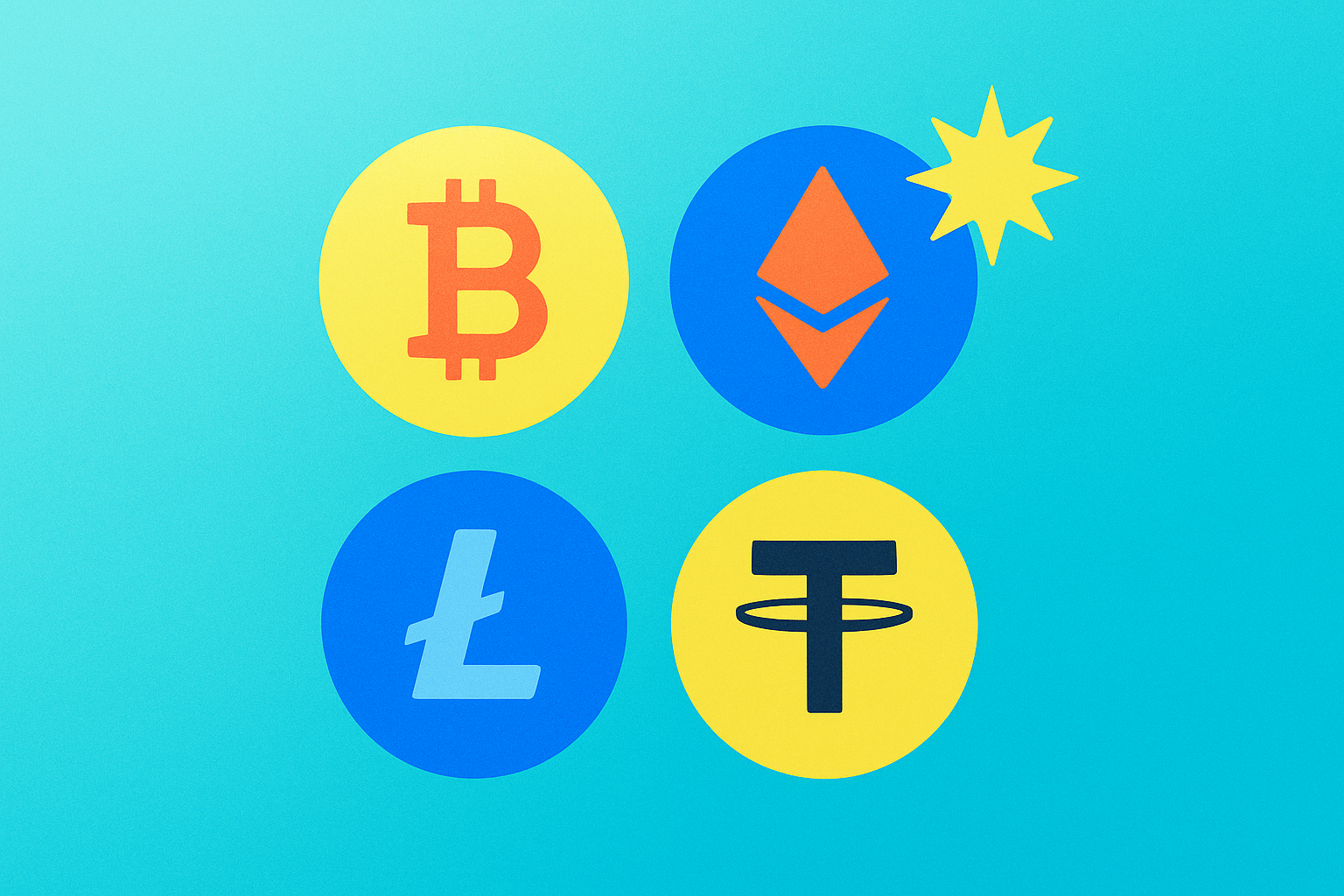
  • Bitcoin (BTC): The most established cryptocurrency and, therefore, less volatile compared to other digital assets, making it a stable portfolio foundation.
  • Ethereum (ETH): One of the key projects in the development of decentralized applications and smart contract technology.
  • Promising Altcoins: Such as Solana, Avalanche, or Polygon, which feature solid use cases and technological innovations.
  • Stablecoins: For example, USDT or USDC, which safeguard a portion of your capital against extreme market fluctuations.

Spreading your funds across different assets protects you from unexpected market movements and gives you the opportunity to balance potential risks with growth opportunities. Additionally, by diluting the effects of any single project, your portfolio won't be severely affected if one of your holdings experiences a sharp decline. This balanced approach is fundamental to long-term success in cryptocurrency investing.

Use Technical Analysis: Make Informed Decisions

Technical analysis is an essential skill for any trader, as it allows you to project possible price movements based on historical data and market patterns. Learning technical analysis patiently can significantly refine your entry and exit strategies, improving your overall trading performance when you start trading crypto.

Some of the main technical indicators that beginners should understand include:

  • Moving Averages (MA): Show general trends in both short-term and long-term timeframes, helping identify overall market direction.
  • RSI (Relative Strength Index): Indicates whether an asset is overbought or oversold, suggesting potential reversal points.
  • MACD (Moving Average Convergence Divergence): Helps visualize trend changes and momentum shifts in the market.
  • Bollinger Bands: Measure volatility and suggest possible entry or exit points based on price deviation from the moving average.

For beginners, it is highly advisable to practice with small amounts or take advantage of demo trading platforms before venturing with significant capital. While this complements rather than contradicts the importance of fundamental analysis, the combination is powerful: first, you filter the projects you trust based on fundamentals, and then you apply technical analysis to determine the optimal time to buy or sell. This layered approach significantly increases the probability of successful trades.

Choose Reliable Platforms: Security Comes First

Choosing the right cryptocurrency exchange is one of the initial and most critical steps for those beginning to trade in the crypto market. Not all platforms offer the same security guarantees, regulatory compliance, or trading conditions, making platform selection a crucial decision.

Several important aspects should be considered when evaluating platforms:

  • Security: Recognized and reputable exchanges provide two-factor authentication (2FA) and advanced secure storage systems to protect your assets from unauthorized access.
  • Liquidity: The higher the liquidity on a platform, the lower the impact of your orders on the market price and the easier it will be to execute trades.
  • Commissions: Carefully review the fees for buying, selling, and withdrawing funds, as these costs accumulate over time. Many platforms offer discount structures if you pay with their native token.
  • Variety of Assets: The more cryptocurrencies available on a platform, the easier it will be for you to implement a diversified trading strategy.

Additionally, remember the importance of safeguarding your digital assets through appropriate storage solutions. Many experienced traders opt for cold wallets, such as hardware wallets, to store cryptocurrency holdings they plan to maintain long-term, thereby avoiding the risks of attacks or hacks on centralized exchange platforms.

Conclusion

Taking your first steps in cryptocurrency trading requires thorough preparation, consistent discipline, and a clear, well-defined strategy. By applying the five essential tips presented in this guide—managing risk responsibly, avoiding emotional FOMO-driven decisions, diversifying your portfolio, utilizing technical analysis, and selecting secure, reliable platforms—you will have a significantly better chance of navigating successfully in this dynamic market.

Success in cryptocurrency trading is not achieved overnight but requires continuous learning, adaptation, and staying informed about market developments. The crypto ecosystem is evolving rapidly, and those traders who maintain updated knowledge and remain disciplined in their approach have a substantially greater chance of achieving consistent, satisfactory results. Begin with these fundamentals, practice diligently, and build your trading experience methodically.

FAQ

How does a beginner start in cryptocurrency?

Start by learning blockchain basics, create a secure wallet, choose your first cryptocurrency, and make a small purchase. Begin with major assets like Bitcoin or Ethereum, then gradually explore other opportunities as you gain experience.

Can I make $100 a day trading crypto?

Yes, making $100 a day trading crypto is achievable with effective strategies and high-volatility cryptocurrencies. Success requires strong market knowledge, disciplined risk management, and consistent trading techniques like scalping or day trading to capitalize on daily price movements.

How much do I need to start trading crypto?

You can start with as little as $10. Most beginners begin with $100-$1,000 to have meaningful trading experience. The key is starting small and gradually increasing your trading amount as you gain experience and confidence.

* The information is not intended to be and does not constitute financial advice or any other recommendation of any sort offered or endorsed by Gate.
Related Articles
Crypto Tax Calculator Australia: The Complete 2025 Guide

Crypto Tax Calculator Australia: The Complete 2025 Guide

Australian crypto investors often ask: how do I calculate my crypto tax? With the Australian Taxation Office (ATO) actively monitoring exchanges and wallets, it’s critical to get it right. Using a crypto tax calculator in Australia makes it easier to comply, save time, and avoid costly mistakes.
2025-08-28 05:40:03
What is Dollar Cost Averaging (DCA) in Crypto Assets? Analysis of strategies and mechanisms.
What is Dollar Cost Averaging (DCA) in Crypto Assets? Analysis of strategies and mechanisms.

This article explores the concept of Dollar Cost Averaging (DCA) as a strategic approach to investing in Crypto Assets, emphasizing its ability to reduce emotional decision-making and provide stability in volatile markets. It explains how DCA lowers risk and improves investment outcomes, offering practical guidance for implementation via trading platforms like Gate compared to lump-sum investing. Suitable for beginners and investors seeking systematic long-term gains, the article highlights the benefits of DCA in reducing average costs and enhancing recovery period returns. Key sections cover the DCA mechanism, implementation techniques, strategic comparisons, and risk management advantages.
2025-11-21 03:09:24
Understanding Dollar Cost Averaging Strategy in Crypto Investments

Understanding Dollar Cost Averaging Strategy in Crypto Investments

This article delves into Dollar Cost Averaging (DCA) in cryptocurrency investing, highlighting its simplicity and suitability for small portfolios. It outlines both the pros, such as reduced impact of volatility, and cons, like increased trading fees. The article guides readers on implementing DCA with fixed schedules or price-based triggers. Additionally, it compares DCA with alternative strategies like lump-sum investing and leverage trading. Ideal for beginners seeking a consistent investment approach, this piece emphasizes understanding DCA's benefits and limitations in crypto markets.
2025-11-01 10:32:02
Understanding Dollar Cost Averaging: A Guide for Investors

Understanding Dollar Cost Averaging: A Guide for Investors

This article demystifies Dollar-Cost Averaging (DCA) in cryptocurrency investment, highlighting its advantages and disadvantages. It aims to inform long-term investors on using DCA to reduce cost basis and navigate market volatility. Readers will learn how to implement DCA via scheduled purchases or price alerts on platforms like Gate, understand alternatives to DCA, and decide if this strategy aligns with their financial goals. Keywords: DCA, crypto, long-term investment, market volatility, cost basis reduction, Gate.
2025-10-29 09:44:18
Understanding Dollar Cost Averaging in Cryptocurrency Investments

Understanding Dollar Cost Averaging in Cryptocurrency Investments

Discover Dollar-Cost Averaging (DCA) as a key strategy in crypto investments, offering simplicity and risk management in volatile markets. This article explains DCA's benefits, drawbacks, and its comparison with alternative strategies like lump-sum or leverage trading. Ideal for both novice and seasoned investors, it provides practical steps to implement DCA, and enhances understanding of market dynamics. Learn how DCA averages costs over time, its impact on transaction fees, and how it aligns with long-term investment goals.
2025-10-29 07:05:47
Understanding Dollar Cost Averaging in Cryptocurrency Investments

Understanding Dollar Cost Averaging in Cryptocurrency Investments

Understanding Dollar Cost Averaging in Cryptocurrency Investments elaborates on DCA's principles, pros, and cons within crypto markets. This strategy benefits investors by reducing volatility impact and emotional decisions, making it suitable for those aiming for steady, long-term growth. The article discusses DCA implementation steps, compares it to other methods like lump-sum investing and technical analysis, and emphasizes careful consideration of individual financial goals. Targeting both novice and experienced investors, it provides clear insights into optimizing crypto investments by using platforms like Gate for automatic recurring purchases.
2025-11-16 06:50:44
Recommended for You
Crypto Trading Bots: Automate Your Trading Strategies

Crypto Trading Bots: Automate Your Trading Strategies

# Automated Cryptocurrency Trading Bots: Enhance Your Strategy Cryptocurrency trading bots automate complex trading strategies across Gate, enabling 24/7 market participation without manual intervention. This comprehensive guide explores eight bot types—including Spot Grid Trading, Futures Grid Trading, DCA Strategy, Arbitrage, Portfolio Rebalancing, Spot PAC, and algorithmic execution bots—designed for both beginners and experienced traders. Learn how automation eliminates emotional decision-making, ensures consistent execution, and maximizes profit potential through sophisticated trading strategies. Whether you're seeking grid trading profits, dollar-cost averaging optimization, or low-risk arbitrage returns, discover the bot solution matching your trading objectives. This guide addresses key considerations: capital requirements, profitability potential, security protocols, bot selection criteria, and comparative advantages—empowering you to implement data-driven trading strategies with precision and consi
2026-01-04 15:43:18
Pi Network Mainnet Launch: What the Mainnet Launch Means for Pioneers

Pi Network Mainnet Launch: What the Mainnet Launch Means for Pioneers

Explore the 2025 launch of the Pi Network mainnet. Find out how to purchase PI on Gate, analyze its price implications, and assess both risks and opportunities for early adopters. This comprehensive guide covers the official launch date and the future outlook of the Pi Network crypto project.
2026-01-04 15:41:57
How to Trace Bitcoin Address Owners: A Comprehensive Guide for Financial Institutions

How to Trace Bitcoin Address Owners: A Comprehensive Guide for Financial Institutions

# Article Overview: How to Identify the Owner of a Bitcoin Address? This comprehensive guide explores Bitcoin address tracing methodologies essential for financial institutions combating illicit activities. While Bitcoin maintains pseudonymous transactions on its public blockchain, multiple investigative techniques—including blockchain analysis, IP tracking, exchange collaboration, and transaction pattern recognition—enable identification of address owners. The article addresses critical compliance needs for financial institutions, law enforcement, and regulatory authorities conducting AML/KYC operations. It outlines practical best practices such as robust KYC procedures, inter-agency collaboration, and real-time transaction monitoring, while balancing effective investigation with privacy protection. Readers gain actionable insights into blockchain forensics tools, Gate exchange verification protocols, and strategies for preventing money laundering in cryptocurrency ecosystems. This resource serves complianc
2026-01-04 15:39:38
Understanding PNL in the Crypto Space

Understanding PNL in the Crypto Space

# Understanding PNL in Cryptocurrency Trading PNL (Profit and Loss) is a fundamental metric for cryptocurrency traders that quantifies trading gains or losses and guides strategic decision-making. This comprehensive guide explores both Realized PNL (actual profits from closed positions) and Unrealized PNL (potential gains on open trades), along with essential calculation methods including FIFO, LIFO, and Weighted Average Cost. Designed for traders at all levels, this article addresses critical challenges such as risk management, emotional trading, and performance optimization through concrete PNL analysis. Learn how to leverage PNL tracking tools on Gate and third-party platforms to evaluate trading strategies, manage leverage effectively, and build sustainable profitability. By mastering PNL fundamentals and applying data-driven insights, traders can transform volatile markets into consistent returns and disciplined trading success.
2026-01-04 15:38:03
Does Shiba Inu Coin (SHIB) Reach 1 Cent? Discover How Many Millionaires Would Be Created

Does Shiba Inu Coin (SHIB) Reach 1 Cent? Discover How Many Millionaires Would Be Created

# Article Overview: Will Shiba Inu Coin (SHIB) Reach 1 Cent? This comprehensive guide examines whether Shiba Inu (SHIB) can reach the $0.01 milestone and its implications for investors. The article explores the mathematical possibilities of price appreciation, analyzing how thousands of SHIB holders could become millionaires through sustained ecosystem development and token burning initiatives. Readers will discover key growth drivers including Shibarium's layer-2 scaling solution, memecoin market momentum, and supply reduction strategies. The guide addresses realistic feasibility factors, investment risks, and due diligence requirements for prospective investors on Gate. Whether you're an early adopter or new to cryptocurrency, this resource provides actionable insights for evaluating SHIB's long-term growth potential and making informed investment decisions in volatile digital asset markets.
2026-01-04 15:36:38
Why China is Banning Crypto?

Why China is Banning Crypto?

# Article Introduction This comprehensive guide examines China's cryptocurrency regulatory framework and its profound impact on global markets, investors, and traders. The article explores the evolution of China's stringent policies from 2017 through the 2021 comprehensive ban, including the strategic introduction of the Digital Yuan as a central bank digital currency. Key sections analyze how China's ban reshaped global mining operations, with the United States and other nations capturing market share previously dominated by Chinese miners. The guide addresses critical concerns for cryptocurrency investors on Gate and financial professionals navigating policy-driven market volatility. Through real-world examples, statistical data, and practical FAQ responses, readers gain essential insights into regulatory compliance, risk management strategies, and the interconnected dynamics between national digital currencies and decentralized crypto ecosystems shaping the future of global finance.
2026-01-04 15:25:11