Top 9 Cryptocurrencies for Long-Term Investment in 2025

9 Best Long-Term Cryptocurrencies for 2025: Which Coin Will Be the Next Bitcoin?
Looking to invest in cryptocurrency for the long-term? This comprehensive guide explores some of the most popular cryptocurrency options for investment in 2025, examining their unique features, advantages, and potential drawbacks. For investors wondering which coin will be next Bitcoin, we analyze nine prominent cryptocurrencies that could represent significant long-term opportunities.
What are the best long-term cryptocurrencies?
The cryptocurrency market offers numerous investment opportunities for long-term investors seeking the next Bitcoin. The following section examines nine prominent cryptocurrencies that have established track records and significant market presence. Each cryptocurrency presents distinct features and use cases that appeal to different investment philosophies and could potentially become the next Bitcoin-like asset.
Bitcoin
Originally launched in 2009, Bitcoin is the world's oldest and most well-known cryptocurrency. Often referred to as 'digital gold', Bitcoin is widely considered a hedge against inflation and the benchmark against which other cryptocurrencies are measured. As of late 2025, Bitcoin has achieved a market capitalization exceeding $1 trillion, making it the most valuable cryptocurrency globally.
Bitcoin's value proposition is built on several key foundations. The cryptocurrency features a fixed supply of 21 million coins, creating inherent scarcity that drives its appeal as a store of value. This limited supply mirrors the characteristics of precious metals like gold, which cannot be produced infinitely. Additionally, Bitcoin's sixteen-year operational history has established it as a trusted asset with a global community of supporters and developers.
The fixed supply mechanism protects Bitcoin from inflation concerns, as the monetary policy is predetermined and transparent. Furthermore, Bitcoin's significance has been recognized at the governmental level, with major governments planning to hold Bitcoin as part of strategic cryptocurrency reserves.
However, Bitcoin does have limitations. Unlike other blockchain platforms, Bitcoin was not designed to support decentralized applications and non-fungible tokens, restricting its functionality compared to more versatile blockchain networks.
Ethereum
Originally launched in 2014, Ethereum has established itself as the world's leading blockchain for decentralized applications and NFTs. With a market capitalization exceeding $200 billion as of late 2025, Ethereum remains the second-largest cryptocurrency by value and a strong candidate as the next Bitcoin in terms of long-term adoption.
Ethereum's primary strength lies in its versatility as a platform for building decentralized applications. The blockchain enables developers to create smart contracts and decentralized protocols that operate without centralized intermediaries. This functionality has made Ethereum the foundation for the decentralized finance (DeFi) movement and the NFT ecosystem.
The Ethereum network has implemented Layer 2 solutions such as Optimism and Arbitrum, which significantly improve transaction speeds and reduce fees while maintaining security. This scalability innovation addresses historical challenges. Additionally, Ethereum implements a deflationary mechanism through transaction fee burning, where a portion of each transaction fee is permanently removed from circulation. This process has reduced Ethereum's supply over time, creating upward price pressure.
Ethereum's importance has been recognized by major governments, which have designated it for inclusion in strategic cryptocurrency reserves. However, Ethereum faces challenges from competing blockchains. The network has also faced criticism for higher transaction fees compared to some competitors during peak usage periods.
Solana
Solana represents one of the fastest-growing smart contract blockchains in the cryptocurrency ecosystem. Currently ranking as a top-ten blockchain globally, Solana has demonstrated strong price growth performance and could potentially emerge as the next Bitcoin for speed-focused investors.
The primary advantage of Solana is its exceptional transaction processing speed. The network can process up to 2,600 transactions per second, positioning it among the fastest blockchains available. This performance capability is achieved through a unique consensus mechanism, with ongoing upgrades potentially increasing speeds significantly.
Solana's user base has expanded steadily as developers and users seek faster and cheaper alternatives to traditional blockchain networks. The blockchain's efficiency and performance have attracted significant development activity and community engagement. Recognition of Solana's importance is evident from its planned inclusion in strategic cryptocurrency reserves.
However, Solana's architecture involves trade-offs, particularly regarding decentralization. Critics argue that Solana sacrifices decentralization for speed, noting that validator stake concentration has been a concern, though the network has been actively working to address this issue.
Chainlink
Chainlink operates as a decentralized oracle network, addressing a critical gap in blockchain technology. Oracles serve as bridges between blockchain networks and real-world data sources, enabling smart contracts to interact with external events and information.
Chainlink's unique utility becomes apparent when considering blockchain applications requiring real-world data. The network can verify identity information, manage supply chains, and facilitate various applications based on real-world events. These applications require reliable data sources external to the blockchain, making oracle solutions essential infrastructure that could make Chainlink a long-term investment comparable to Bitcoin's foundational role.
Chainlink has developed substantial partnerships with major financial institutions. These partnerships enable traditional financial institutions to integrate blockchain technology into their platforms through Chainlink's infrastructure. The project has demonstrated significant trust and adoption, having partnered with thousands of projects and enabling trillions in transaction value.
Despite its strong market position, Chainlink faces increasing competition from other blockchain projects developing decentralized oracle solutions. The LINK token reached significant highs in previous years, and its price has experienced various cycles reflecting broader market dynamics.
Polkadot
Polkadot represents an innovative approach to blockchain interoperability, enabling communication and value transfer between incompatible blockchain networks. Many investors view Polkadot as essential infrastructure for a future characterized by multiple specialized blockchains working in concert, positioning it as a potential next Bitcoin alternative.
Polkadot's primary strength lies in its unique architecture, which allows previously incompatible blockchains to interact seamlessly. The network enables developers to create specialized blockchains, known as parachains, that process transactions in parallel. This design allows Polkadot to achieve transaction speeds of up to 1,000 transactions per second while maintaining security and decentralization.
For cryptocurrency holders, Polkadot offers attractive staking opportunities, with competitive annual rewards. This incentive structure encourages network participation and security. The project's vision of creating interoperable blockchain ecosystems appeals to investors who believe future Web3 infrastructure will require seamless communication between diverse blockchain networks.
A significant consideration for Polkadot is its inflation characteristics. The network employs a controlled inflation model to incentivize participation. Understanding these tokenomics is essential for long-term investors evaluating Polkadot as a potential next Bitcoin candidate.
Cardano
Cardano, developed by Ethereum co-founder Charlie Hoskinson, was created as an improved smart contract blockchain incorporating lessons learned from previous blockchain implementations. Like Ethereum, Cardano enables users to interact with decentralized protocols and NFTs, offering another alternative for those seeking the next Bitcoin.
Cardano distinguishes itself through its commitment to peer-reviewed academic research. Every proposed change and enhancement undergoes rigorous academic review before implementation, ensuring technological soundness and security. This methodical approach contrasts with faster-moving blockchain projects.
Cardano's technical architecture offers efficiency advantages over competing platforms. Cardano-based tokens and NFTs are built directly into the blockchain architecture rather than through smart contracts. This approach results in lower transaction fees and enhanced security compared to smart contract-based token implementations.
The ADA token maintains relatively controlled inflation, which is designed to decline over time. This deflationary trajectory appeals to investors concerned about long-term inflation impacts and seeking a cryptocurrency with Bitcoin-like scarcity characteristics. Cardano's recognition reflects acknowledgment of its importance in the blockchain ecosystem.
However, Cardano's peer-reviewed approach, while ensuring quality, results in slower release cycles compared to competitors. This methodical pace has led to delayed feature releases compared to platforms offering features more rapidly. Consequently, Cardano has experienced measured adoption compared to platforms offering rapid feature deployment, despite its technical rigor.
Avalanche
Avalanche, launched in 2020, has rapidly grown to become one of the world's largest blockchain networks. Like Ethereum, Avalanche provides users with the ability to interact with decentralized protocols and NFTs, while offering unique performance advantages that position it as a potential next Bitcoin for scalability-focused investors.
Avalanche's architecture supports the full ecosystem of blockchain applications, including NFTs, DeFi protocols, and gaming platforms. The network maintains compatibility with major blockchain standards, allowing developers to easily port existing applications and users to transfer assets with minimal friction.
The tokenomics of Avalanche feature a capped supply, creating scarcity and potential value appreciation. Transaction fees are burned, reducing total supply over time and creating potential deflationary pressure similar to Bitcoin's fixed supply appeal. The Avalanche blockchain employs a unique consensus mechanism enabling the network to achieve strong transaction speeds while maintaining security and decentralization.
Avalanche faces significant competition from other smart contract blockchains seeking to serve similar use cases. Additionally, considerations about token distribution exist due to the allocation of early supply, potentially affecting long-term governance dynamics.
XRP
XRP is a cryptocurrency created by Ripple, specifically designed to facilitate faster cross-border payments. XRP has emerged as one of the most notable cryptocurrencies in 2025, gaining significant momentum following positive regulatory developments and could represent the next Bitcoin for payment-focused investors.
XRP's primary use case addresses a genuine pain point in global finance. Traditional cross-border payment systems typically require several days to settle transactions, involving multiple intermediaries and substantial costs. XRP enables settlement of these same transactions in seconds, dramatically improving efficiency for financial institutions.
XRP has secured partnerships with prominent financial institutions, demonstrating institutional adoption and real-world use cases. A major development for XRP occurred in 2025 when regulatory clarity improved significantly. After years of regulatory uncertainty, major regulatory milestones were achieved, removing significant overhang from investor sentiment. The planned inclusion of XRP in strategic cryptocurrency reserves further validates its importance.
Despite these positive factors, XRP has experienced substantial price consolidation. The cryptocurrency reached significant highs in previous years and has seen renewed interest in 2025. Additionally, discussions about XRP's governance structure continue within the cryptocurrency community.
Aave
Aave represents one of the most successful decentralized finance (DeFi) protocols, built on the Ethereum blockchain. Unlike traditional centralized financial institutions, Aave operates as a decentralized lending and borrowing protocol, owned and governed by holders of the AAVE token rather than any single company. For DeFi-focused investors seeking the next Bitcoin in the decentralized finance space, Aave represents a compelling opportunity.
Aave enables users to participate in decentralized lending markets, where they can earn interest on cryptocurrency deposits or borrow cryptocurrency by providing collateral. This model eliminates intermediaries like banks, allowing users to participate in financial services directly. The protocol has accumulated significant total value locked, making it one of the most trusted DeFi protocols.
Ownership of AAVE tokens provides governance rights, allowing token holders to vote on protocol decisions and determine the future direction of the platform. This democratic approach appeals to investors who support decentralized governance and believe in the future of DeFi infrastructure. For investors bullish on the transformation of financial services through decentralized alternatives, AAVE represents a direct investment in this emerging sector.
Aave's price has experienced various cycles reflecting broader market conditions and the evolving maturity of the DeFi sector, with renewed interest observed in 2025.
What is a long-term cryptocurrency investment?
A long-term cryptocurrency investment involves purchasing cryptocurrency and holding it for extended periods, spanning years or even decades. This strategy contrasts with short-term trading, which focuses on capitalizing on price fluctuations over shorter timeframes. For investors seeking which coin will be next Bitcoin, long-term investing represents the primary strategy.
Long-term investors typically base their investment thesis on fundamental beliefs about the cryptocurrency's long-term value and utility. These investors believe that the chosen cryptocurrency will develop genuine use cases, attract increasing user adoption, and appreciate in value as the technology matures and becomes integrated into broader financial and technological systems.
What are the benefits of long-term cryptocurrency investments?
Long-term cryptocurrency investments offer several distinct advantages for suitable investors seeking the next Bitcoin.
Wealth Building Potential: Investing in cryptocurrency for the long term can serve as an effective wealth-building strategy. By maintaining positions through market cycles, investors can benefit from appreciation over extended periods. However, this approach requires patience and is not suitable for investors seeking immediate returns.
Reduced Active Management: Short-term crypto trading requires constant market monitoring and frequent trading decisions based on price movements. In contrast, long-term investors can adopt a buy-and-hold approach, significantly reducing the time and stress associated with active portfolio management. This passive approach appeals to investors with limited time for market analysis.
Exceptional Return Potential: Compared to traditional capital investments like stocks and bonds, cryptocurrency has historically demonstrated potential for substantial returns during adoption cycles. This extraordinary appreciation potential illustrates the opportunity available in emerging technologies during their early adoption phases.
How to choose the best long-term cryptocurrency investments for your portfolio
Selecting appropriate cryptocurrencies for long-term investment requires a disciplined approach incorporating several key principles when evaluating which coin will be next Bitcoin.
Understand value
Before committing capital to any cryptocurrency, investors must thoroughly understand the source of the cryptocurrency's value. This requires examining the cryptocurrency's utility and potential use cases. For example, Bitcoin's value derives from its secure network, fixed supply of 21 million coins, and widespread recognition as a store of value. Ethereum's value stems from its function as the leading platform for decentralized applications. Understanding these value drivers helps distinguish legitimate projects from speculative assets.
Recognize risk
The cryptocurrency market remains characterized by significant volatility. Asset prices can experience dramatic fluctuations over short periods, and investors face real risks of significant losses. Before investing, carefully assess your risk tolerance and financial situation. Long-term crypto investing may not be appropriate if you cannot afford to maintain positions through substantial price declines without financial hardship. Only invest capital you can afford to lose entirely.
Research your cryptocurrency
Thorough research forms the foundation of sound investment decisions. Before investing in any cryptocurrency, study the project's economic model, security architecture, development team, and use cases. Seek information from reliable sources and evaluate the project's reputation within the cryptocurrency community. Exercise healthy skepticism of projects making extraordinary claims or guarantees, recognizing that if something appears too good to be true, it likely is. Verify that development teams have credible backgrounds and that projects have demonstrated a commitment to security and technical excellence.
Conclusion
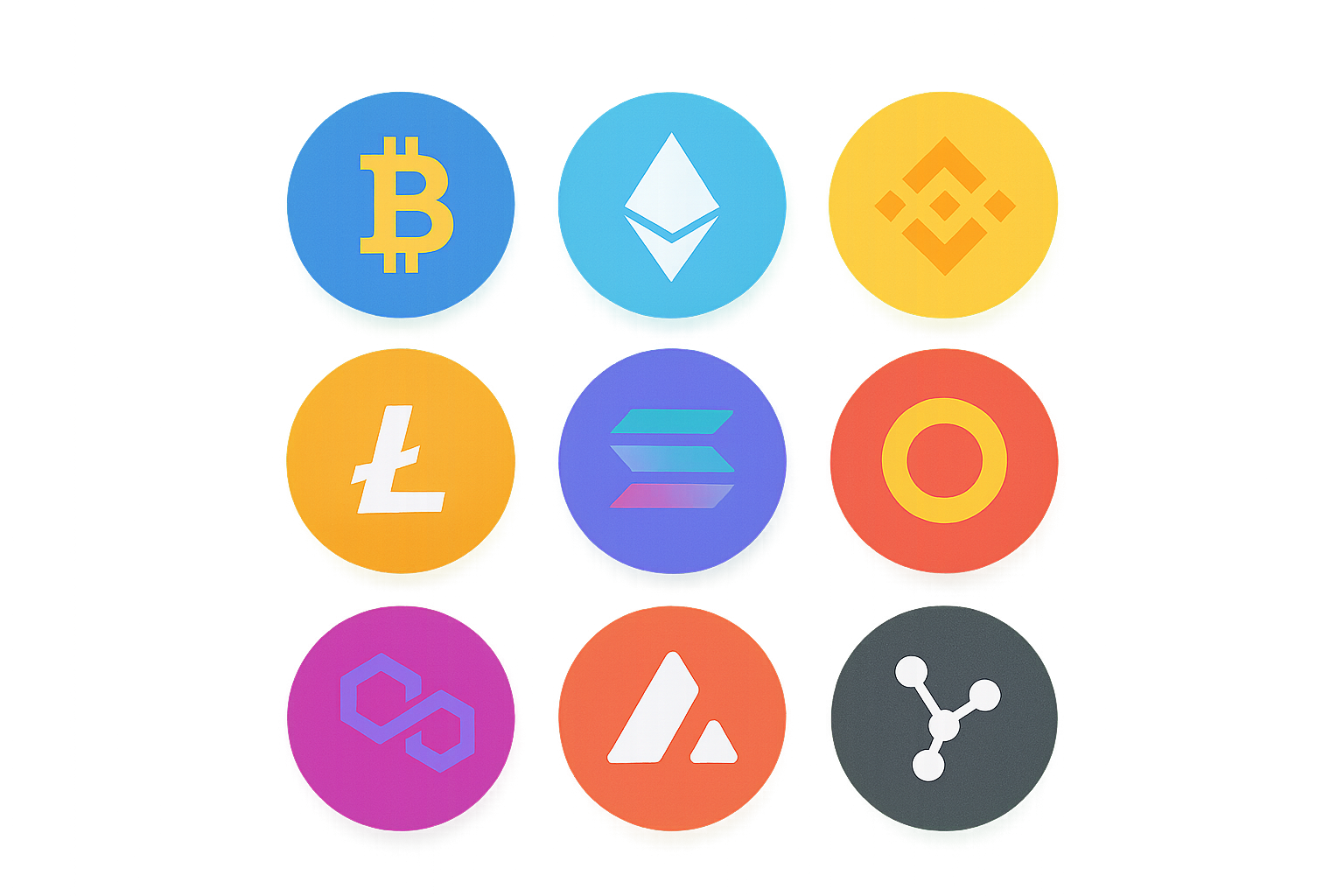
The cryptocurrency market offers diverse investment opportunities for long-term investors seeking exposure to emerging blockchain technologies and their applications. The nine cryptocurrencies examined—Bitcoin, Ethereum, Solana, Chainlink, Polkadot, Cardano, Avalanche, XRP, and Aave—each represent distinct approaches to blockchain technology and financial innovation.
For investors asking which coin will be next Bitcoin, successful long-term cryptocurrency investing requires a disciplined approach emphasizing fundamental analysis, risk management, and thorough research. Investors must understand the value propositions of their chosen cryptocurrencies, recognize the inherent volatility and risks of this emerging asset class, and maintain positions appropriate to their financial circumstances and risk tolerance. By approaching cryptocurrency investment with the same rigor applied to traditional investments while acknowledging the unique characteristics of this nascent market, investors can position themselves for potential long-term wealth creation while managing downside risks appropriately.
FAQ
Which crypto has 1000x potential?
Zano (ZANO) stands out as a penny crypto with 1000x potential, backed by strong community support and innovative technology. Other promising candidates include Nosana for AI computing and Pengu for memecoin momentum.
Can Solana reach $10,000 dollars?
Yes, Solana reaching $10,000 is possible. With growing ecosystem adoption, increasing transaction volume, and strong developer support, SOL has significant upside potential. Market sentiment and continued blockchain innovation could drive this milestone.
Who is rumored to be behind Bitcoin?
Satoshi Nakamoto is the pseudonym of Bitcoin's creator, whose true identity remains unknown. The person or group holds approximately 1 million BTC. Various individuals have been speculated to be Satoshi, but none confirmed.
What's the next big coin after Bitcoin?
Ethereum stands as the leading candidate, driving smart contracts and decentralized applications. Its Ethereum 2.0 upgrade strengthens its long-term potential. Other promising projects include Solana and Polkadot, each offering unique technological advantages in blockchain infrastructure.
Share
Content
What are the best long-term cryptocurrencies?
Bitcoin
Ethereum
Solana
Chainlink
Polkadot
Cardano
Avalanche
XRP
Aave
What is a long-term cryptocurrency investment?
What are the benefits of long-term cryptocurrency investments?
How to choose the best long-term cryptocurrency investments for your portfolio
Conclusion
FAQ
Trending Cryptocurrencies


Top Cryptocurrencies Poised for Explosive Growth in 2025
Best Cryptocurrencies for 2025: Potential High-Growth Coins
Top 10 Cryptocurrencies with 2025 Price Predictions | Future Investment Insights
Top 6 Cryptocurrencies Poised for Growth in 2025
6 Promising Cryptocurrencies for Strong Growth Potential

Avalanche (AVAX) 2025 Price Analysis and Market Trends

TradFi Inflows Into Crypto ETFs Drive Renewed Confidence in Bitcoin and Ethereum
Pi Network Price Outlook for January 2026: What Investors Should Watch

Simon's Cat: A Web3 Community-Driven IP Brand Token

What is UNO: A Comprehensive Guide to the Classic Card Game and Its Global Impact

Pi Coin Faces Security Test as Payment Requests Are Temporarily Disabled