MONG vs BTC: Which Cryptocurrency Offers Better Investment Potential in 2024?
Introduction: MONG vs BTC Investment Comparison
In the cryptocurrency market, comparisons between MONG and BTC have always been a topic investors cannot avoid. The two differ significantly in market capitalization ranking, application scenarios, and price performance, representing different positioning within crypto assets.
MONG (MongCoin): Born out of the incoherent ramblings of a US congressman, the MongMob values friendship, degenerate meme culture, and good vibes. As a community-driven token, it has attracted a niche following aligned with these cultural values.
BTC (Bitcoin): Proposed by Satoshi Nakamoto in 2008, Bitcoin has been recognized as "digital gold" and represents the world's most traded and highest market cap cryptocurrency. It operates as a decentralized payment system based on P2P networks and cryptographic security, with no dependence on central authorities.
This article will conduct a comprehensive analysis of MONG vs BTC investment value comparison across historical price performance, supply mechanisms, market adoption, and technical ecosystems, attempting to address the question investors care most about:
"Which is the better investment choice?"
MongCoin (MONG) vs Bitcoin (BTC) - Price History and Market Comparison
I. Historical Price Comparison and Current Market Status
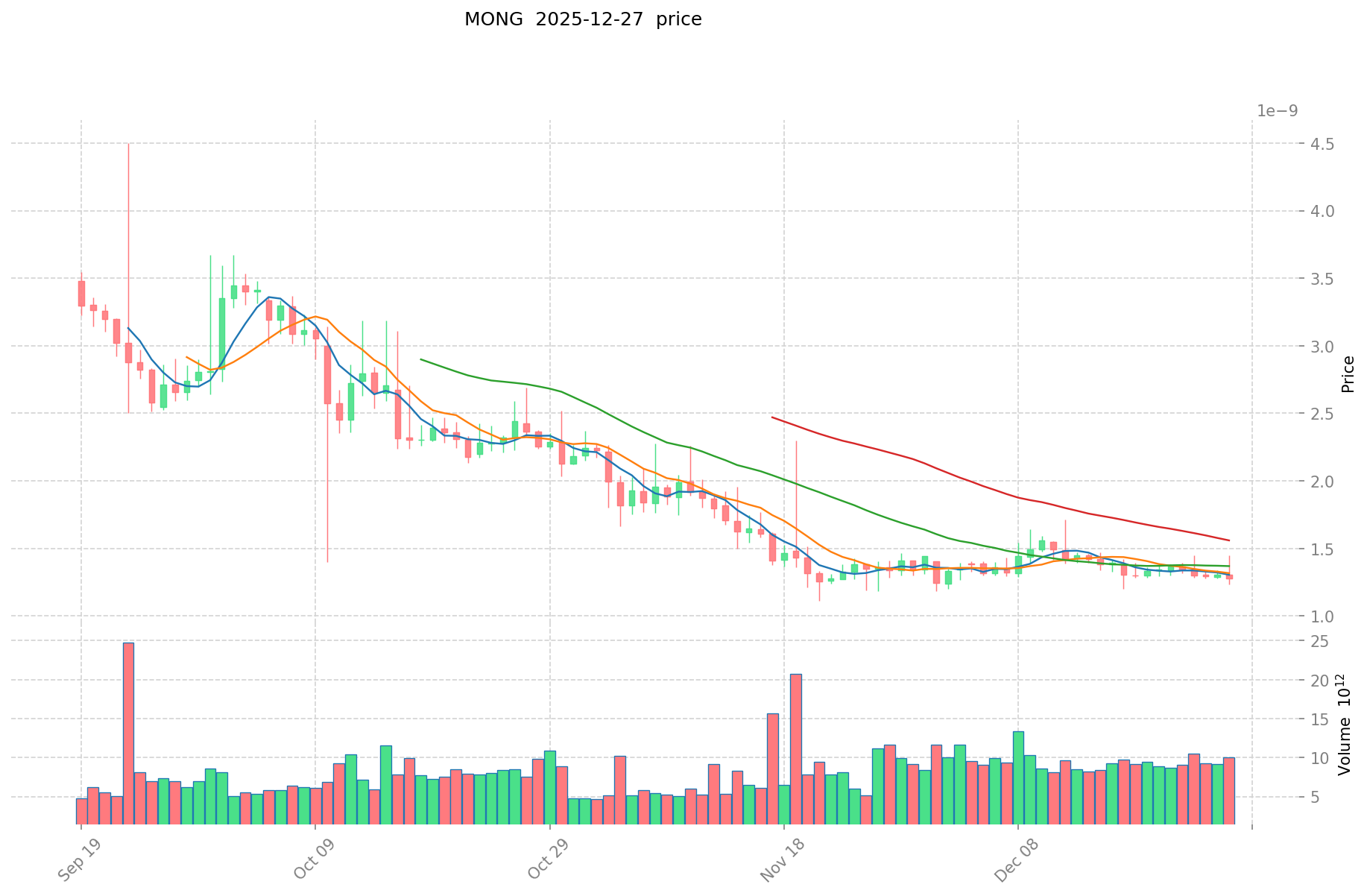
MongCoin (MONG) and Bitcoin (BTC) Historical Price Trends
- May 2023: MongCoin reached its all-time high of $0.00000039872, driven by early project momentum and community interest in the decentralized meme culture concept.
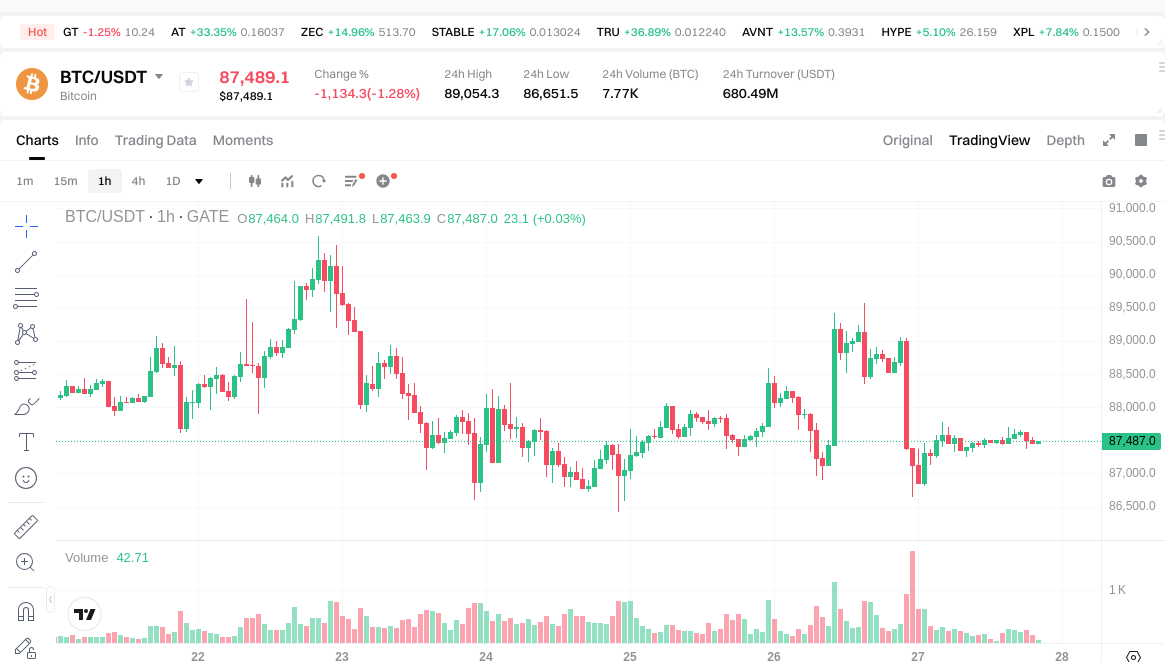
- October 2025: Bitcoin achieved its all-time high of $126,080, reflecting strong institutional adoption and market confidence in digital assets.
- November 2025: MongCoin declined to its historical low of $0.000000001115, demonstrating extreme volatility typical of micro-cap tokens.
- Comparative analysis: Over the 2025 market cycle, MongCoin collapsed approximately 99.7% from its peak, while Bitcoin experienced approximately 30% decline from its October 2025 all-time high of $126,080, showcasing the significant difference in market stability between established cryptocurrencies and emerging tokens.
Current Market Status (December 27, 2025)
- MongCoin current price: $0.00000000128
- Bitcoin current price: $87,497.2
- 24-hour trading volume: MongCoin $12,024.58 vs Bitcoin $681,732,208.88
- Market sentiment index (Fear & Greed Index): 23 (Extreme Fear)
View real-time prices:
- Check MONG current price Market Price
- Check BTC current price Market Price
二、影响 MONG vs BTC 投资价值的核心因素
供应机制对比(Tokenomics)
-
BTC:固定供应上限为 2,100 万枚,每四年减半机制。2024 年第四次减半后,挖矿奖励从 6.25 BTC 降至 3.125 BTC。挖矿活动预计在 2140 年左右结束,创造人为稀缺性和长期通缩预期
-
MONG:参考资料中未提供 MONG 的具体供应机制、总量上限或减半规则信息
-
📌 历史规律:固定供应上限结合减半周期构成 BTC 价格推涨的基础。供应减少预计在需求保持不变或增长时导致价格上升,而机构通过 ETF、信托渠道的持续增持进一步加剧稀缺性效应
机构采用与市场应用
-
机构持仓:BTC 现货 ETF 推出后,吸引了数百亿美元资本净流入,成为传统投资者进入加密市场的主要渠道。BTC 被众多机构投资者、企业及富豪囤积收藏
-
企业采用:BTC 已被认可用于支付(2010 年即有商用案例)、投资获利、融资和收藏。作为"数字黄金",其避险属性在全球地缘政治风险和通胀压力背景下得到确认
-
国家政策:参考资料中未提供 MONG 的政策立场。BTC 交易已合法化,但行业税收问题和监管框架仍处于模糊地带,未来可能面临政策变化或执法审查
技术发展与生态建设
-
BTC 技术升级:通过侧链或协议升级,BTC 网络支持复杂金融应用(如借贷、衍生品),拓展使用场景。同时保持"价值存储"的独特属性
-
MONG 技术发展:参考资料中未提供相关信息
-
生态对比:BTC 生态主要集中在支付和价值存储功能;以太坊等技术更灵活的区块链可在 DeFi、NFT、智能合约等领域提供更多应用可能,但 BTC 的网络安全性和市场认可度仍具独特优势
宏观经济与市场周期
-
通胀环境下的表现:BTC 被定位为对冲美元贬值的"硬通货"。若法定货币面临恶性通胀或信用丧失,BTC 可能从高波动性资产转型为替代性避险资产,吸引更多资金流入
-
宏观货币政策:美联储降息周期、美元指数波动直接影响 BTC 价格。美元指数下跌支撑风险资产上涨;政策不确定性时期,市场风险偏好变化推动 BTC 短期波动
-
地缘政治因素:全球地缘政治冲突加剧跨境交易需求,强化 BTC 作为"去中心化资产"和"去美元化"工具的吸引力。贸易摩擦缓解后市场风险偏好上升,资金流向高风险资产
III. 2025-2030 Price Forecast: MONG vs BTC
Short-term Forecast (2025)
- MONG: Conservative $0.0000000007168-$0.00000000128 | Optimistic $0.00000000128-$0.0000000018816
- BTC: Conservative $79,613.443-$87,487.3 | Optimistic $87,487.3-$125,106.839
Medium-term Forecast (2026-2027)
- MONG could enter consolidation phase, estimated price range $0.000000000964288-$0.00000000238021 (47% upside by 2027)
- BTC could enter bullish accumulation phase, estimated price range $57,400.41753-$119,993.446905075 (28% upside by 2027)
- Key drivers: institutional capital inflows, ETF adoption, ecosystem development
Long-term Forecast (2028-2030)
- MONG: Base case $0.000000002006555-$0.000000002625759 | Optimistic case $0.000000002796369-$0.000000003623547
- BTC: Base case $111,425.690509236-$169,111.6990332883875 | Optimistic case $156,692.377278613125-$236,756.3786466037425
MONG:
| 年份 | 预测最高价 | 预测平均价格 | 预测最低价 | 涨跌幅 |
|---|---|---|---|---|
| 2025 | 0.0000000018816 | 0.00000000128 | 0.0000000007168 | 0 |
| 2026 | 0.000000002197312 | 0.0000000015808 | 0.000000000964288 | 23 |
| 2027 | 0.00000000238021 | 0.000000001889056 | 0.000000001152324 | 47 |
| 2028 | 0.000000002796369 | 0.000000002134633 | 0.000000002006555 | 66 |
| 2029 | 0.000000002786016 | 0.000000002465501 | 0.000000002046366 | 92 |
| 2030 | 0.000000003623547 | 0.000000002625759 | 0.000000002468213 | 105 |
BTC:
| 年份 | 预测最高价 | 预测平均价格 | 预测最低价 | 涨跌幅 |
|---|---|---|---|---|
| 2025 | 125106.839 | 87487.3 | 79613.443 | 0 |
| 2026 | 117989.747145 | 106297.0695 | 57400.41753 | 21 |
| 2027 | 119993.446905075 | 112143.4083225 | 104293.369739925 | 28 |
| 2028 | 156692.377278613125 | 116068.4276137875 | 111425.690509236 | 32 |
| 2029 | 201842.9956203764625 | 136380.4024462003125 | 132288.990372814303125 | 55 |
| 2030 | 236756.3786466037425 | 169111.6990332883875 | 109922.604371637451875 | 93 |
IV. Investment Strategy Comparison: MONG vs BTC
Long-term vs Short-term Investment Strategy
- MONG: Suitable for speculative investors seeking high-risk, high-reward opportunities through emerging micro-cap tokens with community-driven narratives
- BTC: Suitable for investors seeking long-term wealth preservation, inflation hedging, and exposure to institutional-grade digital assets with proven market resilience
Risk Management and Asset Allocation
- Conservative investors: MONG 0% vs BTC 5-10%
- Aggressive investors: MONG 5-15% vs BTC 40-60%
- Hedging tools: Stablecoin allocation, options strategies, cross-asset diversification with traditional safe-haven assets
V. Potential Risk Comparison
Market Risk
- MONG: Extreme price volatility with 99.7% decline from peak to current levels; micro-cap liquidity constraints and potential for sudden price collapses; susceptibility to speculative sentiment swings and coordinated selling events
- BTC: Significant drawdown risk during macro downturns; correlation with traditional risk assets during periods of risk-off sentiment; regulatory policy changes affecting institutional participation
Technical Risk
- MONG: Insufficient information provided regarding technical infrastructure, network security, and development roadmap stability
- BTC: Hashrate concentration among major mining pools; potential consensus protocol vulnerabilities; network upgrade coordination challenges
Regulatory Risk
- Global regulatory frameworks remain uncertain for both assets. BTC faces potential taxation policy clarification and enforcement scrutiny. MONG, as an emerging meme token, faces heightened regulatory scrutiny regarding securities classification and consumer protection concerns. Policy shifts in major jurisdictions could significantly impact market adoption and price performance for both cryptocurrencies.
VI. Conclusion: Which Is the Better Buy?
📌 Investment Value Summary:
- MONG Advantages: Community-driven appeal to niche demographics; extreme upside potential during bull markets; lower absolute price point enabling retail participation
- BTC Advantages: Established market leadership with $681.7 billion in daily trading volume; institutional adoption through ETF products; fixed supply mechanism creating artificial scarcity; recognition as "digital gold" for inflation hedging; proven resilience across market cycles; decentralized payment system backed by cryptographic security
✅ Investment Recommendations:
- Beginner investors: Allocate majority exposure to BTC (70-90%) for capital preservation and foundational cryptocurrency exposure; consider MONG allocation only after establishing diversified portfolio foundation
- Experienced investors: Implement core-satellite strategy with BTC as core holding (50-70% allocation) and MONG as satellite speculative position (5-15%) based on risk tolerance and market cycle assessment
- Institutional investors: Focus on BTC through regulated ETF products and custody solutions; avoid MONG due to liquidity constraints, regulatory uncertainties, and lack of institutional infrastructure
⚠️ Risk Disclosure: Cryptocurrency markets exhibit extreme volatility. MONG has experienced 99.7% decline from historical peaks. This analysis is provided for informational purposes only and does not constitute investment advice. All cryptocurrency investments carry substantial risk of loss.
FAQ
MONG和BTC分别是什么?有什么区别?
BTC是比特币,全球最早的区块链资产。MONG是新兴加密货币。BTC交易完全公开透明,MONG可能提供隐私特性。技术架构、共识机制及应用场景存在显著差异。
MONG和BTC的技术原理有什么不同?
BTC基于区块链技术的去中心化加密货币,具有广泛认可和市场价值。MONG是ERC-20模因币,与NFT系列关联,主要用于娱乐,缺乏内在价值。两者在技术架构、应用场景和市场地位上存在根本差异。
MONG相比BTC有什么优势和劣势?
优势:MONG交易费用更低,交易速度更快,创新性更强。劣势:市场认可度不如BTC,历史稳定性和流动性相对较弱,风险更高。
MONG和BTC的市场流动性和交易额对比如何?
BTC作为市场领头羊,流动性和交易额远超MONG。BTC日均交易额以十亿美元计,而MONG作为新兴币种,流动性相对较低。随着MONG生态发展和认可度提升,未来交易额有望逐步增长。
投资MONG和BTC的风险分别是什么?
BTC面临量子计算威胁、矿工集中化、监管政策变化等风险。MONG作为新兴币种,流动性风险、市场认可度风险和价格波动风险更大。两者均需关注技术发展和政策动向。
MONG和BTC的生态应用场景有什么差异?
比特币主要聚焦数字支付和价值存储,生态应用相对单一。MONG则在去中心化金融、智能合约等领域拥有更丰富的应用场景,生态建设更具创新性和扩展性。
从长期投资角度,MONG和BTC哪个更值得关注?
BTC作为市场先行者,具有更成熟的生态和更强的抗风险能力,长期表现更稳定可靠。MONG作为新兴资产,虽有增长潜力,但历史数据不足。长期而言,BTC更值得关注。
Share
Content
Introduction: MONG vs BTC Investment Comparison
I. Historical Price Comparison and Current Market Status
供应机制对比(Tokenomics)
机构采用与市场应用
技术发展与生态建设
宏观经济与市场周期
III. 2025-2030 Price Forecast: MONG vs BTC
IV. Investment Strategy Comparison: MONG vs BTC
V. Potential Risk Comparison
VI. Conclusion: Which Is the Better Buy?
FAQ
How to Buy Cryptocurrency


Trending Cryptocurrencies



why is crypto crashing and will it recover ?

MIGGLES vs BTC: The Battle Between a New Crypto Protocol and the Original Digital Gold
Understanding PEPE: Market Trends and Performance

Is LOBO•THE•WOLF•PUP (LOBO) a good investment?: A Comprehensive Analysis of Risk, Potential, and Market Viability

Pi Network Mainnet Launch and Future

Latest Shiba Inu Price Analysis for 2025: Insights into SHIB Token Market Trends

Are There Any Taxes for Crypto in Canada?

How Does Fed Policy and Inflation Impact Crypto Prices in 2026?

How to Use MACD, RSI, and Bollinger Bands for Crypto Trading in 2026?

VOID vs ATOM: Understanding the Fundamental Differences Between Emptiness and Matter in Modern Physics

What are the consequences of setting up a mining farm at home?