EVM-Equivalent Chains

2026-01-08 15:01:59
Blockchain
DeFi
Ethereum
Layer 2
Web 3.0
Article Rating : 3.5
half-star
121 ratings
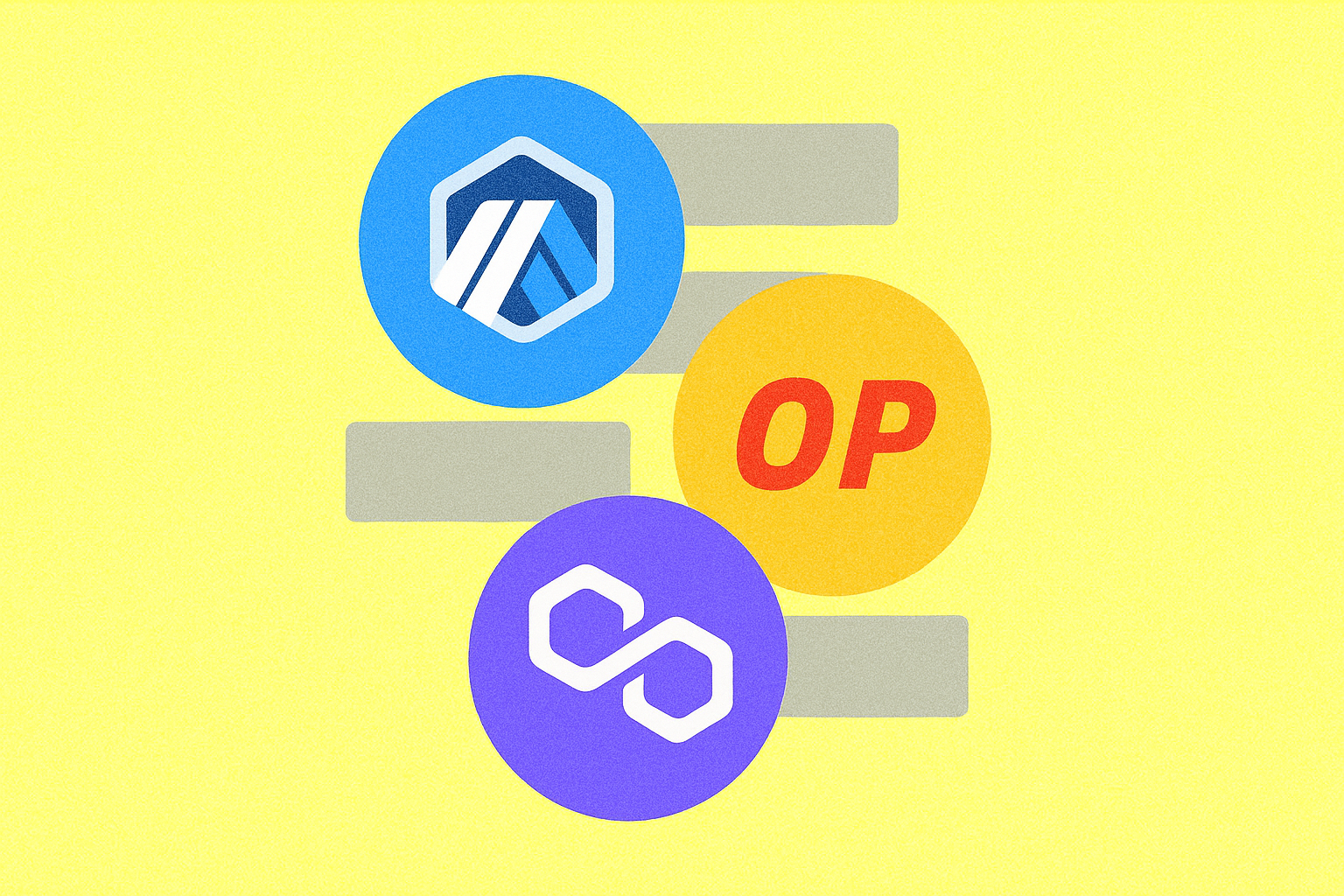
This comprehensive guide explores EVM-Equivalent Chains, blockchain networks fully compatible with Ethereum's smart contracts and dApps that address critical scalability challenges. Learn how these chains deliver significantly faster transaction speeds and lower costs compared to Ethereum mainnet while maintaining complete compatibility. Discover why developers increasingly deploy projects on EVM-compatible platforms like Arbitrum, Optimism, and Polygon available on Gate. Understand the technical architecture, consensus mechanisms, and market implications shaping the multi-chain blockchain ecosystem. Explore investment opportunities and cross-chain infrastructure developments that democratize access to DeFi and blockchain innovation for both retail and institutional participants seeking scalable solutions.
EVM-Equivalent Chains

Understanding EVM-Equivalent Chains

The Ethereum blockchain, launched in 2015, introduced the revolutionary concept of smart contracts – self-executing contracts with agreement terms directly written into code. This groundbreaking innovation opened up a world of possibilities, leading to the development of numerous decentralized applications (dApps) and giving birth to the decentralized finance (DeFi) sector. However, as adoption grew, the Ethereum network began facing significant scalability challenges, resulting in high transaction costs and slow processing speeds during peak usage periods.

These limitations created a pressing need for alternative solutions, which led to the emergence of EVM-Equivalent Chains. These blockchain networks are designed to operate on the same principles and protocols as the Ethereum blockchain, ensuring full compatibility with Ethereum's smart contracts and dApps while addressing the scalability bottlenecks. By maintaining this compatibility, developers can easily port their existing Ethereum projects to these alternative chains without significant code modifications.

Examples of prominent EVM-Equivalent Chains include several mainstream platforms that have gained substantial traction in the blockchain ecosystem. These chains offer significantly faster transaction speeds and lower costs compared to Ethereum, making them attractive alternatives for both developers and users. For instance, some leading EVM-compatible chains have achieved transaction throughput that is orders of magnitude higher than Ethereum's, while maintaining gas fees at a fraction of the cost. This improved performance has led to the development of numerous successful projects across various sectors, including DeFi protocols, NFT marketplaces, and gaming applications.

The technical architecture of EVM-Equivalent Chains typically involves modifications to the consensus mechanism, such as adopting Proof of Stake (PoS) or Delegated Proof of Stake (DPoS) instead of Ethereum's original Proof of Work (PoW). These consensus mechanisms enable faster block production and higher transaction throughput while maintaining security and decentralization to varying degrees.

Importance of EVM-Equivalent Chains

EVM-Equivalent Chains play a crucial role in the broader blockchain ecosystem by addressing several critical challenges. First and foremost, they provide a practical solution to Ethereum's scalability issues, enabling more users to interact with smart contracts and dApps without encountering prohibitive transaction costs or frustrating delays. This improved accessibility has the potential to accelerate the mainstream adoption of blockchain technology and DeFi, making these innovations more user-friendly and economically viable for everyday users.

Beyond scalability, EVM-Equivalent Chains foster innovation within the blockchain space by providing diverse platforms for developers to build and launch their projects. This multiplicity of options encourages experimentation and specialization, as different chains can optimize for specific use cases or user demographics. For example, some chains may prioritize transaction speed for gaming applications, while others might focus on security features for financial services. This diversity facilitates the creation of new dApps and DeFi protocols, contributing to the growth and diversification of the entire blockchain ecosystem.

Furthermore, EVM-Equivalent Chains promote healthy competition and technological advancement. As these chains compete for developers and users, they continuously innovate and improve their offerings, leading to better performance, enhanced security features, and more sophisticated developer tools. This competitive environment benefits the entire blockchain industry by driving progress and preventing any single platform from becoming complacent.

The interoperability aspect of EVM-Equivalent Chains also deserves emphasis. By maintaining compatibility with Ethereum's standards, these chains enable seamless asset transfers and cross-chain interactions through bridge protocols. This interconnectedness creates a more robust and flexible blockchain ecosystem where users can leverage the strengths of multiple chains simultaneously.

Impact on the Market and Investment Landscape

The emergence of EVM-Equivalent Chains has had a profound impact on the cryptocurrency market and investment landscape. These chains have attracted substantial investment capital, with many projects built on these platforms achieving significant market valuations. The success of decentralized exchanges, lending protocols, and other DeFi applications on various EVM-compatible chains demonstrates the strong market demand for scalable blockchain solutions.

Investors have increasingly diversified their portfolios to include tokens and projects associated with EVM-Equivalent Chains, recognizing the potential for substantial returns and the opportunity to participate in innovative blockchain projects. The lower barrier to entry on these chains – both in terms of transaction costs and technical complexity – has democratized access to DeFi and blockchain-based investments, attracting a broader range of participants from retail investors to institutional players.

The market dynamics surrounding EVM-Equivalent Chains have also influenced the valuation and positioning of Ethereum itself. Rather than viewing these chains purely as competitors, many analysts consider them complementary to Ethereum, collectively expanding the total addressable market for blockchain technology. This perspective has led to investment strategies that encompass multiple chains, with investors seeking to capture value across the entire EVM-compatible ecosystem.

Moreover, the proliferation of EVM-Equivalent Chains has created new categories of investment opportunities, including cross-chain protocols, bridge technologies, and infrastructure projects that serve multiple chains simultaneously. These meta-layer investments have become increasingly popular as the multi-chain future of blockchain becomes more apparent.

The liquidity distribution across EVM-Equivalent Chains has also evolved significantly, with total value locked (TVL) spreading across multiple platforms rather than concentrating solely on Ethereum. This distribution has implications for risk management, as it reduces the systemic risk associated with any single chain while providing users with more options for optimizing their yield and risk preferences.

Conclusion

In conclusion, EVM-Equivalent Chains represent an essential component of the modern blockchain ecosystem. They effectively address critical challenges facing the Ethereum network, particularly regarding scalability and transaction costs, while maintaining the compatibility that allows developers to leverage existing tools and codebases. By fostering innovation and providing diverse platforms for blockchain development, these chains have contributed significantly to the growth and maturation of the entire industry.

The impact of EVM-Equivalent Chains extends beyond technical improvements, influencing market dynamics, investment strategies, and the broader adoption of blockchain technology. As the ecosystem continues to evolve, these chains are expected to play an increasingly important role in shaping the future of decentralized applications and finance. The ongoing development of cross-chain infrastructure and the emergence of new use cases suggest that the relevance and influence of EVM-Equivalent Chains will continue to grow in the coming years, contributing to a more scalable, accessible, and innovative blockchain landscape.

FAQ

What is EVM-Equivalent Chain(EVM-Equivalent Chain)?

EVM-Equivalent Chain is a blockchain that fully implements EVM code and conforms to Ethereum standards. Any smart contracts running on Ethereum can also run on EVM-equivalent chains without modification, supporting Ethereum's complete functionality.

What is the difference between EVM-Equivalent Chains and Ethereum mainnet?

EVM-Equivalent Chains run the Ethereum Virtual Machine but typically function as Layer 2 solutions, offering higher transaction speeds and lower fees compared to Ethereum mainnet, which is the original blockchain.

What are the mainstream EVM-compatible chains?

The mainstream EVM-compatible chains include Ethereum, Arbitrum, Optimism, and Polygon. These chains support smart contracts and decentralized applications, offering various scaling solutions and network features.

Why do developers choose to deploy smart contracts on EVM-Equivalent Chains?

Developers choose EVM-Equivalent Chains for familiar development tools, significantly lower transaction costs, and faster confirmation speeds. This enables efficient smart contract deployment and debugging while maintaining Ethereum compatibility.

How is the security of EVM-Equivalent Chains guaranteed?

EVM-Equivalent Chains inherit Ethereum's robust security model through cryptographic verification and consensus mechanisms. They employ validator networks, smart contract audits, and zero-knowledge proofs to ensure transaction integrity and prevent fraud, maintaining high security standards across the ecosystem.

How to perform cross-chain interactions on EVM-Equivalent Chains?

Use decentralized bridges with MPC multi-signature verification, IBC, or XCM protocols. Lock assets on source chain and mint equivalent tokens on target chain. Ensure bridge security through multiple validators and trustless verification mechanisms for safe cross-chain asset transfers.

* The information is not intended to be and does not constitute financial advice or any other recommendation of any sort offered or endorsed by Gate.
Related Articles
Ethereum Mainnet Guide: How to Use and Benefit from the Network in 2025

Ethereum Mainnet Guide: How to Use and Benefit from the Network in 2025

The article "Ethereum Mainnet Guide: How to Use and Benefit from the Network in 2025" provides a comprehensive overview of Ethereum's mainnet and its pivotal role in the Web3 era. It covers the transition to Proof-of-Stake, scalability improvements, transaction fee reduction, and interoperability advancements. This guide addresses the needs of new users, developers, and ETH investors by offering step-by-step instructions on transactions, exploring mainnet versus testnet environments, and outlining strategies for minimizing gas fees. Targeted keywords enhance SEO, ensuring optimized discoverability for those interested in Ethereum's dynamic ecosystem.
2025-08-31 20:05:20
Top Ethereum Layer 2 Projects to Watch in 2025

Top Ethereum Layer 2 Projects to Watch in 2025

The article explores the pivotal role of Ethereum Layer 2 projects in transforming the scaling landscape of Ethereum by 2025. It covers the leading Layer 2 solutions that address high gas fees and enhance transaction throughput, contributing to the widespread adoption of dApps and DeFi. Readers will benefit from a detailed comparison of top projects based on transaction speed and cost efficiency, with emphasis on their performance metrics. The text highlights adoption trends, institutional integration, and innovative use cases, underscoring the significance of Layer 2 technologies in shaping Ethereum's ecosystem, supported by Gate's platform for user accessibility.
2025-10-13 17:45:53
ETH Fusaka Upgrade: The Next Step for Ethereum Evolution

ETH Fusaka Upgrade: The Next Step for Ethereum Evolution

The Ethereum Fusaka Upgrade is a pivotal evolution step, significantly enhancing scalability, efficiency, and performance. This in-depth analysis breaks down the November 2025 update, highlighting key innovations like PeerDAS and Verkle Trees aimed at boosting transaction capacity, reducing costs, and supporting DeFi and Layer 2 solutions. The upgrade resolves scalability issues, appealing to developers, investors, and enterprises seeking advanced blockchain solutions. Structured across multiple sections, the article details the technical advancements, expanded gas limits, and broader ecosystem impacts, while emphasizing Gate's essential role in facilitating access to these Ethereum advancements.


2025-09-29 22:45:58
What is AURORA: Understanding the Northern Lights Phenomenon and Its Scientific Significance

What is AURORA: Understanding the Northern Lights Phenomenon and Its Scientific Significance

The article explores the pivotal role of Aurora within the blockchain landscape, highlighting its launch as an EVM on NEAR Protocol in 2021 to address Ethereum's limitations. It offers a detailed history, outlining crucial milestones such as its mainnet launch and ecosystem expansions. Readers will gain insights into Aurora's decentralized control, consensus mechanisms, and its secure transaction solutions. The piece also examines market performance, collaborative partnerships, and community engagement on social media. Integral to Aurora’s narrative are its ability to reduce transaction costs and ensure high efficiency, catering to Ethereum developers and crypto enthusiasts seeking a scalable, interoperable blockchain alternative.
2025-09-30 08:08:33
What is Ethereum Fusaka? How It Will Reshape L1 & L2 Scalability

What is Ethereum Fusaka? How It Will Reshape L1 & L2 Scalability

The article "What is Ethereum Fusaka? How It Will Reshape L1 & L2 Scalability" explores the transformative Ethereum Fusaka upgrade and its impact on blockchain scalability. With a focus on PeerDAS technology, it highlights advancements in data availability and throughput, offering solutions to scalability issues. The upgrade promises decentralized efficiency and cost-effectiveness, enhancing dApp development and enterprise adoption. The article compares Fusaka to traditional scaling methods and discusses its immediate impact on Ethereum's Layer 1 and Layer 2, paving the way for innovation in decentralized applications. Platforms like Gate are integral in supporting these advancements.
2025-09-29 02:26:47
Monad: The High-Performance Web3 Infrastructure for Blockchain Developers in 2025

Monad: The High-Performance Web3 Infrastructure for Blockchain Developers in 2025

In 2025, Monad revolutionizes Web3 infrastructure by offering high-performance blockchain solutions for developers. Key features include parallel transaction execution, achieving 10,000 TPS, and ensuring sub-second finality. MonadBFT and MonadDB enhance security and efficiency while supporting large validator sets and high transaction volumes. Developers benefit from negligible fees, EVM compatibility, and seamless integration with Ethereum tools. The adoption of Monad redefines scalability, fostering innovation in sectors like DeFi and gaming. This framework addresses scalability challenges, catering to developers seeking robust decentralized application solutions in the evolving Web3 landscape.
2025-10-10 09:14:47
Recommended for You
DOGE and SHIB Remain Stable Amid Broader Meme Coin Market Decline

DOGE and SHIB Remain Stable Amid Broader Meme Coin Market Decline

This article analyzes the 2024 meme coin market, where total capitalization declined 20% to $46.18 billion amid volatile conditions. Despite broader downturn, Dogecoin (DOGE) and Shiba Inu (SHIB) demonstrated resilience with minimal losses. DOGE, trading at $0.1632 with $24.73 billion market cap, shows strong holder confidence evidenced by whale movements. SHIB faces short-term exchange selling pressure but maintains second-place status with growing DeFi ecosystem development. The article explores market dynamics, investment risks, and best practices for purchasing and securing assets on Gate and hardware wallets, providing essential guidance for traders navigating meme coin volatility.
2026-01-11 01:34:34
Trader DonAlt Predicts Bullish Bitcoin Outlook with $104,000 Support Level Test

Trader DonAlt Predicts Bullish Bitcoin Outlook with $104,000 Support Level Test

This article presents cryptocurrency trader DonAlt's bullish Bitcoin outlook, centered on the critical $104,000 support level as a key testing point. Using multi-timeframe technical analysis across monthly, weekly, and daily charts, the analysis identifies strong support confluences at $100,000-$104,000, signaling potential higher lows and uptrend continuation. If Bitcoin successfully defends these levels, projections suggest a rally beyond $130,000, representing a 25%+ gain opportunity. The article explores both bullish and bearish scenarios, including downside risks to $82,000-$89,000 if support breaks. Designed for traders and investors, it emphasizes technical levels for risk management while highlighting the importance of incorporating macroeconomic factors and proper position sizing in cryptocurrency trading strategies.
2026-01-11 01:31:29
Cryptocurrency Market Updates and Developments

Cryptocurrency Market Updates and Developments

This comprehensive cryptocurrency news and market insights article covers critical developments across security, market trends, and institutional adoption. Topics include major security breaches like Truebit's 8,535 ETH loss, the surge in crypto ATM fraud reaching $240 million, and emerging trends such as high-net-worth individuals purchasing European real estate with cryptocurrency through platforms like Brighty. The article examines altcoin rotation patterns as Bitcoin dominance declines, analyzes institutional movements including BNY Mellon's tokenized deposits and Gate's expanding ecosystem, and discusses regulatory shifts as the SEC adopts technology-neutral approaches. Additionally, it explores AI integration in crypto transactions, blockchain's real-world applications, and 2026 market forecasts emphasizing privacy, security, and institutional participation. Essential reading for investors, traders, and stakeholders seeking comprehensive understanding of current cryptocurrency market dynamics and future
2026-01-11 00:57:49
Duan Yongping Shares 50 Perspectives on Investment and Education

Duan Yongping Shares 50 Perspectives on Investment and Education

This article presents 50 investment and education insights from Duan Yongping, a renowned Chinese investor and former BBK Electronics executive. Through a comprehensive video interview, Duan shares his fundamental investment philosophy centered on rational analysis, cash flow evaluation, and understanding core business models. Beyond investment strategies, he discusses business culture built on trust, simplicity in operations, and long-term value creation. The article also explores his educational perspectives emphasizing safety, role modeling, and reducing pressure on children. Duan's cautious approach to emerging technologies like AI and electric vehicles, combined with his analysis of major corporations, demonstrates practical application of value investing principles. Throughout, long-term thinking emerges as the unifying principle connecting investment decisions, business strategy, and personal development, offering comprehensive guidance for investors and business leaders on disciplined, principles-driv
2026-01-11 00:52:29
Cryptocurrency Exchange Founder's Wealth Reaches $87.3 Billion, Ranking 21st Globally

Cryptocurrency Exchange Founder's Wealth Reaches $87.3 Billion, Ranking 21st Globally

This article explores the remarkable wealth accumulation of cryptocurrency exchange founders, with a focus on CZ's $87.3 billion net worth ranking 21st globally. Beyond celebrating financial success, the piece emphasizes the founder's philosophy that personal wealth matters less than positive societal impact. The article details how cryptocurrency platforms have matured into legitimate financial infrastructure, creating jobs and innovation while advancing financial inclusion. Key sections cover wealth ranking methodologies, the founder's humble perspective on riches, the industry's ripple effects on global finance, philanthropic initiatives addressing social challenges, and future evolution of crypto markets. The content serves entrepreneurs, investors, and industry observers seeking to understand wealth creation in blockchain technology and the growing responsibility of cryptocurrency leaders toward social impact and regulatory engagement.
2026-01-11 00:51:16
Shytoshi Kusama of Shiba Inu Remains Silent as AI Project Launch Approaches

Shytoshi Kusama of Shiba Inu Remains Silent as AI Project Launch Approaches

This article explores Shytoshi Kusama's strategic silence and the Shiba Inu project's groundbreaking AI innovations. It reveals how the leadership team's extended social media absence connects to the development of Shib Fun, an AI-powered platform designed to revolutionize the ecosystem's utility. The article examines how this technological advancement will impact SHIB, BONE, LEASH, and TREAT tokens while analyzing community sentiment amid market stability. By integrating artificial intelligence into cryptocurrency infrastructure, Shiba Inu positions itself at the intersection of AI and blockchain technology. Discover why this development strategy reflects deliberate focus on product delivery and what strategic implications await the broader ecosystem as the platform launch approaches.
2026-01-11 00:49:52