ALEX vs GMX: A Comprehensive Comparison of Two Leading Decentralized Trading Platforms

Introduction: ALEX vs GMX Investment Comparison
In the cryptocurrency market, the comparison between ALEX and GMX is a topic investors cannot avoid. The two not only show significant differences in market capitalization ranking, application scenarios, and price performance, but also represent different positioning in the crypto asset landscape. ALEX (ALEX): Since its mainnet launch in January 2022, it has gained market recognition by positioning itself as the largest DeFi protocol on the Stacks blockchain, holding over half of the TVL and offering Bitcoin-secured DeFi solutions. GMX (GMX): Established as a decentralized perpetual exchange, it functions as a utility and governance token while capturing 30% of platform-generated fees, and ranks significantly higher in market capitalization at 355th globally. This article will comprehensively analyze the investment value comparison between ALEX and GMX from perspectives including historical price performance, supply mechanisms, market positioning, and ecosystem development, while attempting to answer the question investors care most about:
"Which is the better buy right now?"
I. Price History Comparison and Current Market Status
ALEX (Alex Lab) and GMX Price Trends
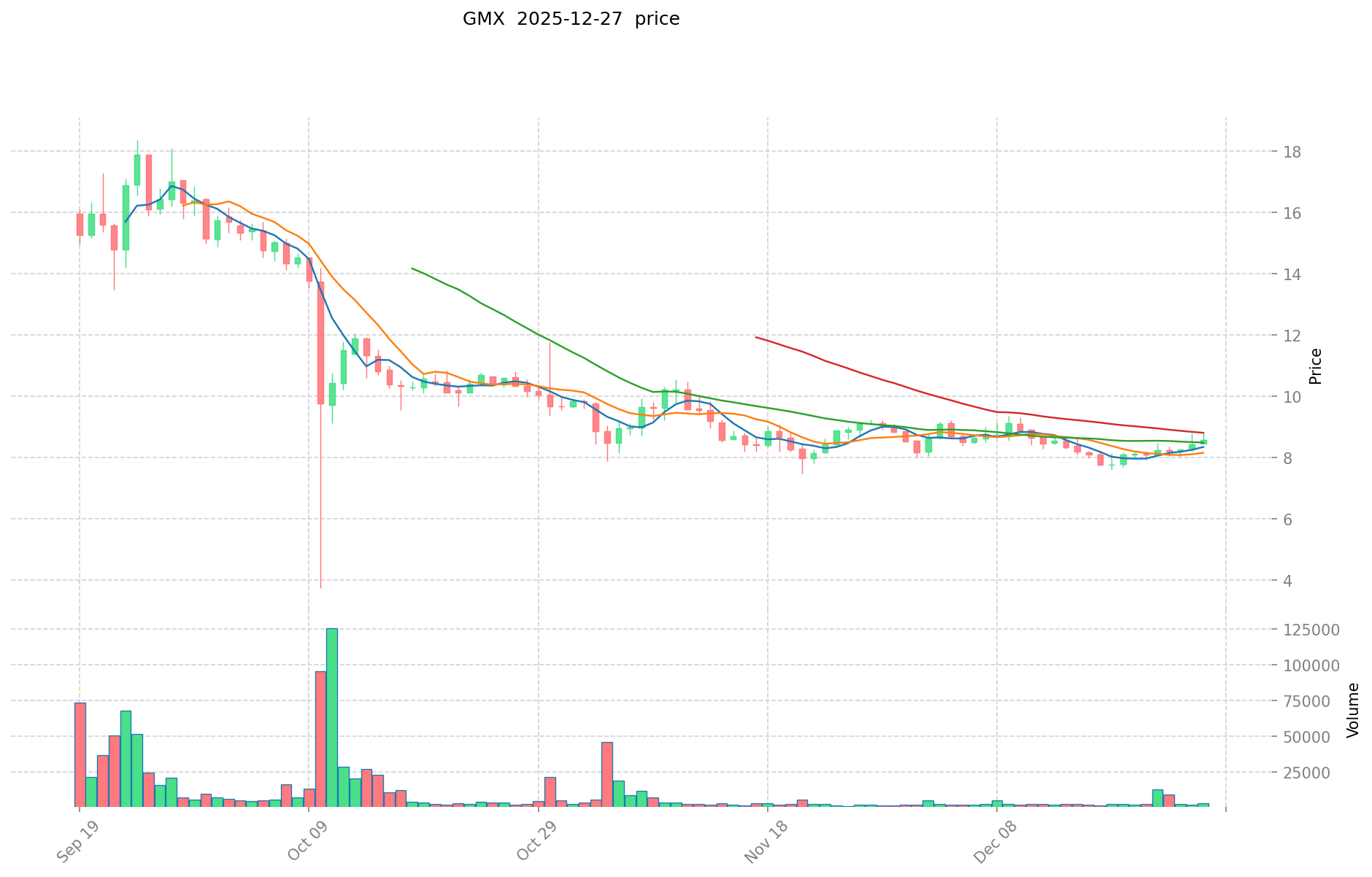
- 2023: GMX reached its all-time high of $91.07 on April 18, 2023, driven by growing decentralized derivatives trading adoption.
- 2024: ALEX experienced significant volatility as a Stacks-based DeFi protocol, reaching its all-time high of $0.54577 on April 1, 2024.
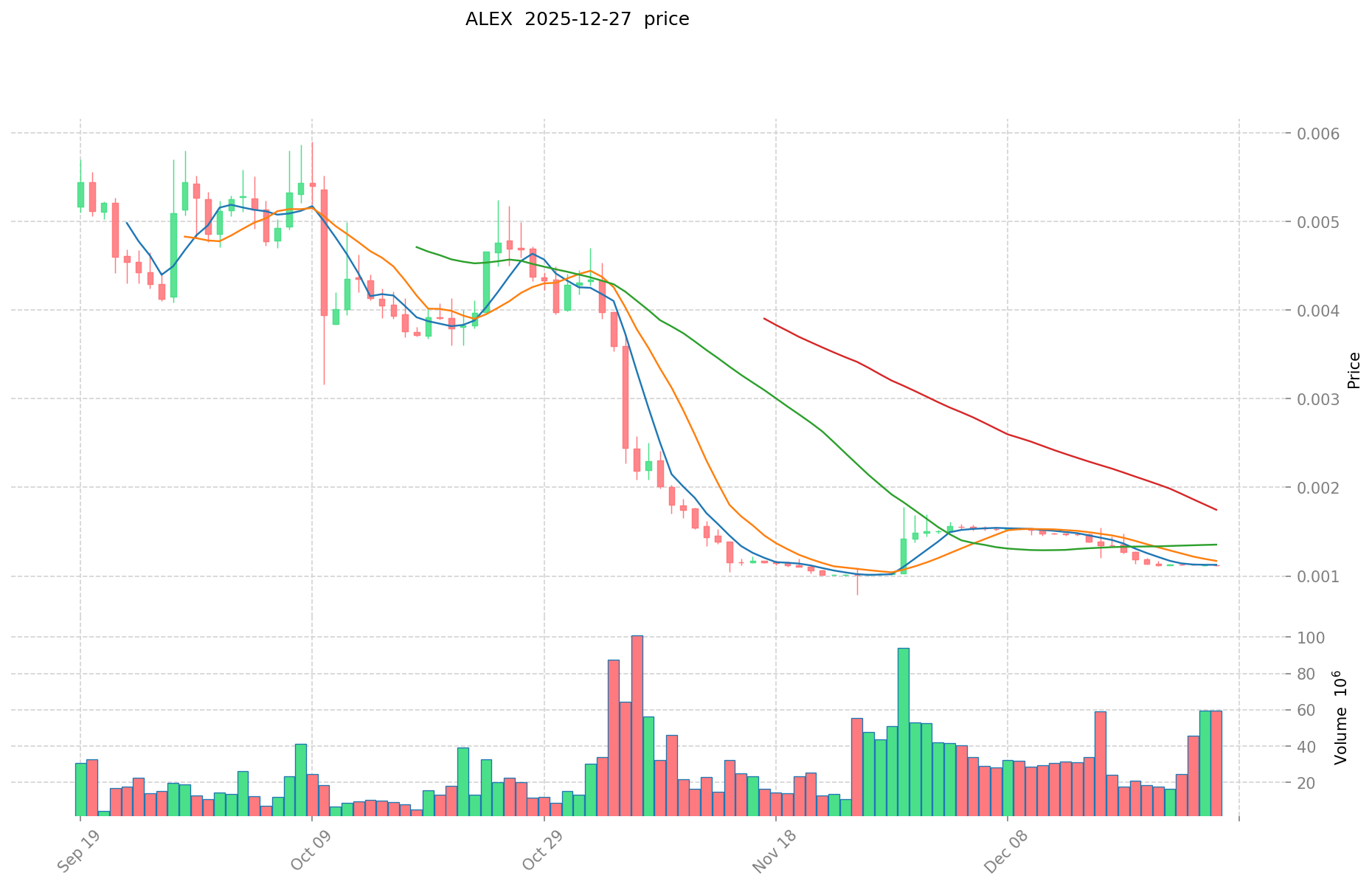
- Comparative Analysis: Over the market cycle from 2023 to 2025, GMX declined from its peak of $91.07 to a low of $6.92 (recorded on October 11, 2025), representing a 92.4% decrease. ALEX fell from $0.54577 to $0.000793 (recorded on November 25, 2025), representing a 98.5% decline, indicating more severe downward pressure on Bitcoin DeFi tokens compared to general derivatives protocols.
Current Market Status (December 27, 2025)
- ALEX current price: $0.001127.
- GMX current price: $8.657.
- 24-hour trading volume: ALEX at $68,650.33 vs GMX at $20,520.80.
- Market Emotion Index (Fear & Greed Index): 23 (Extreme Fear).
Click to view real-time prices:
- View ALEX current price Market Price
- View GMX current price Market Price
GMX Crypto Asset Research Report
I. GMX Price History Review and Current Market Status
GMX Historical Price Trends and Investment Returns
- All-Time High (ATH): $91.07 (April 18) — reflecting extreme market optimism in the decentralized perpetual contract sector.
- All-Time Low (ATL): $6.92 (October 11) — representing approximately 92.4% decline from peak.
- One-Year Performance: -78.32% — price declined significantly from approximately $37.05 to current levels.
- Historical Price Range: $6.92—$91.07, reflecting extreme volatility characteristic of DeFi protocol tokens.
Current GMX Investment Market Status (December 17)
- Market Capitalization: $83,228,732.45
- Fully Diluted Valuation (FDV): $83,228,732.45
- Circulating Supply: 10,360,853.04 tokens (78.19% of maximum supply)
II. Core Factors Affecting GMX Investment Value
Supply Mechanism and Scarcity (Tokenomics)
- Circulating Supply: 10,360,853 tokens (78.20% of maximum supply).
- Unreleased Supply: 3,889,147 tokens (21.80% remaining for release).
- Token Distribution Impact: The 21.80% unreleased supply represents potential dilution risk, as continued token releases could increase selling pressure on secondary markets.
- Historical Context: GMX token emission peaked in early project phases and has since declined, with institutional token allocation largely released by current date.
Institutional Adoption and Market Application
- Institutional Holdings: Limited institutional adoption compared to major DeFi protocols like Aave or Uniswap, reflecting hesitation toward derivatives-focused platforms.
- Enterprise Adoption: GMX serves as a utility and governance token for the decentralized perpetual exchange protocol. Token holders receive 30% of platform trading fees, creating direct economic incentive alignment.
- Regulatory Uncertainty: Derivatives trading faces greater regulatory scrutiny globally compared to spot trading or lending protocols, creating compliance uncertainty for both users and institutional participants.
Technical Development and Ecosystem Building
- Network Deployment: GMX operates on Arbitrum Layer 2 blockchain, reducing transaction costs and optimizing user experience compared to Ethereum mainnet alternatives.
- Protocol Architecture: GMX functions as a decentralized perpetual contract exchange combining utility and governance roles. The fee-sharing mechanism incentivizes long-term token holding.
- Ecosystem Position: GMX competes with protocols like Hyperliquid (professional traders focus), Vertex (cross-chain derivatives), and edgeX (high-frequency and quantitative trading focus) in the derivatives segment.
- Market Fragmentation: Future market development likely features segmented user bases: Hyperliquid dominates professional traders, GMX attracts LP-friendly users, while specialized protocols serve niche trading strategies.
Macroeconomic Environment and Market Cycles
- Volatility Characteristics: GMX exhibits high market volatility with one-year decline of -78.32%, reflecting DeFi sector compression and derivatives market challenges.
- DeFi Sector Headwinds: The broader altcoin market experienced contraction in 2024 due to insufficient demand-side growth and narrative fatigue. GMX, as a derivatives-focused token, faced additional pressure from the derivatives segment compression.
- Capital Reallocation: Market participants shifted focus toward established DeFi protocols (Aave, Uniswap) with proven business models and positive cash flows, reducing capital allocation to emerging or struggling protocols.
- Liquidity Constraints: Daily average trading volume approximately $13,000 USD creates significant slippage for institutional-scale positions.
III. Key Investment Risks
- High Volatility: One-year decline of -78.32% demonstrates extreme price instability.
- Limited Liquidity: Average daily trading volume of approximately $13,000 USD presents execution challenges.
- Regulatory Uncertainty: Derivatives platforms face potential regulatory action across multiple jurisdictions.
- Smart Contract Risk: Decentralized protocol operations depend on underlying code security.
- Market Risk Extreme: Leverage and liquidation mechanics in perpetual contracts create tail risks for both users and protocol viability.
- Token Dilution: 21.80% unreleased token supply represents future selling pressure.
- Market Concentration: GMX represents only 0.0026% of total cryptocurrency market capitalization, indicating limited mainstream adoption.
IV. Future Price Projections
2025 Price Scenarios
- Conservative Forecast: $5.31—$8.04
- Neutral Forecast: $8.04—$9.24
- Optimistic Forecast: $9.24—$11.50
2026-2028 Multi-Year Outlook
- 2026: $5.96—$10.54
- 2027: $8.54—$13.62
- 2028: $8.47—$14.16
2030 Long-Term Scenarios
- Base Case: $14.20—$17.64 (assumes stable ecosystem expansion, favorable macroeconomic environment, continued platform growth)
- Optimistic Case: $18.00—$22.00 (assumes widespread DeFi adoption, successful protocol upgrades, favorable regulatory environment)
- Risk Case: $8.00—$10.00 (assumes prolonged bear market, regulatory pressure, or intensified competition from similar protocols)
V. Important Disclaimer
⚠️ Critical Notice: Cryptocurrency investment involves extreme risk. GMX experienced one-year decline of -78.32%, and the derivatives sector faces significant headwinds. This content serves informational purposes only and does not constitute investment advice. Conduct thorough research and consult professional advisors before taking any action. Cryptocurrency investments may result in total capital loss.
III. 2025-2030 Price Forecast: ALEX vs GMX
Short-term Forecast (2025)
- ALEX: Conservative $0.00098049-$0.001127 | Optimistic $0.001127-$0.00154399
- GMX: Conservative $7.57856-$8.612 | Optimistic $8.612-$11.71232
Mid-term Forecast (2026-2028)
- ALEX may enter consolidation phase, projected price range $0.001148-$0.002165
- GMX may enter growth phase, projected price range $9.349-$15.587
- Key drivers: institutional capital inflows, ETF adoption, ecosystem development
Long-term Forecast (2029-2030)
- ALEX: Base scenario $0.001814-$0.002520 | Optimistic scenario $0.002215-$0.002857
- GMX: Base scenario $9.908-$17.485 | Optimistic scenario $14.265-$19.875
ALEX:
| 年份 | 预测最高价 | 预测平均价格 | 预测最低价 | 涨跌幅 |
|---|---|---|---|---|
| 2025 | 0.00154399 | 0.001127 | 0.00098049 | 0 |
| 2026 | 0.0014423346 | 0.001335495 | 0.0011485257 | 18 |
| 2027 | 0.001916702424 | 0.0013889148 | 0.000777792288 | 23 |
| 2028 | 0.00216517928172 | 0.001652808612 | 0.0009090447366 | 46 |
| 2029 | 0.002519872009855 | 0.00190899394686 | 0.001813544249517 | 69 |
| 2030 | 0.002856618542081 | 0.002214432978357 | 0.001395092776365 | 96 |
GMX:
| 年份 | 预测最高价 | 预测平均价格 | 预测最低价 | 涨跌幅 |
|---|---|---|---|---|
| 2025 | 11.71232 | 8.612 | 7.57856 | 0 |
| 2026 | 13.0075648 | 10.16216 | 9.3491872 | 17 |
| 2027 | 15.523715616 | 11.5848624 | 10.078830288 | 33 |
| 2028 | 15.5874323592 | 13.554289008 | 9.21691652544 | 56 |
| 2029 | 17.48503282032 | 14.5708606836 | 9.908185264848 | 68 |
| 2030 | 19.8746539724304 | 16.02794675196 | 14.2648726092444 | 85 |
四、投资策略对比:ALEX vs GMX
长期 vs 短期投资策略
- ALEX:适合关注比特币生态DeFi潜力、看好Stacks区块链长期发展的投资者,需承受短期极端波动风险
- GMX:适合寻求衍生品赛道机会、关注Layer2生态发展的投资者,但需警惕监管不确定性和流动性约束
风险管理与资产配置
- 保守型投资者:ALEX 5% vs GMX 10%(两者均风险较高,建议低配额,可增配稳定币至85%)
- 激进型投资者:ALEX 15% vs GMX 20%(ALEX波动性更高但潜在收益空间更大,GMX流动性相对稳定)
- 对冲工具:稳定币配置70%以上、期权对冲下行风险、跨币种组合分散单一协议风险
五、潜在风险对比
市场风险
- ALEX:98.5%的历史跌幅反映Bitcoin DeFi代币极端波动性,日均交易量68,650美元,流动性严重不足可导致大幅滑点
- GMX:78.32%的年度跌幅、21.80%的未流通供应量存在潜在稀释风险,日均交易量约13,000美元的流动性制约机构级别仓位执行
技术风险
- ALEX:作为Stacks生态代币,依赖比特币侧链技术稳定性,生态应用场景相对单一,智能合约风险集中于DeFi协议
- GMX:Arbitrum Layer2依赖性导致跨链风险,衍生品合约杠杆机制和清算机制存在系统性风险,代码安全性需持续监测
监管风险
- 全球监管政策对两者影响存在差异:GMX作为去中心化永续合约交易所,面临更严格的衍生品监管审查,多个司法管辖区已对类似协议施加合规压力;ALEX作为DeFi借贷协议相对受关注度较低,但Bitcoin生态政策变化可能间接影响
六、结论:Which Is the Better Buy?
📌 投资价值总结:
- ALEX优势:Stacks链上最大DeFi协议、掌控超50% TVL、比特币生态叙事潜力、极低市值存在百倍潜力空间
- GMX优势:衍生品赛道领先地位、30%费用分享机制提供经济激励、Arbitrum生态支撑、相对ALEX流动性更优
✅ 投资建议:
- 新手投资者:优先关注GMX而非ALEX,GMX虽风险高但生态更成熟、流动性更好;建议从小额开始配置5%-10%,主要仓位配置稳定币和主流币种
- 有经验投资者:可按2:1比例配置GMX:ALEX组合(利用GMX作基础敞口、ALEX作高风险高收益配置),设置严格止损30%,关注Stacks生态和衍生品赛道发展动向
- 机构投资者:两种资产流动性均不足以支撑大规模机构配置,建议保持观望态度,待生态发展和流动性改善后再考虑战术性布局
⚠️ 风险提示:加密货币市场波动性极高,ALEX和GMX均经历70%以上年度跌幅,本文不构成投资建议。投资者应根据自身风险承受能力进行决策,考虑承受全部本金损失的可能性。
FAQ
ALEX和GMX分别是什么?各自的核心功能有什么区别?
ALEX是去中心化交易平台,主要提供交易和流动性挖矿服务。GMX是衍生品交易平台,核心功能为高杠杆期货交易和永续合约,两者都基于区块链技术但服务方向不同。
ALEX和GMX的交易费用如何对比?哪个更便宜?
GMX永续合约交易费用为0.1%,ALEX的交易费用整体更低。ALEX提供更具竞争力的费用结构,对交易者更加友好。
ALEX和GMX支持的交易对和杠杆倍数有什么差异?
GMX支持更多交易对和更高杠杆倍数(最高150倍),ALEX的交易对和杠杆选择相对有限。两者具体差异建议查看各自官方文档了解最新配置。
ALEX和GMX的流动性和交易深度对比如何?
GMX流动性更深,采用Chainlink预言机实现零滑点交易,GLP资产池提供充足交易深度。ALEX作为较新项目,流动性和交易深度仍在建立中,暂不及GMX成熟。
使用ALEX和GMX分别需要注意哪些风险?
ALEX需注意算法偏差风险和智能合约风险。GMX需注意流动性风险导致的价格波动,以及预言机定价偏差可能引发的套利风险。
ALEX和GMX生态发展现状如何?未来前景对比如何?
GMX专注衍生品交易,交易额相当于二线平台水准,未来有扩展现货交易潜力。ALEX在生态建设上差距较大,GMX前景更看好,但距dYdX龙头地位仍有差距。两者增长潜力均可期。
Share
Content
Introduction: ALEX vs GMX Investment Comparison
I. Price History Comparison and Current Market Status
I. GMX Price History Review and Current Market Status
II. Core Factors Affecting GMX Investment Value
III. Key Investment Risks
IV. Future Price Projections
V. Important Disclaimer
III. 2025-2030 Price Forecast: ALEX vs GMX
四、投资策略对比:ALEX vs GMX
五、潜在风险对比
六、结论:Which Is the Better Buy?
FAQ
How to Buy Cryptocurrency


Trending Cryptocurrencies



What is AEVO: A Comprehensive Guide to the Decentralized Options Trading Platform

STBU vs DYDX: A Comprehensive Comparison of Two Leading Decentralized Exchange Protocols
TRC vs DYDX: A Comprehensive Comparison of Two Leading Layer-1 Blockchain Networks and Their Token Economics
What is LOGX: A Comprehensive Guide to Understanding Logarithmic Functions and Their Applications
DPR vs DYDX: Comprehensive Comparison of Two Leading Decentralized Trading Protocols
LOE vs DYDX: A Comprehensive Comparison of Two Leading Decentralized Exchange Protocols

Cooin Wallet: A Comprehensive Guide to Secure Crypto Management
What Is a Market Order?
List of XRP Rich: How Much XRP Puts You in the Top 10%

Fear, Uncertainty and Doubt (FUD)

What to Do If You Haven't Received the Verification SMS