

Trade
Basic
Futures
Futures
Hundreds of contracts settled in USDT or BTC
Options
HOT
Trade European-style vanilla options
Unified Account
Maximize your capital efficiency
Demo Trading
Futures Kickoff
Get prepared for your futures trading
Futures Events
Futures Mall
Participate in events to win generous rewards
Demo Trading
Use virtual funds to experience risk-free trading
Earn
Launch
CandyDrop
Collect candies to earn airdrops
Launchpool
Quick staking, earn potential new tokens
HODLer Airdrop
Hold GT and get massive airdrops for free
Launchpad
Be early to the next big token project
Alpha Points
NEW
Trade on-chain assets and enjoy airdrop rewards!
Futures Points
NEW
Earn futures points and claim airdrop rewards
Investment
Simple Earn
Earn interests with idle tokens
Auto-Invest
Auto-invest on a regular basis
Dual Investment
Buy low and sell high to take profits from price fluctuations
Soft Staking
Earn rewards with flexible staking
Crypto Loan
0 Fees
Pledge one crypto to borrow another
Lending Center
One-stop lending hub
VIP Wealth Hub
Customized wealth management empowers your assets growth
Private Wealth Management
Customized asset management to grow your digital assets
Quant Fund
Top asset management team helps you profit without hassle
Staking
Stake cryptos to earn in PoS products
Smart Leverage
NEW
No forced liquidation before maturity, worry-free leveraged gains
GUSD Minting
Use USDT/USDC to mint GUSD for treasury-level yields

More




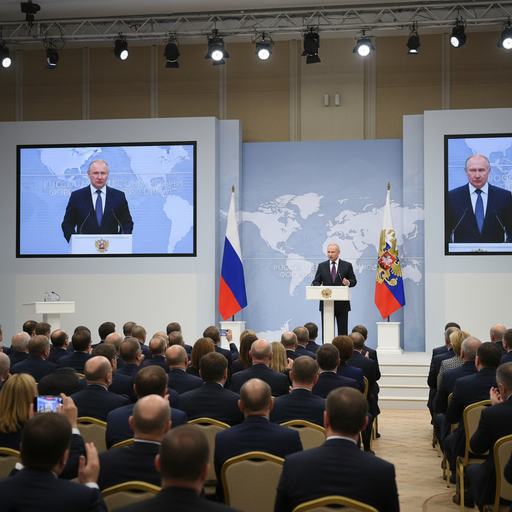


Crypto Takeaways From Davos 2026: Where Politics, Money — and Musk — Collide - Brave New Coin
That shift was unmistakable. Where crypto once lived on the fringe of finance panels and innovation side events, it now showed up in speeches about national competitiveness, technological sovereignty, and global influence. The question wasn’t whether crypto would survive regulation — it was which political bloc would shape its future.
Crypto as Statecraft, Not Rebellion
The most striking reframing at Davos was the way crypto was discussed by political leaders. The language of decentralization and financial freedom has been replaced by the language of industrial policy and national advantage. The United States positioned itself as a future hub for digital asset innovation, framing blockchain infrastructure as part of a broader effort to outcompete rival tech ecosystems and attract global capital.
Across the Atlantic, the tone was far more defensive. European policymakers emphasized financial stability, consumer protection, and the need to preserve monetary sovereignty. In their view, privately issued digital money isn’t just a market innovation — it’s a potential threat to central bank authority and economic control. The result is a widening philosophical gap: one side sees crypto as an economic accelerant, the other as a system that must be carefully boxed in.
A World of Rules, Not a Rulebook
Despite plenty of talk about global cooperation, Davos delivered no meaningful regulatory alignment. Instead, the crypto industry is facing a future defined by regulatory borders rather than universal standards. Some regions are building clear frameworks designed to attract companies and investment. Others are layering restrictions and compliance requirements that make participation expensive and slow.
For crypto firms, this has turned jurisdiction into a strategic choice. Where you incorporate, where you base your developers, and where you serve customers now shapes your entire business model. The industry isn’t global in the way it once imagined — it’s becoming a patchwork of friendly and hostile zones, with capital and talent flowing accordingly.
From Outlaw Tech to Political Infrastructure
What’s changed most is crypto’s image. It’s no longer primarily framed as a tool for speculation or illicit finance. At Davos, it was discussed as financial infrastructure — something that could influence how trade settles, how capital moves, and how countries project economic power.
That doesn’t mean trust is universal. Central bankers remain wary, regulators remain cautious, and the memory of high-profile collapses still hangs over the industry. But crypto has crossed a line. It’s no longer being debated as a novelty. It’s being debated as a system that could reshape the financial order.
Elon Musk at Davos: Why Crypto Isn’t Big Enough for His Vision
Elon Musk’s appearance at Davos didn’t center on Bitcoin, blockchains, or digital finance. And that, in itself, was the message.
Instead, Musk zoomed out to what he sees as the real axis of global transformation: artificial intelligence, robotics, and the automation of human labor. He spoke about a near future where intelligent machines outperform humans across most tasks, where humanoid robots become commercially viable, and where economic abundance is driven by software and silicon rather than human effort.
Crypto, in this framing, isn’t a revolution. It’s a feature.
Musk’s vision places financial systems downstream of technological power. In a world where AI builds companies, robots run factories, and software designs infrastructure, the dominant players won’t be the ones who control money — they’ll be the ones who control computation, energy, and manufacturing capacity. Digital currencies may grease the wheels, but they won’t steer the machine.
There was also a subtle political undertone. While policymakers debated how to regulate crypto, Musk was effectively arguing that they’re fighting yesterday’s war. The real contest, in his view, is over who leads in AI, robotics, and space-based infrastructure — technologies that redefine economic and military power at a civilizational level.
The Bigger Picture: Crypto Has Entered the Power Game
The real takeaway from Davos wasn’t a new token narrative or regulatory breakthrough. It was this: crypto is no longer a counterculture. It’s part of the global power structure.
Governments are positioning it as a competitive advantage or a systemic risk. Corporations are treating it as infrastructure. Visionaries like Musk are folding it into a much larger story about automation, intelligence, and the future of human relevance in a machine-driven economy.
Crypto didn’t dominate Davos — but it didn’t need to. It’s already where it matters most now: inside the strategic thinking of states, not just the portfolios of traders.