# Web3Security

16.85K
#Web3SecurityGuide 🔐
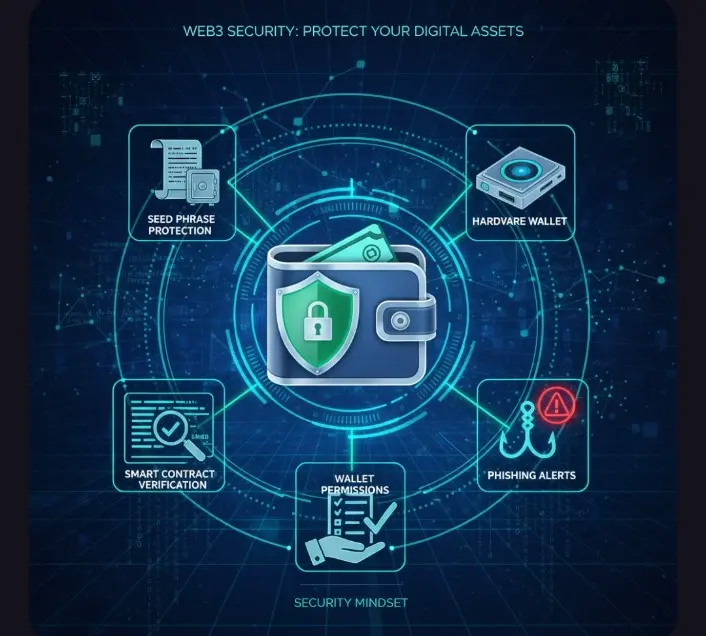
As the Web3 ecosystem expands, security remains the foundation of responsible participation. While blockchain technology offers incredible opportunities, it also requires users to take greater responsibility for protecting their assets.
Simple habits can make a significant difference: ✔ Never share your seed phrase
✔ Verify websites before connecting wallets
✔ Use hardware wallets for long-term holdings
✔ Review smart contract permissions regularly
✔ Stay cautious of phishing attacks and fake airdrops
In Web3, security is not just a technical concern—it is a mindset. The
post-image
  • Reward
  • 4
  • Repost
  • Share
ZAYDEN_ETH:
looking forward nice
View More
#Web3SecurityGuide 🔐
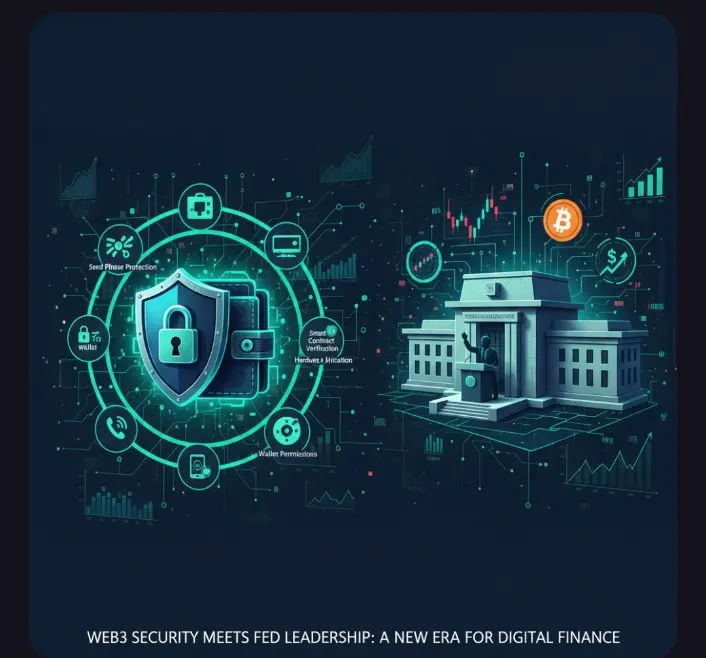
As Web3 adoption grows, security awareness is becoming one of the most important skills for every crypto user. The industry continues to expand rapidly, but scams, phishing attacks, and wallet exploits remain major risks.
Key Web3 security practices include: • Never sharing seed phrases
• Using hardware wallets for large holdings
• Verifying smart contracts before approvals
• Avoiding suspicious links and fake airdrops
• Enabling two-factor authentication
• Reviewing wallet permissions regularly
Security is no longer optional in crypto — it is a necessity. The strongest p
post-image
  • Reward
  • 3
  • Repost
  • Share
Crypto_Teacher:
Ape In 🚀
View More
#Web3SecurityGuide : How to Stay Safe in the Decentralized Internet
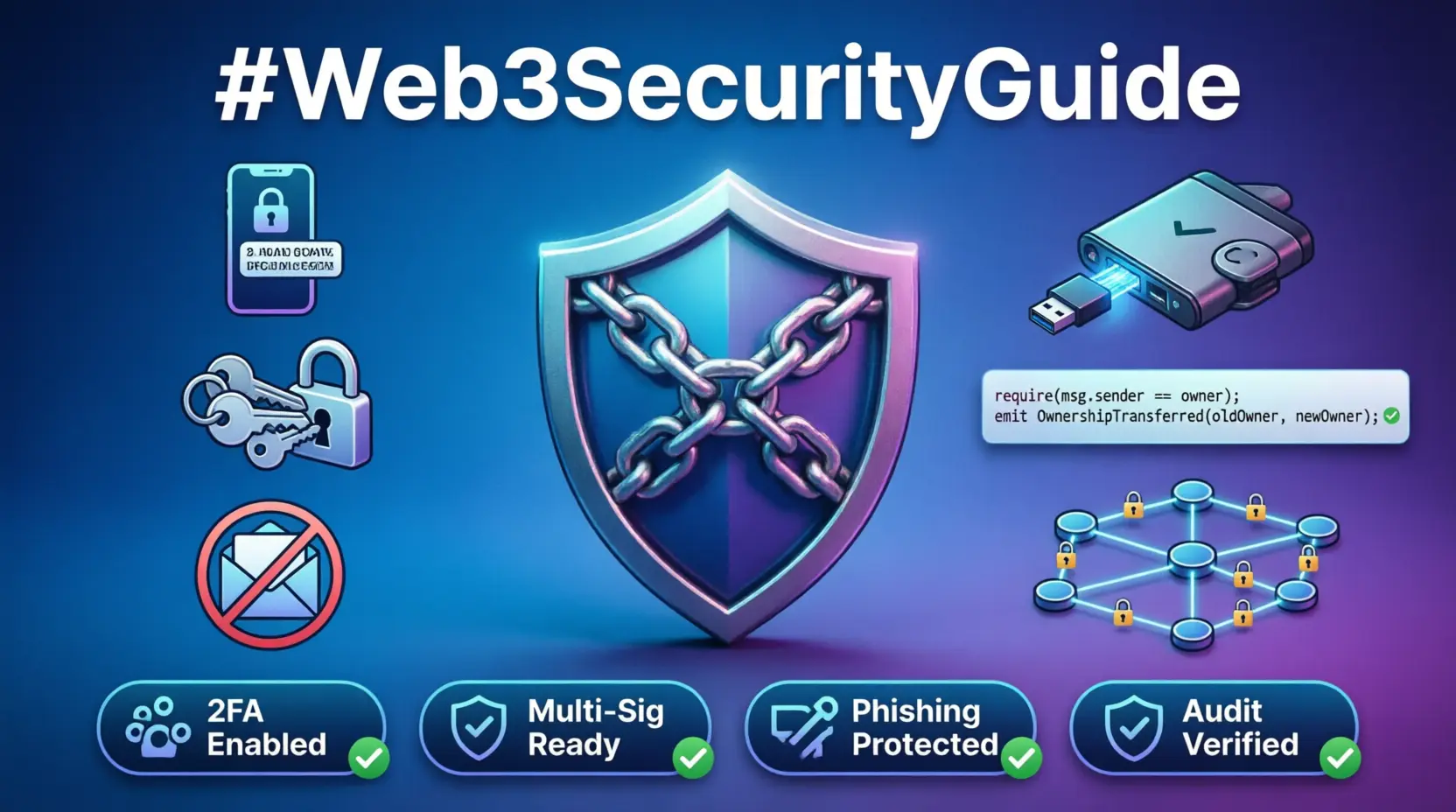
Web3 is often described as the next evolution of the internet—built on blockchain technology, decentralized applications (dApps), and user-owned digital assets. Unlike traditional Web2 platforms where companies control data, Web3 aims to give control back to users. However, this freedom also comes with serious responsibility. Because there is no central authority to “undo” mistakes, security becomes extremely important.
This guide explains how Web3 security works, what threats exist, and how you can protect yourself from scams
SAFE6.75%
IN6.91%
ON-1.24%
post-image
  • Reward
  • 1
  • Repost
  • Share
iceTrader:
LFG 🔥
#Web3SecurityGuide is becoming one of the most important topics in the modern digital era as more users shift toward decentralized applications, blockchain platforms, and crypto-based financial systems. With the rapid growth of Web3, security has become a top priority because users are now fully responsible for protecting their digital assets, wallets, and identities without relying on centralized authorities. Unlike traditional web systems, Web3 operates on decentralized networks, which means a single mistake—like losing a private key or signing a malicious transaction—can lead to irreversibl
  • Reward
  • Comment
  • Repost
  • Share
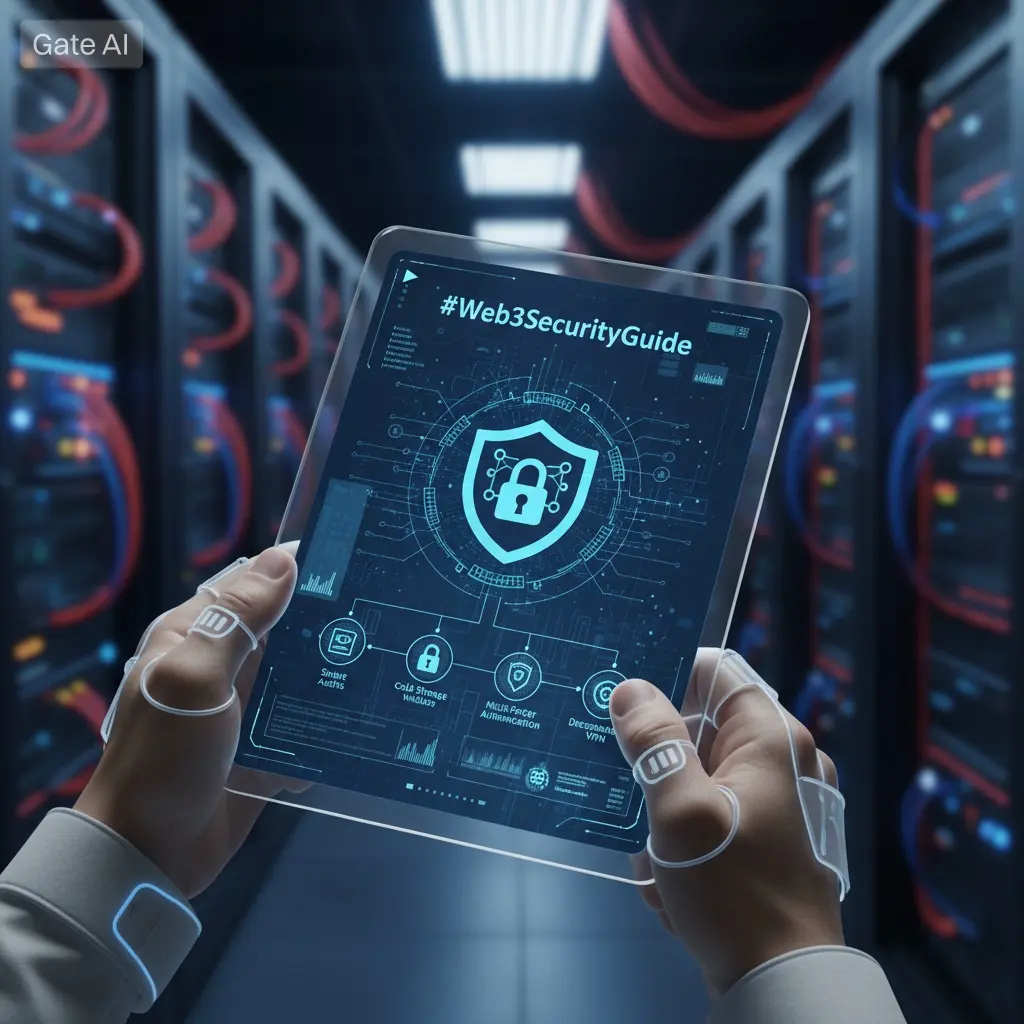
#Web3SecurityGuide is becoming one of the most important topics in the modern digital era as more users shift toward decentralized applications, blockchain platforms, and crypto-based financial systems. With the rapid growth of Web3, security has become a top priority because users are now fully responsible for protecting their digital assets, wallets, and identities without relying on centralized authorities. Unlike traditional web systems, Web3 operates on decentralized networks, which means a single mistake—like losing a private key or signing a malicious transaction—can lead to irreversibl
post-image
  • Reward
  • Comment
  • Repost
  • Share
#Web3SecurityGuide 🔐
As Web3 adoption grows, security awareness is becoming more important than ever. Crypto users should always protect seed phrases, enable two-factor authentication, and avoid interacting with suspicious links or fake decentralized applications.
Scams, phishing attacks, and wallet exploits continue targeting inexperienced users across the crypto space. Proper wallet security, hardware wallet usage, and transaction verification can significantly reduce risk exposure.
In decentralized finance, personal responsibility is critical because blockchain transactions are often irrev
  • Reward
  • Comment
  • Repost
  • Share
#GateSquareMayTradingShare #Web3SecurityGuide 🔐
As Web3 adoption grows, security awareness is becoming more important than ever. Crypto users should always protect seed phrases, enable two-factor authentication, and avoid interacting with suspicious links or fake decentralized applications.
Scams, phishing attacks, and wallet exploits continue targeting inexperienced users across the crypto space. Proper wallet security, hardware wallet usage, and transaction verification can significantly reduce risk exposure.
In decentralized finance, personal responsibility is critical because blockchain t
  • Reward
  • Comment
  • Repost
  • Share
#Web3SecurityGuide 🔐
As Web3 adoption grows, security awareness is becoming more important than ever. Crypto users should always protect seed phrases, enable two-factor authentication, and avoid interacting with suspicious links or fake decentralized applications.
Scams, phishing attacks, and wallet exploits continue targeting inexperienced users across the crypto space. Proper wallet security, hardware wallet usage, and transaction verification can significantly reduce risk exposure.
In decentralized finance, personal responsibility is critical because blockchain transactions are often irrev
  • Reward
  • Comment
  • Repost
  • Share
#Web3SecurityGuide 🔐
As Web3 adoption grows, security awareness is becoming more important than ever. Crypto users should always protect seed phrases, enable two-factor authentication, and avoid interacting with suspicious links or fake decentralized applications.
Scams, phishing attacks, and wallet exploits continue targeting inexperienced users across the crypto space. Proper wallet security, hardware wallet usage, and transaction verification can significantly reduce risk exposure.
In decentralized finance, personal responsibility is critical because blockchain transactions are often irrev
  • Reward
  • Comment
  • Repost
  • Share
The NEAR Protocol has just announced the integration of Post-Quantum Cryptography (PQC), allowing for secure key rotation in a single transaction.
The Logic: As AI compute power grows in 2026, legacy encryption methods are becoming vulnerable to brute-force attacks. NEAR is the first major L1 to implement quantum-resistant security at the protocol level.
The Insight: This isn't just a technical update; it is an institutional requirement. Sovereign wealth funds and global banks will only settle on "Quantum-Proof" rails. NEAR is positioning itself as the most secure execution layer for the nex
NEAR29.06%
  • Reward
  • Comment
  • Repost
  • Share
Load More