

#24hCryptoFuturesLiquidationsTop400M
24-HOUR CRYPTO FUTURES LIQUIDATIONS TOP 400 MILLION DOLLARS: MARKET VOLATILITY ANALYSIS
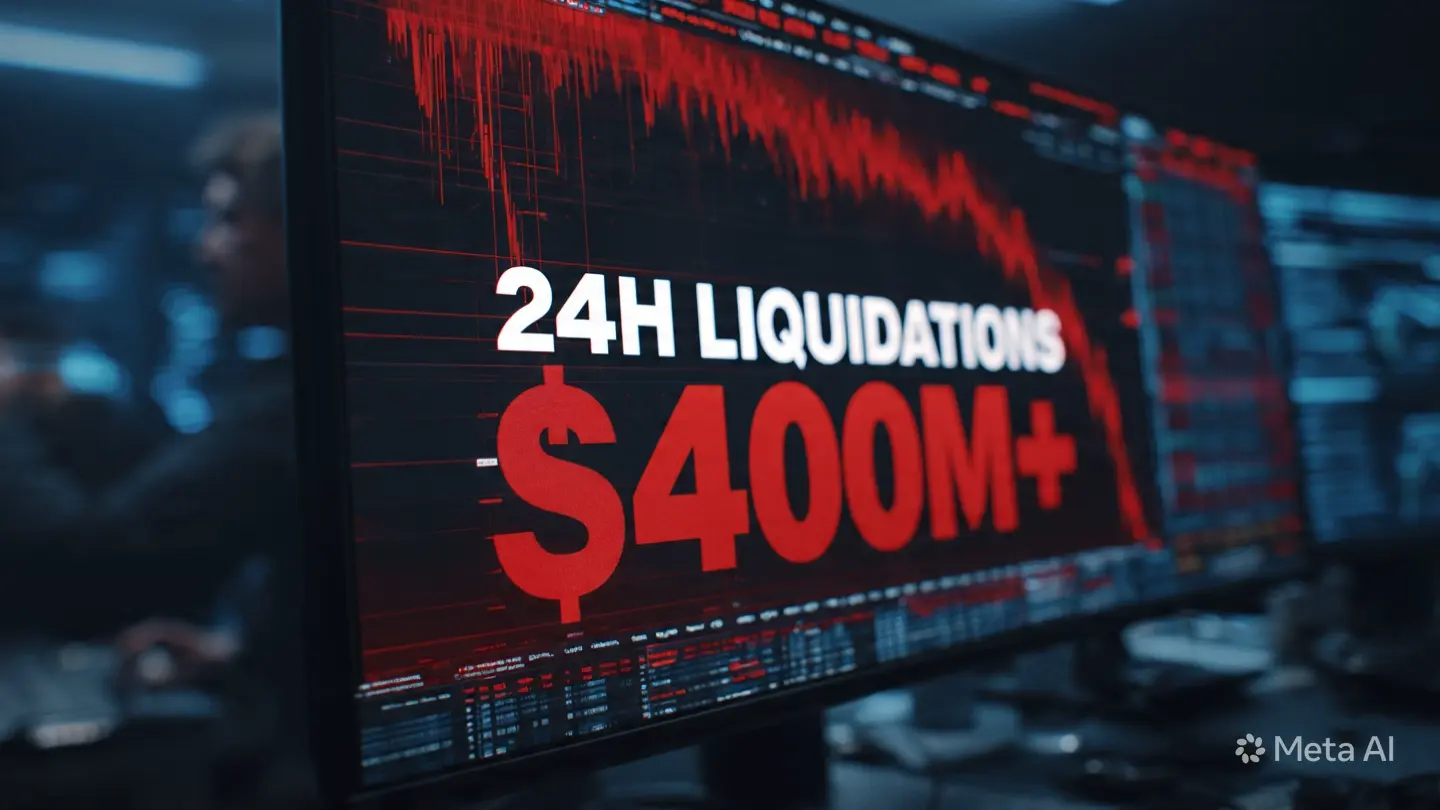
Cryptocurrency futures markets experienced severe stress as leveraged positions worth over $400 million were liquidated within a 24-hour period, highlighting the extreme volatility and risk inherent in digital asset derivatives trading. This liquidation event represents one of the largest in recent months and demonstrates the ongoing challenges facing leveraged crypto traders.
LIQUIDATION EVENT SCOPE
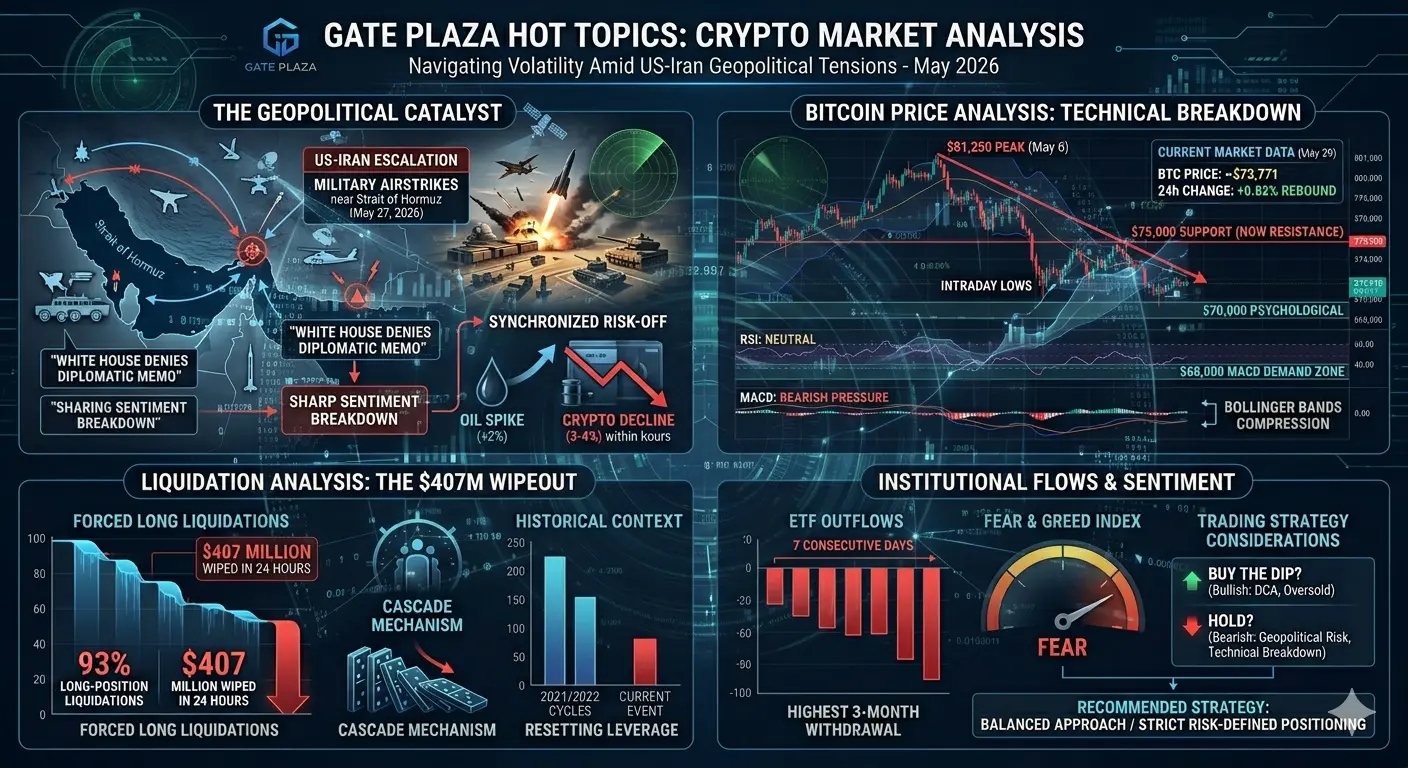
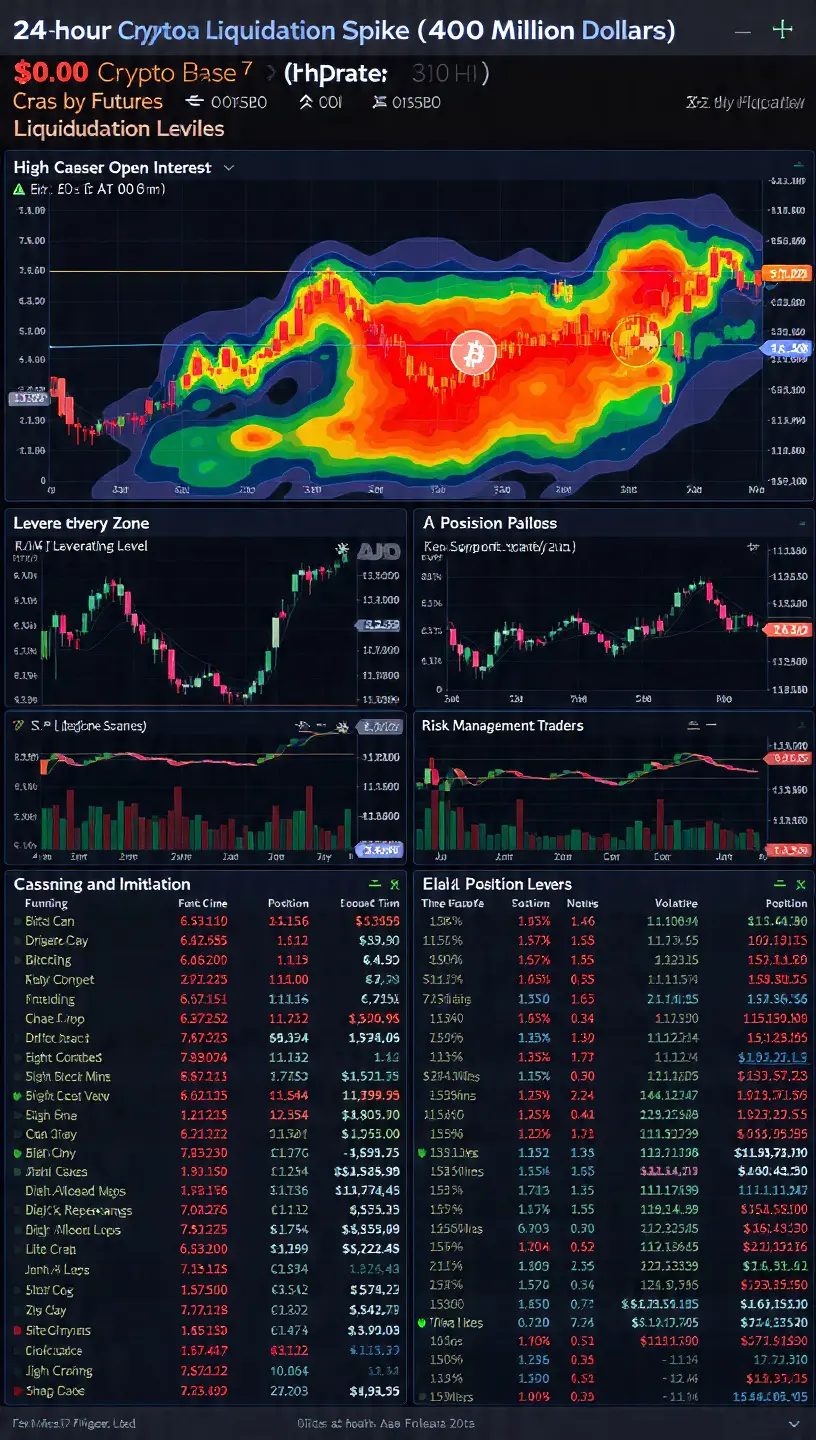
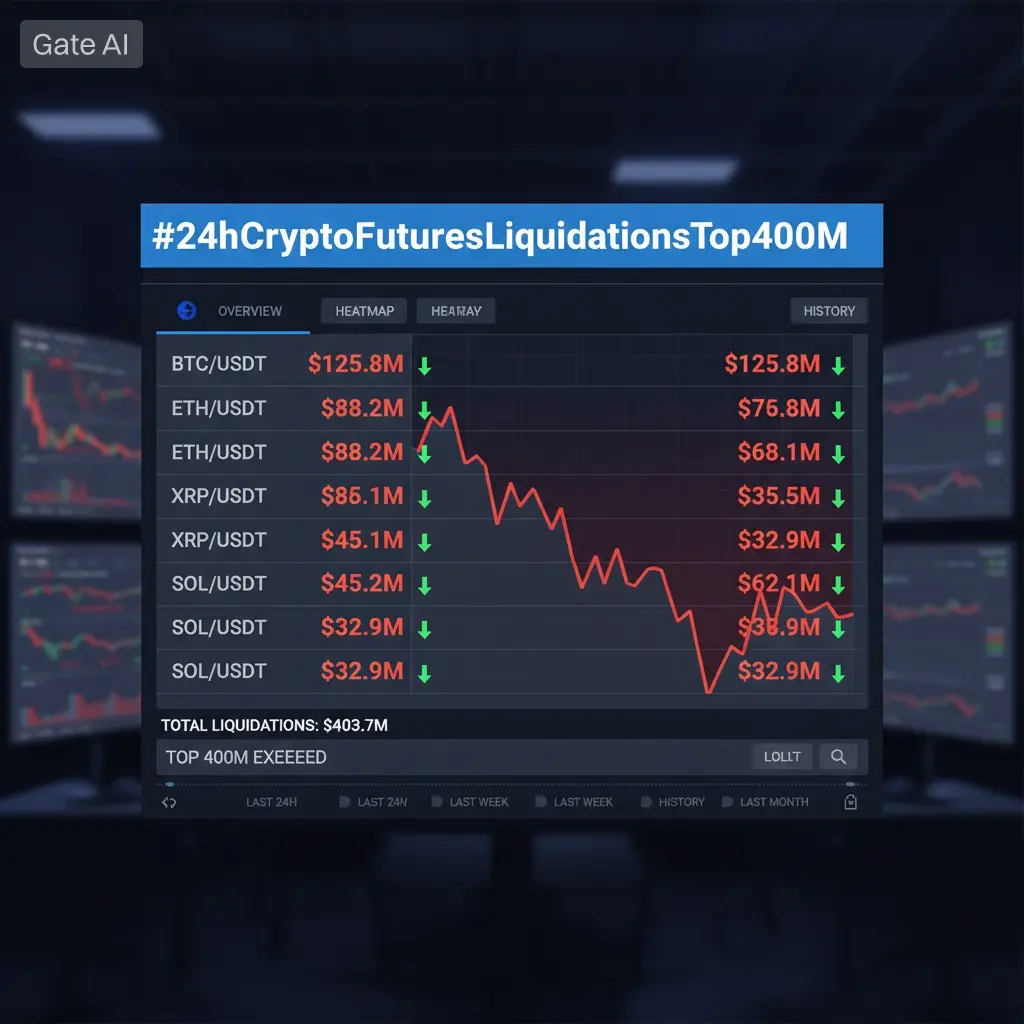
The liquidation cascade resulted in over $415 million in cryptocurrency positions being forcibly closed across major derivatives exchanges. Bitcoin perpetual futures accounted for approximately $207 million of the total liquidations, with Ethereum and other altcoins contributing the remainder. The scale of liquidations indicates significant leverage utilization across the cryptocurrency futures market.
The event unfolded rapidly, with the majority of liquidations occurring within a compressed time window as price movements triggered cascading margin calls. Automatic deleveraging mechanisms employed by exchanges amplified selling pressure as underwater positions were forcibly unwound.
MARKET CONTEXT AND TRIGGERS
The liquidation event occurred against a backdrop of heightened cryptocurrency market volatility. Bitcoin had experienced significant price swings in preceding days, creating conditions where leveraged positions became vulnerable to adverse moves. Ethereum's decline below the $4,000 psychological support level contributed to bearish sentiment and accelerated liquidations.
While specific catalysts vary by event, cryptocurrency liquidations often follow periods of low volatility during which traders increase leverage, followed by sudden price movements that trigger margin calls. The combination of high leverage and relatively thin order books in cryptocurrency markets creates conditions for rapid liquidation cascades.
BITCOIN MARKET DYNAMICS
Bitcoin perpetual futures bore the brunt of the liquidation event, with approximately $207 million in long and short positions forcibly closed. The liquidation distribution between long and short positions provides insight into market positioning and sentiment preceding the event.
Bitcoin's price action during the liquidation period demonstrated the reflexive nature of cryptocurrency markets. As leveraged long positions were liquidated, selling pressure increased, driving prices lower and triggering additional liquidations in a self-reinforcing cycle.
ETHEREUM AND ALTCOIN IMPACT
Ethereum futures contributed significantly to total liquidations, with the ETH price decline below $4,000 representing a notable technical breakdown. The $4,000 level had served as support for over 40 days, and its breach triggered stop-loss selling and margin calls across leveraged positions.
Altcoin futures markets experienced correlated liquidations as cryptocurrency markets broadly declined. The high correlation between digital assets during stress periods means that adverse moves in Bitcoin and Ethereum typically cascade throughout the cryptocurrency ecosystem.
LEVERAGE AND RISK MANAGEMENT
The scale of liquidations highlights the risks associated with leveraged cryptocurrency trading. Futures markets allow traders to control large positions with relatively small margin deposits, amplifying both gains and losses. When prices move against leveraged positions, exchanges automatically liquidate positions to prevent losses from exceeding margin balances.
Risk management failures by traders contributed to the liquidation severity. Inadequate position sizing, failure to use stop-loss orders, and overconfidence in market direction left many traders exposed to catastrophic losses when markets moved against their positions.
EXCHANGE MECHANISMS
Cryptocurrency derivatives exchanges employ automatic deleveraging systems to manage counterparty risk during extreme market conditions. These mechanisms ensure that winning traders receive their profits even when losing traders lack sufficient margin to cover losses.
The liquidation process itself can exacerbate price movements. When exchanges close underwater positions, they typically execute market orders that add to selling pressure during declines or buying pressure during rallies. This dynamic can transform moderate price moves into extreme events.
MARKET STRUCTURE CONCERNS
Large liquidation events raise questions about cryptocurrency market structure and stability. The combination of high leverage, fragmented liquidity across multiple exchanges, and automated liquidation systems creates conditions for extreme volatility that exceeds what fundamentals might justify.
The October 2025 crypto crash, which saw $19.3 billion in leveraged positions liquidated within 24 hours, demonstrated how severe these events can become. While the current $400 million event is smaller in scale, it serves as reminder of the risks inherent in cryptocurrency derivatives markets.
TRADER BEHAVIOR AND PSYCHOLOGY
Liquidation events reveal important insights about cryptocurrency trader behavior. The tendency to increase leverage during bull markets creates vulnerability to corrections. Fear of missing out drives position sizing beyond prudent risk management limits.
Behavioral factors including overconfidence, confirmation bias, and herd mentality contribute to the buildup of leveraged positions that ultimately face liquidation. The cryptocurrency market's 24-hour trading cycle and accessibility amplify these behavioral tendencies.
INSTITUTIONAL PARTICIPATION
The liquidation event occurred alongside growing institutional participation in cryptocurrency markets. Bank of America disclosed substantial indirect exposure to Bitcoin, Ethereum, XRP, and Solana through ETF holdings and equity positions in cryptocurrency-related companies.
Institutional presence may eventually reduce liquidation severity by providing additional liquidity and more sophisticated risk management. However, current market structure remains dominated by retail traders utilizing high leverage, contributing to volatility.
REGULATORY IMPLICATIONS
Large liquidation events attract regulatory attention to cryptocurrency derivatives markets. Concerns about consumer protection, market manipulation, and systemic risk drive calls for enhanced oversight of leveraged trading products.
Regulatory approaches vary globally, with some jurisdictions imposing leverage limits on retail cryptocurrency trading while others maintain lighter touch approaches. The $400 million liquidation event may contribute to regulatory momentum in jurisdictions considering stricter controls.
RECOVERY AND MARKET RESILIENCE
Cryptocurrency markets have demonstrated remarkable resilience following liquidation events. Prices often recover substantial portions of liquidation-driven declines within hours or days, suggesting that forced selling rather than fundamental deterioration drives many extreme moves.
The speed of recovery from liquidation events has increased as markets mature and institutional participation grows. However, the pattern of sharp declines followed by partial recovery remains characteristic of cryptocurrency price action.
RISK MANAGEMENT LESSONS
The liquidation event provides important lessons for cryptocurrency traders. Position sizing relative to account balance, use of stop-loss orders, and avoidance of excessive leverage represent fundamental risk management practices that could have prevented many liquidations.
Traders who survived the event with intact capital are positioned to benefit from subsequent recovery. Those who experienced liquidation face the challenge of rebuilding positions while dealing with psychological impacts of significant losses.
The $400 million liquidation event serves as reminder that cryptocurrency markets remain highly volatile and that leveraged trading carries substantial risk of total capital loss. Even experienced traders must exercise caution when utilizing derivatives products in these markets.
24-HOUR CRYPTO FUTURES LIQUIDATIONS TOP 400 MILLION DOLLARS: MARKET VOLATILITY ANALYSIS
Cryptocurrency futures markets experienced severe stress as leveraged positions worth over $400 million were liquidated within a 24-hour period, highlighting the extreme volatility and risk inherent in digital asset derivatives trading. This liquidation event represents one of the largest in recent months and demonstrates the ongoing challenges facing leveraged crypto traders.
LIQUIDATION EVENT SCOPE
The liquidation cascade resulted in over $415 million in cryptocurrency positions being forcibly closed across major derivatives exchanges. Bitcoin perpetual futures accounted for approximately $207 million of the total liquidations, with Ethereum and other altcoins contributing the remainder. The scale of liquidations indicates significant leverage utilization across the cryptocurrency futures market.
The event unfolded rapidly, with the majority of liquidations occurring within a compressed time window as price movements triggered cascading margin calls. Automatic deleveraging mechanisms employed by exchanges amplified selling pressure as underwater positions were forcibly unwound.
MARKET CONTEXT AND TRIGGERS
The liquidation event occurred against a backdrop of heightened cryptocurrency market volatility. Bitcoin had experienced significant price swings in preceding days, creating conditions where leveraged positions became vulnerable to adverse moves. Ethereum's decline below the $4,000 psychological support level contributed to bearish sentiment and accelerated liquidations.
While specific catalysts vary by event, cryptocurrency liquidations often follow periods of low volatility during which traders increase leverage, followed by sudden price movements that trigger margin calls. The combination of high leverage and relatively thin order books in cryptocurrency markets creates conditions for rapid liquidation cascades.
BITCOIN MARKET DYNAMICS
Bitcoin perpetual futures bore the brunt of the liquidation event, with approximately $207 million in long and short positions forcibly closed. The liquidation distribution between long and short positions provides insight into market positioning and sentiment preceding the event.
Bitcoin's price action during the liquidation period demonstrated the reflexive nature of cryptocurrency markets. As leveraged long positions were liquidated, selling pressure increased, driving prices lower and triggering additional liquidations in a self-reinforcing cycle.
ETHEREUM AND ALTCOIN IMPACT
Ethereum futures contributed significantly to total liquidations, with the ETH price decline below $4,000 representing a notable technical breakdown. The $4,000 level had served as support for over 40 days, and its breach triggered stop-loss selling and margin calls across leveraged positions.
Altcoin futures markets experienced correlated liquidations as cryptocurrency markets broadly declined. The high correlation between digital assets during stress periods means that adverse moves in Bitcoin and Ethereum typically cascade throughout the cryptocurrency ecosystem.
LEVERAGE AND RISK MANAGEMENT
The scale of liquidations highlights the risks associated with leveraged cryptocurrency trading. Futures markets allow traders to control large positions with relatively small margin deposits, amplifying both gains and losses. When prices move against leveraged positions, exchanges automatically liquidate positions to prevent losses from exceeding margin balances.
Risk management failures by traders contributed to the liquidation severity. Inadequate position sizing, failure to use stop-loss orders, and overconfidence in market direction left many traders exposed to catastrophic losses when markets moved against their positions.
EXCHANGE MECHANISMS
Cryptocurrency derivatives exchanges employ automatic deleveraging systems to manage counterparty risk during extreme market conditions. These mechanisms ensure that winning traders receive their profits even when losing traders lack sufficient margin to cover losses.
The liquidation process itself can exacerbate price movements. When exchanges close underwater positions, they typically execute market orders that add to selling pressure during declines or buying pressure during rallies. This dynamic can transform moderate price moves into extreme events.
MARKET STRUCTURE CONCERNS
Large liquidation events raise questions about cryptocurrency market structure and stability. The combination of high leverage, fragmented liquidity across multiple exchanges, and automated liquidation systems creates conditions for extreme volatility that exceeds what fundamentals might justify.
The October 2025 crypto crash, which saw $19.3 billion in leveraged positions liquidated within 24 hours, demonstrated how severe these events can become. While the current $400 million event is smaller in scale, it serves as reminder of the risks inherent in cryptocurrency derivatives markets.
TRADER BEHAVIOR AND PSYCHOLOGY
Liquidation events reveal important insights about cryptocurrency trader behavior. The tendency to increase leverage during bull markets creates vulnerability to corrections. Fear of missing out drives position sizing beyond prudent risk management limits.
Behavioral factors including overconfidence, confirmation bias, and herd mentality contribute to the buildup of leveraged positions that ultimately face liquidation. The cryptocurrency market's 24-hour trading cycle and accessibility amplify these behavioral tendencies.
INSTITUTIONAL PARTICIPATION
The liquidation event occurred alongside growing institutional participation in cryptocurrency markets. Bank of America disclosed substantial indirect exposure to Bitcoin, Ethereum, XRP, and Solana through ETF holdings and equity positions in cryptocurrency-related companies.
Institutional presence may eventually reduce liquidation severity by providing additional liquidity and more sophisticated risk management. However, current market structure remains dominated by retail traders utilizing high leverage, contributing to volatility.
REGULATORY IMPLICATIONS
Large liquidation events attract regulatory attention to cryptocurrency derivatives markets. Concerns about consumer protection, market manipulation, and systemic risk drive calls for enhanced oversight of leveraged trading products.
Regulatory approaches vary globally, with some jurisdictions imposing leverage limits on retail cryptocurrency trading while others maintain lighter touch approaches. The $400 million liquidation event may contribute to regulatory momentum in jurisdictions considering stricter controls.
RECOVERY AND MARKET RESILIENCE
Cryptocurrency markets have demonstrated remarkable resilience following liquidation events. Prices often recover substantial portions of liquidation-driven declines within hours or days, suggesting that forced selling rather than fundamental deterioration drives many extreme moves.
The speed of recovery from liquidation events has increased as markets mature and institutional participation grows. However, the pattern of sharp declines followed by partial recovery remains characteristic of cryptocurrency price action.
RISK MANAGEMENT LESSONS
The liquidation event provides important lessons for cryptocurrency traders. Position sizing relative to account balance, use of stop-loss orders, and avoidance of excessive leverage represent fundamental risk management practices that could have prevented many liquidations.
Traders who survived the event with intact capital are positioned to benefit from subsequent recovery. Those who experienced liquidation face the challenge of rebuilding positions while dealing with psychological impacts of significant losses.
The $400 million liquidation event serves as reminder that cryptocurrency markets remain highly volatile and that leveraged trading carries substantial risk of total capital loss. Even experienced traders must exercise caution when utilizing derivatives products in these markets.