Com o avanço da tecnologia blockchain, o setor está direcionando seu foco dos criptoativos nativos para o mapeamento on-chain de Real World Assets (RWA). Títulos, fundos, notas e direitos de recebíveis imobiliários — ativos financeiros tradicionais — vêm ganhando destaque nas finanças blockchain, pois a integração on-chain desses ativos proporciona maior liquidez, redução dos custos de liquidação e mais transparência.
A tokenização de RWA, porém, vai além da simples digitalização de ativos. É necessário que a rede subjacente ofereça desempenho de padrão financeiro, gestão robusta de ativos e mecanismos para sustentar valor a longo prazo. Embora as blockchains públicas de uso geral sejam abertas, elas frequentemente não atendem aos requisitos de throughput, adaptação de negócios e suporte para operações financeiras avançadas.
Pharos (PROS) se apresenta como uma rede Layer1 de alto desempenho desenvolvida para cenários RealFi. Sua missão é estabelecer uma infraestrutura sólida para trazer ativos do mundo real para on-chain. Ao contrário das blockchains públicas convencionais, a Pharos foi projetada para garantir alto throughput, baixa latência e escalabilidade em emissão de ativos, liquidação de pagamentos e operações financeiras institucionais — atendendo às demandas específicas dos ativos financeiros reais on-chain.
Por que ativos do mundo real exigem infraestrutura on-chain especializada?
A tokenização de ativos do mundo real é fundamentalmente diferente da negociação de ativos padrão on-chain. RWA envolve processos complexos, como emissão de ativos, distribuição de retornos, transferências internacionais e liquidação, que requerem desempenho e estabilidade superiores da rede. Por exemplo, ao processar títulos ou notas, a velocidade de confirmação das transações, a eficiência da liquidação e a escalabilidade do sistema impactam diretamente a circulação dos ativos.
Além disso, a tokenização de RWA geralmente envolve participação institucional e fluxos de capital de longo prazo. Isso exige que a rede subjacente tenha mecanismos de incentivo sustentáveis, e não apenas atividade de usuários de curto prazo. Embora blockchains públicas de uso geral permitam a implantação aberta de aplicações, elas frequentemente não conseguem entregar desempenho consistente para liquidações de alta frequência e operações financeiras em grande escala. Por isso, o desenvolvimento de RWA demanda redes de infraestrutura otimizadas para aplicações financeiras — principal diferencial da Pharos.
Como a arquitetura de alto desempenho da Pharos potencializa RWA on-chain?
A Pharos viabiliza a tokenização de RWA por meio de sua arquitetura Layer1 de alto desempenho. Com um mecanismo de execução paralela, a Pharos processa múltiplas transações simultaneamente, elevando significativamente o throughput da rede. Isso é crucial para RWA, já que transações de ativos reais envolvem grandes volumes de capital e liquidações frequentes — gargalos na rede afetariam diretamente a liquidez.
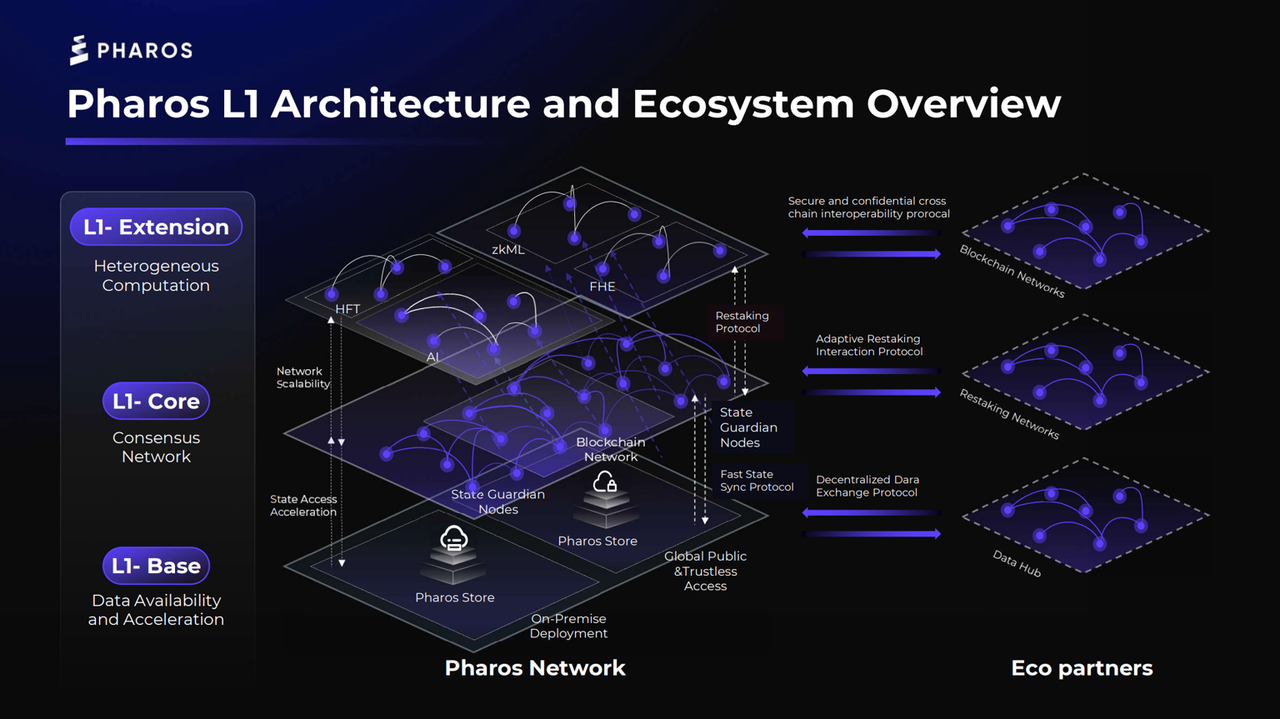 Visão geral da arquitetura L1 e do ecossistema Pharos, fonte: Pharos
A arquitetura modular da Pharos permite adaptação flexível a diferentes cenários financeiros. Emissão de ativos, liquidação de pagamentos e gestão de liquidez podem ser otimizados separadamente por módulos dedicados, sem comprometer a estabilidade da rede. Esse design fortalece o suporte a operações financeiras complexas, oferecendo uma base confiável para emissão e circulação de ativos reais on-chain.
Como a infraestrutura RealFi conecta ativos tradicionais à liquidez on-chain?
A infraestrutura RealFi da Pharos foi criada para ser um gateway de liquidez eficiente para ativos financeiros tradicionais, utilizando redes on-chain. Ativos financeiros tradicionais normalmente enfrentam baixa liquidez e liquidação lenta, enquanto a blockchain possibilita movimentação mais rápida e eficiente por meio da digitalização e negociação on-chain. Ao estruturar uma rede focada no fluxo de ativos financeiros, a Pharos facilita o acesso de ativos tradicionais aos mercados on-chain e amplia sua liquidez.
Assim, a Pharos não se limita a “colocar ativos on-chain” — ela viabiliza liquidez real para esses ativos. Após a tokenização, todas as operações de negociação, liquidação e transferência de valor dependem da rede subjacente. A arquitetura de alto desempenho e o modelo de valor de longo prazo da Pharos foram desenvolvidos para esse objetivo, conectando ativos tradicionais à liquidez on-chain e impulsionando o ecossistema RealFi.
Como o PROS captura valor no ecossistema RWA on-chain?
No modelo RealFi da Pharos, o PROS é o principal meio de transferência de valor da rede. Quando ativos reais são emitidos, negociados e liquidados on-chain, essas atividades geram demanda por taxa de negociação, e o PROS, como token nativo, captura esse valor. Com a entrada de mais projetos de RWA na rede, a atividade on-chain cresce e a demanda por PROS aumenta.
O PROS também é essencial para o staking e incentivos do ecossistema. Nós validadores asseguram a rede por meio do staking, enquanto participantes são incentivados a integrar ativos e aplicações. Essa estrutura garante que o crescimento da rede aumente a demanda pelo token, criando um ciclo de valor impulsionado por atividade financeira real — base econômica fundamental para a Pharos expandir a tokenização de RWA.
O que diferencia a Pharos na liderança de RWA on-chain?
A Pharos se destaca ao unir tecnologia de alto desempenho a um modelo de valor RealFi, entregando infraestrutura completa para tokenização de RWA. Diferente de plataformas que focam apenas na emissão de ativos, a Pharos prioriza liquidez pós-tokenização e valor sustentável. Esse posicionamento estratégico faz dela uma “rede operacional de ativos financeiros reais on-chain” — mais do que uma solução de mapeamento de ativos.
Com a expansão do mercado de RWA, cresce a importância de infraestrutura robusta, eficiente e sustentável. Plataformas capazes de oferecer suporte estável e escalável para ativos reais serão protagonistas no segmento de RWA. A Pharos constrói a base para que RWAs ingressem no mercado financeiro on-chain em grande escala.
Resumo
A Pharos (PROS) oferece suporte essencial para trazer Real World Assets (RWA) para on-chain, com arquitetura Layer1 de alto desempenho e infraestrutura orientada para cenários financeiros. Sua execução paralela aumenta a eficiência das transações, o design modular amplia a adaptabilidade e o modelo de valor de longo prazo do PROS viabiliza uma rede RealFi que conecta ativos tradicionais à liquidez on-chain.
Com RWA consolidando-se como motor de crescimento das finanças blockchain, a demanda por infraestrutura de padrão financeiro seguirá em alta. O diferencial da Pharos está em viabilizar a tokenização de ativos, apoiar a liquidez e capturar valor. Com a expansão do ecossistema, a Pharos se posiciona como referência em infraestrutura para inovação RealFi.
Perguntas frequentes
Como a Pharos impulsiona RWA on-chain?
A Pharos utiliza arquitetura Layer1 de alto desempenho e design modular para oferecer suporte eficiente à emissão, negociação e liquidação de ativos reais, promovendo a integração dos RWA ao ecossistema financeiro on-chain.
Por que RWAs exigem infraestrutura especializada?
A tokenização de ativos reais envolve negociações e liquidações complexas, com demandas superiores de throughput, estabilidade e mecanismos de valor de longo prazo — desafios que blockchains de uso geral não conseguem suprir plenamente.
Qual é a lógica da infraestrutura RealFi da Pharos?
A lógica central da Pharos é conectar ativos financeiros tradicionais à liquidez on-chain por meio de uma rede de alto desempenho, sustentando a circulação e a troca de valor de ativos reais on-chain.
Qual o papel do PROS na tokenização de RWA?
O PROS é utilizado para pagamento de taxas de negociação, participação em staking e incentivos ao ecossistema, sendo fundamental para a captura de valor e operação da rede Pharos.