Seiring aplikasi Web3 semakin kompleks, keterbatasan blockchain tradisional dalam pemrosesan data—seperti data yang tidak dapat diverifikasi, ketersediaan yang terbatas, dan kurangnya partisipasi komputasi secara langsung—semakin nyata. Irys dikembangkan untuk mengatasi hambatan mendasar ini, sehingga aplikasi on-chain dapat mengelola data dalam skala besar.
Secara garis besar, Irys menandai evolusi dari “storage blockchain” menjadi “data-driven blockchain,” yang mengubah data dari sekadar catatan pasif menjadi sumber daya inti yang dapat diverifikasi, diakses, dan dieksekusi secara aktif.
Sumber: irys.xyz
Apa Itu Irys (IRYS)
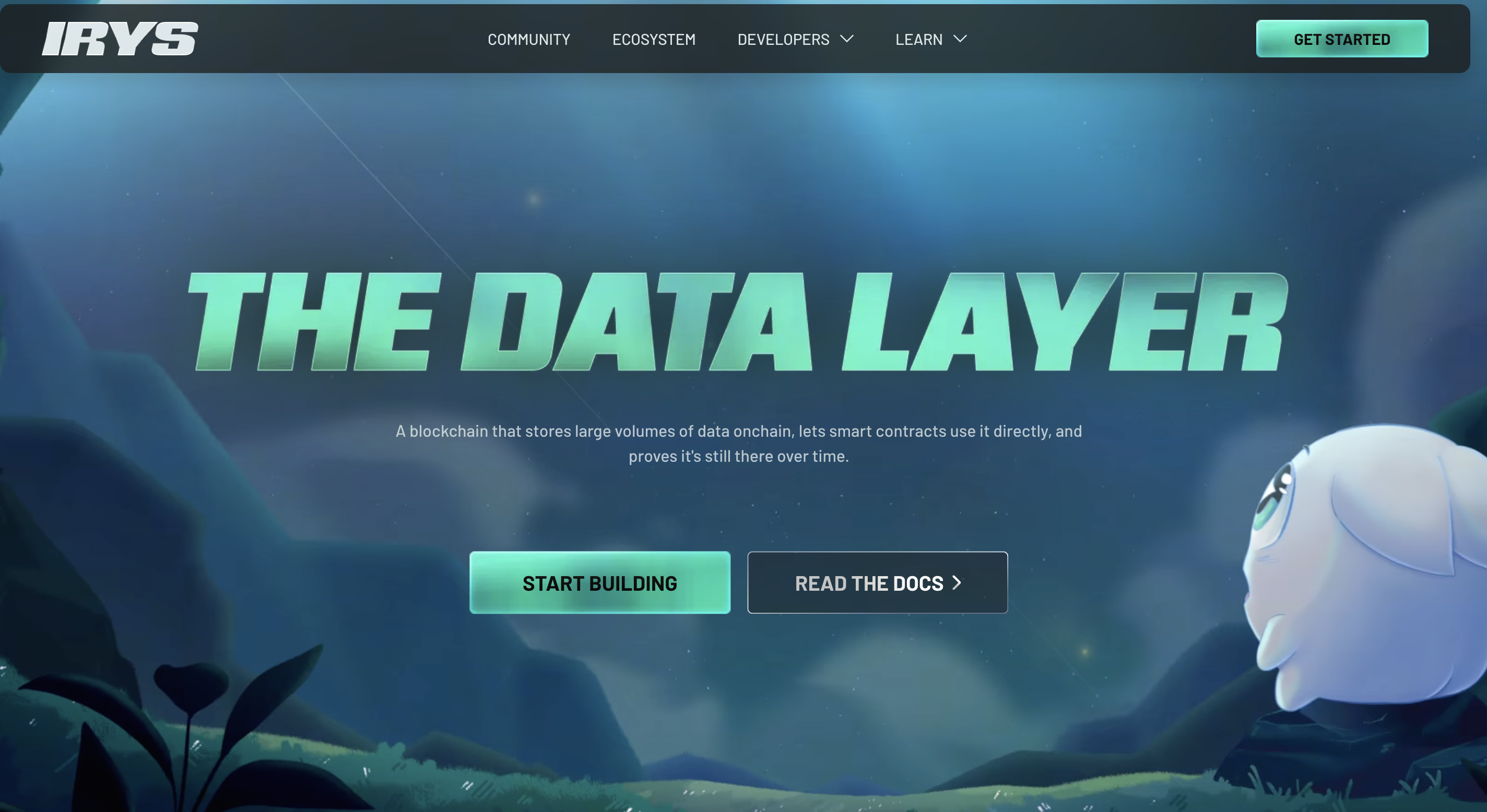
Irys merupakan jaringan data terdesentralisasi yang dikembangkan dengan konsep “Datachain”—yaitu sistem blockchain yang dirancang untuk penyimpanan dan eksekusi data. Berbeda dengan chain tradisional yang hanya mencatat status transaksi, Irys mengintegrasikan data secara langsung ke dalam proses konsensus dan verifikasi.
Pada storage blockchain lama, data diperlakukan sebagai muatan statis tanpa mekanisme terpadu antar node untuk membuktikan eksistensi atau ketersediaan data secara berkelanjutan. Irys memperkenalkan mekanisme data yang dapat diverifikasi, sehingga setiap dataset dapat dibuktikan dan divalidasi secara kolektif di seluruh jaringan.
Arsitektur ini membuat Irys lebih dari sekadar “storage layer”—menjadi lingkungan data yang dapat diprogram. Pengembang dapat membangun aplikasi berbasis data secara langsung di Irys tanpa bergantung pada layanan data eksternal.
Peran Utama Irys: Web3 Verifiable Data Layer
Irys diposisikan sebagai “verifiable data layer” di Web3, menjembatani kesenjangan struktural antara data dan eksekusi. Secara tradisional, penyimpanan data dan eksekusi Smart Contract terpisah, sehingga membatasi kemampuan aplikasi.
Dalam ekosistem Web3, data harus disimpan, diverifikasi, diakses, dan dapat digunakan untuk komputasi. Tanpa kapabilitas ini, aplikasi on-chain tidak mampu memproses logika data yang kompleks.
Irys menanamkan data proof (Proof of Storage / Availability) langsung ke dalam konsensus, sehingga data menjadi bagian dari lingkungan on-chain yang tepercaya. Node dapat mengonfirmasi status data tanpa bergantung pada asumsi eksternal.
Secara arsitektural, Irys merupakan solusi Data Layer / Data Availability, dengan nilai inti pada penghubung antara “data” dan “eksekusi.”
Cara Kerja Irys: Penyimpanan, Verifikasi, dan Invokasi Data
Irys beroperasi berdasarkan siklus hidup data—unggah, verifikasi, dan invokasi. Pengguna mengirimkan data ke jaringan, yang kemudian di-sharding dan diintegrasikan ke dalam struktur blockchain.
Untuk proses verifikasi, Irys berinovasi dengan memastikan setiap blok tidak hanya mencatat urutan transaksi, namun juga bukti sampling terenkripsi untuk partisi data. Hal ini memastikan data benar-benar ada dan tetap dapat diakses.
Jaringan menggunakan mekanisme verifikasi terpadu, mencegah fragmentasi validasi spesifik node. Semua node mengonfirmasi status data berdasarkan aturan bersama, sehingga meningkatkan konsistensi.
Pada lapisan invokasi, Irys memungkinkan data berpartisipasi langsung dalam logika eksekusi on-chain, sehingga menjadi “programmable data.”
Struktur Jaringan Irys: Node, Penyimpanan, dan Logika Distribusi Data
Jaringan Irys terdiri dari banyak node yang bertanggung jawab atas penyimpanan, verifikasi, dan distribusi data. Node mengikuti mekanisme konsensus untuk menjaga integritas jaringan.
Untuk distribusi data, Irys menerapkan partisi dan replikasi, memastikan data tersimpan di seluruh jaringan. Hal ini meningkatkan ketersediaan dan mengurangi risiko kegagalan satu titik.
Node wajib membuktikan bahwa mereka “secara aktif menyimpan data” melalui bukti kriptografi dan verifikasi sampling, sehingga proses penyimpanan dapat diverifikasi. Operasi jaringan berjalan berdasarkan insentif, termasuk hadiah penyimpanan dan keuntungan verifikasi.
Fungsi Token IRYS: Insentif, Pembayaran, dan Keamanan Jaringan
Token IRYS merupakan instrumen ekonomi inti jaringan, digunakan untuk pembayaran penyimpanan, insentif node, dan keamanan jaringan.
Pengguna membayar token IRYS untuk menyimpan data—mirip dengan model Gas, namun biaya didasarkan pada konsumsi sumber daya data aktual, sehingga penyimpanan dapat diukur secara pasti.
Node memperoleh hadiah atas kontribusi penyimpanan dan verifikasi, menciptakan pasokan sumber daya yang terdesentralisasi dan memastikan jaringan berjalan secara berkelanjutan.
Selain itu, token IRYS dapat digunakan untuk staking dan langkah keamanan guna mencegah aktivitas jahat. Secara keseluruhan, Tokenomics IRYS membentuk fondasi ekonomi jaringan.
Penggunaan Irys: Dari Penyimpanan Data hingga Infrastruktur Web3
Irys dimanfaatkan untuk penyimpanan data Web3—metadata NFT, konten on-chain, dan arsip data jangka panjang—di mana data harus selalu dapat diakses dan tahan manipulasi.
Pada DeFi dan aplikasi on-chain, ketersediaan data adalah kebutuhan utama. Irys memungkinkan data kompleks digunakan secara langsung dalam logika blockchain.
Seiring berkembangnya AI dan marketplace data, data yang dapat diverifikasi menjadi semakin penting. Irys menyediakan infrastruktur dasar untuk perdagangan dan komputasi data.
Secara keseluruhan, Irys berkembang dari “alat penyimpanan” menjadi “lapisan infrastruktur” yang utuh.
Irys vs. Protokol Penyimpanan Lain (Arweave, Filecoin)
Meski Irys, Arweave, dan Filecoin sama-sama menangani penyimpanan data Web3, posisi dan desainnya sangat berbeda.
Arweave menonjolkan penyimpanan permanen (pembayaran satu kali untuk penyimpanan seumur hidup), Filecoin menawarkan storage marketplace untuk penyimpanan sesuai permintaan. Irys berfokus membangun verifiable data layer, menitikberatkan pada data proof, aksesibilitas, dan invokasi langsung oleh logika on-chain.
Irys mengintegrasikan “verifikasi data + logika eksekusi” dalam satu sistem, sehingga data tidak hanya disimpan, tapi juga dapat berpartisipasi aktif dalam komputasi blockchain. Desain “data sebagai state, executable” ini membuat Irys lebih menyerupai lapisan komputasi berbasis data daripada sekadar jaringan penyimpanan.
Keunggulan, Keterbatasan, dan Miskonsepsi Umum tentang Irys
Keunggulan utama Irys adalah arsitektur terpadu “data + eksekusi,” yang memungkinkan data berpartisipasi langsung dalam logika blockchain—penting untuk aplikasi yang kompleks.
Mekanisme data yang dapat diverifikasi meningkatkan kepercayaan, sehingga pengembang dapat membangun aplikasi terdesentralisasi tanpa ketergantungan eksternal.
Keterbatasannya meliputi kompleksitas sistem yang tinggi, ekosistem yang masih berkembang, dan model biaya yang memerlukan validasi jangka panjang.
Miskonsepsi umum adalah menyamakan Irys dengan penyimpanan cloud tradisional. Faktanya, Irys adalah infrastruktur data on-chain, bukan sekadar pengganti storage konvensional.
Ringkasan
Irys memperkenalkan verifiable data layer yang menyatukan penyimpanan, verifikasi, dan eksekusi, mendorong blockchain dari “sistem pencatatan status” menjadi “sistem berbasis data.”
Nilai intinya adalah mengubah data menjadi sumber daya on-chain yang tepercaya, sehingga memungkinkan aplikasi Web3 yang lebih kompleks dan autentik. Arsitektur ini tidak hanya mengubah metode penyimpanan, tetapi juga mendefinisikan ulang peran data dalam blockchain.
FAQ
1. Apa itu Irys?
Irys adalah protokol penyimpanan data terdesentralisasi dan verifiable data layer, yang dirancang untuk mendukung penyimpanan data on-chain dan komputasi yang dapat dieksekusi.
2. Bagaimana Irys berbeda dari Arweave?
Irys menonjolkan verifiabilitas dan eksekutabilitas data, sedangkan Arweave berfokus pada penyimpanan permanen. Irys memperluas Arweave dengan menambahkan fitur verifikasi dan eksekusi data.
3. Apa tujuan token IRYS?
Token IRYS adalah aset ekonomi inti jaringan Irys, digunakan untuk pembayaran penyimpanan data, insentif operasional node, serta menjaga keamanan dan konsensus jaringan.
4. Irys berada di layer mana?
Irys umumnya dikategorikan sebagai Web3 Data Layer atau Data Availability layer, menyediakan infrastruktur data yang dapat diverifikasi untuk blockchain dan aplikasi.
5. Apakah Irys bisa menggantikan penyimpanan cloud tradisional?
Tidak sepenuhnya. Irys fokus pada infrastruktur data blockchain, dengan keunggulan dalam desentralisasi, verifiabilitas, dan permanensi. Namun, Irys berbeda dari penyimpanan cloud tradisional (seperti AWS atau Alibaba Cloud) dari sisi performa, biaya, dan kemampuan penyimpanan umum berskala besar.