Chainlink and AWS Integrated Data Services
 (Source: chainlink)
Cloud services and blockchain technology were once considered separate domains, but the lines between them are quickly fading. Recently, Amazon Web Services (AWS) added Chainlink’s data services to its Marketplace, enabling developers to connect blockchain applications directly within their familiar cloud environments.
Why is this integration necessary?
Blockchains cannot natively access external data such as real-time market prices, financial information, or real-world asset data. Oracles are essential for bridging on-chain and off-chain worlds, and Chainlink stands as a leading solution in this space.
What services are available to AWS users?
With this integration, AWS users can leverage Chainlink’s three core features:
- Data Feeds
Delivers decentralized market price and financial data for asset valuation, trade settlement, and risk control.
- Data Streams
Provides low-latency, high-frequency data transmission, ideal for real-time trading applications and high-frequency finance scenarios.
- Proof of Reserve
Enables verification of asset existence, for example:
- Confirming whether stablecoins are fully backed by reserves
- Ensuring tokenized assets correspond to real-world assets
How does the integration model work in practice?
Beyond data services, the collaboration between Chainlink and AWS showcases a robust technical integration that allows enterprises to securely transfer off-chain data to the blockchain using AWS infrastructure.
Common integration models include two main categories:
1. Reserve Monitoring (Proof of Reserve)
This approach is primarily used to verify that stablecoins and tokenized assets are adequately backed by reserves.
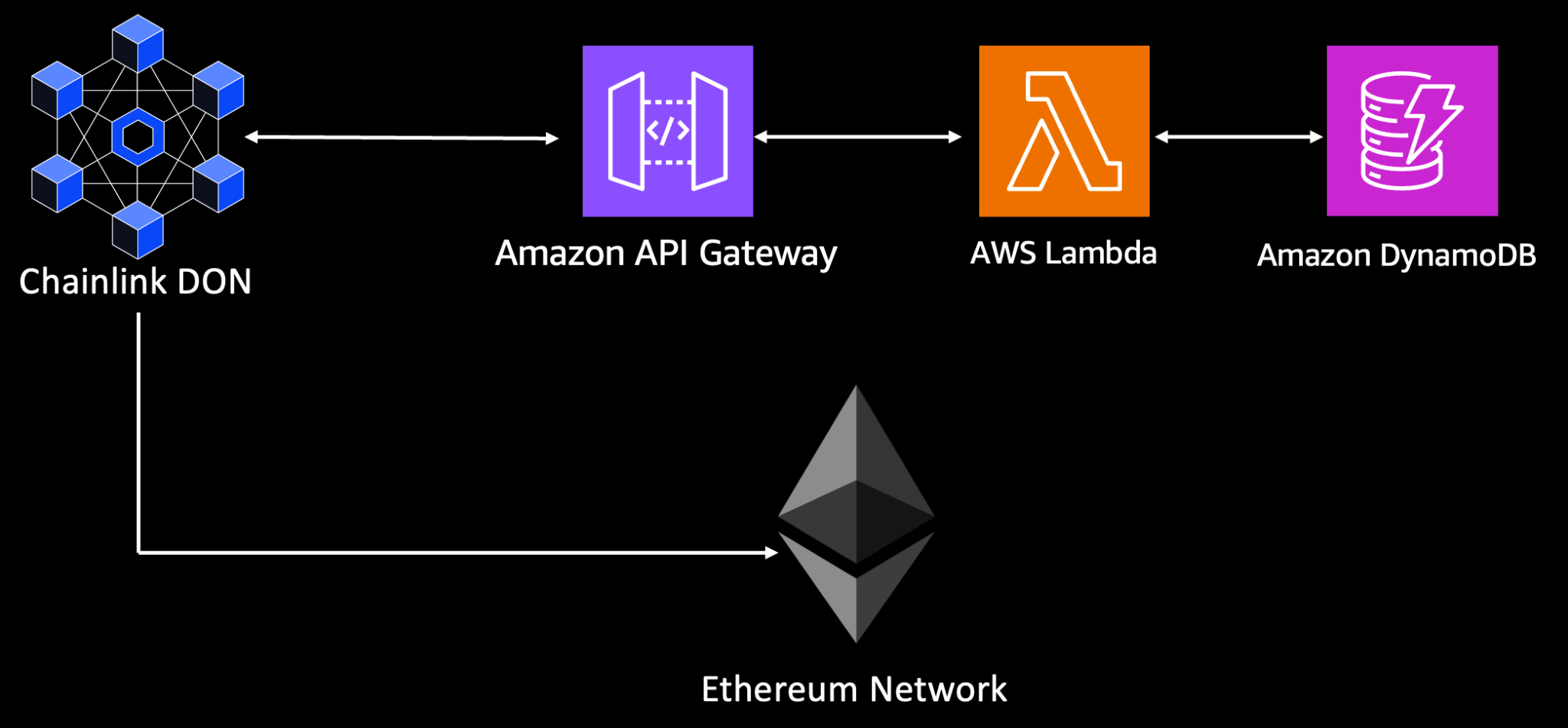
Process overview:
- AWS API Gateway receives data requests
- AWS Lambda processes requests and reads reserve data from DynamoDB
- Chainlink’s decentralized oracle network (DON) periodically fetches the data
- Multi-node consensus verifies whether reserves meet requirements
- The signed and validated results are submitted to Ethereum Smart Contracts
 (Source: AWS Web3 Blog)
This setup enables on-chain applications to access reliable reserve data directly, while the original data remains within AWS for audit and internal management.
2. Real-Time Trading and Prediction Markets
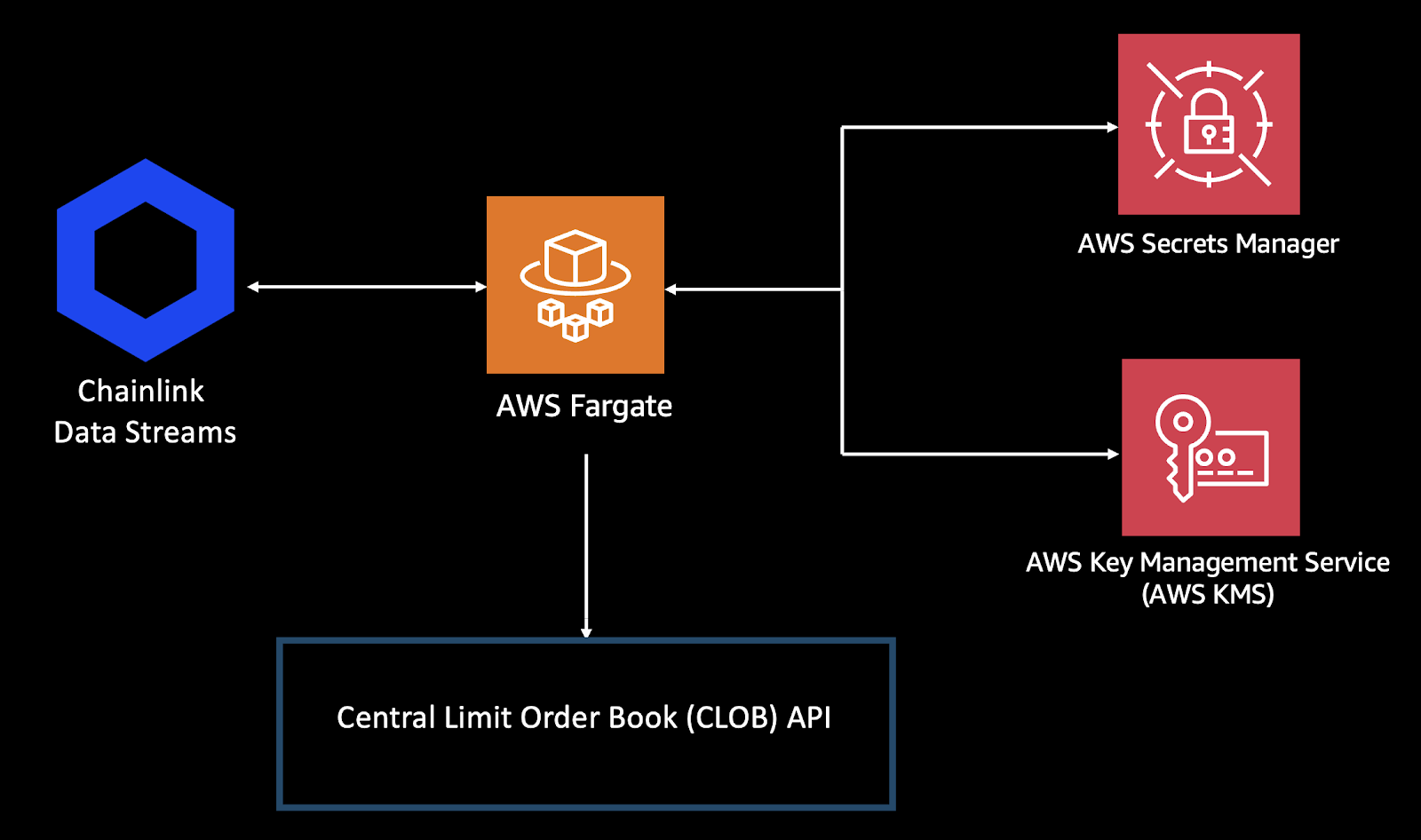
Another model combines Chainlink Data Streams with AWS Fargate to build automated trading systems.
Process steps:
- Continuously receive real-time price updates from Chainlink
- Verify data signatures and freshness
- Standardize price formats
- Assess trading decisions based on risk control parameters
- Automatically submit orders to the Central Limit Order Book (CLOB) if criteria are met
AWS Secrets Manager and KMS handle API keys and trading Private Keys, enhancing overall system security.
 (Source: AWS Web3 Blog)
This architecture is especially well-suited for prediction markets, high-frequency trading platforms, automated market-making systems, and real-time risk control applications.
What does this mean for developers?
The most significant benefit of this integration is lowering the barrier to entry. Developers can use familiar AWS tools (compute, databases, APIs), connect to blockchain Smart Contracts, and build Hybrid Apps that combine cloud infrastructure with decentralized applications.
The tokenization trend is accelerating
This collaboration also reflects the rapid growth of asset tokenization—the transformation of real-world assets into blockchain-based digital assets, such as real estate, bonds, and equities. In this context, data accuracy and timeliness are critical, making oracles indispensable infrastructure.
Oracle competition heats up
As demand rises, competition in the oracle sector is intensifying.
For example:
- Pyth Network has been integrated into prediction market platforms
- Multiple data providers (including financial indices and exchanges) are now offering on-chain data
This underscores that data is becoming a core resource within the blockchain ecosystem.
Paving the way for institutional adoption
For financial institutions, this integration is highly significant:
- Develop blockchain applications within a familiar cloud environment
- Eliminate the need to build infrastructure from scratch
- Enhance security and integration efficiency
This will help drive the convergence of traditional finance and blockchain technology.
Summary
The integration of Amazon Web Services and Chainlink marks a major step toward merging cloud and blockchain technologies. By bridging on-chain and off-chain data, developers and enterprises can more easily build the next generation of financial and application services. As tokenization and DeFi continue to gain momentum, this infrastructure will play an increasingly pivotal role.







