A medida que evoluciona el mercado de rendimiento DeFi, los usuarios ya no se conforman con simplemente “obtener rentabilidad”; ahora buscan “optimizar la rentabilidad”. Los protocolos DeFi tradicionales solo ofrecen modelos de rendimiento variable: aunque es posible obtener rentabilidad con staking o préstamos, resulta complicado asegurar una % de rentabilidad estable o ajustar las estrategias de rendimiento de manera flexible ante los cambios del mercado. Estas limitaciones generan ineficiencias claras en la utilización del capital y en la gestión de riesgos sobre los activos de rendimiento.
Pendle ha revolucionado el sector con su mecanismo de tokenización de rendimiento. Al dividir los activos de rendimiento en PT y YT, Pendle te permite gestionar el capital y los rendimientos futuros por separado. Así, puedes asegurar rendimientos fijos, especular sobre las tasas de rendimiento y cubrir el riesgo de rendimiento. Gracias a esta estructura, Pendle se consolida como protocolo líder en rendimiento fijo y como mercado on-chain de estrategias de rendimiento, proporcionando herramientas de gestión de rendimiento más flexibles.
¿Cuáles son las principales estrategias de rendimiento que ofrece Pendle?
Las estrategias de rendimiento de Pendle se basan en el mecanismo de división PT y YT. Al separar capital y rendimiento futuro, puedes adaptar las estrategias a tu perfil de riesgo. Si prefieres evitar riesgos, puedes obtener rendimiento fijo con PT; si buscas mayor rentabilidad, puedes mantener YT y aprovechar el potencial de crecimiento.
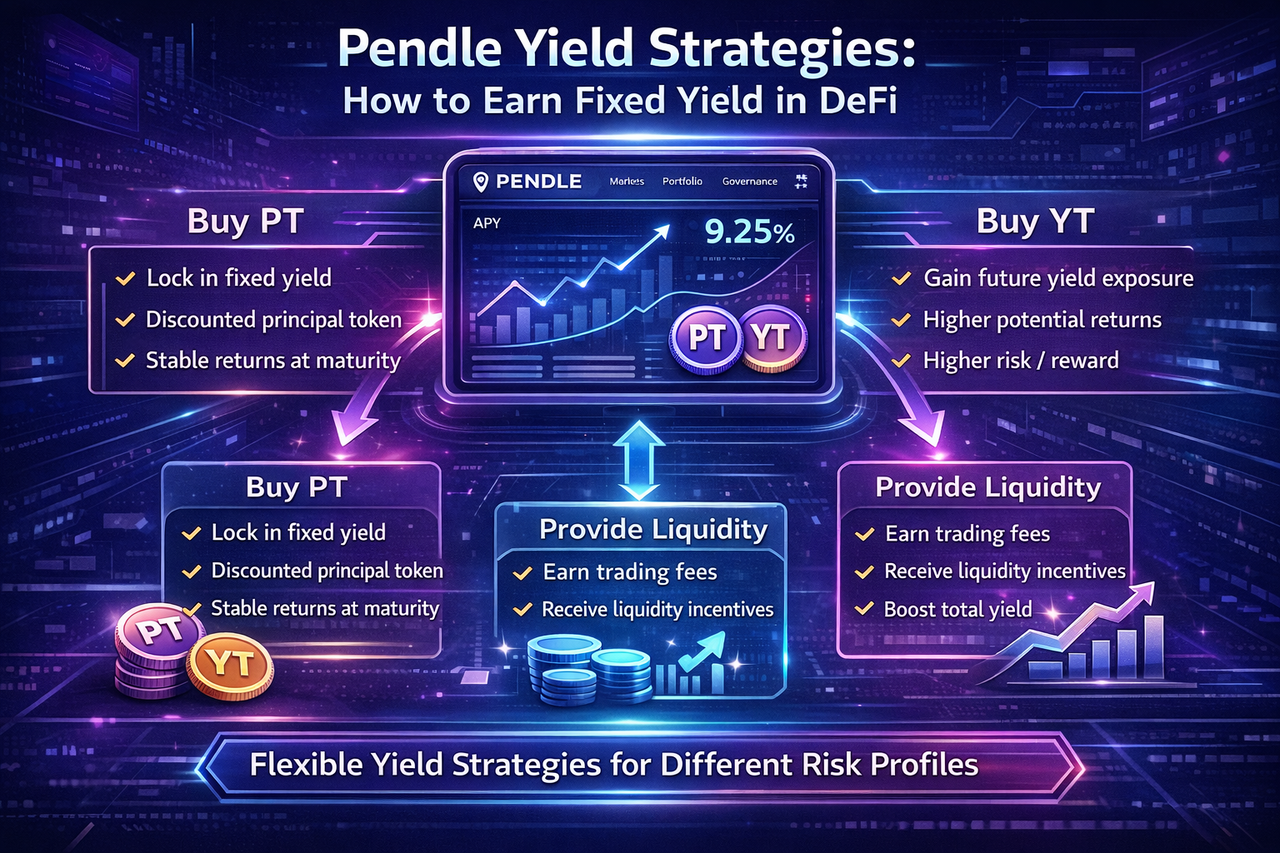
Pendle también te permite asegurar el rendimiento anticipadamente vendiendo derechos de rendimiento, y obtener recompensas adicionales al aportar liquidez. Así, Pendle es mucho más que una plataforma de trading de rendimiento: es un mercado on-chain integral de estrategias de rendimiento para rendimiento fijo, mejora de rendimiento y gestión del riesgo de rendimiento.
¿Cómo puedes obtener rendimiento fijo con Pendle?
La forma más habitual de conseguir rendimiento fijo en Pendle es comprar PT. PT representa la parte de capital de un activo de rendimiento y normalmente cotiza con descuento respecto a su valor de rescate al vencimiento. Si compras PT y lo mantienes hasta el vencimiento, canjeas el capital a valor nominal; la diferencia de precio es el rendimiento fijo.
Este mecanismo es similar al de los bonos cupón cero en finanzas tradicionales. El % de rentabilidad queda asegurado al comprar PT, así que no tienes que preocuparte por la volatilidad futura de las tasas ni por su impacto en tu rentabilidad final. Para los usuarios DeFi que buscan estabilidad, PT es el instrumento central de rendimiento fijo en Pendle y una de sus estrategias clave.
¿Cómo puedes usar YT para buscar rendimientos más altos?
Más allá del rendimiento fijo, Pendle te permite apostar por el crecimiento futuro del rendimiento comprando YT. YT representa el derecho al rendimiento futuro generado por el activo subyacente, así que su valor depende de las expectativas del mercado sobre las tasas de rendimiento.
Si crees que los rendimientos futuros subirán, comprar YT puede darte mayores retornos, ya que unas tasas más altas aumentan tanto el valor de mercado de YT como las distribuciones de rendimiento futuras. Esta estrategia ofrece más potencial de rentabilidad que PT, pero también implica mayor riesgo. Si los rendimientos bajan, el valor de YT puede caer y generar pérdidas.
Por eso, YT es ideal para usuarios con mayor tolerancia al riesgo y una visión alcista sobre el crecimiento del rendimiento.
¿Cómo puedes asegurar el rendimiento vendiendo YT?
Si ya tienes activos que generan rendimiento, Pendle te ofrece otra estrategia: vender YT para asegurar el rendimiento por adelantado. Tras depositar los activos de rendimiento en Pendle, recibes tanto PT como YT. Vender YT equivale a renunciar al rendimiento variable futuro a cambio del valor actual de ese rendimiento.
En este escenario, puedes canjear el capital con PT al vencimiento, y los ingresos de la venta de YT aseguran el rendimiento de forma anticipada. Este enfoque es ideal si te preocupa que los rendimientos futuros bajen, ya que convierte rendimientos inciertos en rendimientos actuales garantizados y reduce el riesgo de volatilidad.
Este mecanismo permite asegurar el rendimiento on-chain y te da más flexibilidad en la gestión de tu rentabilidad.
¿Qué estrategias de liquidez ofrece Pendle?
Además de las estrategias de trading con PT y YT, Pendle permite obtener rendimiento adicional aportando liquidez. Puedes añadir liquidez a los pools de PT y YT y recibir recompensas del protocolo, además de ingresos por comisiones de trading.
Esta opción es adecuada para quienes buscan aumentar su rentabilidad sobre el rendimiento fijo. Comparado con mantener solo PT, aportar liquidez puede ofrecer más rendimiento, pero también implica riesgo de pérdida impermanente y de mercado. Por eso, las estrategias de liquidez son mejores para quienes entienden bien los mecanismos de liquidez DeFi.
Al combinar trading de rendimiento e incentivos de liquidez, Pendle ofrece una selección más diversificada de estrategias de rendimiento.
¿Cuáles son las ventajas de las estrategias de rendimiento de Pendle?
La mayor ventaja de Pendle es la flexibilidad. Los productos de rendimiento DeFi tradicionales suelen ofrecer solo una fuente de retorno, mientras que el mecanismo PT y YT de Pendle te permite elegir entre rendimiento fijo, mejora de rendimiento o cobertura según tu perspectiva del mercado y tu tolerancia al riesgo.
Este enfoque mejora la eficiencia del capital de los activos de rendimiento y transforma la gestión de la rentabilidad de un modelo pasivo a una asignación activa. Puedes asegurar rendimiento fijo, buscar retornos más altos según tus previsiones o gestionar el riesgo vendiendo derechos de rendimiento.
Así, Pendle aporta una estructura de estrategias de rendimiento más sofisticada al mercado DeFi y acelera el crecimiento del sector de rendimiento fijo on-chain.
¿Qué riesgos tienen las estrategias de rendimiento de Pendle?
Aunque Pendle ofrece estrategias flexibles, cada una implica riesgos propios. Las estrategias de rendimiento fijo son relativamente estables, pero están sujetas al riesgo de Contrato inteligente y al riesgo de liquidez. Si hay poca liquidez en el mercado, es posible que no consigas el precio ideal al vender PT antes del vencimiento.
Las estrategias con YT conllevan más riesgo de volatilidad, ya que los cambios en las tasas de rendimiento futuras afectan directamente al valor de YT. Si los rendimientos no cumplen las expectativas, puedes sufrir pérdidas. Las estrategias de liquidez también implican riesgo de pérdida impermanente.
Además, como los mecanismos de rendimiento de Pendle son complejos, si no entiendes bien cómo se valoran PT y YT puedes asumir riesgos adicionales al elegir estrategias. Por eso, es importante que selecciones estrategias que se ajusten a tu tolerancia al riesgo al gestionar el rendimiento con Pendle.
Puntos clave:
Con el mecanismo de división PT y YT, Pendle te ofrece un abanico de estrategias para rendimiento fijo, mejora de rendimiento y gestión de riesgos. Puedes asegurar rendimiento fijo comprando PT, buscar crecimiento futuro comprando YT o asegurar retornos anticipadamente vendiendo YT.
Este marco flexible convierte a Pendle en un protocolo clave del mercado de rendimiento DeFi. A medida que crece la demanda de rendimiento fijo on-chain, las estrategias de Pendle te permitirán gestionar tu rendimiento de forma más eficiente y potenciarán el crecimiento del mercado DeFi de rendimiento fijo.
Preguntas frecuentes
¿Cuáles son las principales estrategias de rendimiento de Pendle?
Las principales estrategias de Pendle son: comprar PT para rendimiento fijo, comprar YT para oportunidades de crecimiento y vender YT para asegurar retornos actuales.
¿Cómo puedes obtener rendimiento fijo con Pendle?
Puedes comprar PT con descuento y canjearlo a valor nominal al vencimiento, asegurando rendimiento fijo por la diferencia de precio.
¿Para quién es adecuado YT?
YT es adecuado para usuarios optimistas con el crecimiento del rendimiento y dispuestos a asumir el riesgo de volatilidad.
¿Cuál es el objetivo de vender YT?
Vender YT convierte el rendimiento variable futuro en retornos actuales garantizados, asegurando la % de rentabilidad y reduciendo el riesgo de volatilidad.
¿Qué riesgos tienen las estrategias de rendimiento de Pendle?
Los principales riesgos son: riesgo de Contrato inteligente, riesgo de liquidez, riesgo de volatilidad de rendimiento y riesgo de pérdida impermanente en estrategias de liquidez.