Glassnode latest on-chain data shows that the cost basis for short-term Bitcoin holders is currently at the lower end of the $60,000-$70,000 range, indicating accumulation signals, but the strength is still lacking.
(Previous context: BTC dropped below $70,000, with long positions liquidated for $300 million, and $14.16 billion in options expiring today testing direction)
(Background: Glassnode: Technical overview of the Bitcoin market in early 2026)
Blockchain analytics company Glassnode stated in its latest report: “BTC is sitting at the lower bound of the new buyers’ cost basis range ($60,000-$70,000). The supply accumulation in this range is quite significant, but the accumulation density is lower than historical analogs that preceded a strong rebound. The accumulation pattern is constructive in form, but not yet in magnitude.”
BTC sits at the lower bound of the new buyers’ cost basis range ($60k–$70k).
Supply accumulation in this range is notable, but the cluster is thinner than historical analogs that preceded a strong recovery.
The accumulation setup is constructive in form, not yet in magnitude.… https://t.co/fluZV6HzPO pic.twitter.com/PkXdzgxQgk
— glassnode (@glassnode) March 29, 2026
The heatmap indicates accumulation
From Glassnode’s heatmap of short-term holders’ cost basis distribution (from September 2025 to March 2026), the evolution of accumulation density is clearly visible. In October 2025, BTC formed a substantial concentration of orange-red chips at the $120,000-$125,000 level, which was the primary cost zone for market participants at that time.
Subsequently, the price fell, and another distinct red horizontal band appeared around $85,000, corresponding to significant accumulation from November 2025 to January 2026.
After a rapid decline in February 2026, BTC reached its current $65,000-$70,000 consolidation range.
The heatmap shows slight yellow and green accumulation signals at this level, but the color intensity is clearly weaker than the previous two accumulation bands.
429,000 BTC accumulated: significant but still not enough
As of the end of February, over 429,000 BTC have been accumulated in the $60,000-$70,000 range, accounting for over 8% of the circulating supply outside of exchanges. This figure is not insignificant, and Glassnode’s weekly report (Week 12) also characterized this range as a “high-confidence support area,” noting that there may still be volatility pressure above $70,000.
From an institutional perspective, Bernstein released a report on March 24 stating that Bitcoin “may have bottomed out,” maintaining a target price of $150,000; JPMorgan believes Bitcoin has passed the “digital gold” qualification exam. However, these belong to a medium- to long-term framework and offer limited guidance for short-term trends.
The options market provides another short-term reference point, as market makers hold short gamma positions between $70,000 and $75,000, meaning if the price enters this range, volatility may accelerate.
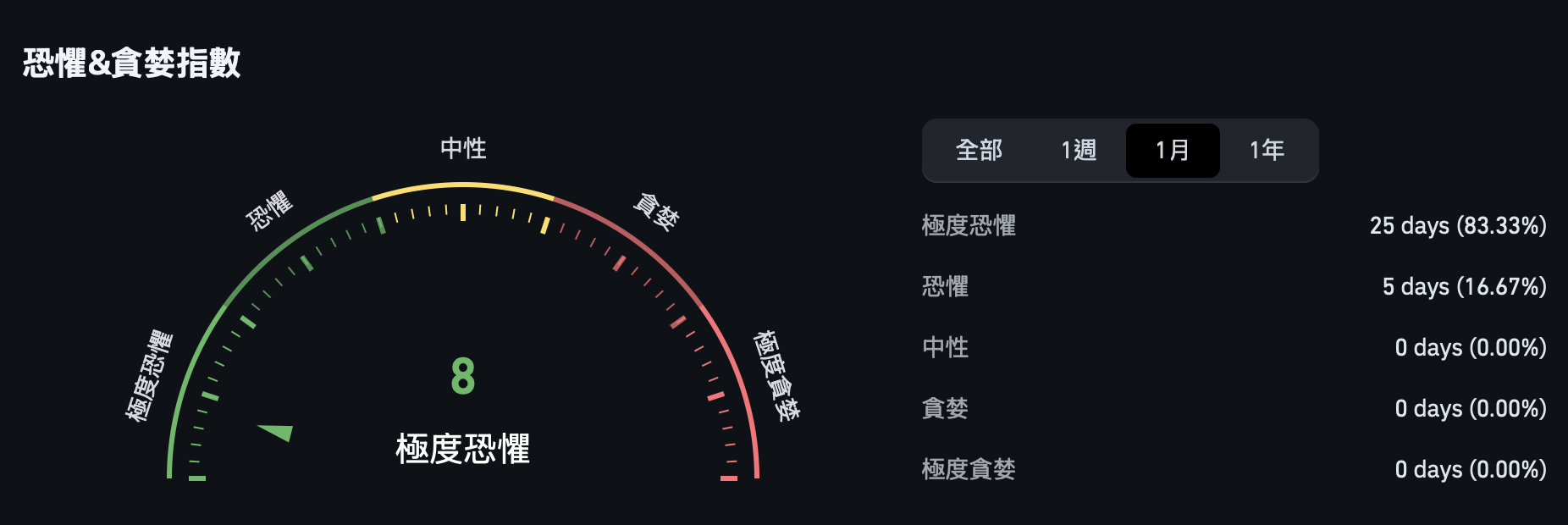
According to CoinGlass statistics, today (29th) the crypto market fear index stands at 8, having not exceeded 20 for nearly 2 months.
The above is not investment advice.

Isenção de responsabilidade: As informações contidas nesta página podem ser provenientes de terceiros e não representam os pontos de vista ou opiniões da Gate. O conteúdo apresentado nesta página é apenas para referência e não constitui qualquer aconselhamento financeiro, de investimento ou jurídico. A Gate não garante a exatidão ou o carácter exaustivo das informações e não poderá ser responsabilizada por quaisquer perdas resultantes da utilização destas informações. Os investimentos em ativos virtuais implicam riscos elevados e estão sujeitos a uma volatilidade de preços significativa. Pode perder todo o seu capital investido. Compreenda plenamente os riscos relevantes e tome decisões prudentes com base na sua própria situação financeira e tolerância ao risco. Para mais informações, consulte a
Isenção de responsabilidade.


